
blue_dolphin
-
Posts
9,278 -
Joined
-
Last visited
12 Followers








Recent Profile Visitors
56,859 profile views






-

Classic Chicken Salad or Loaded with Mix-Ins? What’s Your Go-To?
blue_dolphin replied to a topic in Cooking
I have my personal “classic” tuna salad and egg salad, both just like my mom used to make. I rarely make chicken salad but when I do, it’s always something different, no “classic” there. Restaurants in my area commonly offer a range of salads that can be “upgraded” with the addition of sliced, grilled chicken, steak or salmon. That’s not what comes to my mind when I think of “chicken salad” but I guess they are. -
When all else fails….read the directions!
-
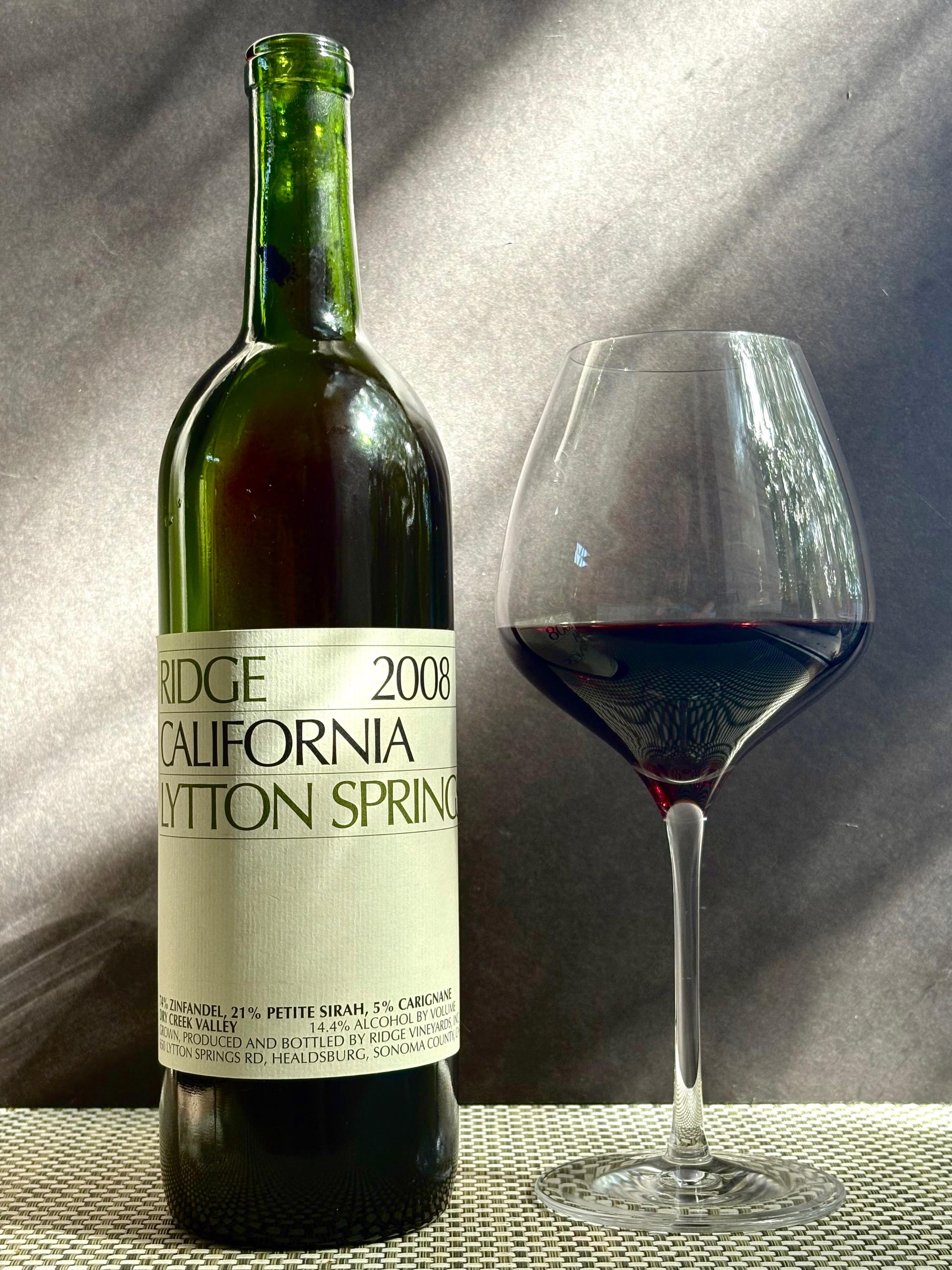
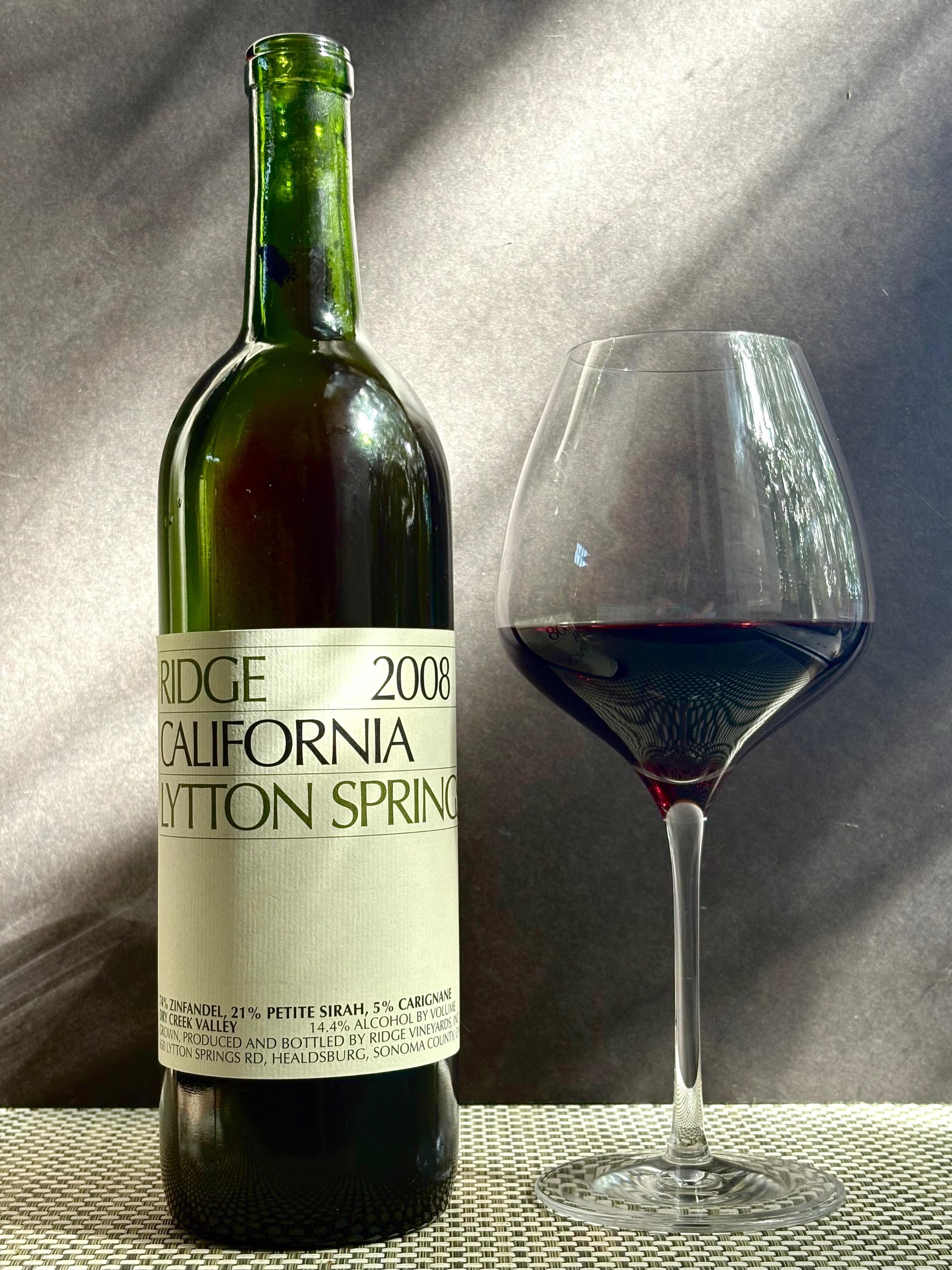
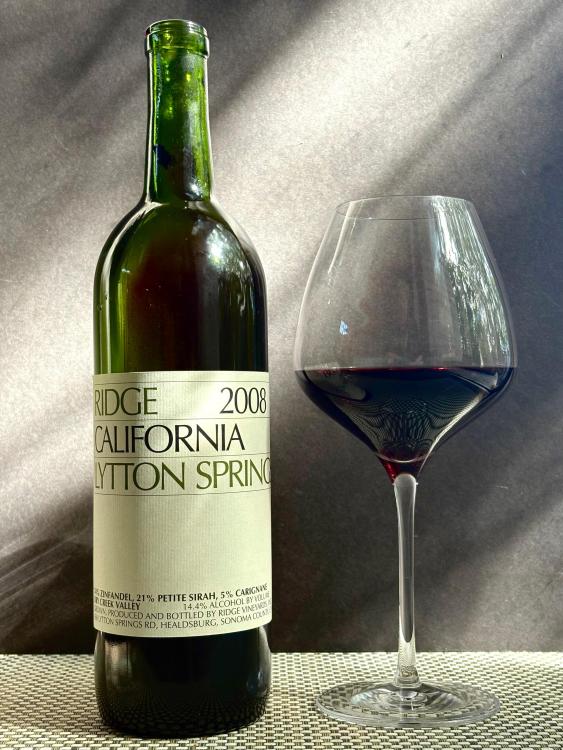
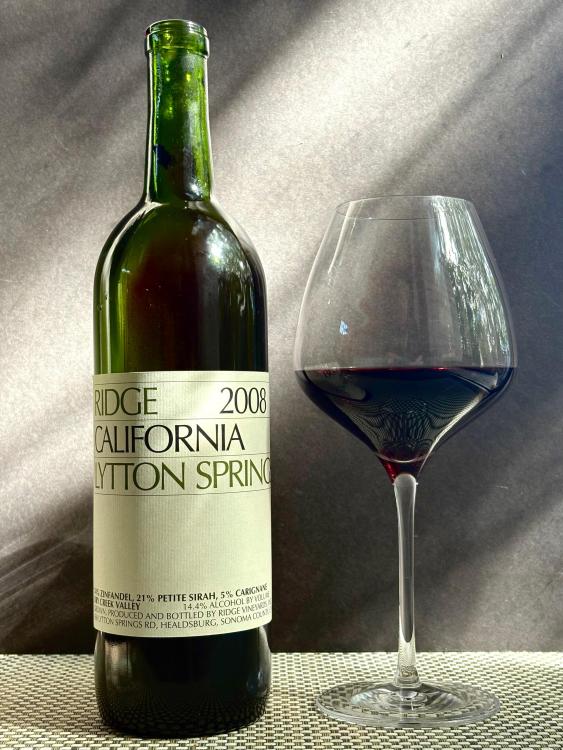
I put this over in the dinner topic but might as well add it here as well. 2008 Ridge Lytton Springs Zinfandel blend: 74% Zinfandel, 21% Petite Sirah, 5% Carignane Excellent! Still tons of fruit even at this age. Very dry, just the right touch of tannin and a really long finish.
-
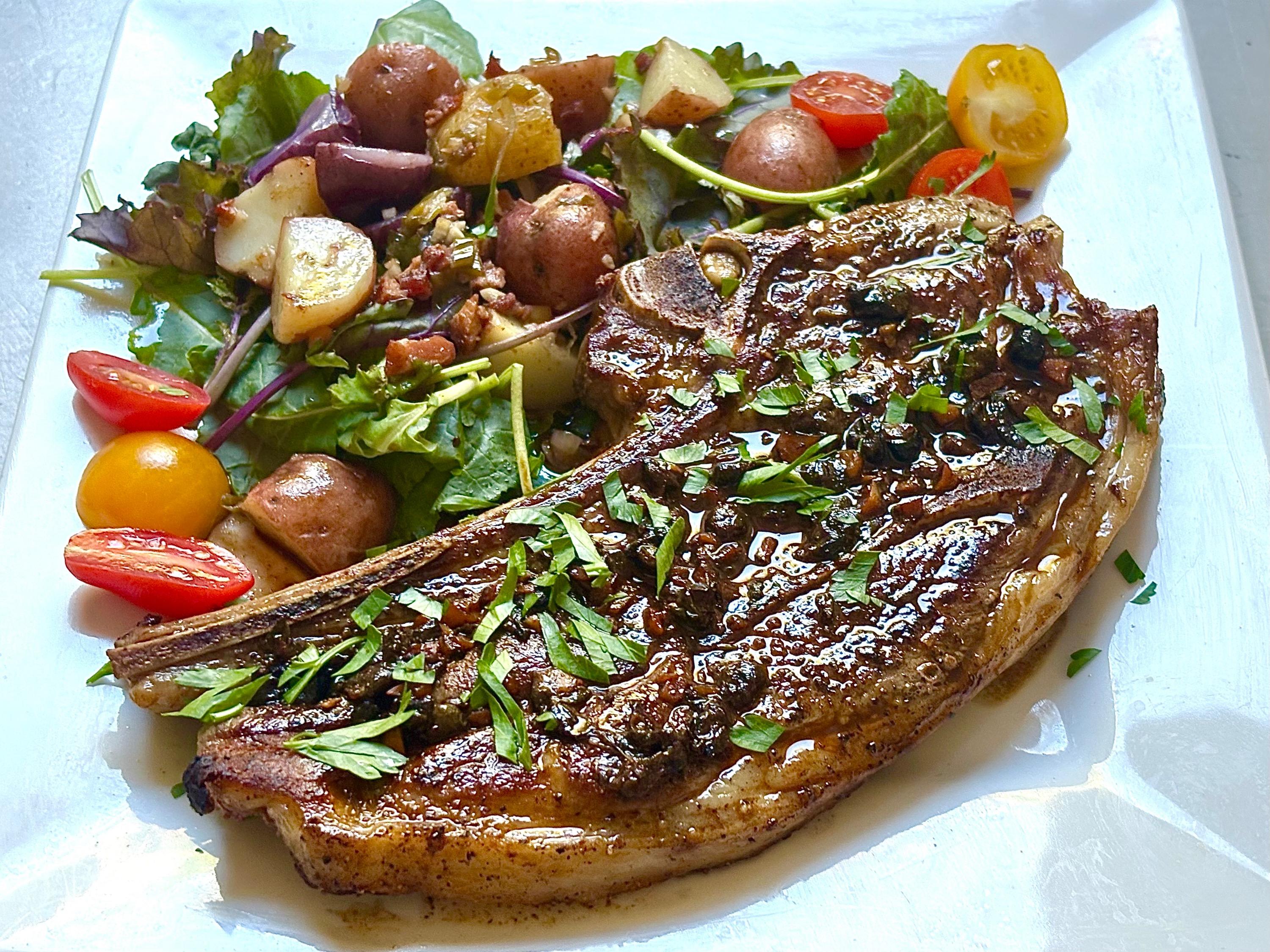
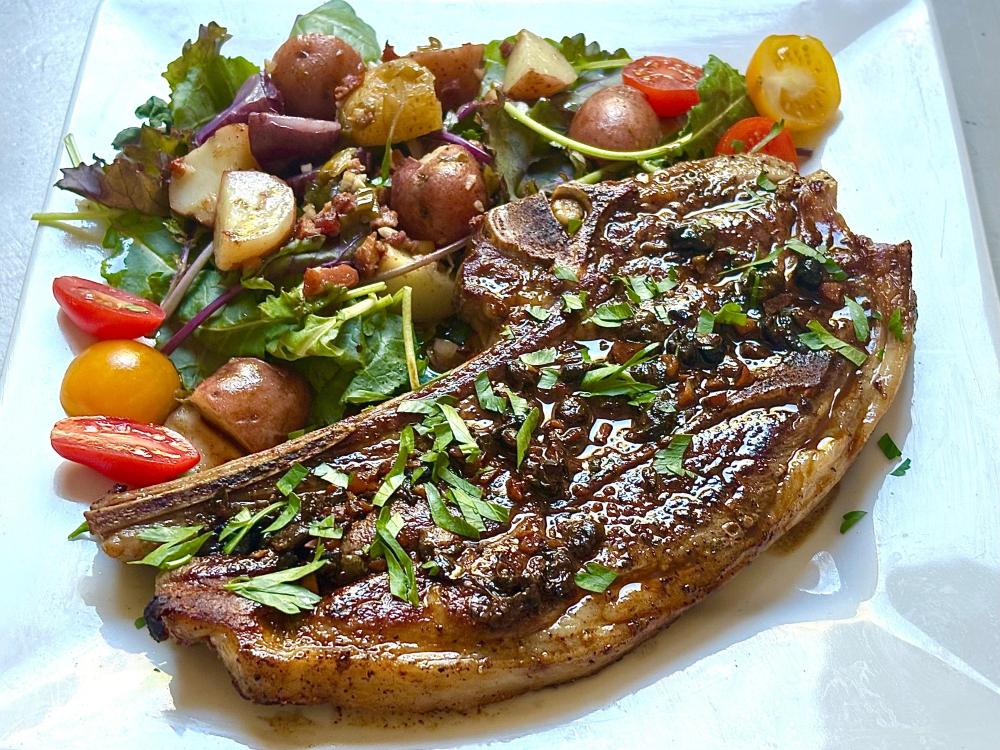
Anchovy Lamb Chops with Capers and Garlic from Melissa Clark’s Dinner Changing the Game, with boiled new potatoes dressed with Pancetta Vinaigrette from Six Seasons, spooned over baby kale. The lamb recipe calls for lamb shoulder chops which I haven’t cooked before but lamb shoulder was on sale for $5.99/lb and I needed some to make the lamb ragu in Six Seasons of Pasta so I had the butcher cut me a few chops so I could try it out. Melissa says the key to shoulder chops is to cook them either fast and furious or low and slow. This was the fast and furious version and 3 min/side in a screaming hot pan gave a nice crust and a pink, medium rare interior and a loud smoke detector! That was a big chop, 15 oz before cooking, so I have leftovers to play around with. All washed down with a nice zin…
- 365 replies
-
- 16
-

-

-

-
The crust can puff up like a balloon, either the whole thing or in pockets. When you add the filling, those sections will crack, the custard will run out and accumulate under the crust. Docking should prevent that but can also leave tiny holes behind that can let the custard leak through, something I like to avoid but do go ahead if that’s your preference.
-
Yes, you want to be able to use the parchment paper to lift out the weights.
-
Your Daily Sweets: What Are You Making and Baking? (2017 – )
blue_dolphin replied to a topic in Pastry & Baking
It was quite nice. The recipe follows Jeni’s Splended Ice Cream’s standard recipe and is credited to her. I made a fennel and black pepper ice cream in the past but most of the fennel flavor came from the fennel seeds. No seeds in this one, just the stems so the flavor is more subtle but the lemon zest and vanilla complement it nicely. Coincidentally, a friend of mine just made a roasted fennel ice cream for a plated dessert and said she roasted it until it was quite charred around the edges. Sounds interesting! -
I prefer to pre-bake before filling to minimize the soggy bottom issue. I don’t dock the crust. I do use pie weights - same dried beans and popcorn I’ve been using for 20 years or more! I put parchment paper in first, then beans. I bake at 400°F until the crust is just starting to turn brown. If you note any holes or cracks in the crust before baking, press them back together with moistened fingers. If you note holes or cracks after the pre-bake, you can patch them up with small slices of whatever cheese you are using. Pop it back in the oven for a minute so the cheese melts and seals the cracks.
-
Your Daily Sweets: What Are You Making and Baking? (2017 – )
blue_dolphin replied to a topic in Pastry & Baking
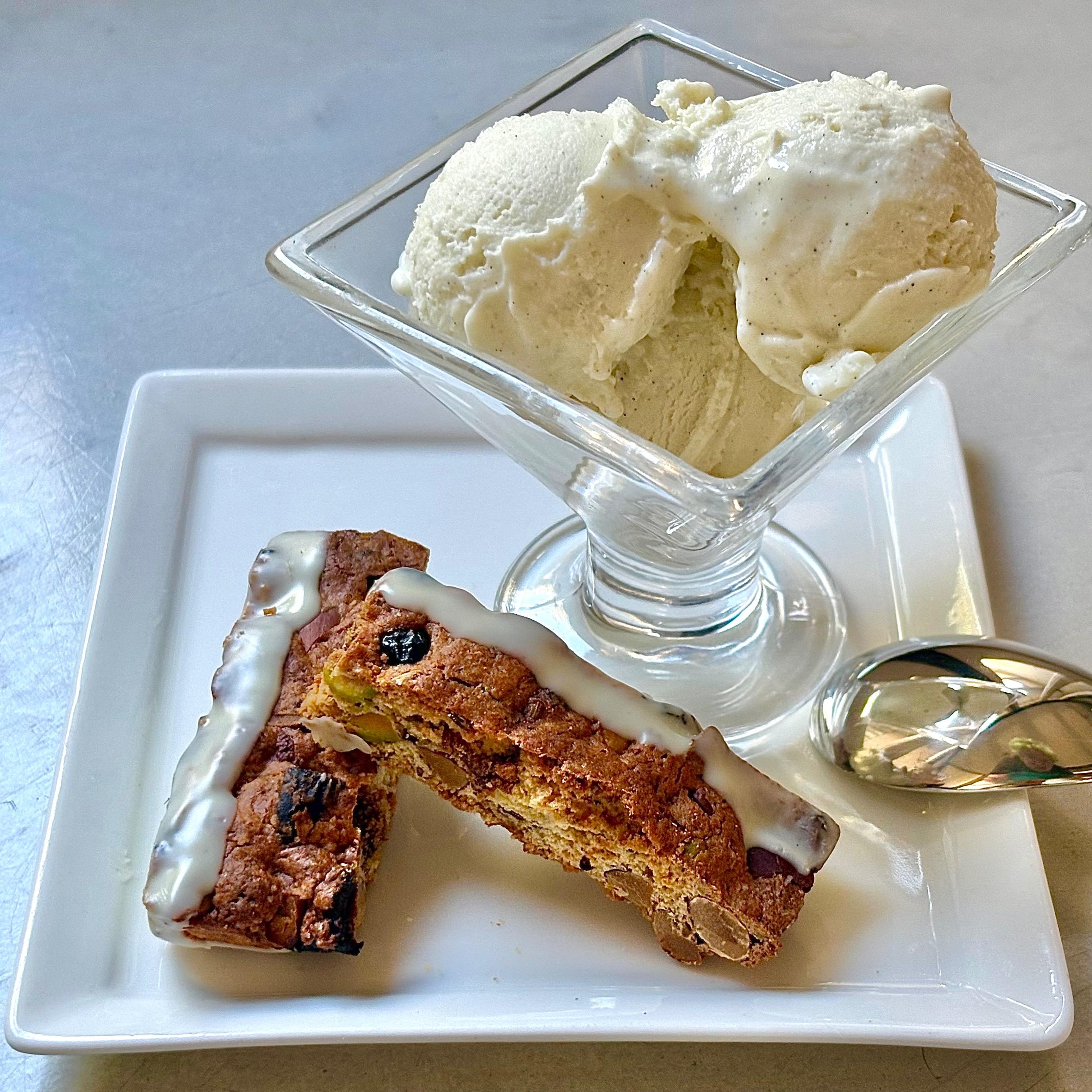
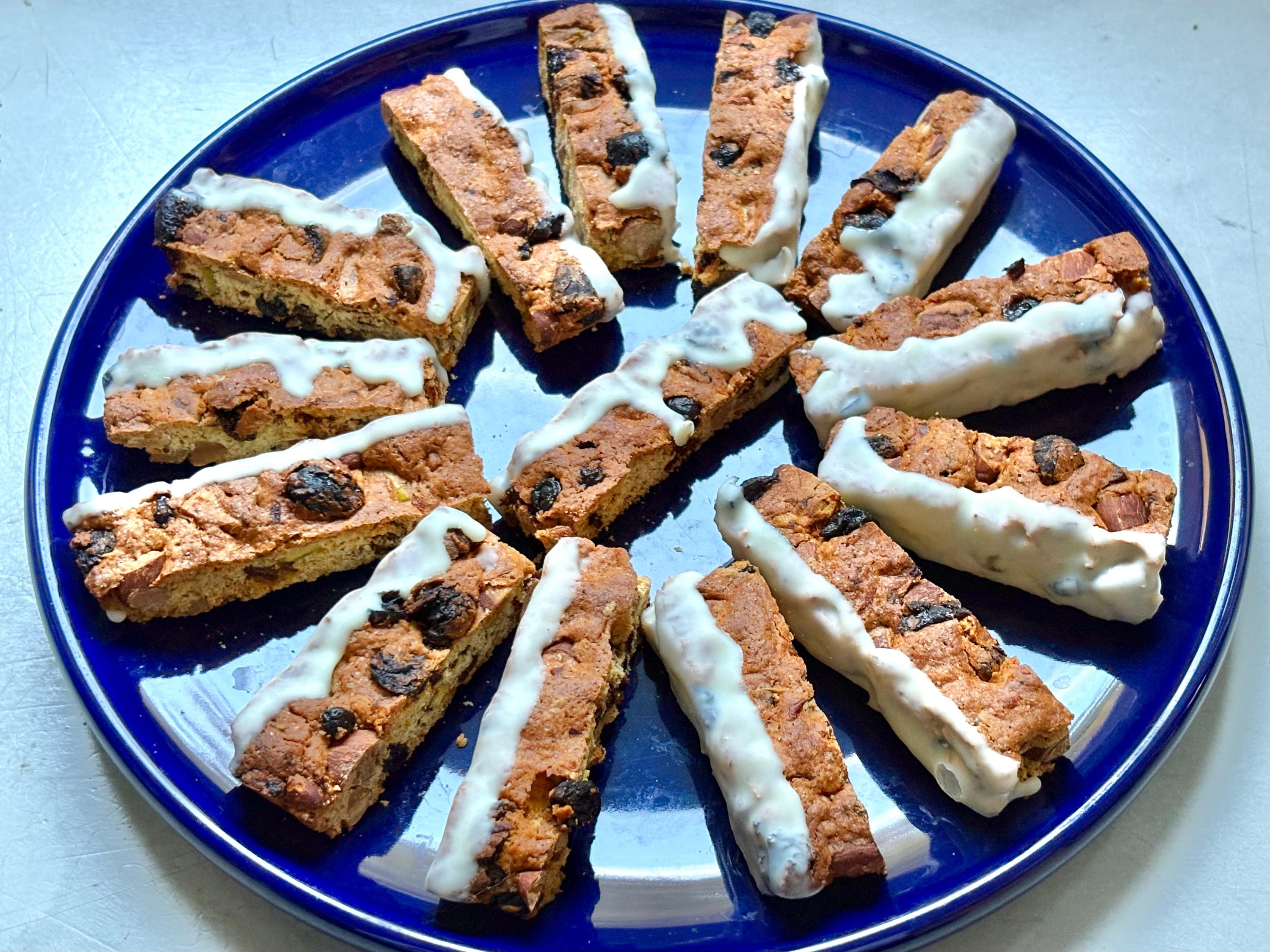
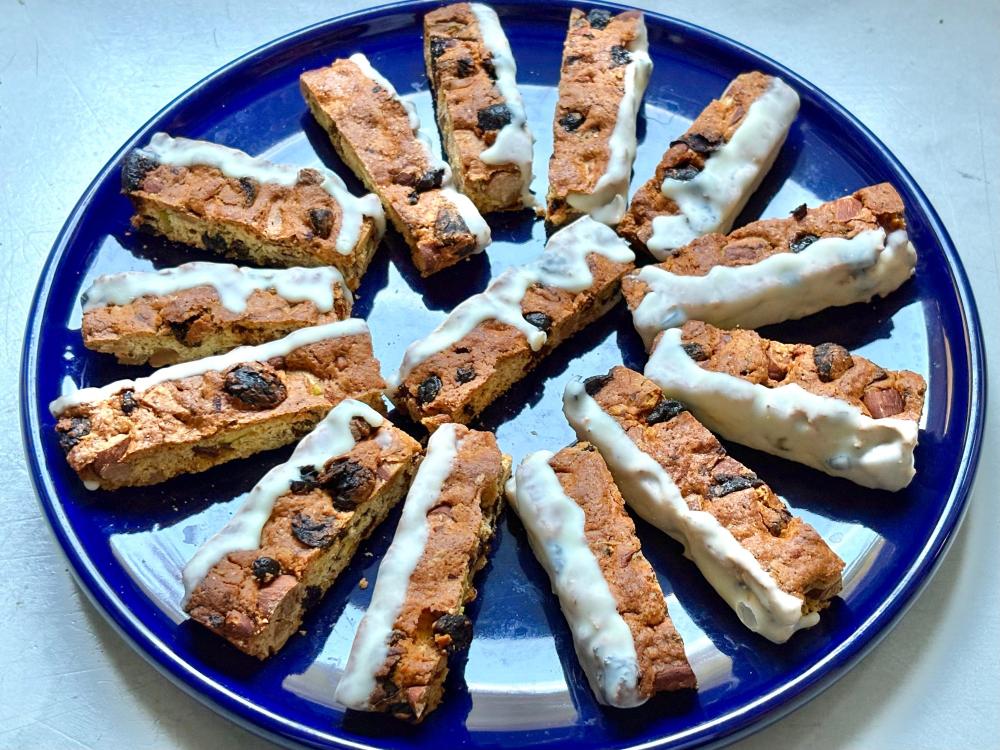
I made the Fruit & nut biscotti with orange & fennel from Baking & the Meaning of Life by Helen Goh because I was looking for a little cookie to go with the fennel stalk ice cream with lemon and vanilla bean that I made from Cooking with Scraps by Lindsay-Jean Hard The biscotti dough is pressed into a pan instead of shaping into a loaf for the first bake. The fruit is dried apricots, blueberries, and I subbed in dried cherries for the currants in the recipe. Nuts are almond and pistachio. I made a half batch, baked in a 1/8 sheet pan. I used . Helen said not to skip the dip in white chocolate and she was right - they’re not particularly sweet so it’s a nice touch. Should be a fun recipe to play around with different fruit and nut combos. I’m thinking a tropical version with mango, papaya, pineapple, coconut and macadamia nuts would be fun.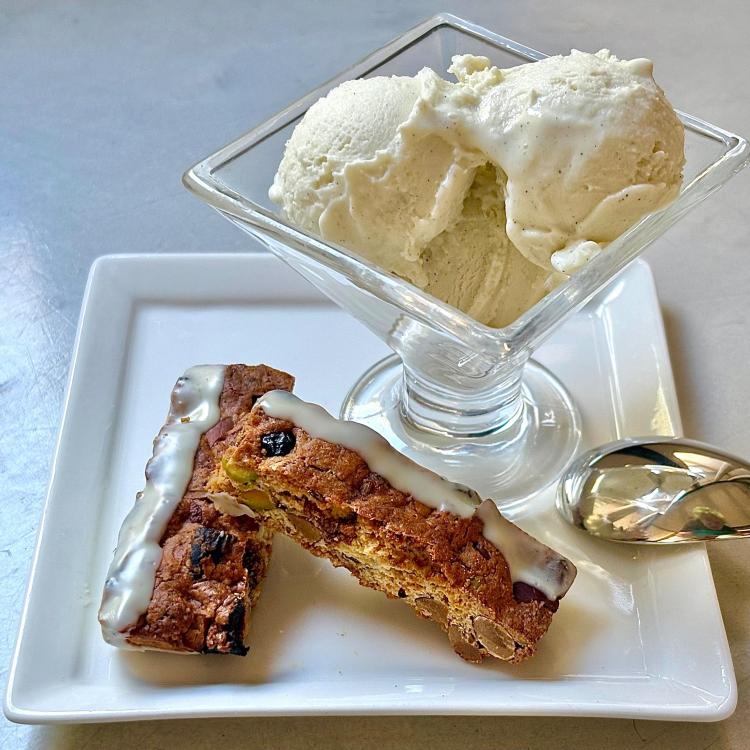
-
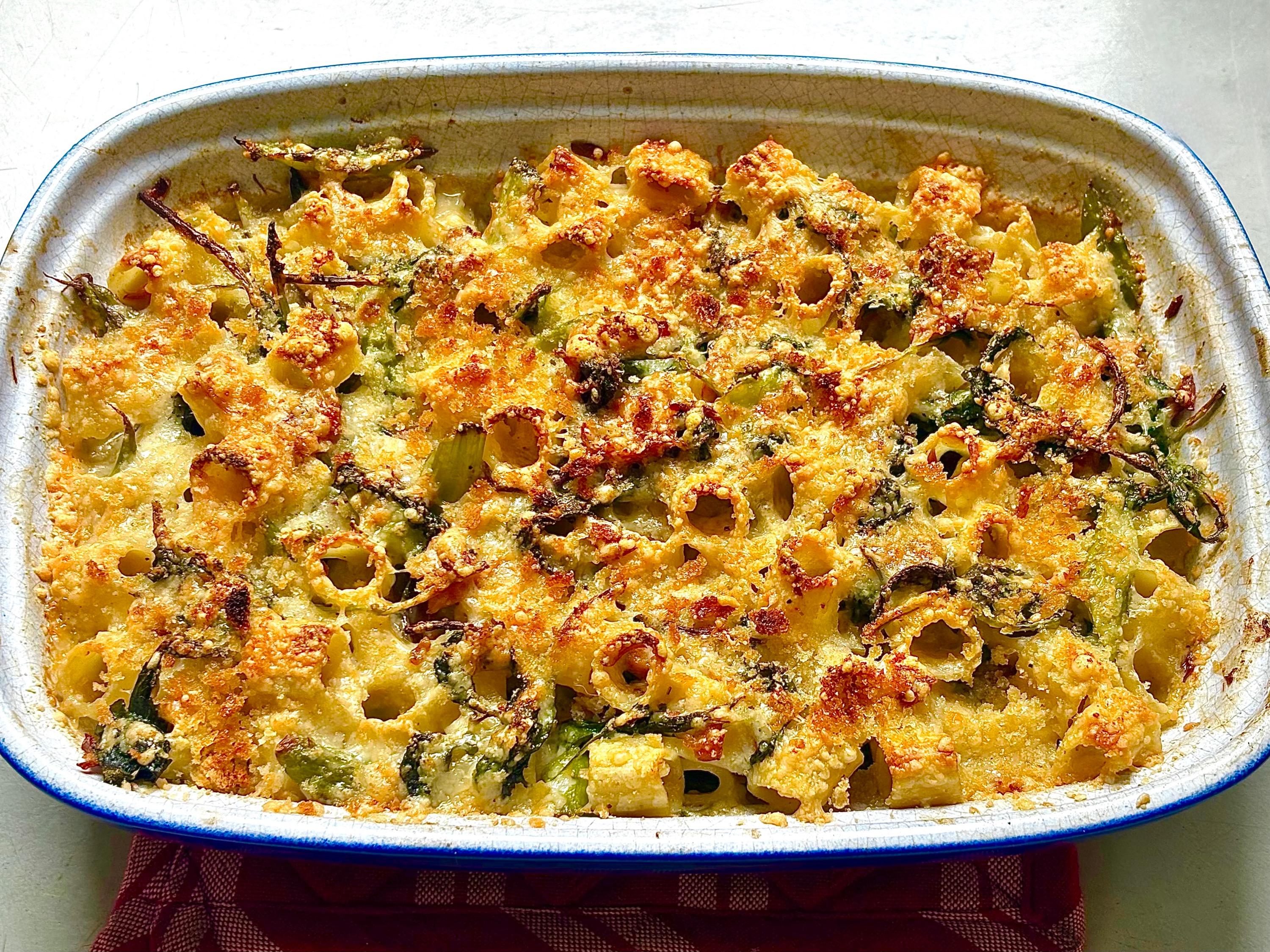
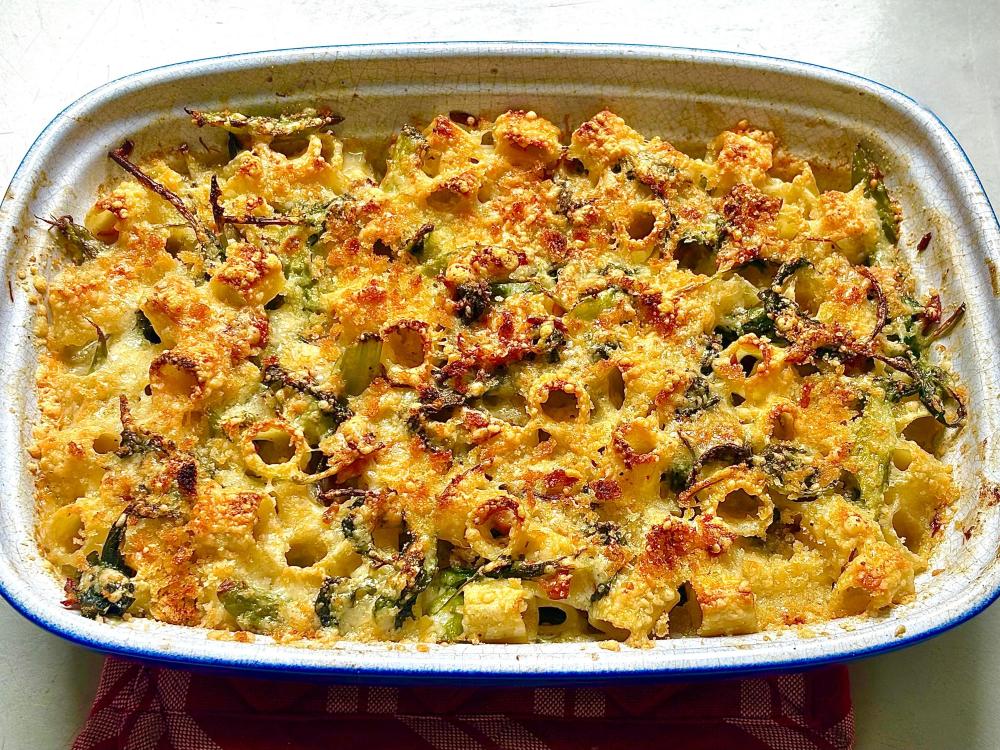
Asparagus with tuna p 165 from Six Seasons of Pasta by Joshua McFadden and Martha Holmberg This is basically the book’s version of tuna noodle casserole. I followed the recommendation of an EYB user to include the baking step and agree that the baking time really brings the flavors together. I used a can of smoked tuna, increased the amount of asparagus, added lots of arugula as suggested in the header notes and included breadcrumbs in the cheese topping. With those modifications, I liked it enough to make again.
-
Thanks! I don’t go there often but the WM neighborhood market is the closest grocery store and their parking lot is so easy to get in and out of that I sometimes run in when I’m in a hurry.
-
I kind of avoid the microwave for melting butter but also use a silicone lid. I most often use Kerrygold butter and their foil wrappers work fine for greasing pans but I’m not sure about the microwave. I thought the tip to soften cream cheese by submerging it in hot water was interesting. Probably best with a new package vs one I’ve already opened for a little schmear on a bagel!
-
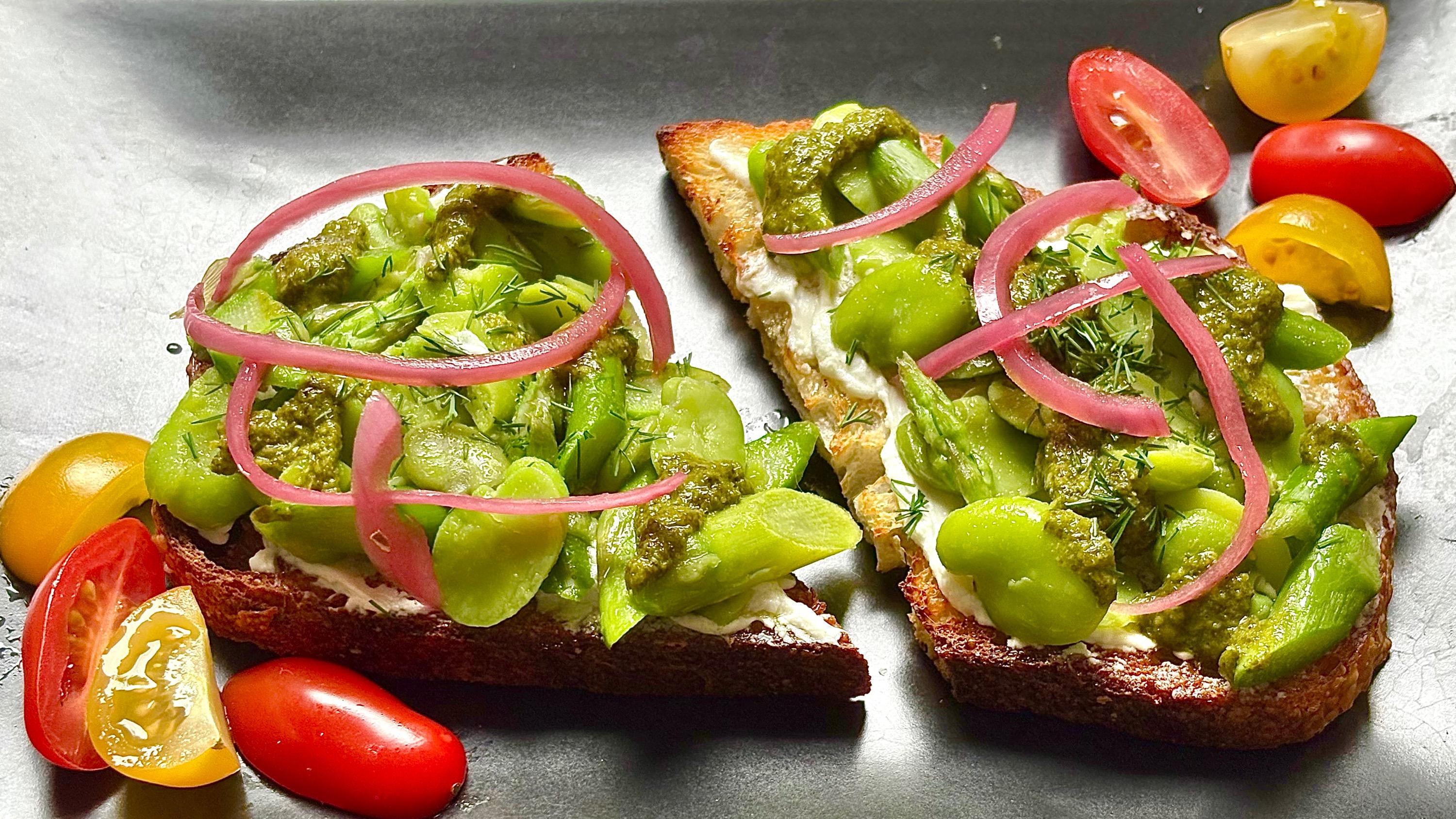
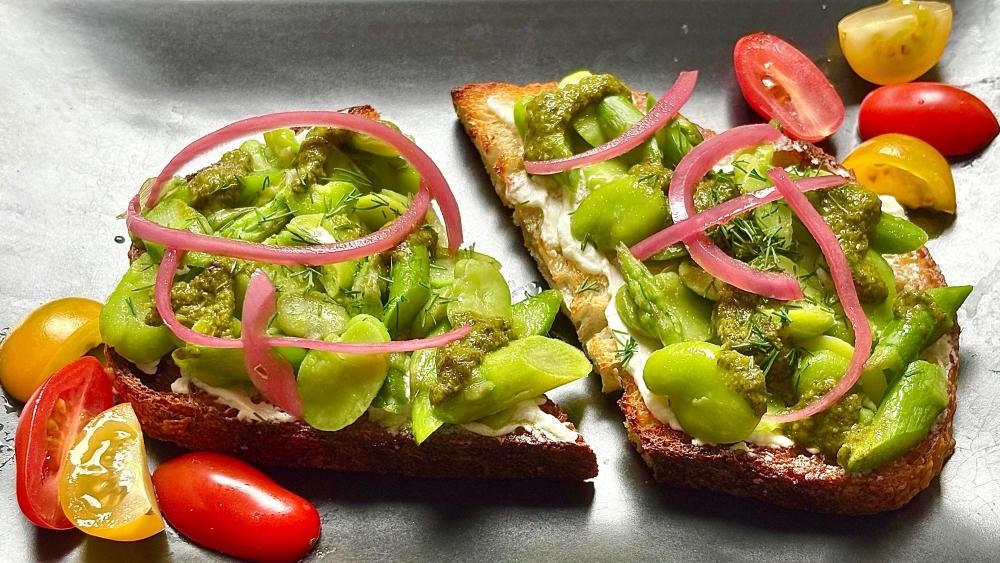
Toasted sourdough, topped with marinated goat cheese, fava beans, asparagus, fresh herbs, a drizzle of green sauce and pickled onions, all from Samin Nosrat’s Good Things
-
I agree with @Smithy that the presenter is engaging. Gave me a nice little insomnia distraction last night and my comments cast no shame on anyone who picked up some good ideas. I was very impressed at the multiple ovens and vast counter space in that kitchen though I don’t see much genius, just hacks, which aren’t a good thing in my book. With respect to measuring vanilla extract into the cap, my vanilla isn’t the same brand and the cap barely holds less than 3/4 tsp. Close but no cigar. More importantly, I prefer to keep the cap and bottle threads clean to maintain the best seal. I learned to save butter wrappers for greasing pans from my mom and assumed everyone did the same. Maybe she was more of a genius than I realized - she thought box graters were unsafe and always used her Mouli julienne to grate cheese so I bought one for my first kitchen as well. I don’t care for Rice Crispy Treats but I will wash an extra bowl any day instead of trying to awkwardly mix something in a baking pan. As someone who has a tiny freezer compartment in my fridge and views all bags of chips as a single serving, the business of storing bags of snacks in the freezer went over my head. Bagged popcorn already has zero appeal and eating it cold sounds atrocious. Fresh, hot popcorn for me! The whole s’mores thing was odd. Anyone who wants eat s’mores with a fork is missing the point and the idea of kids stabbing a flaming poker with molten marshmallows into a a tiny plastic bag of cookies is frightening. I like batch cocktails and her “freezer door Old Fashioned” is OK but generally, you want to account for dilution by adding a measured amount of water if you want to batch freezer cocktails. I didn’t realize that hard taco shells were still a thing. I guess the muffin tins could be handy but I would never dirty an extra one to hold the sour cream, hot sauce, etc that were already in their own containers. Did I miss some serious genius?
-
For pre-shaped crusts, I’ve used Marie Callender’s and Pet-Ritz (which I believe is now part of Pillsbury) both of which come frozen and offer a “deep dish” size. The “regular” versions don’t accommodate the amount of filling I like in a quiche. These aren’t my first pick for a quiche but I’ve used them when I needed to make multiple quiches to take to an event or when I’m cooking away from home. I’ve since picked up enough reusable pie pans from thrift stores and garage sales that I can make quiches for friends, etc without worrying about getting the pans back so I haven’t purchased the pre-shaped products in years.