liuzhou
-
Posts
16,813 -
Joined
-
Last visited
Content Type
Profiles
Forums
Store
Help Articles
Everything posted by liuzhou
-
You couldn't see it was lager? Funnily enough, I am in the process of writing the next instalment which features curry and lager, a 'traditional' pairing in Britain dating all the way back to the 1980s. I've never eaten at Veeraswamy's so can't comment on your experience, but I have London friends who like it a lot.
-
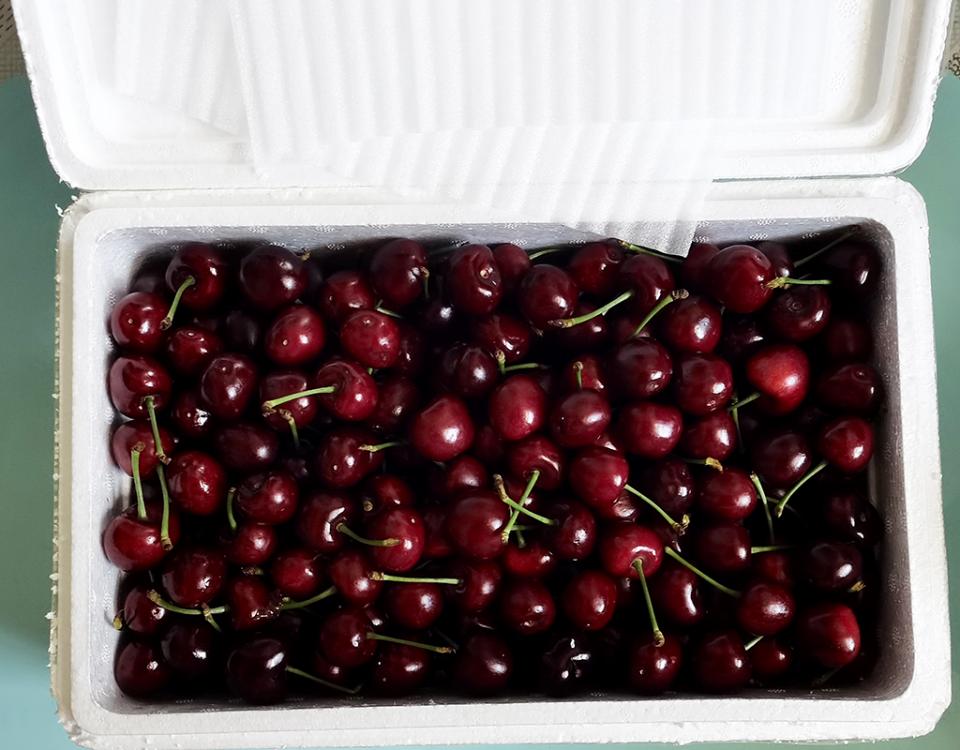
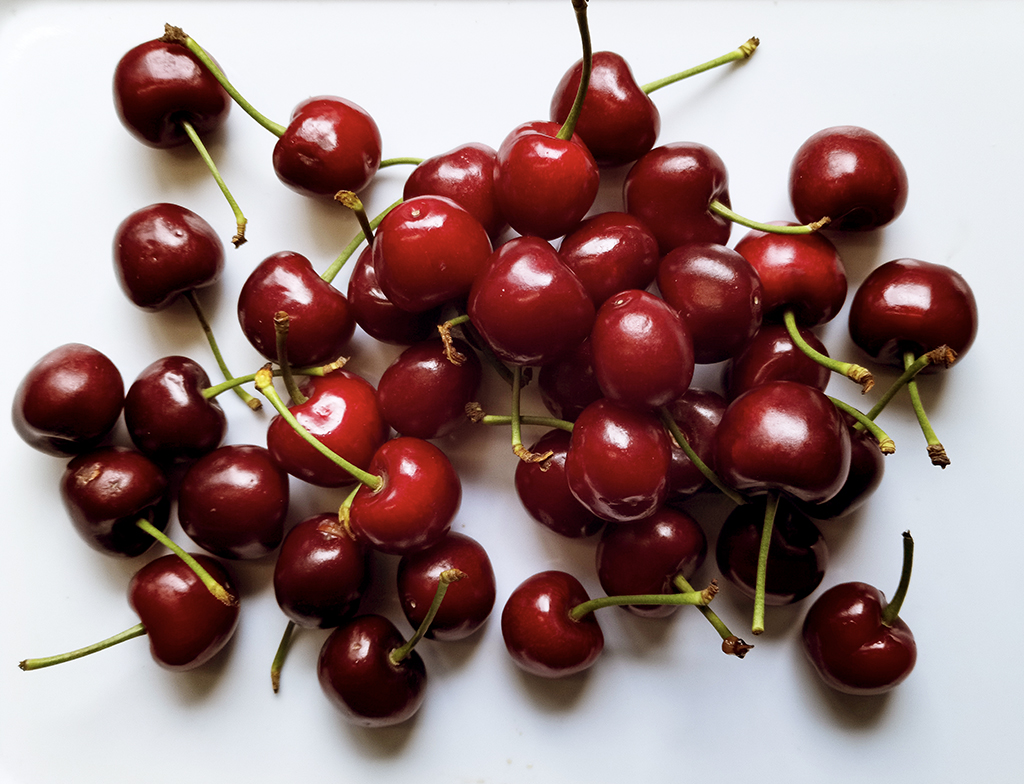
I started this topic five years ago, when I received an unexpected gift of 1.5 kg and 'complained' that it was too many for just me. Today 5 kg turned up! These ones are from Yantai in northern China, an area known for its cherries.
-
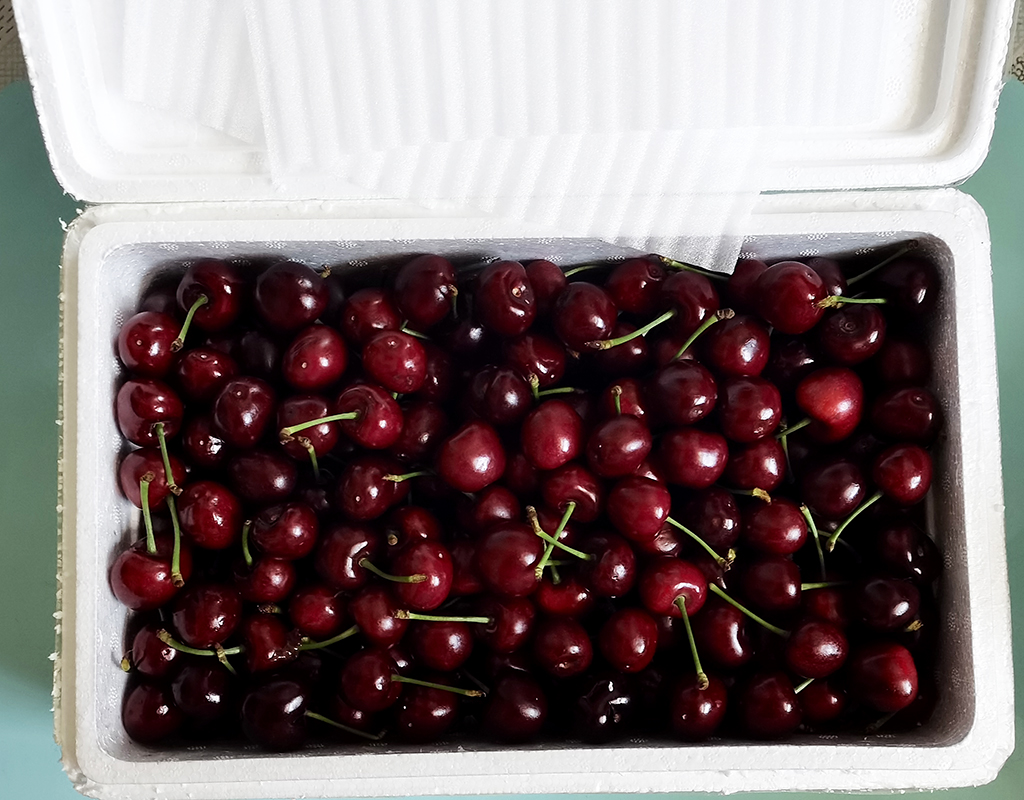
Just arrived from a client. 5 kg of cherries from Yantai in northern China, famous for its high-quality cherries. The image shows half of them; there is another box. How I'll ever get through them, I'll never know.
-

Ten cooks who changed the British dinner table.
liuzhou replied to a topic in Cookbooks & References
I've eaten that one! -
Ten cooks who changed the British dinner table.
liuzhou replied to a topic in Cookbooks & References
I've heard of all the cooks and read most of the books. It may be because, like the Guardian and Jay Rayner, I am British. I too, like his writing. His restaurant reviews are great reading even if you know you will never visit the places in question. His rare bad reviews are hilariously vicious. This one is a favourite, with this a close second. As to the stuff on pedestals, I see roast turkeys, covered in icing / frosting. I don't remember that being a 1960s classic, but it wouldn't surprise me! -
Yes. Again, this is just a summary of the Simon Majumdar's much more detailed podcast in the link @Anna Ngave earlier. For convenience, here that is again. It is based on much the same sources that I used.
-
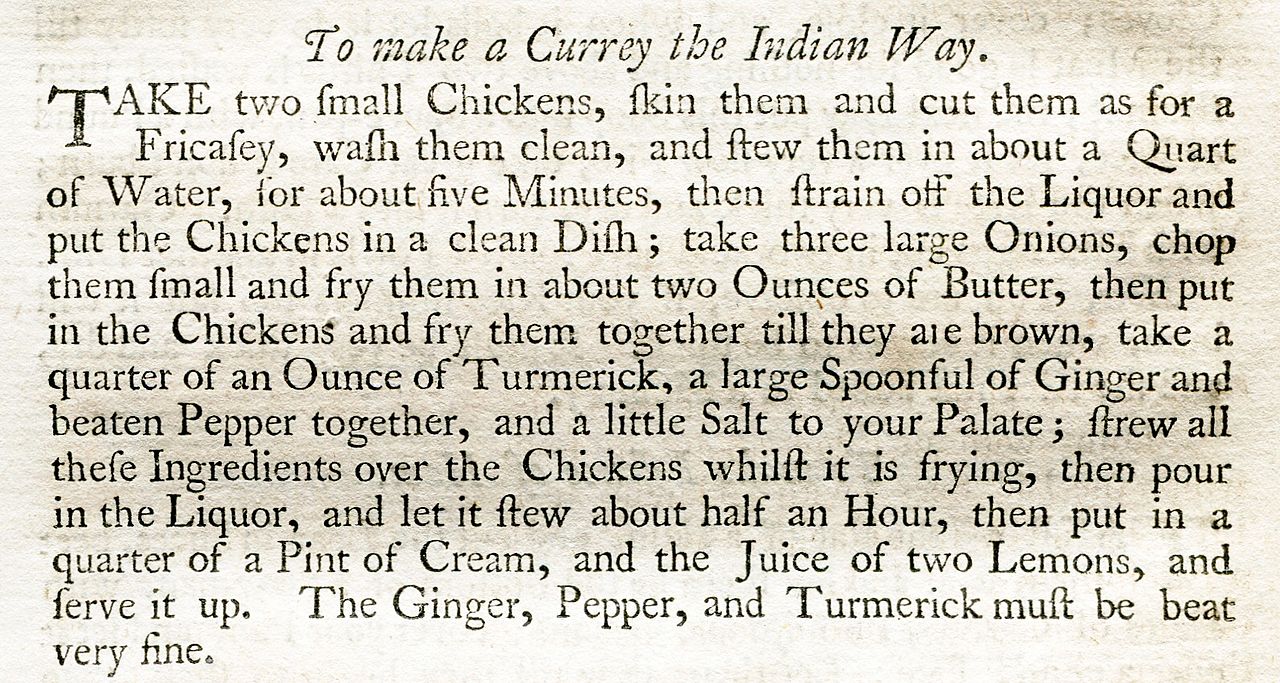
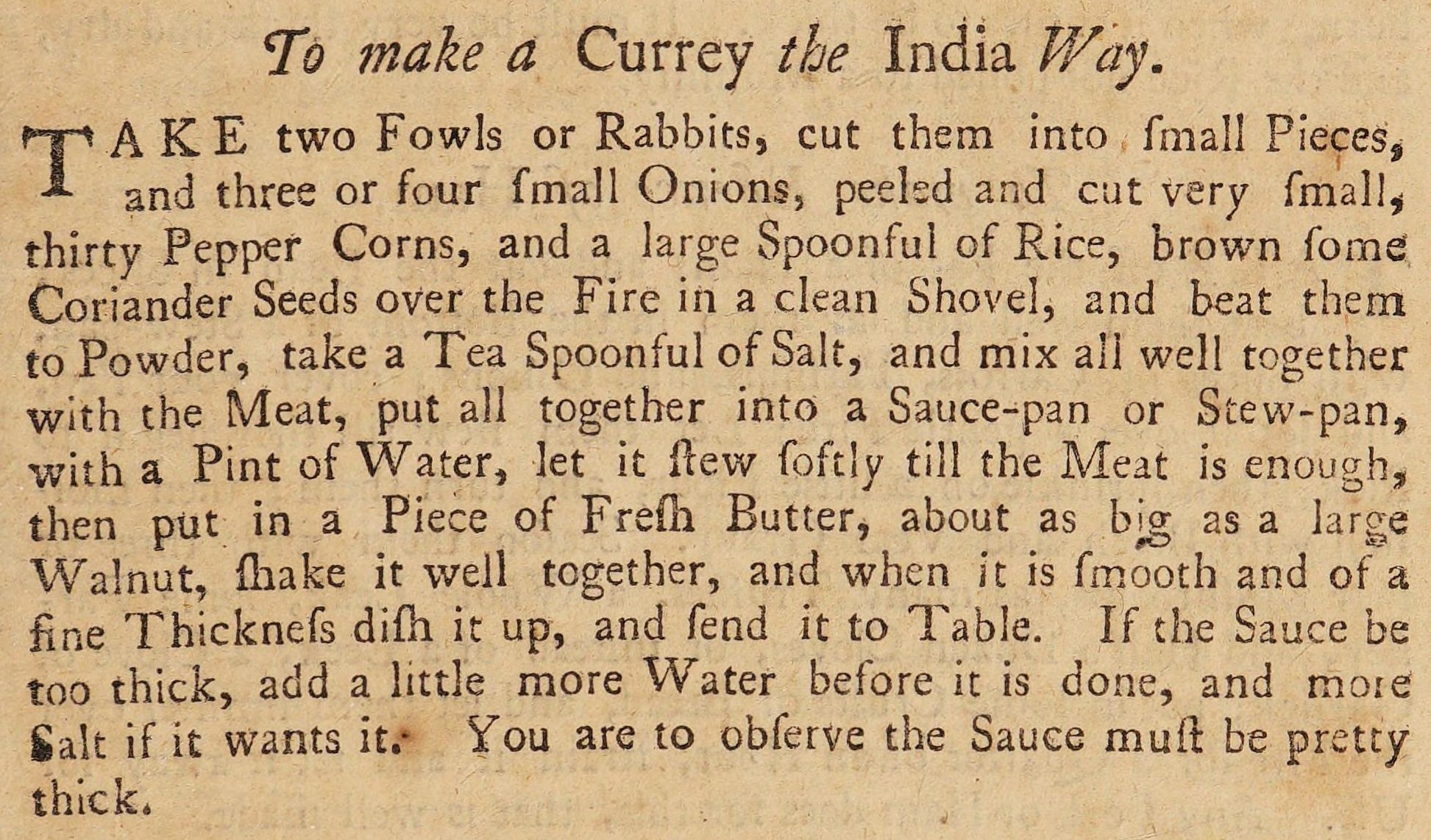
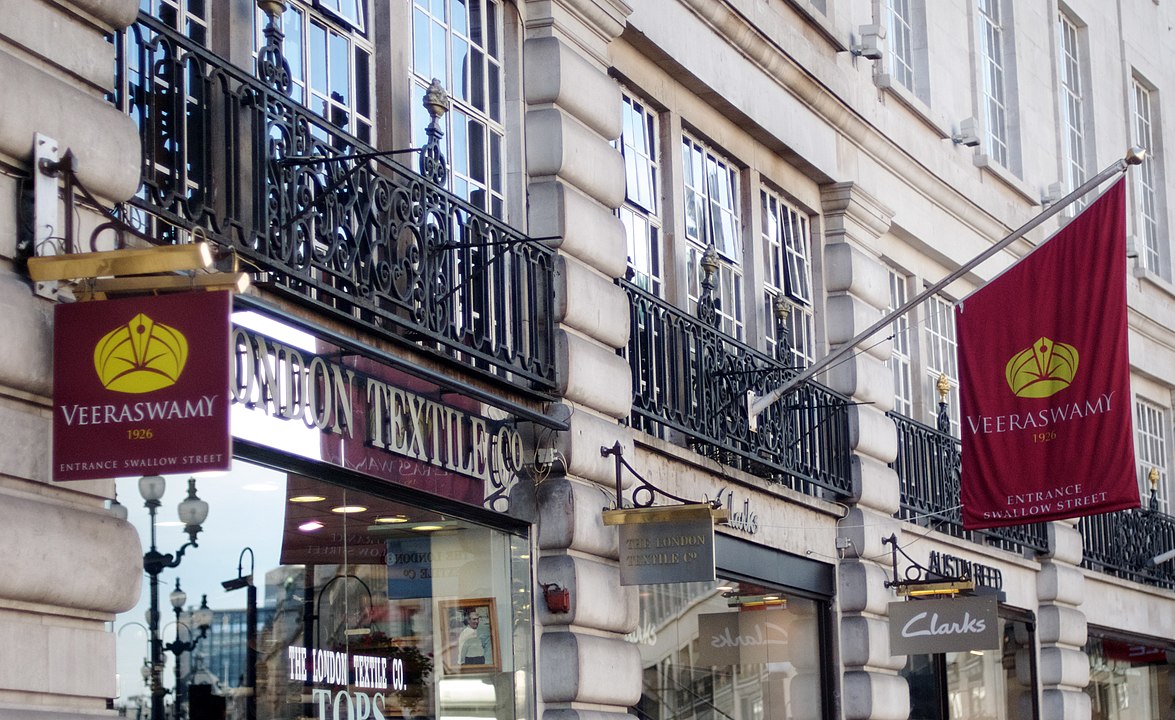
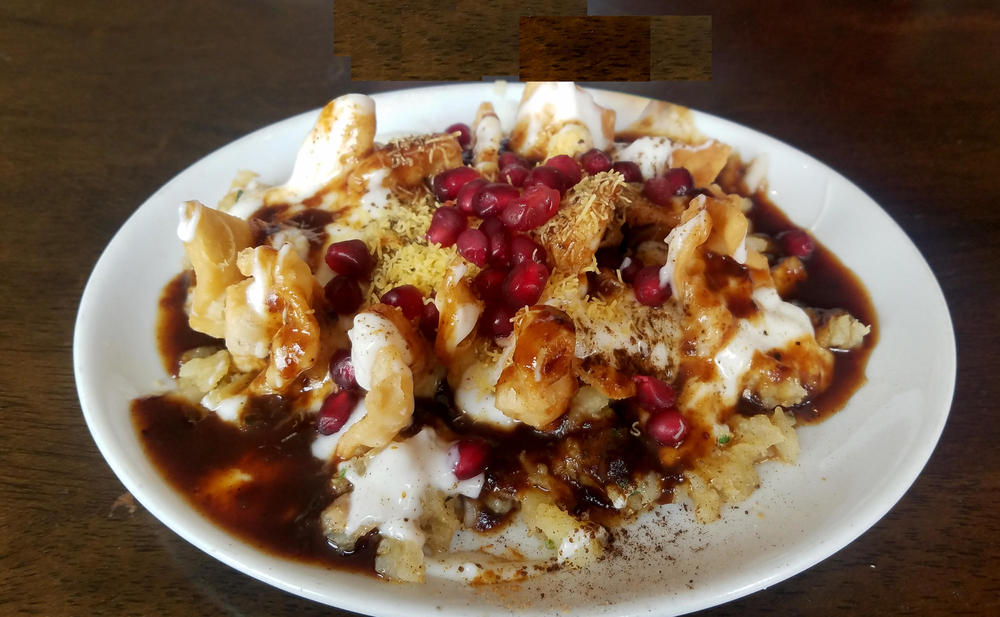
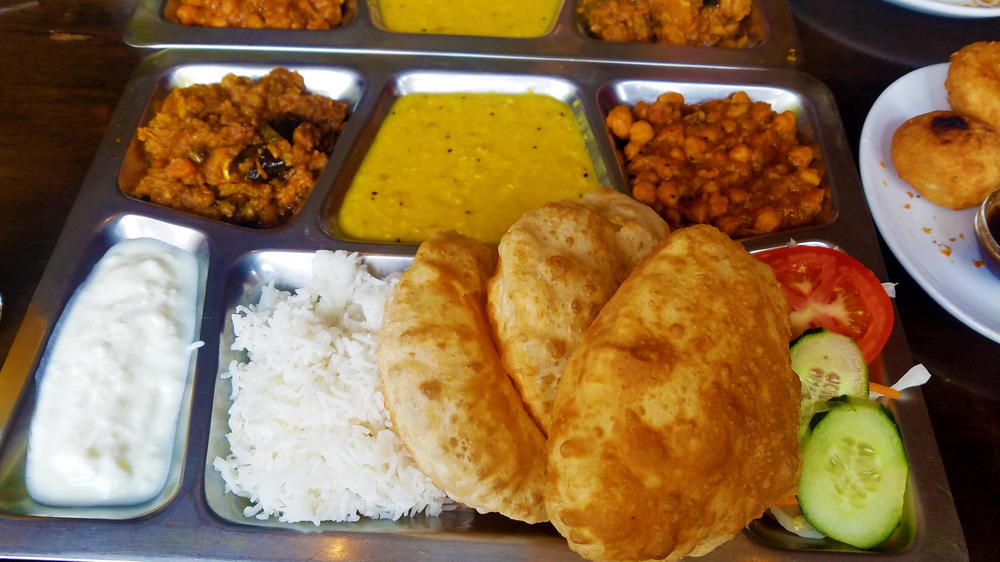
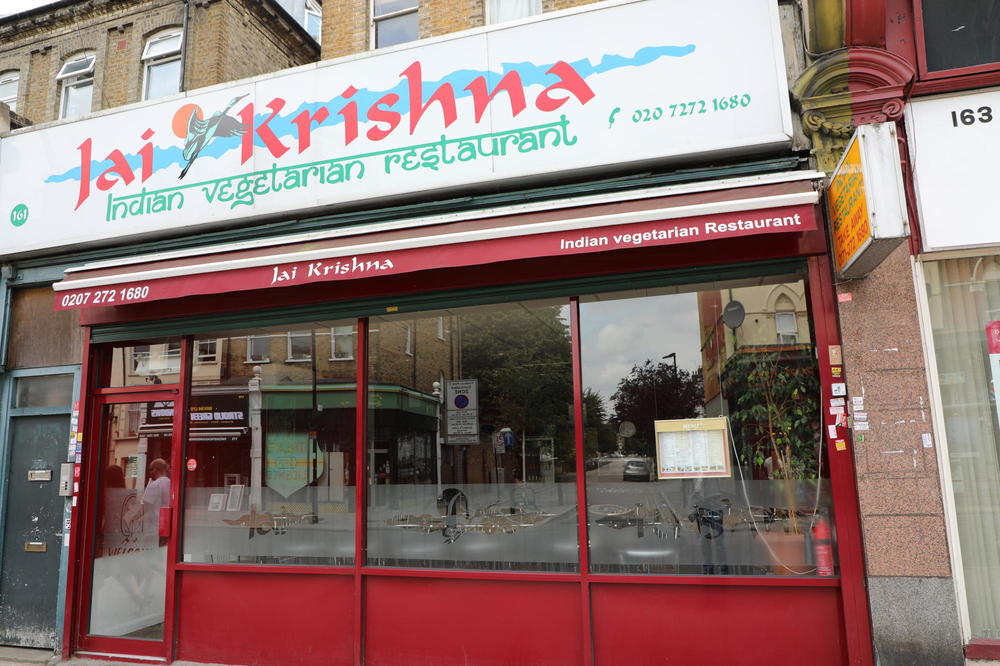
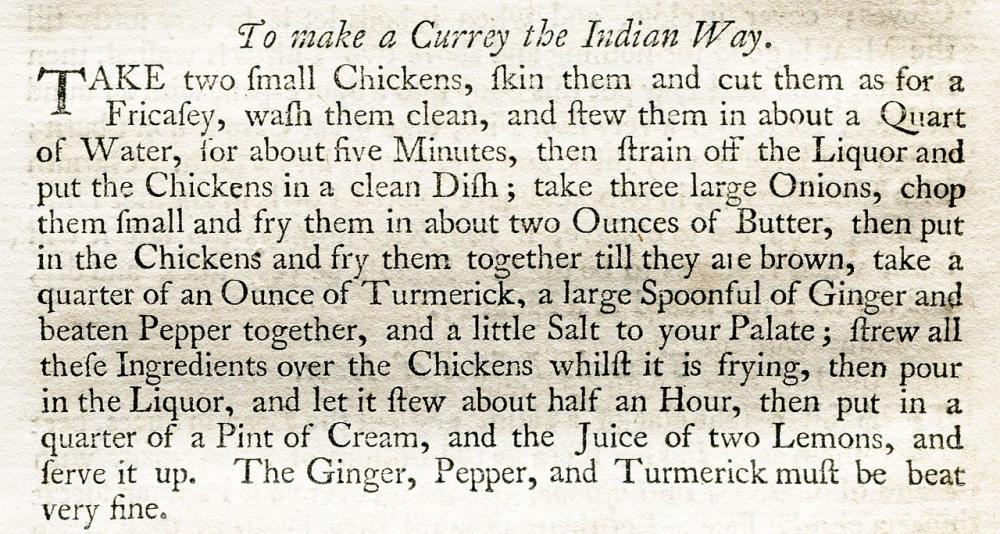
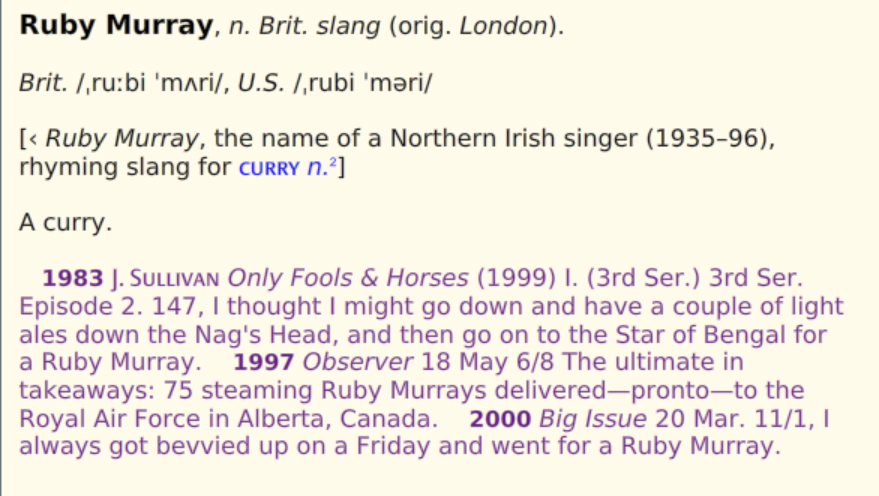
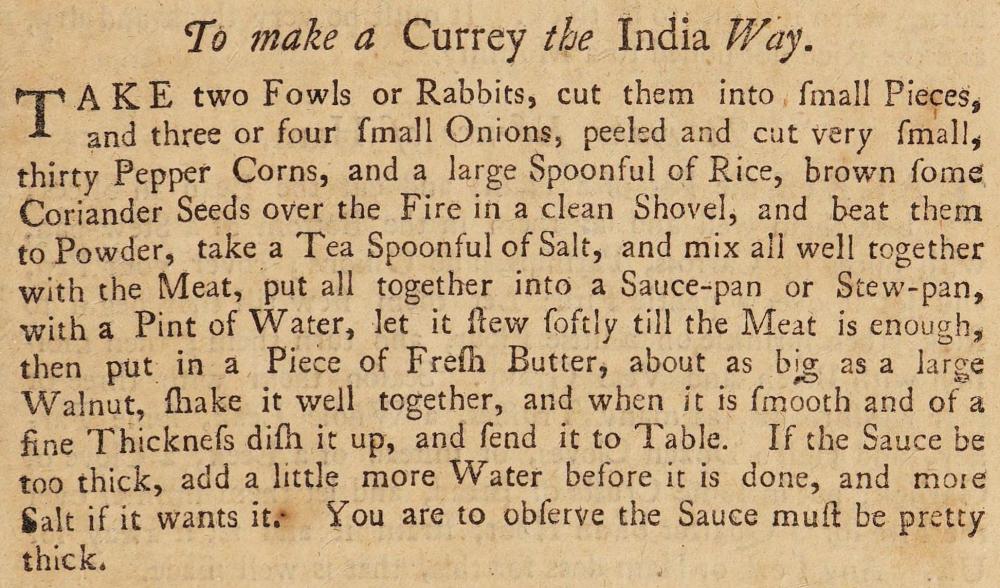
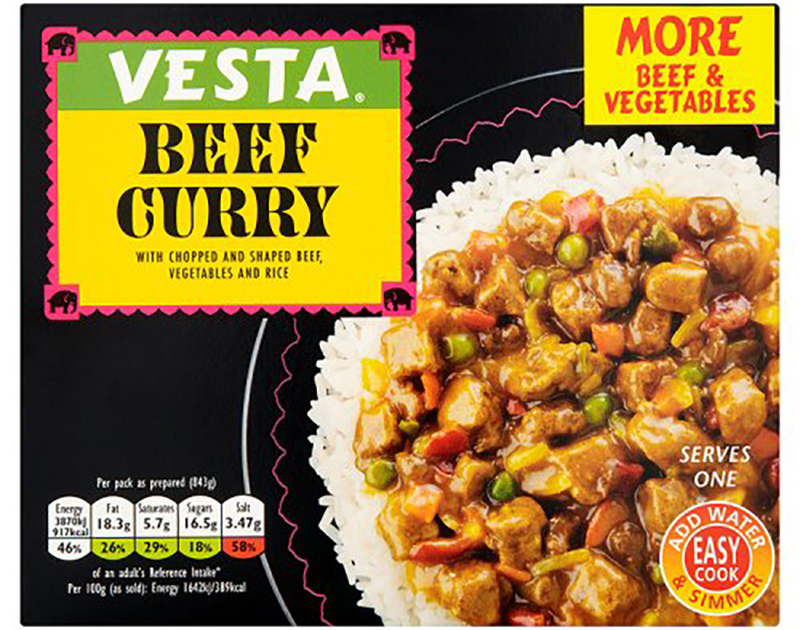
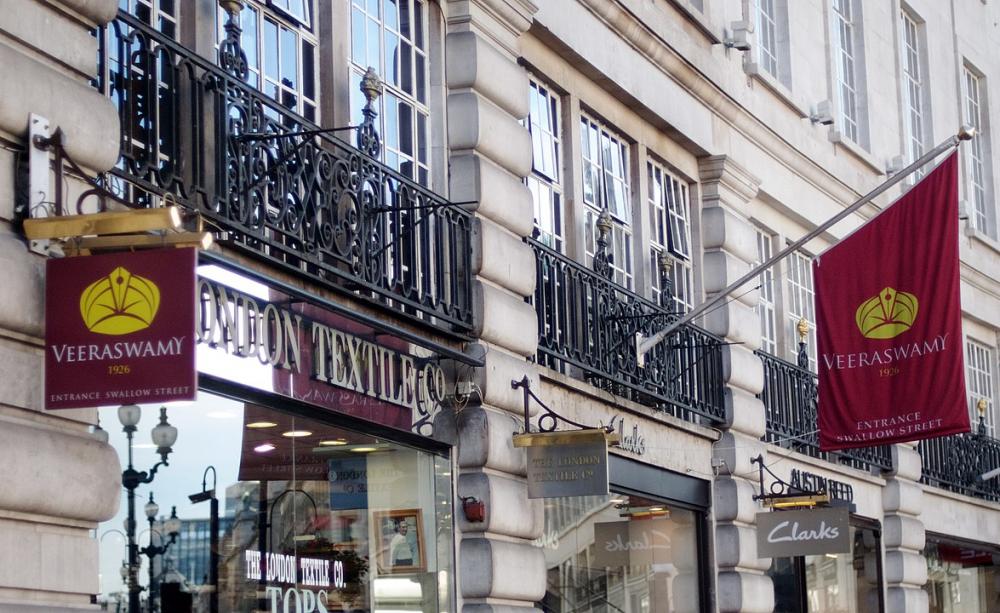
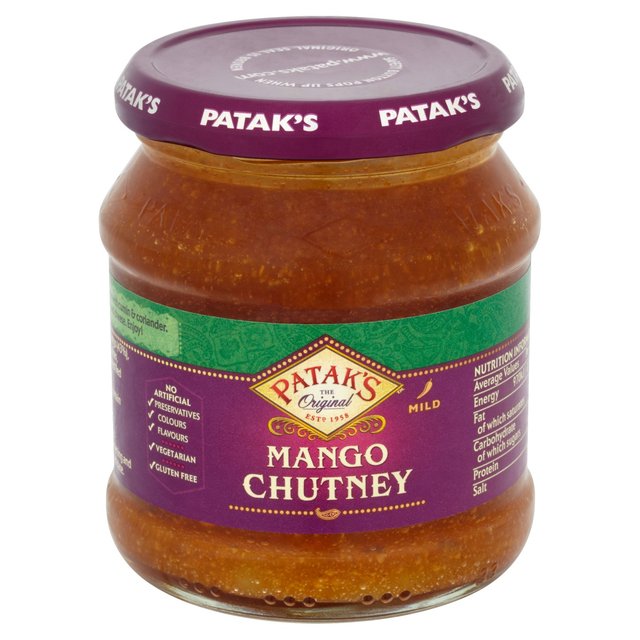
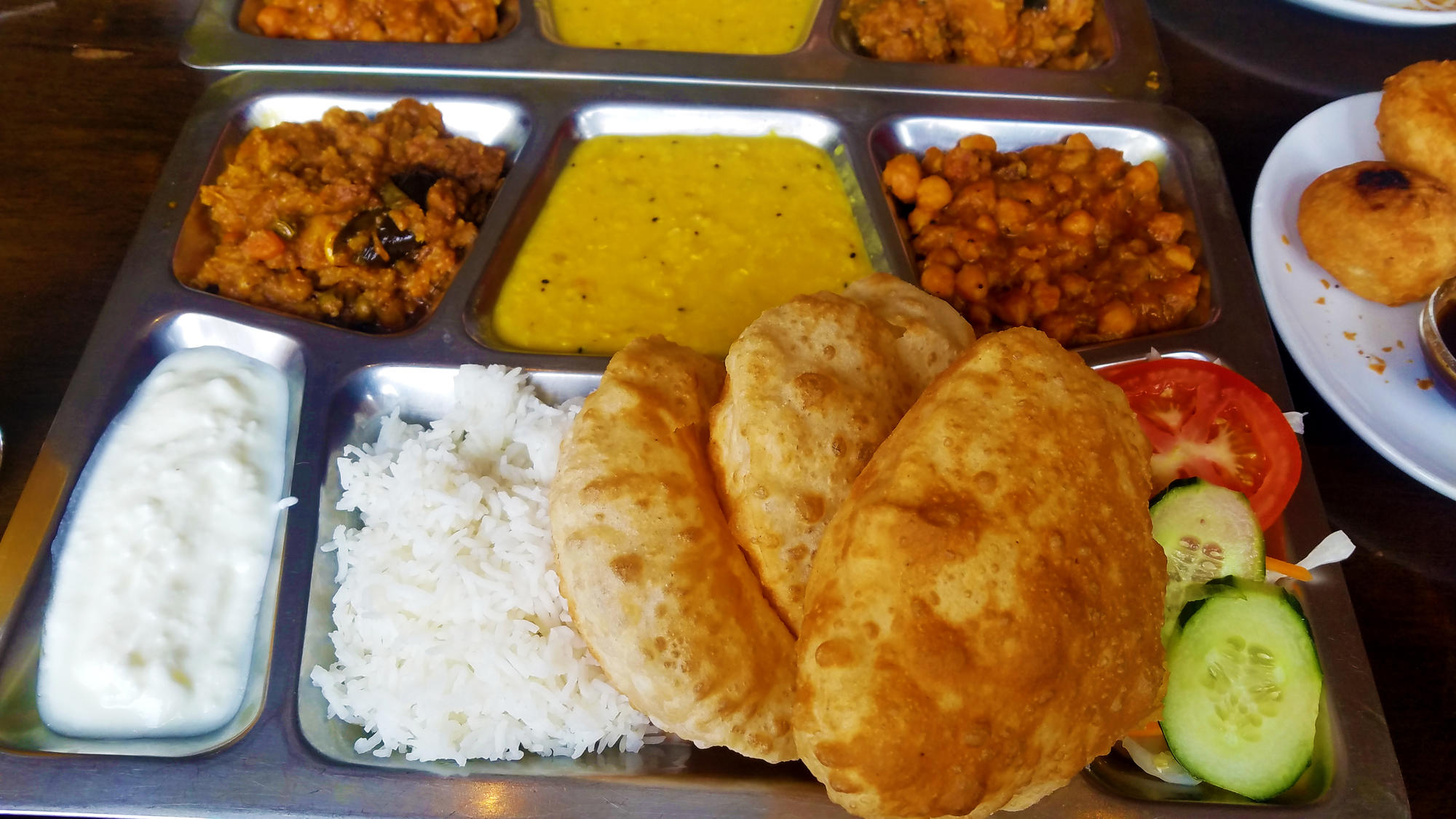
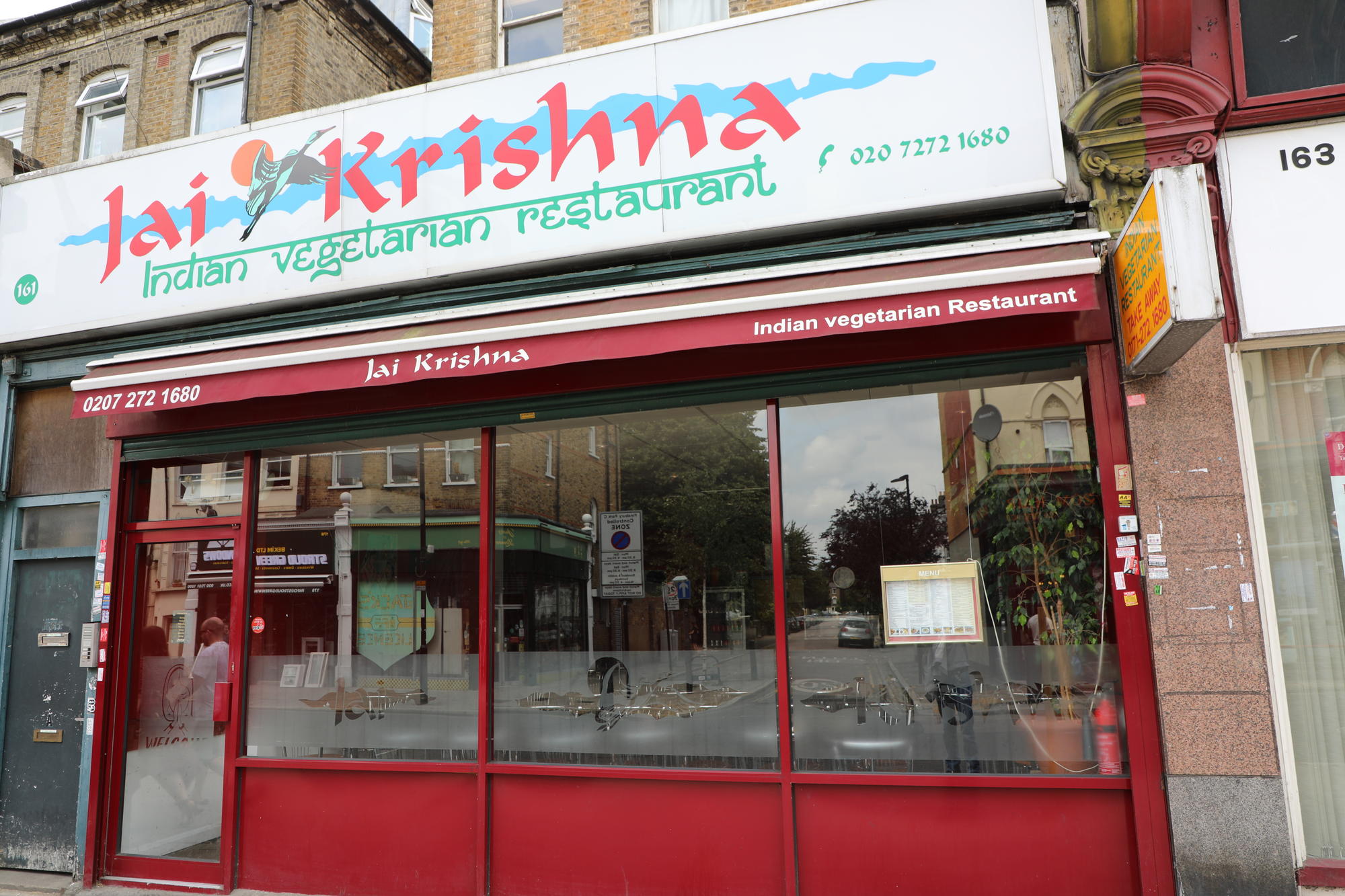
11. Seeking Ruby Murray It is often assumed that “curry” came to Britain via the British Raj (1858 to 1947) or the earlier East India Company rule (1757-1857). However, the earliest printed English recipe for “Currey” appeared in Hannah Glasse’s highly successful The Art of Cookery Made Plain and Easy, first published in 1747. The word "curry" in English was long established prior to that, though, first being recorded in 1598. Hannah Glasse – Art of Cooking - 1747 The dish may not be what we think of curry today, but with its liberal use of black peppercorns and coriander seed, we can see the beginnings of something more recognisable. Later editions updated the recipe to drop the rabbits and also include turmeric and ginger, as well as lemon and cream. Hannah Glasse – Art of Cooking – 1774 edition However, it was during the Company rule and later the British Raj, that more and more British personnel spent time in India and developed a taste for the local cuisine. On their return to Britain, they naturally wanted to continue eating their new-found favourites, or at least, a near approximation. Also, these people, while in India had their servants cook British dishes but with local spicing and other influences, leading to what is often described as Anglo-Indian cuisine. Instruction manuals for this food were printed and distributed in India, a well known example being Arthur Robert Kenney-Herbert’s Culinary Jottings for Madras, Or, A Treatise in Thirty Chapters on Reformed Cookery for Anglo-Indian Exiles from 1878. Catchy title, Arthur! Favourite dishes invented at the time include kedgeree, mulligatawny soup, seafood rissoles and a dish known as pish-pash, a soupy dish of rice with pieces of chopped meat, similar to congee and usually considered children’s food. image - Simon Harriyott; licenced under CC BY 2.0 The first known “Indian” restaurant in Britain was the “Hindoostane Coffee House” in London, which appeared in 1809, but had failed by 1810, due to lack of interest. It did not sell the native food, but Anglo-Indian food, with the dishes reported as being “dressed with curry powder, rice, Cayenne, and the best spices of Arabia”. "Indian" food was also cooked at home from a similar date, as cookbooks of the time seem to attest. Few, if any, of these dishes remain on British menus today, and certainly not in “Indian” restaurants. One preparation that was hugely influential and remains popular to this day is chutney. In the 1840s, thousands of east Indian sailors, known as lascars, were recruited by the East India Company, mainly in Bengal, the area now divided between the Indian state of West Bengal and the independent country of Bangladesh. Several jumped ship after arriving in British ports to escape ill-treatment at the hands of ship owners and disappeared into the cities to try to settle there. They were often met with hostility and racism, but some eventually found a sort of life, even marrying local women, despite opposition from politicians and church leaders. Most were bitterly poor and lived on charity, which earned them the reputation of being lazy and work-shy. The truth is few people would employ them. Veeraswamy's, London - Image by Alex.muller - licenced under CC BY-SA 3.0 The oldest surviving Indian restaurant is Veeraswammy’s, opened on April 21st 1926 (the day Queen Elizabeth II was born), by Edward Palmer, a retired Anglo-Indian soldier and great-grandson of an English general and an Indian princess. Today, it is a Michelin star holding, upmarket venue serving authentic Indian food. A sample of dishes from their menu is here. Address: Mezzanine Floor, Victory House, 99 Regent Street, London W1B 4RS (entrance on Swallow Street) Tel. +44 20 7734 1041. Nearest Underground stations: Piccadilly or Oxford Circus. In 1932, an Indian government survey of 'all Indians outside India' found a population of 7,128 Indians in the United Kingdom, including students, former lascars, and some professionals such as doctors. The resident Indian population of Birmingham was recorded at 100 which grew to around 1,000 by 1945. During WWII, a number of lascars served in the British army and many died. At the end of the war, a number of Indian soldiers, including former lascars, but also others who had also fought with the British forces, were demobbed in Britain and stayed. In 1947 came India’s independence and the Partition which was the separation of what had been India into India and Pakistan, the latter being split into East and West Pakistan. This lead to internal violence and even more Indians and Pakistanis made their way to the UK. Like many immigrants before them a number of these new immigrants took to catering as a means to survive; initially serving up their own food to their fellow immigrants. At that time curry in Britain was still stuck in the Hannah Glasse mode. Ersatz versions occasionally made their way to the British diner. In 1961, the British food company, Batchelor’s launched a type of processed “curry” known as Vesta. I remember these; they were weird. Basically dried, pre-cooked, sweet chicken in a vaguely spicy gravy and rice. Even when reconstituted according to the packet instructions, no one in India would have had a clue what it was supposed to be. (They also did “Chinese” dishes such as Chow Mien which would have left anyone in China baffled.) Batchelor’s is now owned by Premier Foods and appears to have dropped the Vesta chicken curry, although a beef version is still apparently available online. Why anyone would want it is a mystery. It is made with these typically Indian ingredients: rice (57%), dried cooked beef (10%) (cooked beef, salt), maize starch, dried vegetables (8%) (onion, peas, carrot, green pepper, red pepper), dried glucose syrup, sugar, vegetable oils (sunflower palm), spices (ground fenugreek, ground coriander, ground turmeric, ground black pepper, ground cumin, ground celery seed, ground ginger, ground paprika, ground chilli, ground bay leaves), salt, tomato powder, yeast extract (containing barley), acid (citric acid), flavour enhancers (monosodium glutamate, disodium 5'-ribonucleotides). In March 1971, the two geographically separated parts of Pakistan embarked upon a civil war which ended in the victory of East Pakistan in December of the same year and the renaming of East Pakistan to Bangladesh, as an independent state. This war and the earlier atrocities carried out by West Pakistan against the East which prompted the war, also led to a large number of people fleeing to the UK, mainly Bengalis. Once again many of these new settlers opened restaurants, initially aimed at their compatriots. The British people slowly started trying them out. I remember the first time I ate in an “Indian restaurant” in Britain. It was 1972 and my companion and I were the only non-South-Asian customers, as far as I could determine. I forget what we ate but it sure wasn’t Vesta. So, it was around the early 1970s when “Indian” food really began to take off in Britain, mainly in restaurants owned and operated by Bengali immigrants. Today, the industry remains predominantly Bengali irrespective of what dishes appear on their menus. Indian cuisine, like neighbouring China’s is highly regional. Today, “Indian” restaurants are everywhere in Britain. Even small remote villages are likely to have one, even if only for takeaway. Some are excellent, most are acceptable, a few less so – just like any other type of restaurant. Of course, as time has gone by, many of the Bengali restaurateurs have modified their dishes to suit local preferences. They are in business to survive; not as some sort of museum curators. That said, the British public is increasingly looking for novelty and seeking out more and more regional cuisines. In London, the area around Drummond Street in the Euston Station neighbourhood was known for its excellent southern Indian vegetarian food. The street was full of award winning restaurants, mainly run by Indian rather than Bangladeshi owners. Today, its future is in doubt, partly due to Covid, but more so because of developers building a new high-speed rail system that no one wants! Various campaigns are underway to rescue the street and area. For more information on Drummond Street and its restaurants, this article is good, if somewhat out-of-date. I did contact friends in London to see if they had more recent information, but the pandemic is, as everywhere else, muddying thewaters. If I get more, I'll pass it on in due course. For another, less-central version of the same cuisine I can recommend one restaurant well away from the tourist areas. Jai Krishna in Finsbury Park, north London is a popular Indian vegetarian restaurant and not only with vegetarians. I first visited in the 1980s when I lived nearby and made a point of visiting for lunch when I was in London in 2019. It hadn’t changed. Cheap but delicious food in simple but clean surroundings. 161 Stroud Green Rd, Finsbury Park, London N4 3PZ, United Kingdom Tel. +44 20 7272 1680. Menu here. Image by me. Thali - Papadam (not pictured), Mixed Vegetable Curry, Tarka Dal, Chickpea (Garbanzo) Curry, Boiled Rice, 3 Poori, Yogurt, Mango Chutney and Sweet. - Image by me. Papri Chaat - Papri refers to crispy dough wafers served with potatoes, chillies, yoghurt and tamarind chutney, topped with pomegranate seeds - Image by me. For more on the history of curry, I can recommend Lizzie Collingham's Curry: A Tale of Cooks and Conquerors (eG-friendly Amazon.com link). This is the American title. Elsewhere it is known as Curry - a biography. Finally, for this time, I hear some people asking who is Ruby Murray and did we find her? Here is an explanation. More to come; much more.
.thumb.jpg.bbe60ba5e2c92a68324f7ad4d90e86dd.jpg)
-
10 to 15 minutes is enough. I don't really time it. Usually until I've finished cleaning and preparing all the other ingredients for my dish. For tonights meal, it couldn't have been much more than five mnutes. Short marination times are typical in Chinese cooking.
-
I'd guess none of it is free range. It isn't aged. It can be lean or very fatty depending on how you want to use it. For stir frying most people use a very lean tenderloin cut. Some marinades help tenderise it, but often it's not necessary. I stir fried very lean beef tonight and the marinade was just garlic, ginger, chilli and Shaoxing wine, none of which tenderise meat, so far as I know. It was melt-in-the-mouth tender when cooked.
-
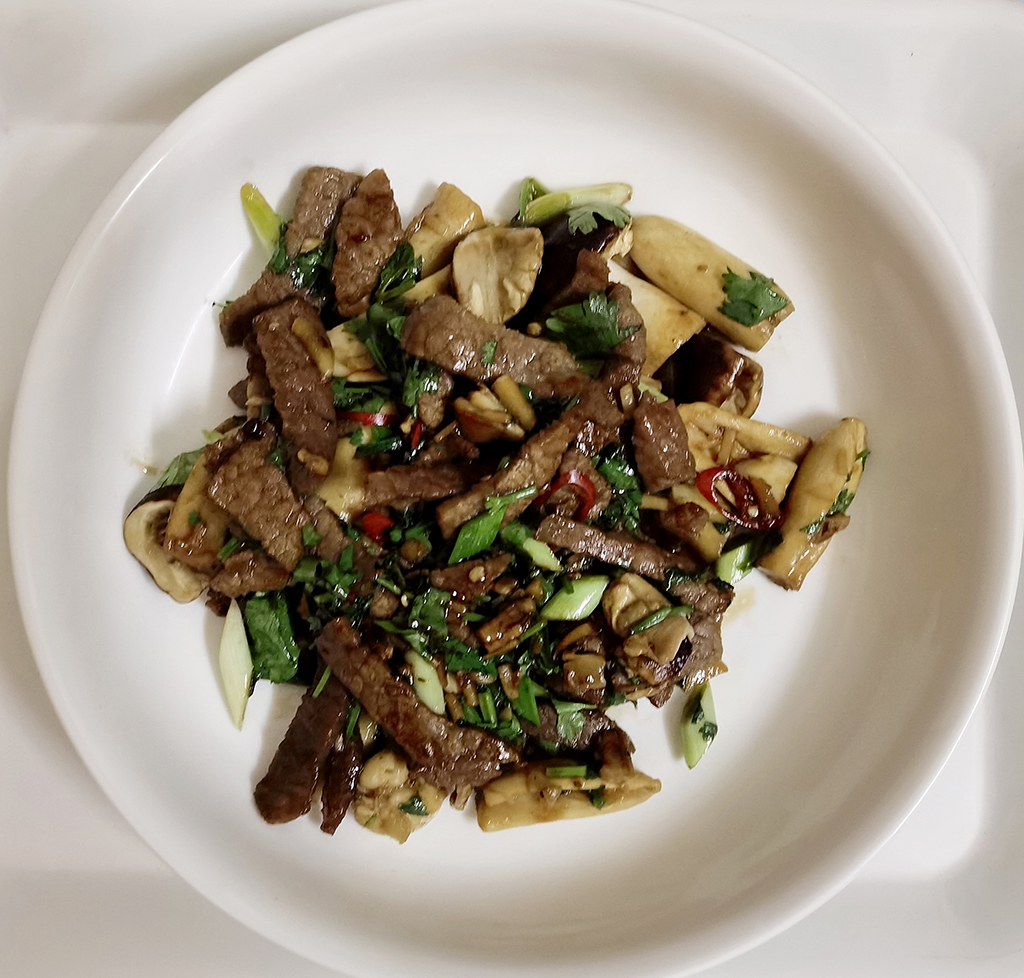
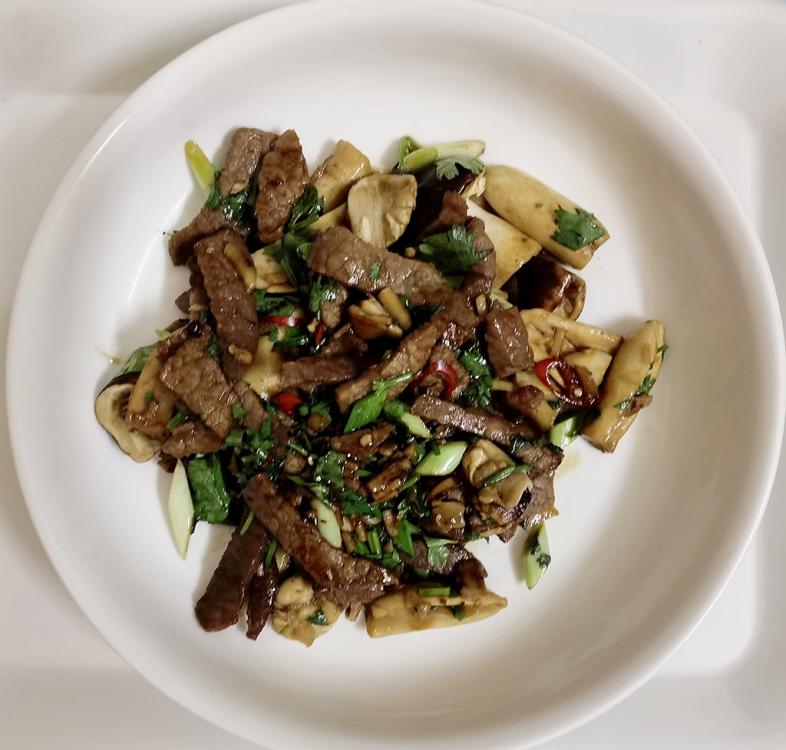
Beef with young wild matsutake, garlic, young ginger, chilli, Shaoxing wine, soy sauce, coriander leaf and scallions.
-
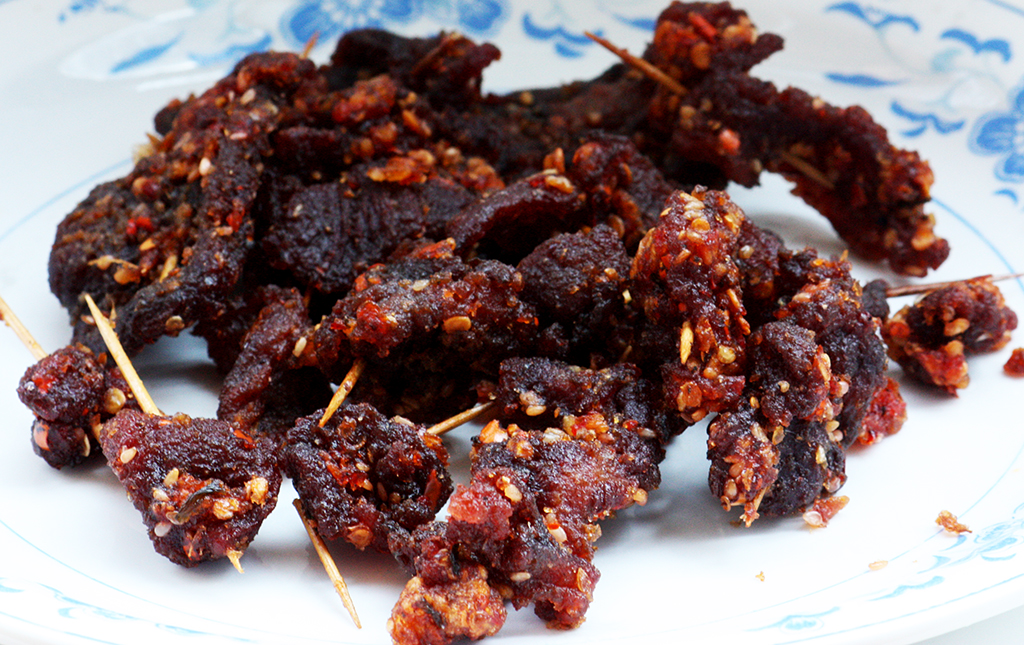
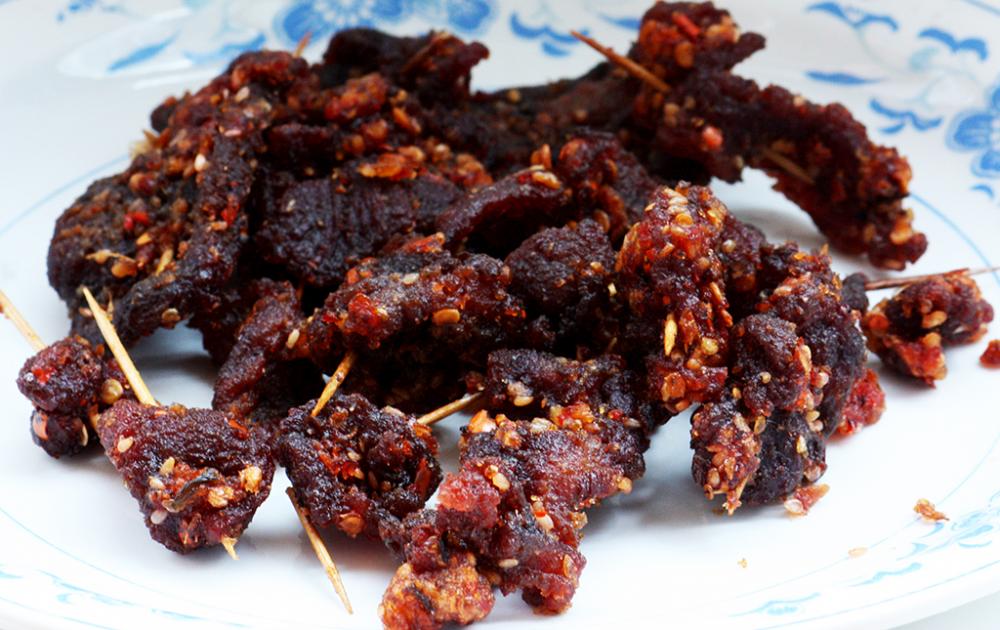
牙签牛肉 (yá qiān niú ròu), literally 'toothpick beef'. Thinly sliced slivers of beef, approx 5cm x 3cm, marinated in soy sauce and garlic then sprinkled with threaded onto toothpicks, spiced as below, then deep fried. Can be served hot or cold. Spicing - Type a) Chilli flakes and cumin (illustrated) - Type b) Cumin and sesame seeds I usually make a batch of each: type a) for the sensible people and type b) for the chilli wimps. 😃
- 13 replies
-
- 12
-

-

-
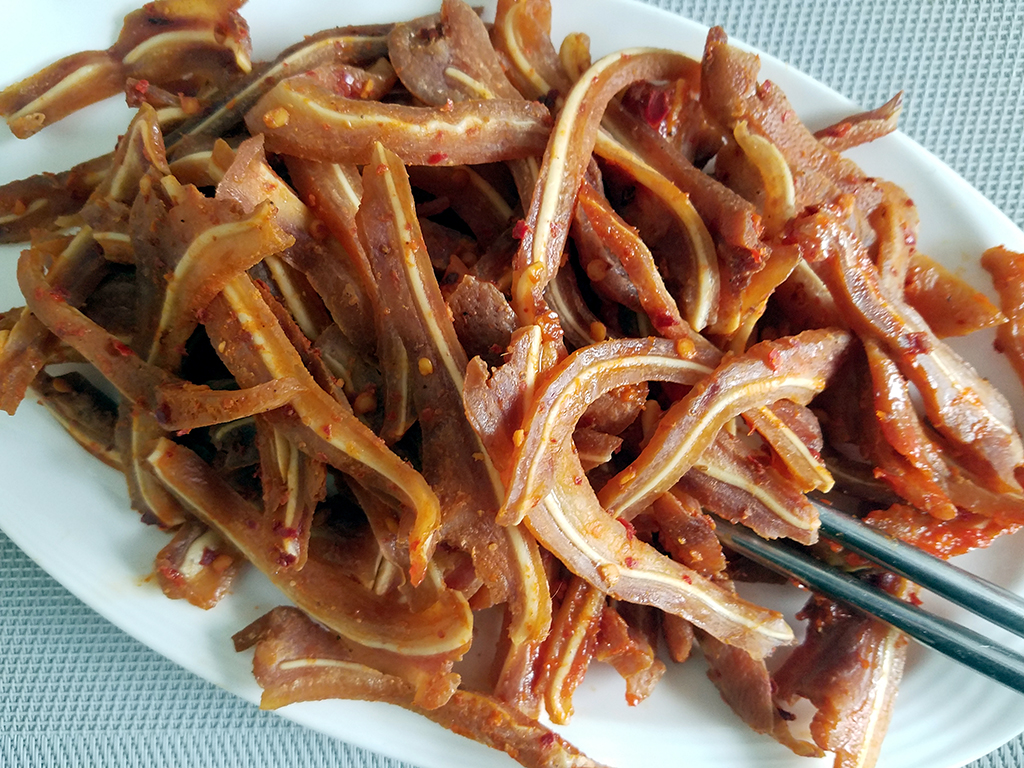
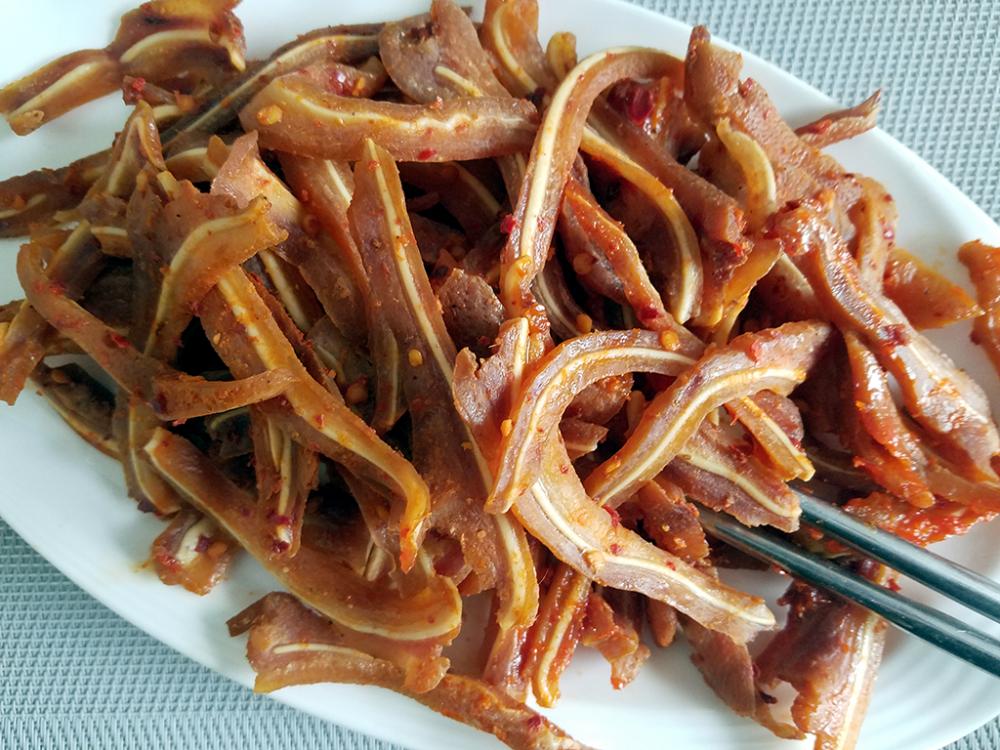
I do love snacking on my Hunan-style spicy pig eats.
-
I have made them in the past but not for a while. I can buy them more cheaply and with less effort in the local market.
-
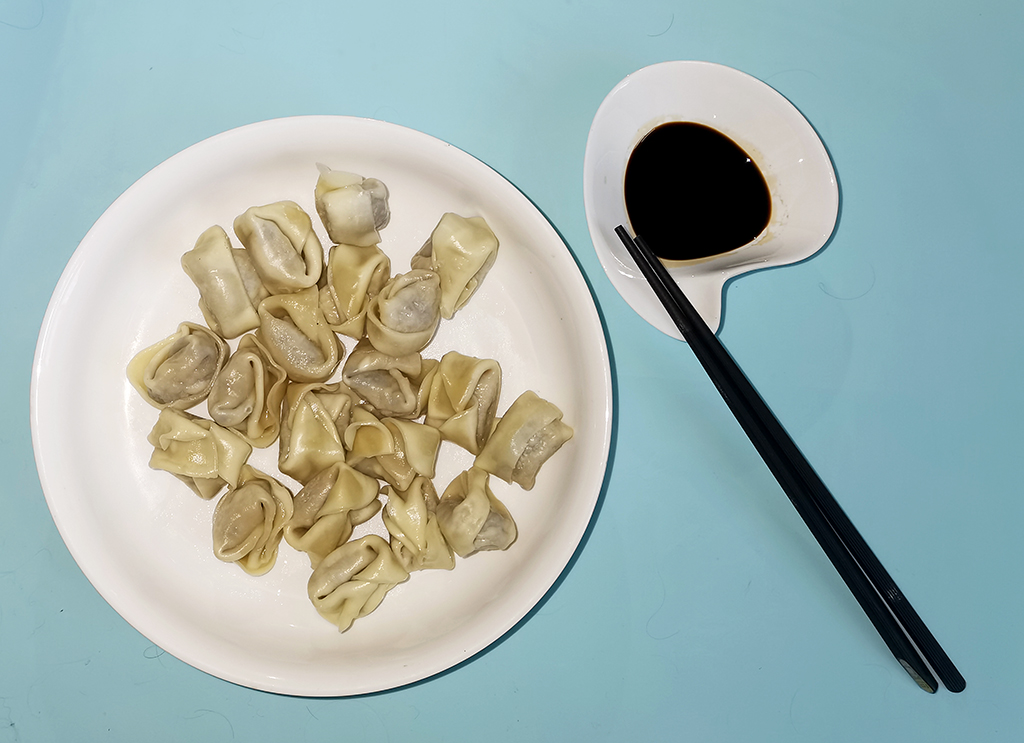
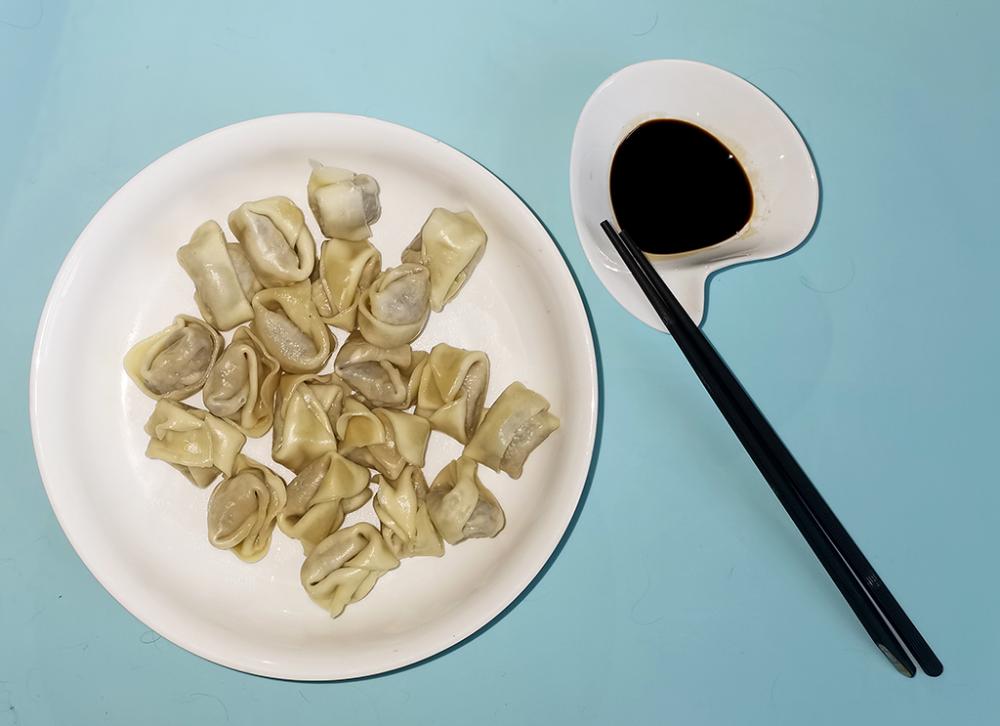
I had just such a day today. Here are the wontons with the soy and black vinegar dip.
-
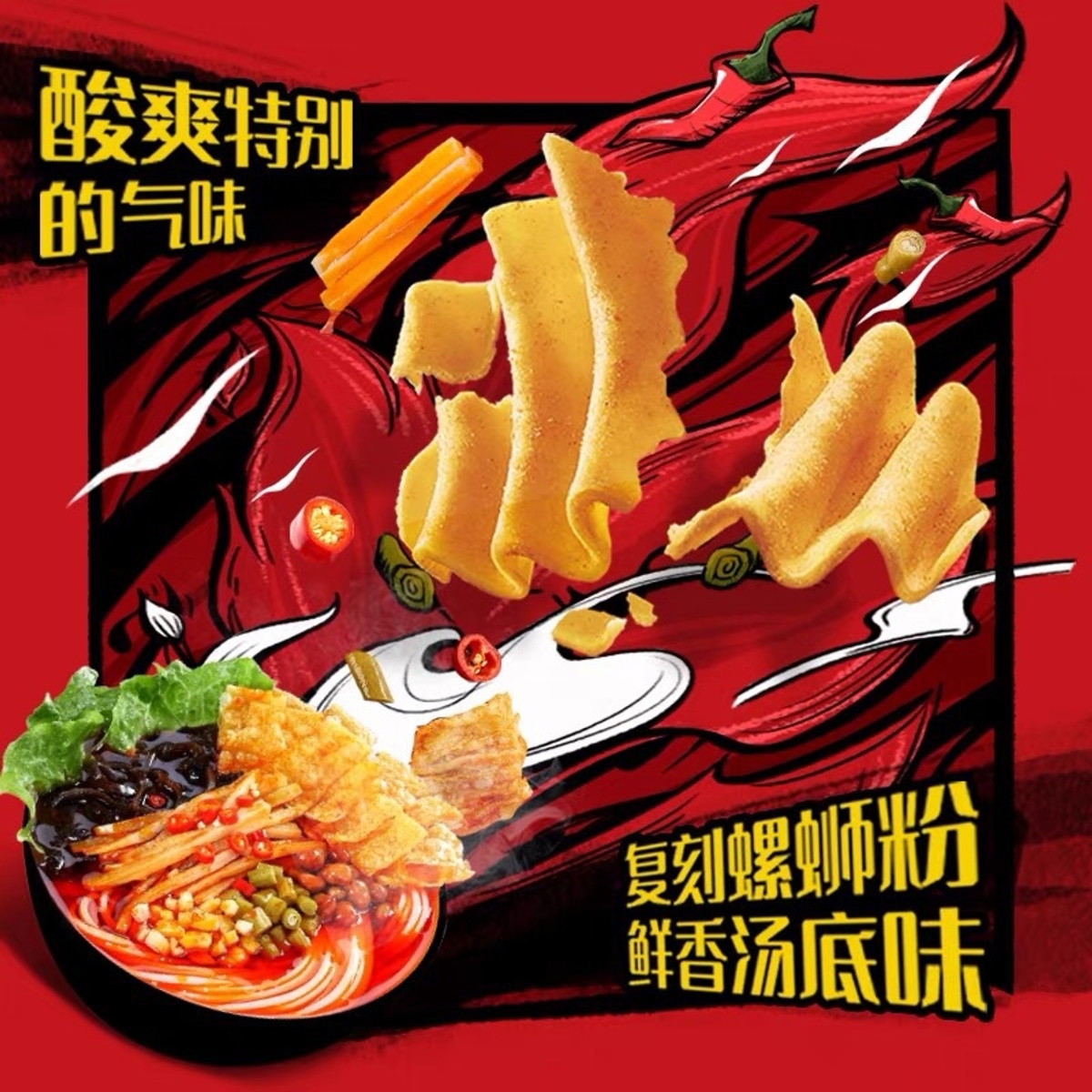
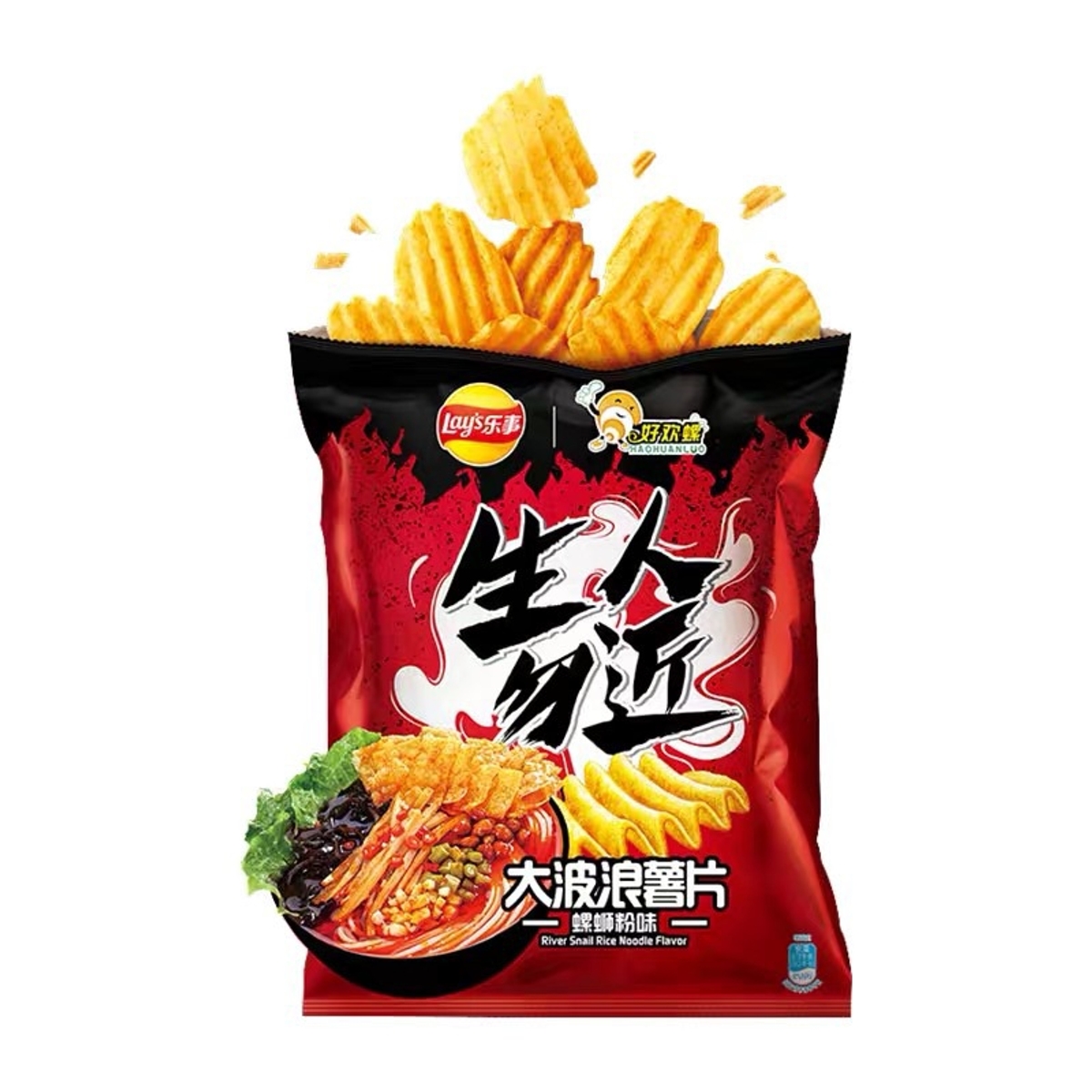
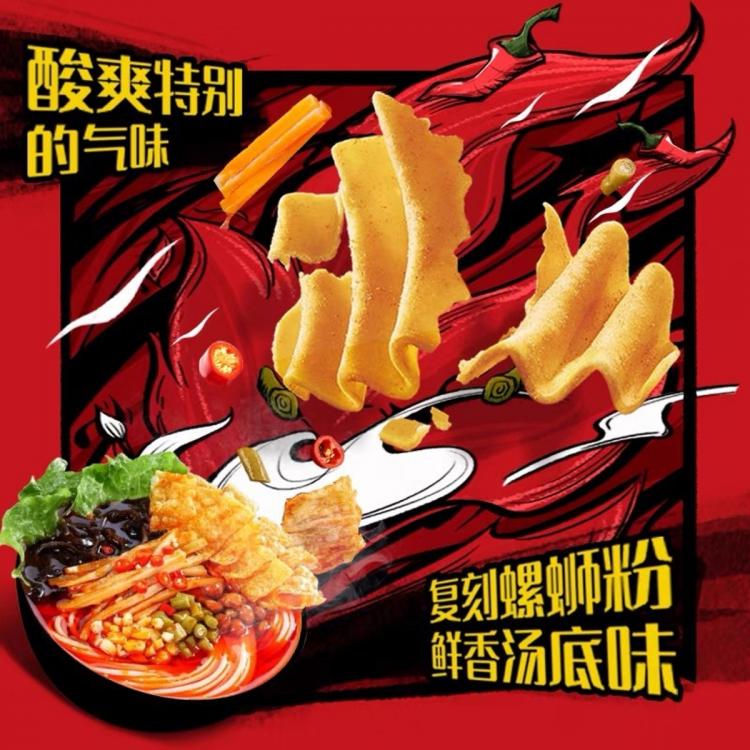
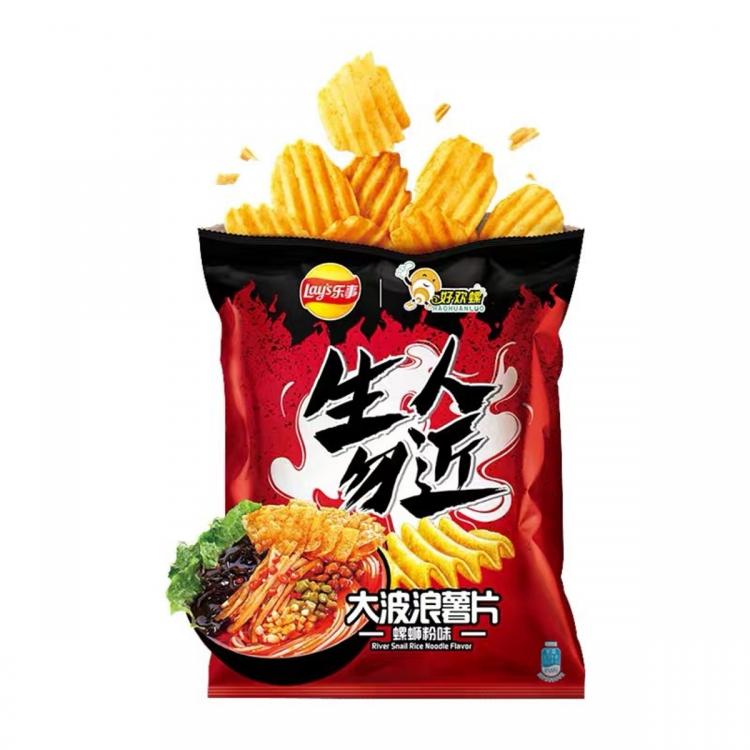
Now, I'm depressed. I'm told these monstrosites ae being launched. Luosifen chips. Luosifen is this city's iconic deliciously wonderful dish of spicy noodles, pickled bamboo and vegetables in a rich stock mainly made using the local river snails. Some idiots have decided this is what we need or want. No we don't!
-
That is generally true in English, too. Normally steak means beef, unless specified otherwise. I'm not a big steak eater, but that ribeye does look very appealing! As do your sausages.
-
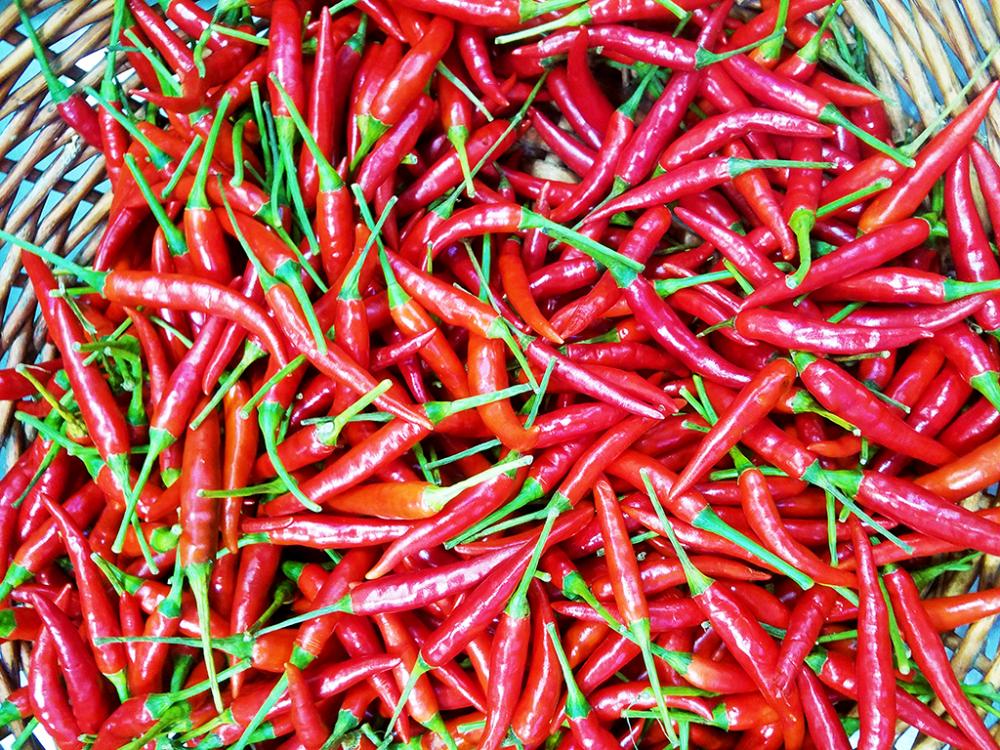
10. The Whole Earth Catalogue of Cuisines Several days ago, I was asked if I was planning to “talk more about the British Empire and its influence on food in Britain”. I replied that I would be, but then I got to thinking. Why only the Empire? British cuisine, like many cultures, has been influenced by other cuisines and countries around the world. Can you imagine what Italy ate before tomatoes arrived from the Americas in the 15th or 16th centuries? Or what Sichuan or Hunan, in China spiced their food with before chillies arrived at roughly the same time from Mexico? We have already seen that the British classic, fish and chips’ two main ingredients originated separately in probably Spain and Belgium before being combined somewhere in England. A few years ago, BBC Radio London broadcaster and writer, Robert Elms, who specialises in London life and culture on his daily show (except Sunday), did a sort of online survey with listener participation, in order to determine how many different nations’ cuisines could be found in dedicated London restaurants. They had reached over 60 countries when it was realised that, for example, ‘Chinese cuisine’ was not wide enough a category, so it was changed to just different cuisines in order to include China’s multiple cuisines. I spoke with him yesterday and he reminded me that they had also done the same to include, among others, Spain’s Basque and Andalusian cuisines etc. The survey had identified over 140 international cuisines found in London restaurants, when it became clear that the task was just getting too complicated, so it was dropped. I have no doubt that the number continued to grow thereafter, although we have to see what happens post-Covid. So, what I now plan doing, over the next week or so, is to l look at some of these imported influences. Yes, there will be an emphasis on the former Empire, but not entirely. However, it’s a national public holiday here tomorrow (Duanwu Festival) and I’m going out to play! So, there will be little from me until Tuesday at the earliest.

-
Looks like you broke it! The website seems to be down Happy to say that the link has been restored.
-
In the link you give, the reference to Simon Majumdar is to one part of the story; not the full story. @Anna N's link is to the original Simon Majumdar podcast/transcript and is much more detailed.
-
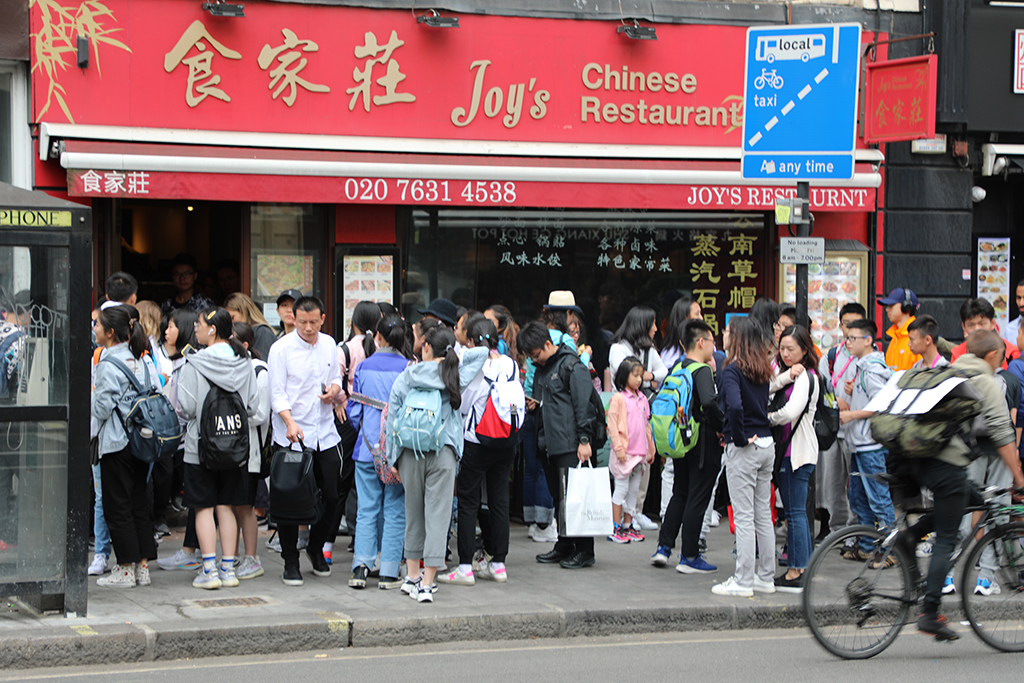
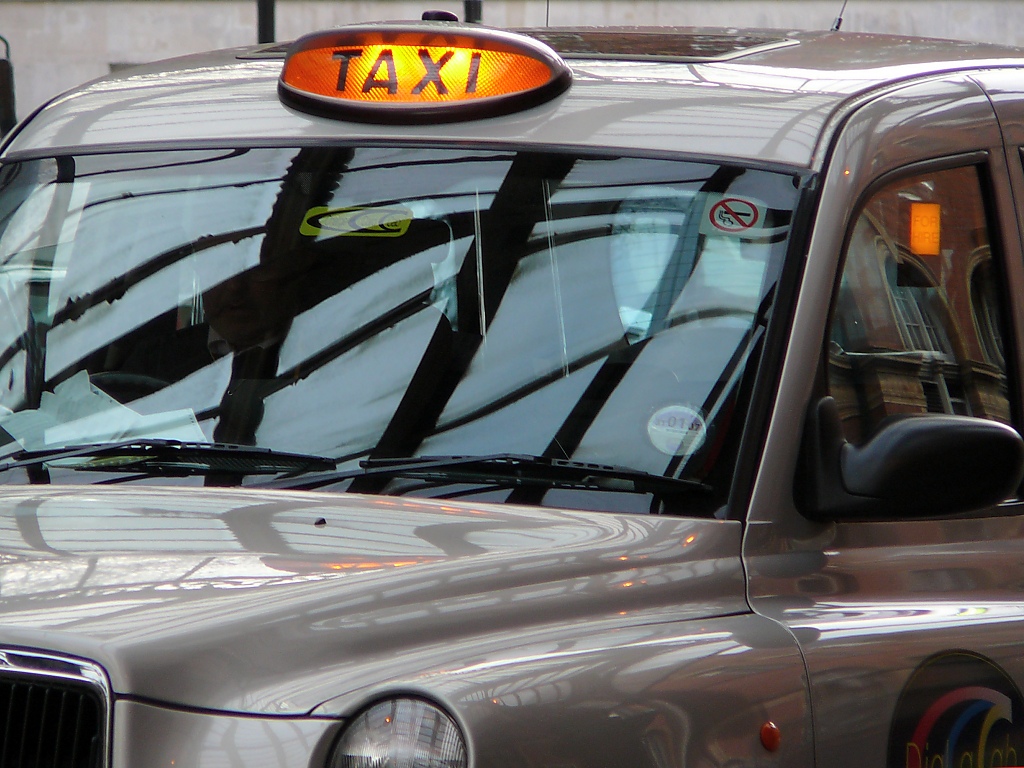
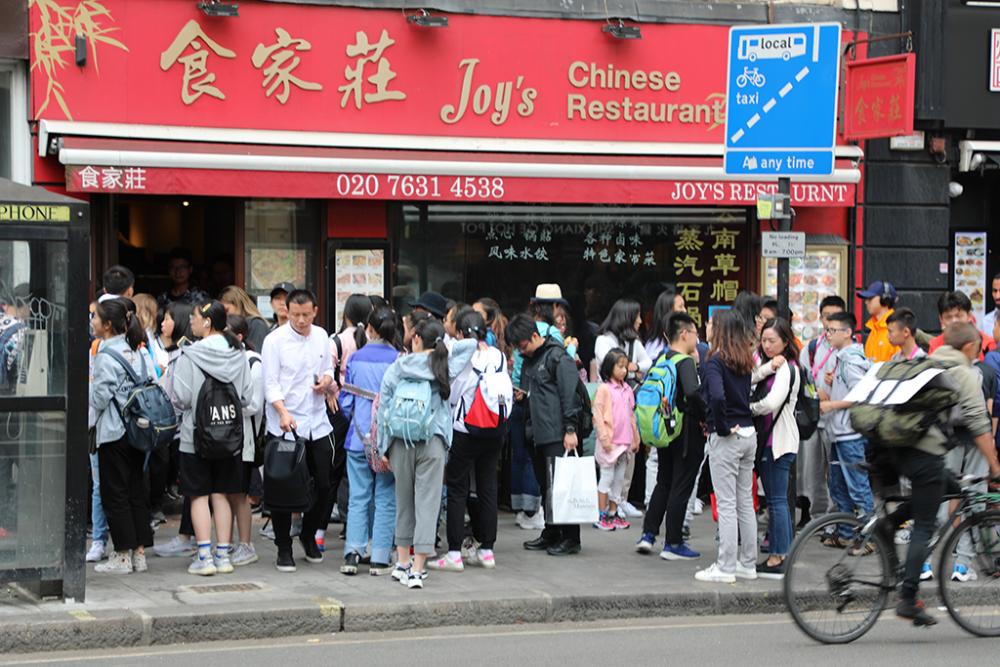
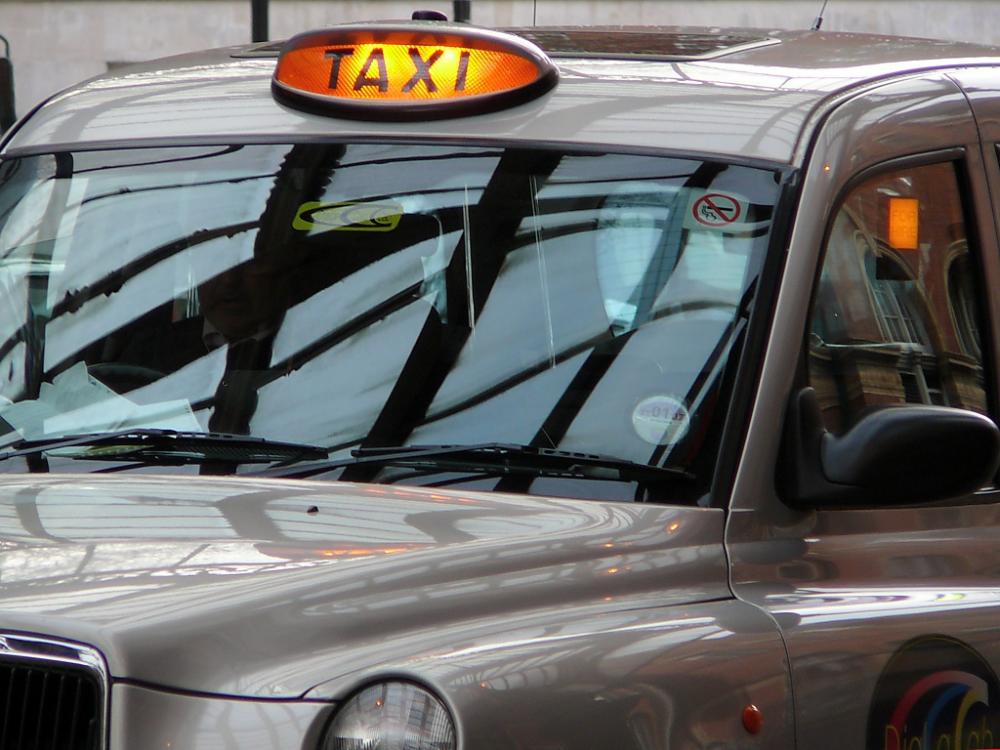
The old adage that, if you want good "ethnic" food, look for a restaurant full of people from that ethnicity, is demonstrably wrong. In London in 2019, I saw packs of Chinese tourists descend from coaches and enter some of the worst Chinese restaurants London has. (It also has some of the best.) The restaurant is usually chosen by the tour guide or company, who may well not be, in this case, Chinese. Or it may even be chosen by the coach driver, who gets a nice commission. The coach then drives off to park. Chinese tourists descending on a decidely average restaurant in London. July 2019 (My picture) You walk past and see a restaurant packed with Chinese people and think that place must be good! Duh! And, another thing, how would you know those customers are Chinese. They could be another Asian nationality altogether. I know the ones I saw were Chinese; I heard them speaking to each other in Beijing-accented Mandarin. Black "cab", London - image by Russ London; licenced under CC BY-SA 2.5 But I do have a better tip. Black taxi drivers (Not taxi drivers who are black!) I mentioned before that, before being licenced, they have to pass a rigorous exam after years of study of London, its streets, hotels, restaurants and public buildings etc. I mentioned that the North Sea Fish Restaurant was one restaurant all London cab drivers have to know. But they don’t only know it. At times, you can see lines of empty, driverless taxis parked in the surrounding streets. The drivers are having lunch or dinner. Especially, at night , you see scores of them. Another example that springs to mind is Archway Kebab in north London. This takeaway shop is rammed all day and is often cited as the best Turkish kebab shop in London. In fact, it won the top prize in the 2019 British Kebab Awards. Every night, there are lines of black taxis outside. (The shop is at 26 Junction Road, London N19 5RE, very near Archway Station on London Underground’s Northern line – or take a taxi.) And if you happen to personally dislike then don’t worry. There are many other kinds of kebabs and other dishes on offer, as there always is in these places. The Archway menu is here. No one is pretending it is fine dining, but it is very good, reasonably priced, takeaway.
-
Coincidentally, I was listening to BBC radio last night after I wrote that post and decided to let it rest overnight to mature before posting it! The presenter of the show I was listening to was discussing "new food" in London and his interviewee mentioned an Onion Bhaji Scotch egg. He had brought one with him for the presenter to try. Not that they are new. They've been around for years! The presenter said something to the effect of "I wonder if Scotland knows about this", obviously referencing the almost certainly mythical connection between the eggs and Scotland, and missing the much more likely Indian origin theory! He did eat the Indian Scotch Egg and declared himself more than happy with it. He obviously couldn't hear me yelling imprecations at the computer (I was listening online). I forget to mention this in my post, as planned.
-
Looks like you broke it! The website seems to be down

-
Well, they are usually made by Greek or Turkish Cypriots; whether they are as made in Cyprus is something else. Some are, but that's normal. Chinese food in Britain is usually nothing like Chinese food in China. As with most cuisines. British or European food in China is seldom anything like British or European food in Europe. Pizzas in China are hilariously off the mark. It works both ways.



.jpg.10406f27329358ad17e21c3aa801391c.jpg)