

teonzo
-
Posts
1,290 -
Joined
-
Last visited
Content Type
Profiles
Forums
Store
Help Articles
Everything posted by teonzo
-
Please consider there aren't only US members in this forum. I'm from Italy, never ate a single PBJ sandwich in my life and don't know anyone here who did. So what you find boring can otherwise be interesting to people from other cultures. Teo
-
I would suggest to prepare figs puree then freeze it, so you have it available all year. Wash the figs, cut them in half to make sure they are good (nothing rotten, no bugs...). Add a bit of lemon juice (around 20 g lemon juice for 1000 g figs), then blitz them with a hand held blender until you get a puree. Then pass the puree through a sieve to eliminate the seeds. This is a bit of a PITA to do, but a seedless puree is much much better. You can use a food mill with small holes to speed up a bit (I have the food mill tool for my stand mixer, so the machine does all the work). Once you prepared the seedless puree you can freeze it in whatever container you prefer. This way you have fresh figs puree whenever you need it. You can use figs puree to make fig jam, just add the needed amount of sugar and cook as usual. You can use it as a base for sauces, for example mix it with reduced duck stock, then serve the sauce with duck breast. You can use it as a base for sorbets / ice creams. Figs sorbet recipe is really easy: 300 g figs puree, 200 g simple syrup (100 g water + 100 g sugar). You can use it as a base for mousses (figs puree + Italian meringue + gelatin + whipped cream), in which case you need to cook the figs puree (above 90° C) before use. Figs contain ficain, an enzyme that dissolves gelatin, so if you don't cook the puree you end up with a liquid sauce and not a mousse. Figs + saffron is one of the best pairings ever. Anice, licorice, cinnamon are great too. Other pairings: walnuts, almonds, pecans, caramel, pineapple, peaches, ginger, fennel seeds, Sichuan pepper, long pepper, allspice, jalapeno, mustard seeds, mint, melissa, bay leaf, rosemary, most black teas... Teo
-
I haven't tasted it, definetely true. But it's made from pure black sesame without any other additions. If you say I'm not able to imagine the taste then you are the one going too far. I know the taste of highly roasted black sesame. I know the results of grinding black sesame. There will be differences in taste from my experience, that's for sure, due to the difference in quality between the raw products (I'm pretty sure we don't get top quality sesame here), due to the minor oil content, due to the finer grind. But these differences can't be that huge to make it a totally different product from what I can imagine. Besides that, a good pastry chef (with enough imagination and skills) can use pretty much all kind of ingredients in desserts. Recent history in restaurant desserts prove it. This black sesame paste can't be an exception. Teo
-
It's the same technique as for foie gras: soaking in milk help to get some blood and impurities out of the liver. This way the liver tastes less sharp and milder. I don't see any reason to soak chicken livers in milk, better going for the full taste. My preference goes to corned ox tongue. It's great for sandwiches, slice it very thin and add a green vegetable of your choice and some horseradish. If you have a parmigiano crust then shave the outside layer (the one with the burnt letters), roast it on an open flame until it's tender, then eat it with corned beef tongue, perfect match. Teo
-
I used black sesame in many desserts in the past, being robust and savoury is not a problem if you balance your recipes. That paste would be ideal, since it's really smooth and most oil have been extracted. I tried black tahini, but it always tasted stale, most probably since there's low turnover for it. Having a black sesame paste which is smooth and almost without oil would be a great help for making mousses, sorbets, caramels, croquants and so on. Plus it has a great color. It will remain a dream and I'll continue to use a stand blender with not ideal results (not perfectly smooth, still has all the oil). Teo
-
I would love to be able to find fresh black sesame paste here in Italy. It would be perfect for a lot of desserts. Teo
-
@Jim D.: thanks for the nice words! @RWood: I would definetely avoid white chocolate with olive oil. Here are some recipes I have in my books (I multiplied/divided the quantities and rephrased the instructions to avoid legal troubles). ------------------------------ ROSEMARY AND OLIVE OIL GANACHE (slabbed and cut with guitar, from "Couture Chocolate" by William Curley) 800 g cream (35%) 8 g rosemary sprigs 120 g invert sugar 4 g salt 900 g dark chocolate (66%) 30 g butter 135 g olive oil Boil cream, add rosemary, cover and infuse for 2 hours. Strain the cream, add invert sugar and salt, boil again. Make ganache with cream and dark chocolate. Add butter and olive oil. ------------------------------ CARDAMOM - OLIVE OIL - HONEY TRUFFLES (truffle ganache to be piped into hollow shells, from "Fine Chocolates Great Experience 3" by Jean-Pierre Wybauw) 200 g cream 200 g honey 100 g glucose 160 g maltodextrin 2 g salt 8 g ground cardamom 160 g glycerol 680 g milk chocolate 60 g olive oil Mix cream, honey, glucose, maltodextrin, salt, ground cardamom and glycerol. Bring to boil. Make ganache with previously boiled ingredients and milk chocolate. Add olive oil. ------------------------------ TUSCAN EXTRAVIRGIN OLIVE OIL GANACHE (slabbed and cut with guitar, from "Come Musica" by Luca Mannori, winner of the 1997 Coupe du Monde) 1600 g dark chocolate (64%) 800 g hazelnut paste 160 g Tuscan extravirgin olive oil 2 g salt Melt dark chocolate. Add hazelnut paste, olive oil and salt. Temper ganache. ------------------------------ Teo
-
I made various tries for olive oil pralines. This is the last one (can't find the others on this PC sorry): -------- 350 g dark chocolate 70% 250 g extra-virgin olive oil 30 g cider vinegar 1 g salt Temper dark chocolate, add olive oil, vinegar and salt (these 3 ingredients at around 30° C), mix -------- It came out really firm even with that huge amount of olive oil. So don't expect something super soft if you substitute all the dairy with olive oil. Taste was pretty strong, I used a quite strong olive oil from Tuscany, without the cider vinegar this praline would have been too unctuous and overwelming. There are other ways to make olive oil ganaches. Pastrygirl already wrote one. Another one is substituting a part of nut paste (hazelnut or almond) in a "cremino" (don't know the English term for "cremino", sorry, I mean a filling made with 1 part milk or white chocolate and 1 part nut paste). Quick example: 100 g milk chocolate, 75 g almond paste, 25 g olive oil. You can still taste the nut paste, so this won't be a pure olive oil ganache. Once you decided which style you prefer for the ganache, then you have to re-balance the recipe for each olive oil you will use. Delicate olive oils will require a higher %, stronger olive oils a lower %. You may need to use different chocolates for each olive oil, especially if you use dark chocolate. Same recipe (with the same olive oil) can be mediocre with a chocolate with mainly fruity tones and really good with a chocolate with mainly toasted tones (or viceversa). If you want to highlight each different oil, then I think the best choice is the one wrote by Pastrygirl: substituting cream with olive oil + water. For example: 100 g dark chocolate, 20 g olive oil, 40 g water. Temper dark chocolate, add olive oil, then water. Olive oil and water added at around 30° C. Water must be boiled just before making the ganache for shelf life reasons. A pinch of salt is a fine idea. You can increase olive oil to 30-35 g without big differences about texture and firmness, so you can adjust each recipe for each oil just changing this variable. I wouldn't go over 35% olive oil (ratio in terms of dark chocolate) otherwise it will be too unctuous. If you want to be creative and add other tastes to the olive oil, then my favourite group is acidic ingredients to act as a contrast. My favourite choice is clementine juice, but you can use whatever is added in every kind of "vinaigrette" (I know vinaigrettes are meant only with vinegar, it's just to give a point of reference), like lemon juice, orange juice, balsamic vinegar, raspberry vinegar and so on. Teo
-
As far as I know a full loaded dishwasher consumes much less water than washing the same stuff by hand, even if you put big bowls and not only small / thin stuff. Teo
-
I would eat 3 sandwiches like this one just now. Teo
-
Some more stuff: Rodolfo Guzman - "Borago: Coming from the South" restaurant from Santiago, Chile Tim Raue - "My Way: From the Gutters to the Stars" restaurant from Berlin, Germany Jason Licker - "Lickerland: Asian-Accented Desserts" modern style plated desserts, seems to be a great book Enrico Cerea + Roberto Cerea - "Da Vittorio: Recipes from the Legendary Italian Restaurant" restaurant from Bergamo, Italy, style is classical Wylie Dufresne - "wd~50: The Cookbook" restaurant from New York, USA, I'm happy it's going to be released even if the restaurant closed, I'm really curious to get this Daniel Patterson + Mandy Aftel - "The Art of Flavor: Practices and Principles for Creating Delicious Food" if I'm right this is a reprint, originally it was released more than 10 years ago Homaro Cantu - "Moto: The Cookbook" restaurant from Chicago, USA, I'm a bit skeptical about this one since the chef committed suicide 2 years ago, so I doubt he worked on (supervised?) and finished this book Daniel Humm + Will Guidara - "Eleven Madison Park: The Next Chapter" restaurant from New York, USA, good timing to capitalize on the nr 1 spot on the San Pellegrino list Stuart Brioza + Nicole Krasinski - "State Bird Provisions: A Cookbook" restaurant from San Francisco, USA Paul Kahan - "Cheers to the Publican, Repast and Present: Recipes and Ramblings from an American Beer Hall" restaurant from Chicago, USA Teo
-
I would call this Fun, not a problem... Teo
-
Yup, I remembered that thread, that's one of the reasons why I was asking. I was surprised to read "world's largest sugarcane producing area", since people in Europe and America (whole continent) consume much much more refined sugar than Chinese people. I would have guessed China was importing sugar after the globalization, not exporting it. Another thing to learn. Teo
-
Damn, I paid top money for priority shipping and it's still on the way? Surprises like this are one of the reasons why it's worth living, I'm happy you have such friends. This is another surprise, since China is not that famous for pastry or rum. Sugar production for export? Teo
-
 Besides the language issues, why are you cooking this mousse? I really don't see the point of this passage. Chicken livers are already cooked and sieved, can't get any better than that. Raspberry juice is much better raw than cooked. You get an airy mousse before cooking, with an appealing color. With the oven passage you are going to overcook the chicken livers, to cook the raspberry juice and lose its freshness, to lose part of the fluffy texture, to ruin that great color. I really don't see the point honestly. They freeze well the same. Teo
 -
Your Daily Sweets: What Are You Making and Baking? (2016 – 2017)
teonzo replied to a topic in Pastry & Baking
COKETRAILS Coca-Cola fluid gel covered with coconut powder. This dessert must be consumed with a straw, while you open your arms like an airplane. Sorry guys, but I have a lot of fun making this kind of dumb things. Teo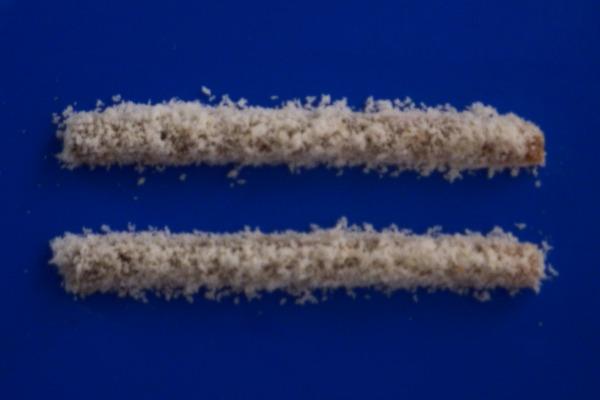
-
Ouch! I paid 8 euro for a 7 ml bottle, pretty big difference. Sosa sells it for example, along with candied violets and dried violets. But each way you go they are really expensive. They sell a "violet flavor", but it does not seem to come from real violets. Same for all the other suppliers I tried here, lower price I found is 90 euro for a 5 ml bottle of violet essential oil. Sooner or later I'll give up and buy one, if it's as powerful as ylang ylang it could be cost effective even at that price. Teo
-
The first you said. You could add the essential oil at the beginning or in the middle of the recipe. In this way you could have the chance to taste it and correct the amount of the essential oil, but after that you should have to boil it to reach the desired temperature. Boiling causes flavor loss. If you add the essential oil at the end, then you limit the flavor loss. But you don't have time to add essential oil, taste (your tongue is not happy to taste something at 105-107°C), adjust and so on. You have just time to add it and pour the pâte de fruit. So you need to know beforehand how much essential oil you need to add. There are various ways to know this. One could be making various tries until you get what you are looking for, expensive and time consuming. Preparing a syrup like I suggested is another way, much quicker and cheaper. This way you know how much drops you need for 200 g, so calculating how many you need for your final product is an easy calculation. I wrote 100+100 g just for easiness: with less amount you have difficulties balancing the drops (1 drop can be enough for 200 g, if it's ylang ylang it's even too much, dividing 1 drop is pretty difficult), with more amount you waste money. I suggested a 1:1 syrup because usually it's already made in most kitchens, plus it has a similar concentration as the final pâte de fruit. This way you get an estimate on how many drops you need, but for sure you will need some fine tuning. Mostly because the pâte de fruit will not be alone, it will be part of a praline with 2 layers. There will be water migration between the 2 layers, this will cause a change in the flavor balance during the first few days (if you taste the same batch afer 1 day, after 3 days and after 5 days, then it will be different each time). Remember to use always a similar drop dispenser (same size same producer), because "drop" is a vague measure, the size of a drop just depends on the tool you are using. Citric acid is needed to shift the final pH in the window where pectin makes a gel. If the final pH will be lower then pectin won't gel, same as if the pH will be higher. Recipes involving fruit purees are calculated on average (considering the average pH of that fruit puree), so the required amount of citric acid will shift the pH measure towards the middle of the gelling window. If you make a water based pâte de fruit then you are always starting at pH7, so there won't be variations as when you use the fruit puree. This means that aiming at the middle of the window is overkill, you just need to fall inbetween. If you pick the higher number called for citric acid for the various fruits (aka the less acidic fruit) then you are fine. As you already know, if you ingest essential oils without dilution then the risks are huge, you can even die. So you need to use them with precaution. Those things are already written on each bottle, so I tend to give them for granted, my apologies. Essential oils are harmful when ingested pure, due to their concentration. I can't speak for experience (don't have any intention to try), but I'm pretty sure they are harmful even if not ingested, for example ylang ylang oil is so powerful that I think if you pour a single drop on your tongue then you risk serious damage to your ability to taste things. But if you use natural essential oils (distilled from the real organic stuff) and dilute them then there is no risk. If you make an infusion from dried rose buds, then you are getting the same molecules there are in the essential oil. If the molecules in the essential oil were always harmful, then it would be so for the infusion too. The risks in ingesting essential oils are due to their concentrations, not their composition. Essential oils are a better choice for flavor since cold distillation is the best way to get the pure flavor. But after that you need to dilute it before consumption. I'm pretty sure you already know there are reconstituted oils (like wisteria), oils from non organic stuff (risks of pesticides) and so on, so stay away from them. If you know of a cheap source for violet essential oil then please share, thanks! And tell us which flavor combinations you intend to try! Teo
-
For rose, best thing is using the essential oil instead of infusing dried rose buds. Essential oils are cold distilled from the flowers, you can't geta better aromatic extraction than that. Uusually all suppliers of confectionery ingredients have essential oils in their catalogue, if you have troubles finding them then try a health store. Beware that some like violet and chamomile can be pretty expensive, even some kind of rose (there are various rose varieties, usually Damascus rose is the cheaper one). Pâte de fruit is the best choice for shelf life reasons. Don't have any recipe here at hand, but it's pretty simple to create one. Pick a recipe for a pâte de fruit made with a "liquid" fruit (like orange, don't start from a recipe that calls for a thick puree), substitute water for the fruit juice, adjust the quantity of citric acid (you need to raise it to compensate for the lack of fruit acids) and pectin (if you have the Boiron table with all the fruit recipes, then pick the higher measure of citric acid and pectin). Proceed as usual with the recipe. When you reached the final temperature add the essential oil drops and food colorings (same step as the citric acid). You need to adjust neforehand for the number of oil drops, just make a 1:1 syrup (100 g water 100 g sugar) then add a drop at a time and taste. Each essential oil has a different flavor intensity: ylang ylang is STRONG (a couple drops is enough for 1 kg); lavender is medium; Damascus rose is lower. You may need to add food colorings if you want to recall the original ingredient (lavender oil is transparent like water, Damascus rose oil is yellow). You can make infusions with spices, herbs and so on, then prepare the pâte de fruit. In that case you have better to start with a syrup, aromatics diffuse way better in a syrup than in plain water. Just use a part of sugar called in the pâte de fruit recipe to make a syrup. Essential oils are better added at the end, otherwise you loose volatile aromatics during boiling. Teo
-
If you are talking about traditional candied cedro (like this one) then just don't try it. You need to start with a green fruit, then follow a peculiar method. If you start from a ripe (yellow) fruit then you will end with a huge disappointing mess. We discussed about it on this thread: Ripe cedro (peel and albedo) can be great in salads (fennel, arugula, so on). You can make a great marmalade. Just avoid candying it. Teo
-
Don't hold your breath... It's easier that French people will stop eating baguettes. They used a peculiar marketing strategy for Italy. We are the only country where it's not named Thermomix (it sounds "scary" for Italians), here it is called Bimby ("bimbo" means "child", the Y at the end gives a touch of exotic without being scary). It was marketed as a tool that helped mothers to make food for their children. It caught the attention of the emancipated female generation (the generation where the majority of females work and are not housewives) because they are/were not used to cook anything, so when they heard stuff like "with this appliance cooking a risotto will be EASY!" they fell for it, without realizing that cooking a risotto in the Thermomix is not more difficult than cooking it the traditional way, it's just a bit more expensive. For some reason people who don't know to cook think that risotto is a really difficult dish and are scared by it. If you give a look at Bimby websites in Italy then you will be puzzled, they are full of crazy methods to do everything with this appliance. Most of the times it's just a big mess (time consuming and with lesser results), but people must justify to themselves that they spent a full salary for good. Asking to their grandmothers was too difficult (and painful, since it would end with a broken rolling pin on their head). I'm not criticizing the Thermomix, it's a great machine if you know how to use it, I'd like to have one, but it's not the lifesaver for unexperienced home cooks. I would say our market is pretty unpredictable. One would think that almost each family would have an ice-cream maker at home, since they are not that expensive (much less than a Thermomix) and we are probably the population that eats more ice-cream in the world. But in reality really few people have an ice-cream maker. Slow cookers are really rare, of all the "new" (for us here) appliances I would say this is the easiest to use and more useful. Just put beans, stew, soup, whatever, it does all by itself, you just need to check after few hours without risks, what can you ask more? Oh yes, a Bimby, sorry. ISI siphons are becoming more and more popular. I have a page on my blog where I explain the basics on how to use it, I'm always impressed by how many people visits it and ask questions. In my view this is a tool only for the food maniacs, not for the average home cook. Sous vide is much much more useful than a siphon. But since all chefs use it on TV then it must be great, who cares if you spend more for the gas cartridge than for the cream you are going to whip with it. Teo
-
Well, this is always a good sign for the food! Teo
-
Seems like Electrolux is betting on the European market for Anova. Home sous vide cooking is almost unheard of here in Italy, I started to see a couple of mentions in forums/blogs in the last year, only mentions and not people talking about recipes. We are something like 10 years behind. Since Electrolux has a marketing power way bigger than Anova, I suppose they estimated they can make very good profits: Italy is a virgin market for home sous vide, they have the marketing presence, with Anova they have a winning appliance, if they can succeed in making it as popular as in the USA then money will flow in their wallets. Don't know about other EU countries, but I suppose the situation will be similar. The big problem for them is that we (as Italian population) tend to be thick headed and close minded when talking about culinary traditions. Italy and France can be difficult markets to conquer for sous vide. Teo
-
Usually this kind of sorting is made using an oblique (very few degrees) vibrating table, with holes on the floor with increasing diameter (in this case first section 7 mm, second section 9 mm, so on). Under each section there is a different chute to collect sorted items of each size. I'm pretty sure @liuzhou got it immediately and was joking on my badly written explanation, I was joking too. Teo