
KennethT
-
Posts
6,938 -
Joined
-
Last visited
Content Type
Profiles
Forums
Store
Help Articles
Everything posted by KennethT
-
@TicTac OK, I just checked out KIND's specs... I had always heard of them, but never got into the nitty-gritty. According to their website, they include UV in their spectrum - it seems that their spectrum goes down to about 380nm (they don't specify directly, but that's what I inferred from their spectrum diagram). In their FAQ, they mention using protective glasses because the lights are so bright, and color corrective glasses to make it easier to see what you're doing while in the purply-ness which, without color correction, it can be challenging to identify nutrient deficiencies, etc. The main light I have (made by Fluence) is full spectrum white - but it is made up of hundreds of LEDs of different colors to put out a specific spectrum in specific quantities. So, if you look at the spectral outlet of my light, its "white" is very different from a fluorescent "white" which is not tuned to create a specific spectrum, but instead made to put a "color temperature" which basically is the ratio of blue to red. But, they specify in their information that the lowest wavelength is just above UV - so eye protection is not required - although if the light is on full brightness (an average PPFD of 1450 umol/m2/s!!) and you were spending any time under it, you' d probably want to wear sunglasses because it's like looking directly at the sun (without the UV or infrared, and very little far-red).
-
@TicTac I'm not @dcarch but what I think he meant by that is that within your light bar, each individual LED puts out a single wavelength. Light bars put out a spectrum by using lots of different types of LEDs. COBs are similar, but the many different LEDs are packaged within a single unit.
-
@TicTac If you're concerned about UV, you need to contact the manufacturer of your light for its spectral output. I don't know where the statement "most quality LED grow lights produce UV rays" comes from. Also, I think a lot of articles in MY are written by writers who have no growing experience... much of what I've read from them is filler that is just general information that seems to be regurgitated over and over. Personally, my main grow light does not produce any light below 400nm, and the amount emitted in the region between 400 and 430nm is so low, (and my exposure time is so short - I don't spend that much time hanging out under the light) I'm not concerned about it. I would assume that since @dcarch built his light from COBs himself, he would have access to the spectral output of the COBs and would know whether or not his lights pose any risk to him.... but again, most people don't hang out for long periods of time under their lights, so health risk is minimized by small amounts of exposure... it would be different if you're working in a greenhouse or an indoor farm that utilizes UV - some indoor cannabis farms specifically use large amounts of UV (there are even pro lights you can get that only emit UV) during the last couple weeks of flower as it encourages terpene output - so glasses and sunscreen or cover up is definitely necessary then.
-
@dcarch Where did you get the heatsinks?
-
@sartoric Very nice... but where's the sweet soy sauce?
-
@dcarch Very nice! You probably don't need to verify for seedlings, but rather than looking at it from a brightness scale, the best thing to do is to get a PAR sensor to check PPFD at plant level. Apogee makes great, affordable sensors that you can plug into a USB port on your computer and read the value using their free software.
-
While I have no experience with professional pastry or food of any kind, I have a lot of experience running a labor intensive factory. If equipment is too expensive, I'd start by trying to get the most out of your team. First, break down your process into small chunks. Labels on bags can be one operation, adding silica another, product, sealing etc. Then divide your staff so one person does one job at a time and batch your work so each step is very repetitive. That's part of the key - the repetitive motions will get refined over time and will go much faster. The other issue is employee motivation. I find nothing motivates people doing boring repetitive work like money. We use an incentive system that is quite effective in getting the most out of our employees and keeps wasted time and motions to a minimum. Basically you create a realistic rate for each job. The rate should seem impossible to a new employee who is all thumbs, but an experienced, motivated worker can do 20% more than the rate. In addition to the base rate of pay, you pay extra for production that is faster than the rate, but the quality of the work can't suffer for it. But, if the worker does 5 hours worth of work (according to the rate) in say 4 hours, they would be paid for 4 hours + 1 hour production bonus.
-
zip lock bags work well... anything to keep the humidity in, really...
-
It doesn't hurt to have one of those cheap $7 temp/humidity readers you find on Amazon - if you have kids, it's a "fun" project to check humidity and if it's too dry, mist away! Also, in the tent, a cheap way to raise humidity is to hang wet towels from the ceiling or even better, blow a fan on them. Most LED grow lights produce no UV, unless they say that they are supposed to make UV. Not only that, but an 80W LED isn't that bright - I have a 200W one in the middle of my living room hanging from the ceiling shining down on my lime tree... only one person (who everyone thinks is hypersensitive) ever remarked about it - she said "arrgghh... it's burning my retinas!", but really, it's not THAT bright... now the monster I have in my grow tent is another story! It's a 550W beast that puts out almost 1400 umol/m2/s!!!! (translation, it's really really bright). Sometimes people will use special grow glasses when using the magenta colored LED lights - the purpose of which is to try to normalize the color which makes inspection (looking for pests, nutrient deficiency, etc) easier... but not needed for normal pruning, trimming harvest, etc unless you're bothered by it.
-
Plastic wrap is ok - anything that keeps in the moisture... otherwise, when it's so dry out, the surface dries out pretty quickly - so it just makes it so you don't have to spray 5x a day. A lot of pro growers germinate their seeds in a humidor - many times, a rolling cart with shelves that can be sealed and humidity/temp controlled. I've typically read that you want 90-100% humidity prior to germination, then once sprouted, I think 70% RH is good so they don't get too much shock - the problem is that seedlings don't have a root system to deal with lots of transpiration which is needed with low humidity, so in order to not stress teh plant out, a higher humidity mitigates the need for lots of transpiration.
-
@TicTac Nice... Do your seedling trays have a humidity dome? If not, maybe consider a humidifier for your tent as it can be really dry right now - my tent had a RH of about 30%, which is horrible for just about everything except for ripening, ahem, certain flowers, so I have a humidifier attached to an Arduino and RH sensor to keep humidity about 70% while starting my seeds... Once everything gets going, I'll dial the humidity down to 50-60%...
-
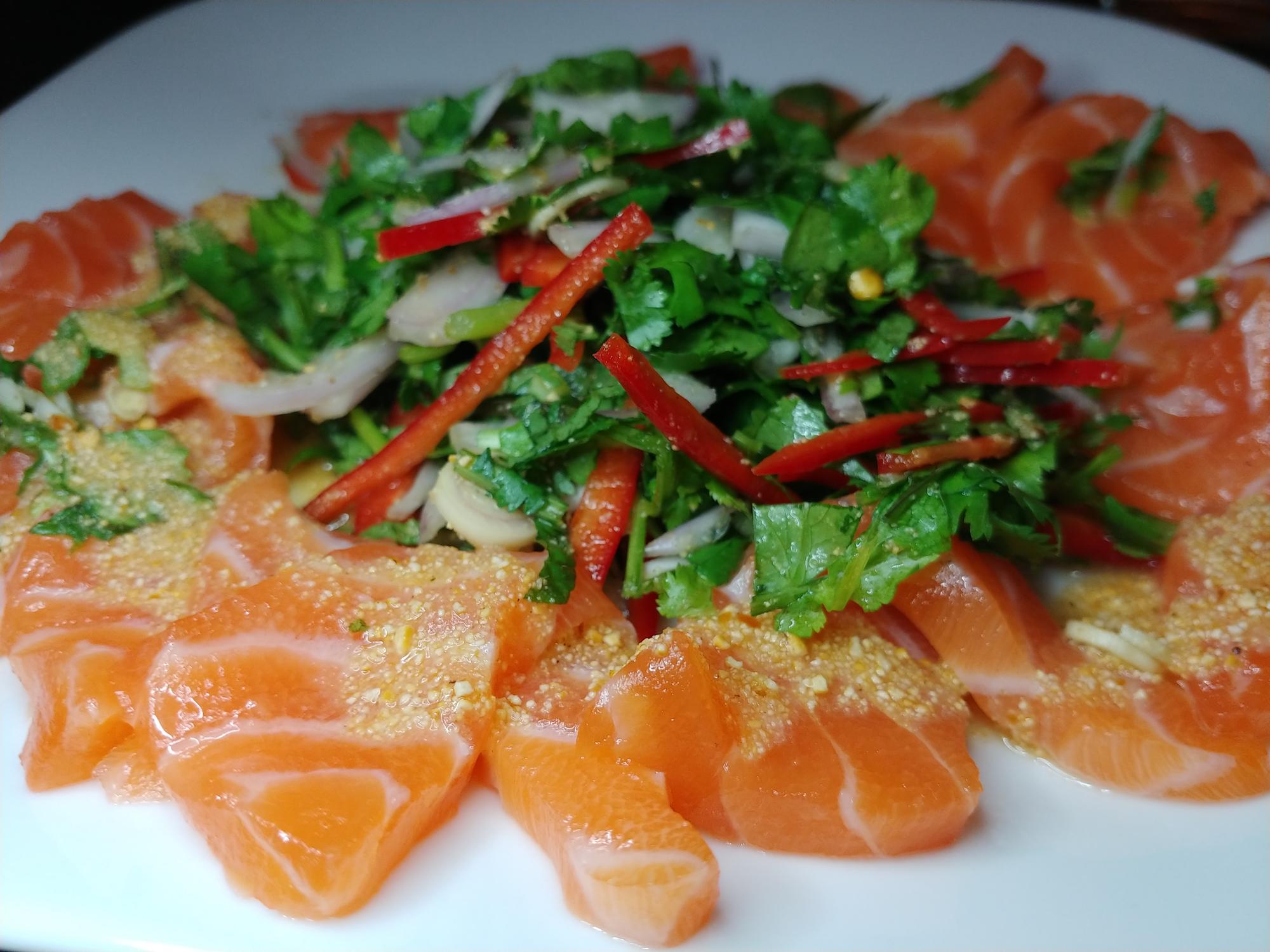
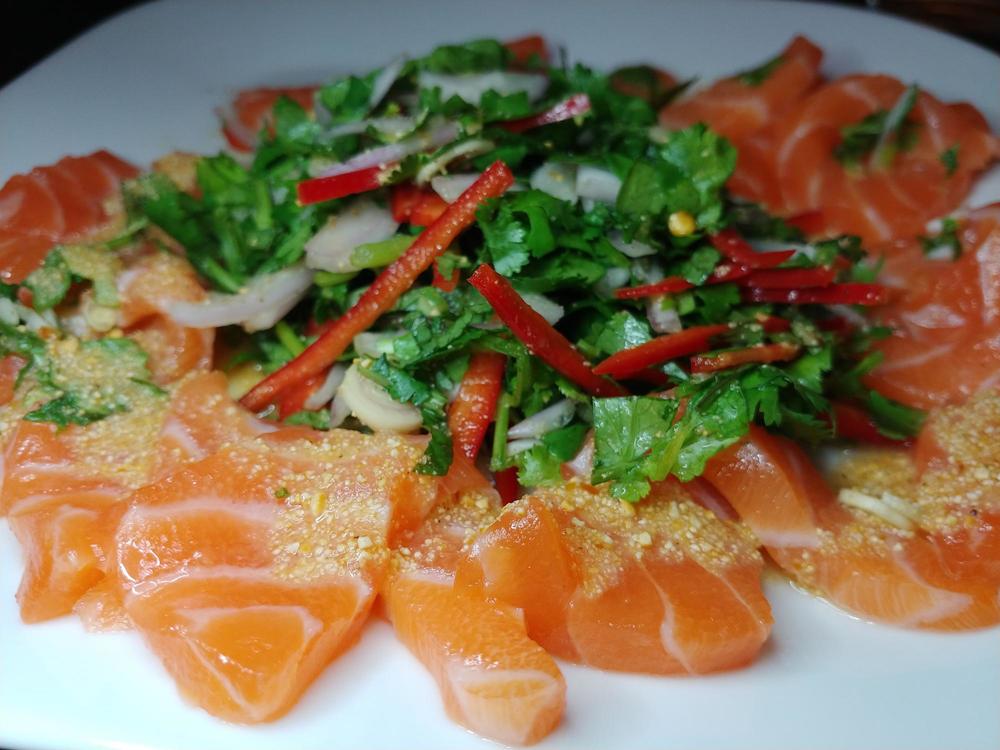
A nice light dinner tonight.... Laab salmon sashimi, served with sticky rice
-
I belong to a few FB gardening groups (mostly hydro but many grow outdoors), and many people put a heavy pole on each side of the row and string a wire between them. Then you tie a string from the base of each plant to the horizontal string and train the tomato plants up. You can secure the plants with a tomato clip, or just wrap the string around the plant at each truss. Google greenhouse tomato farming - that's how the pros usually do it.
-
Do they come a particular region? I wonder if they come from Yunnan, somewhere else or all over...
-
@TicTac and @liuzhou Wow! That is crazy cheap... around here they're about $50/pound!
-
@liuzhou Do they have fresh morels in China or are they dried (or imported)? ETA: please disregard this... I just saw your other post!
-
I would assume it would. Plus, commercial rates differ from residential.
-
We have a Eurocave - we must have gotten it at least 10 years ago... still works perfectly. Ours holds like 240 bottles - and we have the version with a solid door - we actually paid a bit extra to get it clad with hardwood - after it came in, I stained it and oiled it so it looks like an armoire in the middle of our living room. And it's super quiet - you never hear it.
-
I also loathe yogurt, but like raita... but that comes from my parents having take medicine (like an antibiotic) crushed up in a spoonful of yogurt... and just looking at cottage cheese makes me a little sick to my stomach!
-
I'll echo those thoughts - I appreciate the time spent in posting this!!! Thank you!
-
They're very convenient. Many years ago, you'd have to spend $1000 to get an industrial controller... now you can have most of the functionality for $20, and it's much easier to program than the industrial stuff. Using sensors and controllers can save a lot of money and water over time - many people needlessly water based on a clock schedule. I was reading an article about new high tech farming techniques (for outdoor farms, not indoor). Many farms now used enhanced GPS and sensors to be able to robotically drive tractors and deliver fertilizer only where needed. A lot of fertilizer is wasted by mistakenly spraying the same area repeatedly as the tractor makes its rounds, and some areas don't get any at all. The new system winds up using a lot less fertilizer and has a much more even application for healthier crops.
-
This is amazing.. now you have me wanting to grow a curry tree!!! How did you start yours? I've heard that you can root a branch pretty easily, but have never tried... How old is this one by now?
-
That's why I said "when done right"... many hydro growers optimize for yield, not for flavor. The biggest problem with greenhouse grown hydro crops is the genetics they use. The best heirloom tomatoes would have a relatively low yield in a greenhouse, and would be at high risk for mold, rot and pests. Greenhouse growers have much higher costs than field growers, so they need to have high yields to make it pay. I grew a Goose Creek heirloom tomato plant in my living room - it gave the best tomatoes that I (or anyone else who tried them) had ever tasted... but I lost usually half my crop to blossom end rot, which is not atypical for heirlooms grown indoors. Most greenhouses grow hybrids that compromise flavor for disease, salt and pest resistance.
-
Is there a purpose to growing carniverous plants, more than just the fun or novelty of it? I know very little about them, other than the fact that they are carniverous, as the name implies. Do they get all of their nutrients from their digestion, or do they need some from roots as well?
-
My parents tried to do that to me... I was prepared to sit all night, they were not.... hehehe