
KennethT
-
Posts
6,941 -
Joined
-
Last visited
Content Type
Profiles
Forums
Store
Help Articles
Everything posted by KennethT
-
Where did your andouille come from? To me, the right andouille makes all the difference in a good gumbo....
-
My issue with the Rotimatic is that the roti that I make (like in Malaysia/Singapore) is a laminated dough, made by taking the dough ball and stretching to a very thin sheet, then rolling up into a snake and curled into a disk. This gives the roti a great flaky texture - it's not just puffed...
-
Thank you! Can't wait for more.
-
@liuzhou Am I correct in assuming that fresh noodles are available near you? If so, how long do they last from purchase to cook time? Are they meant to be purchased the same day you'll use them, or do they last for a few days in the refrigerator or something?
-
@David Ross I'm curious as to your source for your satay recipe. In all of my sources, including from a cooking school teacher I had in Chiang Mai and Andy Ricker's Pok Pok book, coconut milk/cream is usually used in both the marinade of the satay and in any type of peanut sauce. All of the satay I've had in Thailand had a distinct coconuttiness (sp?) to it, as well as the red curry flavor. Interestingly enough (at least to me), the Malaysian Nyonya version of satay (also found made by Muslims in Singapore) use no coconut at all, but make a rempah that would be similar to a red curry paste and a paste made from ground roasted peanuts cooked in boiling water for about a half hour.
-
I dont' know about indeterminate chilis, but bell peppers can be either depending on the cultivar. From what I can tell, most greenhouse production use the indeterminate variety- just like in greenhouse tomato production. The determinate peppers are commonly called "field" peppers.
-
Do you need to use a phylloxera resistant rootstock for the cab franc?
-
For determinate plants, 18/6 is vegetative cycle, 12/12 is flower. I can't imagine 18/6 is causing your peppers to flower... however, peppers can be indeterminate (are not light cycle sensitive) depending on the variety - just like some varieties of tomatoes, or some strawberries (and I'm sure other plants as well but I haven't looked into it). They basically start to flower after a few weeks of growth. For indeterminate tomatoes, I would pinch off flowers until the plant forms its 3rd truss of leaves... that will make sure the plant is strong enough to support fruiting. I haven't grown indeterminate peppers (or any peppers for that matter) before so I never researched the point at which you can let them fruit.
-
Yes, thanks for this! I also had the pleasure of going to Jay Fai - I wrote about it and showed pictures in my "memories of Bangkok" thread... I was really impressed with that place.
-
@BonVivantYour meals have looked great - they made me yearn to return to France soon!
-
I used to go to Ssam bar pretty frequently, and have never seen anything on the table other than a napkin holder with chopsticks, and a squeeze bottle of chili paste...
-
I'm a fan of MSG... I never used it as an ingredient until I read the Singaporean cookbook "Nyonya Specialties". This is a Singaporean book, not an American one, and it many recipes it has MSG as one of the ingredients. I don't think an American cookbook would call for MSG at all. Ever since trying it because of this book, I use it all the time with no ill effects - and my bloodwork has never looked better!
-
Wouldn't it be easier to get a space heater that you can use while you're down there for any extended period of time?
-
Are fresh pancakes available at the market or do you make them?
-
I don't know the exact chemistry, but from what I understand of it, used oil has more "soaps" which allow better contact between the watery food and the oil. Shirley Corriher had a whole thing about it - and I believe it's in McGee as well. But on that topic, it turns out that you really don't need that much old oil... I've always heard it recommended that when you dispose of old oil that's been used a few times, to save a few tablespoons of it and add it to the new oil... evidently, that's really all the soap you need...
-
My first cookbook was used as the textbook in the professional cooking class for non-professionals that I took in college... I don't know if it is still in print, but at the time, it was a great book that not only had good recipes to illustrate the theory that was taught, but had chapters on knife skills, sanitation, etc... It was "On Cooking" by Labensky and Hause... I'd highly recommend it.
-
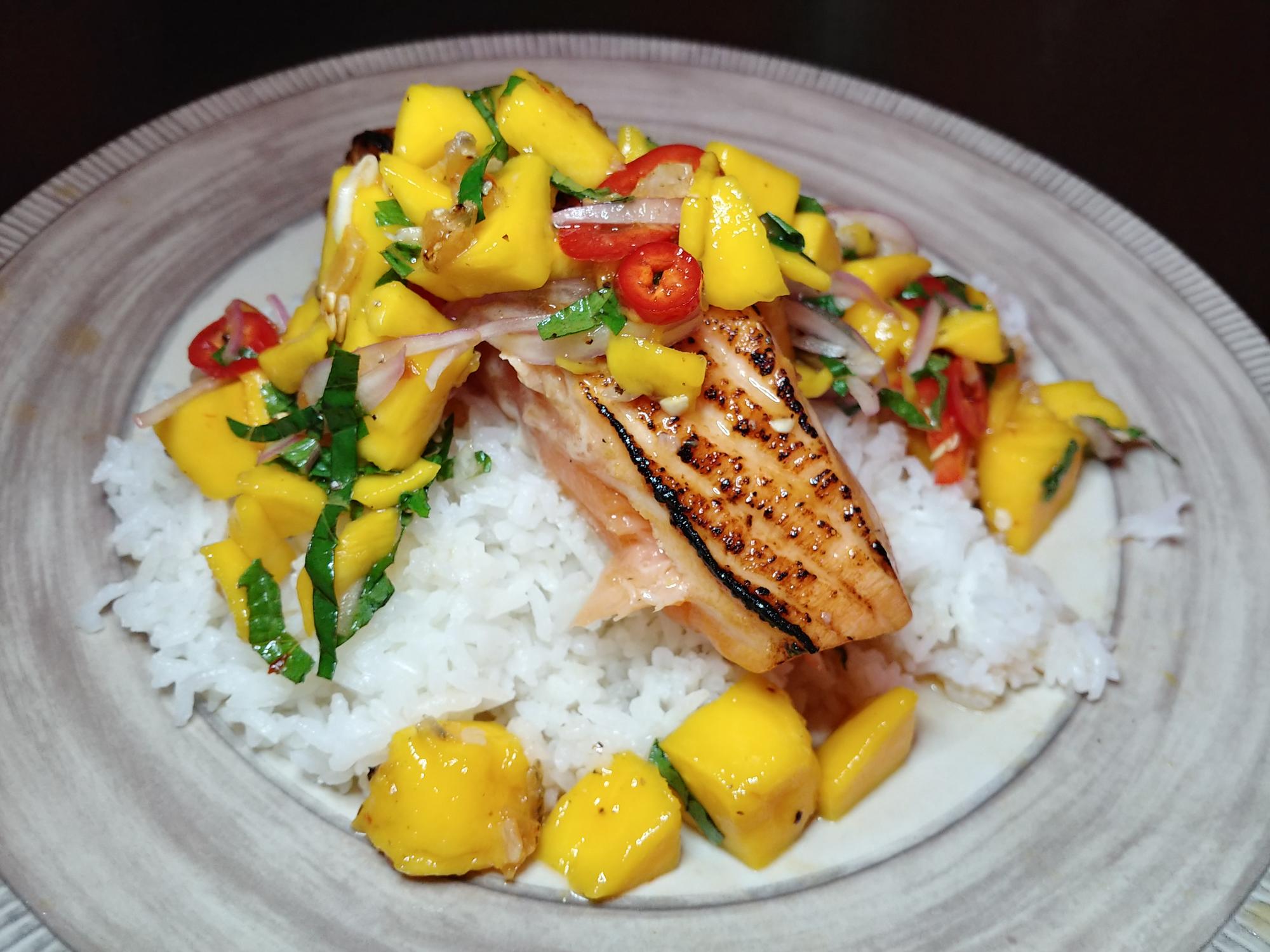
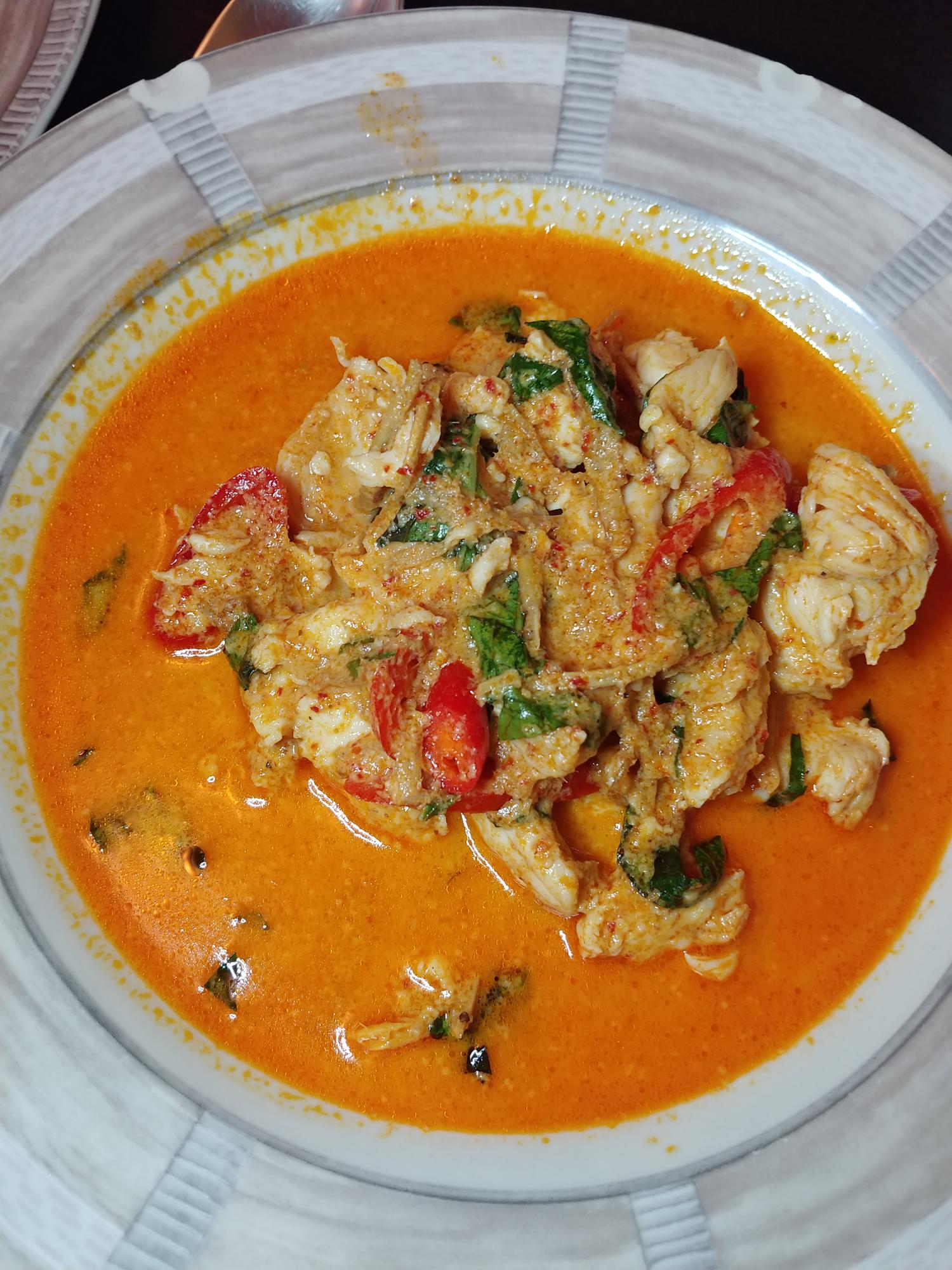
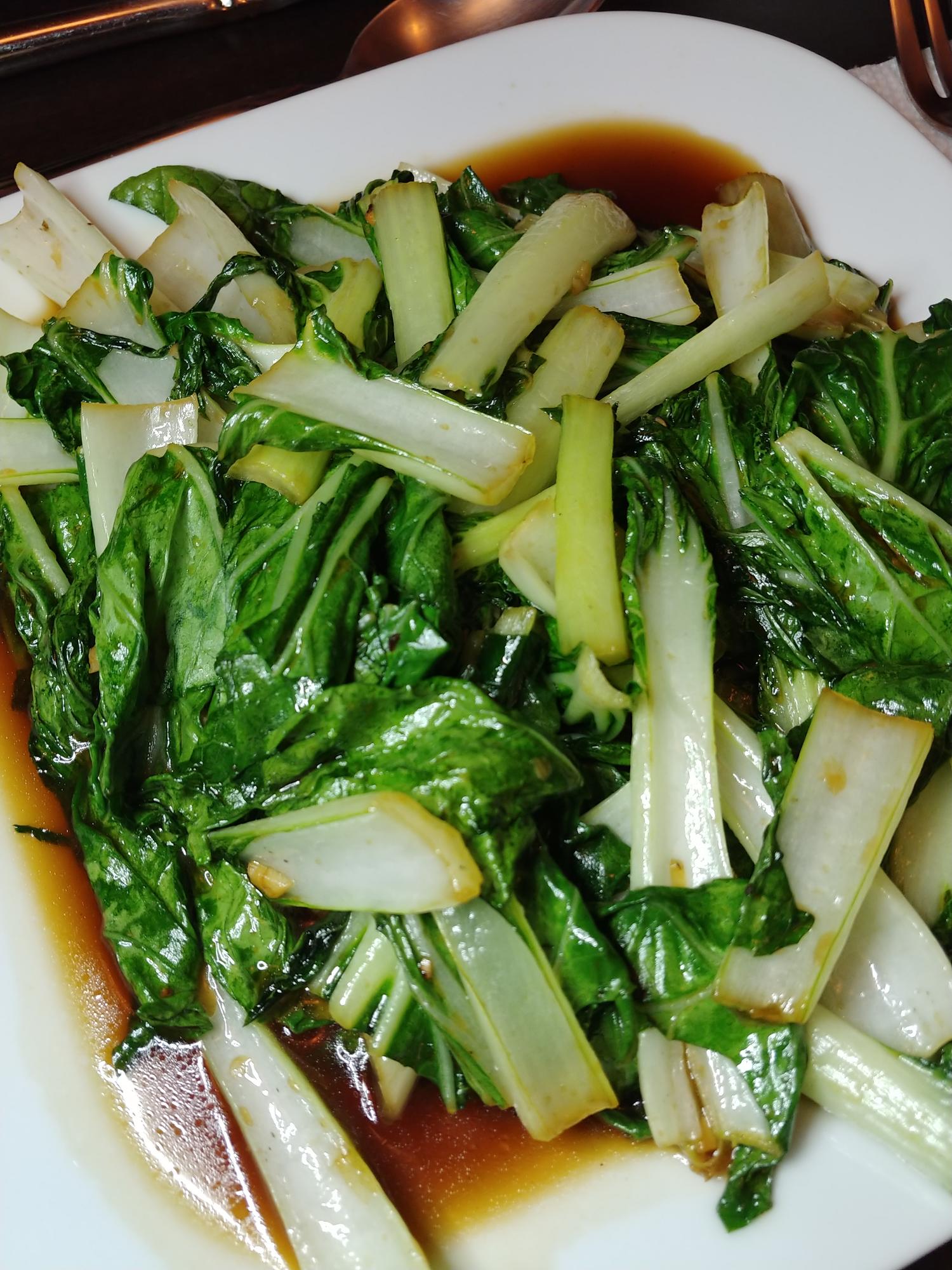
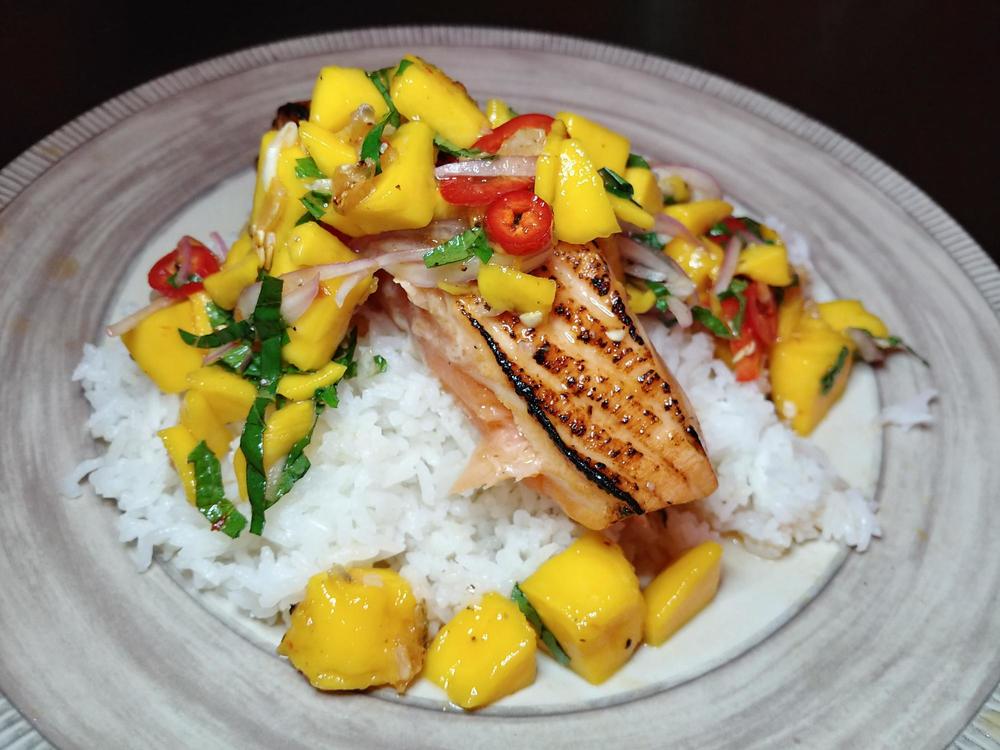
Some recent dinners.... SV salmon with viet style ataulfo mango salad (similar to thai som tum but with more fresh herbs): Red curry chicken - Maesri red curry paste with added grachai, thai basil and chilis, using frozen coconut milk: Thai stir fry of what the H-mart called "bok choy tips"...
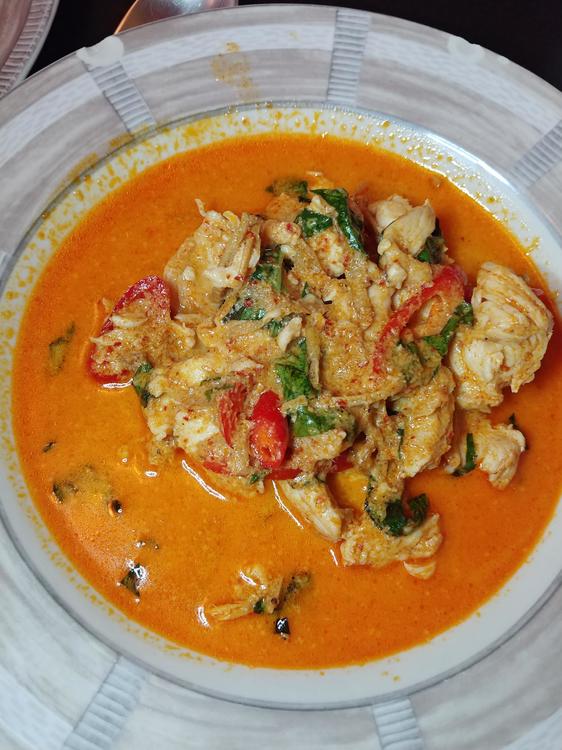
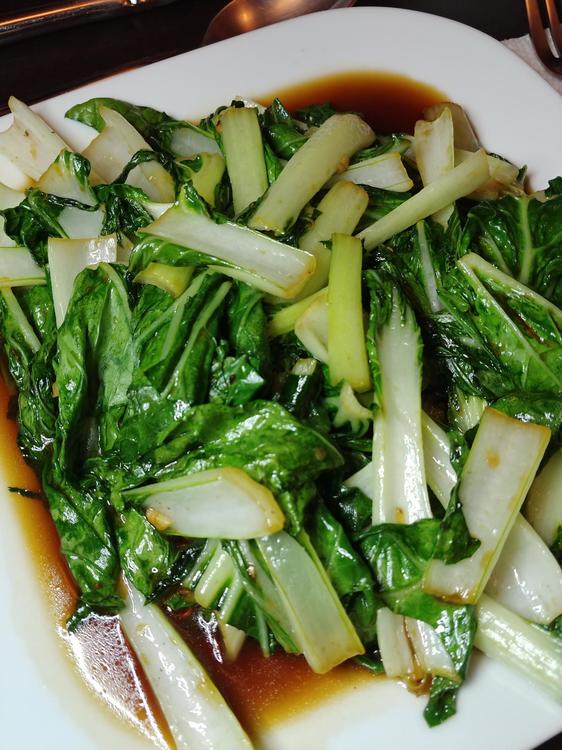
-
Airline Food: The good, the bad and the ugly
KennethT replied to a topic in Food Traditions & Culture
I'm looking forward to meals on Singapore Airlines coming up at the end of June... And for the return trip, I can choose my meals in advance - there are like 10 choices! I chose the chicken-rice (when in Singapore and what not) and dim sum for breakfast... -
That would be a cracked pie...
-
Thank you for taking the time to post this! I enjoyed it.
-
At that quantity, it's almost worth looking into a vacuum or vibrating seeding machine!
-
I was curious, so I checked out their website... https://support.clickandgrow.com/hc/en-us/articles/360000947227-19-How-to-get-rid-of-mold-and-algae-
-
I would use a solution of pure H2O2 as I described in a post above, or use a solution of a product called UC roots, which is hypochlorous acid derived from calcium hypochlorite. But, I don't know if you really want to do that. One of the reasons growing in soil works is because of beneficial bacteria and fungi living in the soil. Sanitizing your soil will kill anything bad growing in it, but will also get rid of all the good, and will make it more difficult for future plants to use that soil, unless you add some compost (which is full of beneficial bacteria and fungi). It might be better to use a product called Hygrozyme (or one of a bunch of similar products) which is an enzyme that breaks down cellulose. So, a soak in that solution will do a good job of breaking down any remaining dead roots in the soil, and turn them into products that are good for future plants - plus the spaces left by the roots add aeration to the soil. Then let it dry out which will get rid of anything anaerobic that could still be hanging around.
-
LEDs have a series resistance, but it's usually pretty negligible compared with other resistances in the circuit. You can find the internal resistance of an LED on the spec sheet. You control how much current you drive through the LED by using an external resistor sized appropriately for the voltage applied across the series combination. A 1000Ah battery just says what the battery is capable of delivering - but it is the load that determines how much current is drawn at any given moment. If you put a 1 megaohm resistor across a 12V car battery, you will only draw .012 mA, but put a short across the terminals, you will draw so much current that it can weld the short to the terminals. That's why you can safely touch both the + and - terminals of a car battery safely - body resistance is about 300ohms, so the most you would draw is 40mA which is not perceptible. So, LED drivers are basically a constant current source varying voltage across a resistance in series with the LED. Varying the voltage across the series resistor varies the current that will flow through the LED. Yes, you can dim an LED using PWM - but you shouldn't really notice any flicker as long as the switching frequency is high enough. Most high quality LED drivers do much more than put a PWM voltage across the LED though, they are a constant current source.