
liuzhou
-
Posts
16,764 -
Joined
-
Last visited
Content Type
Profiles
Forums
Store
Help Articles
Everything posted by liuzhou
-
Well, if you are eating canned peas from the 19th century, you deserve what you get!
-
Canned vegetables always suck*. If you can't get fresh, do without, is my motto. It is very noticeable in supermarkets in China that there is no canned goods section. The very idea of canned vegetables would be ridiculous to a Chinese shopper. We have jicama here, too. I'll get to that in time. I agree it can be a substitute in texture terms; less sure about in taste. *Only honourable exception - French petits pois.
-
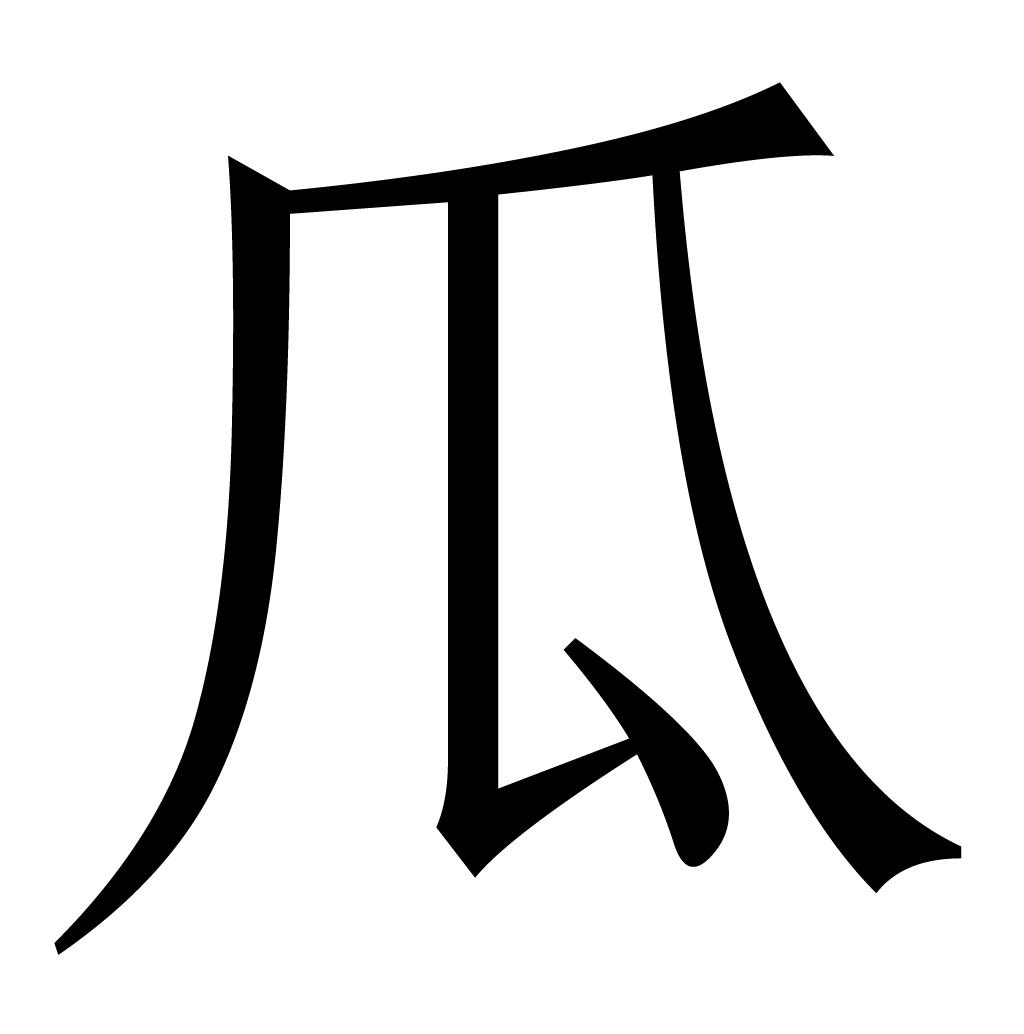
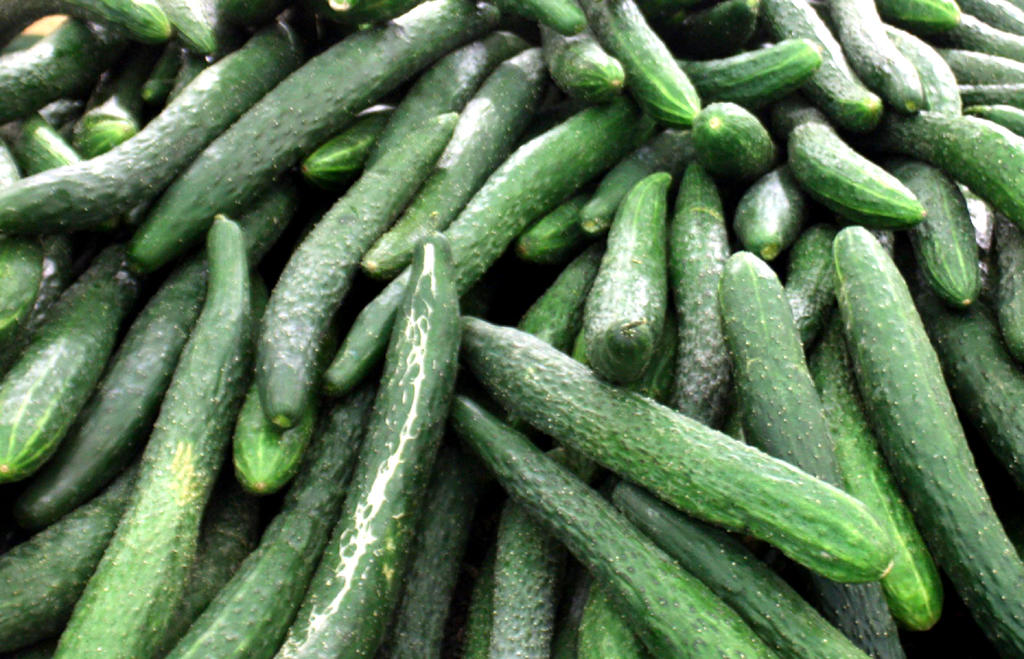
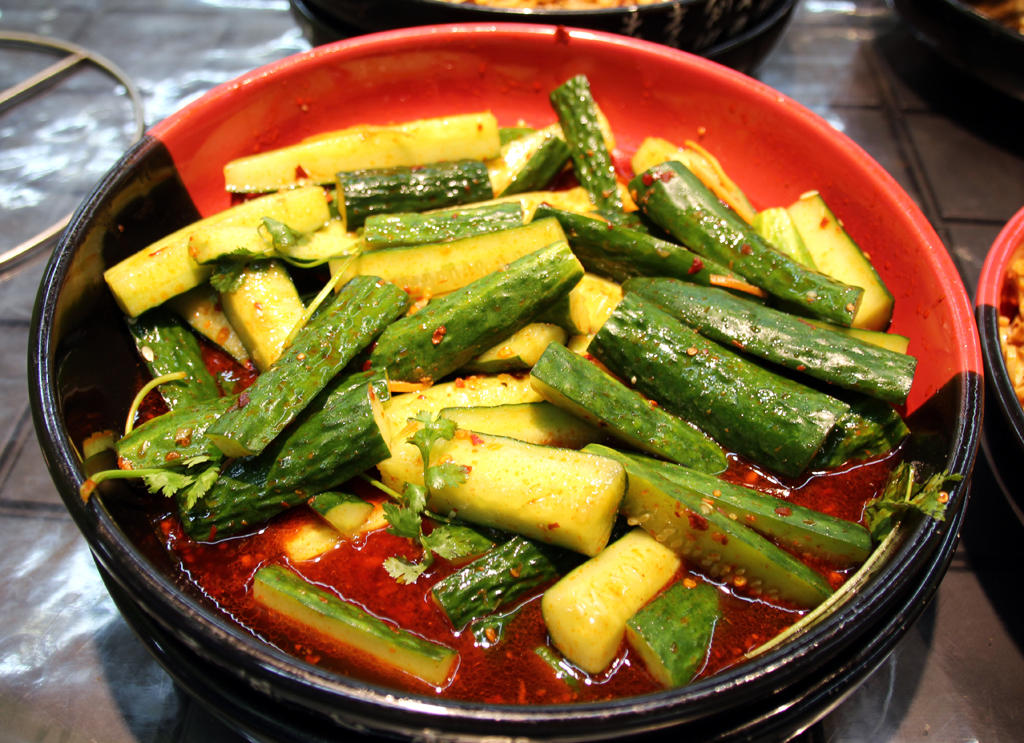
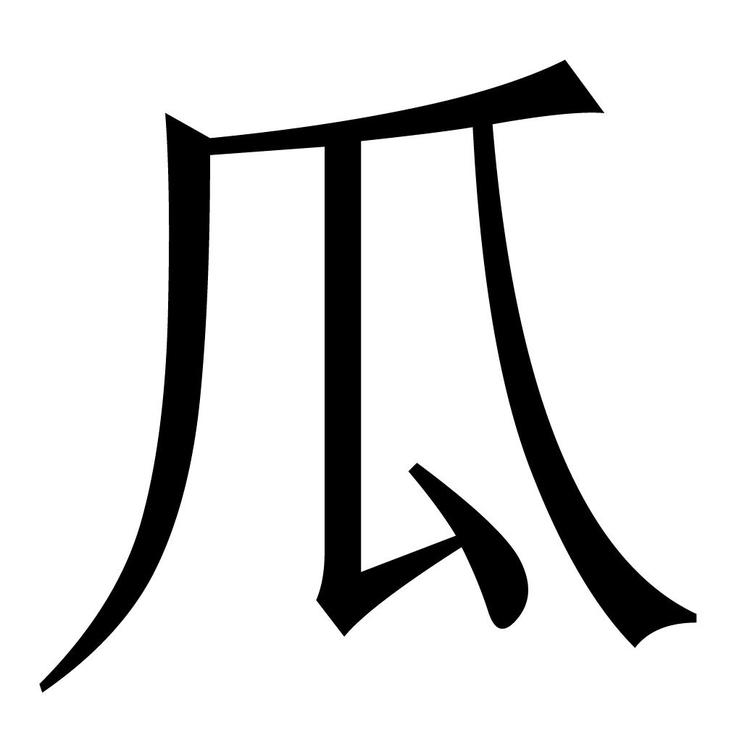
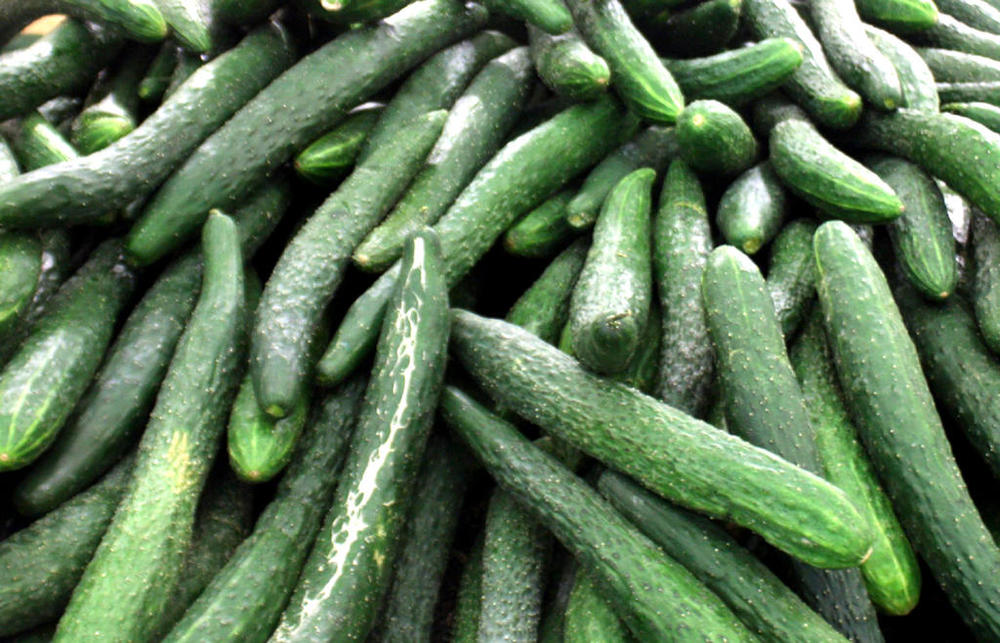
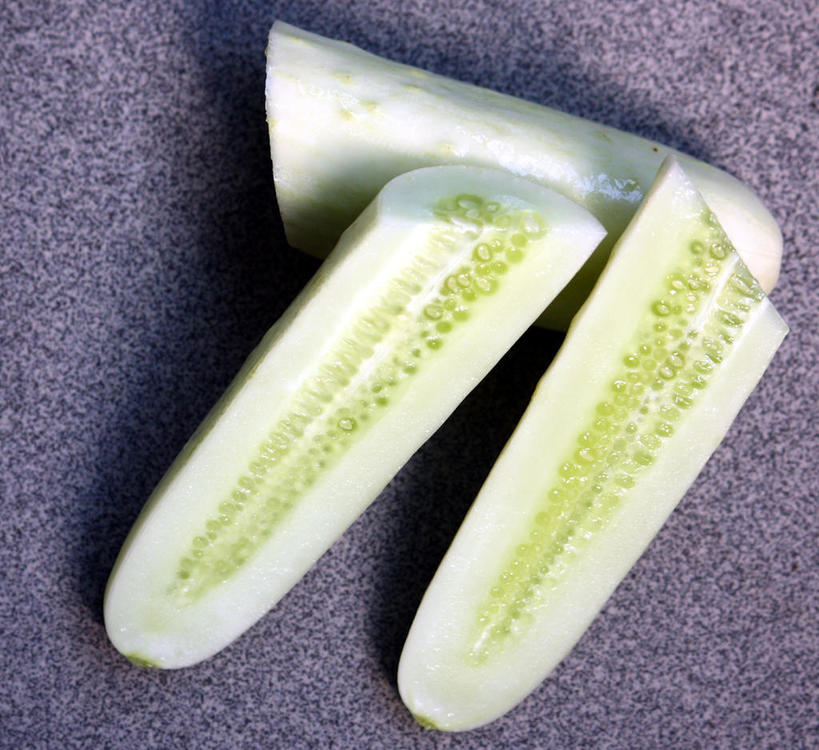
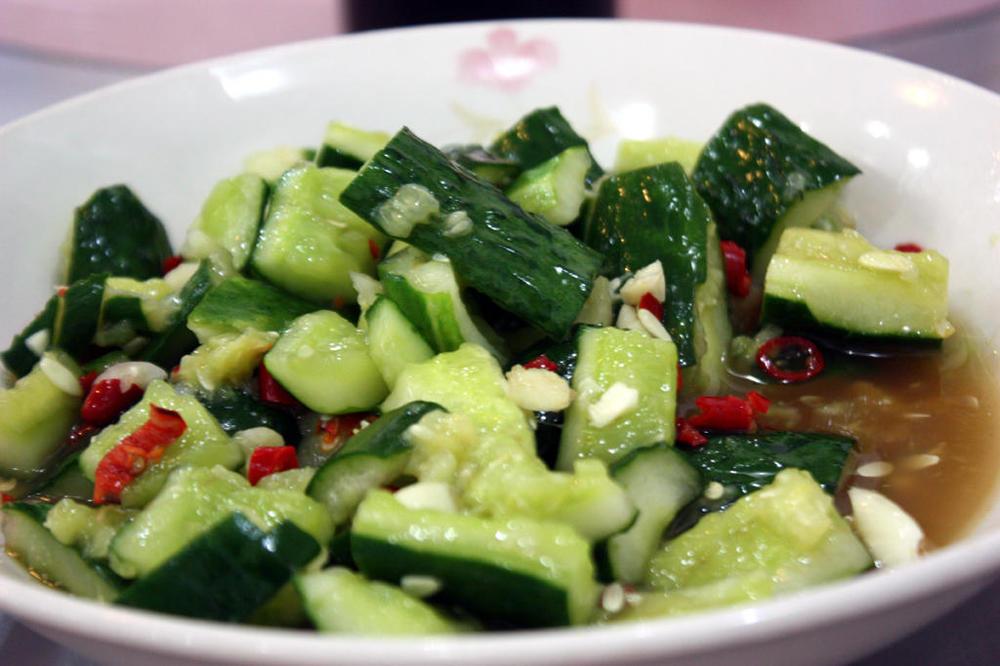
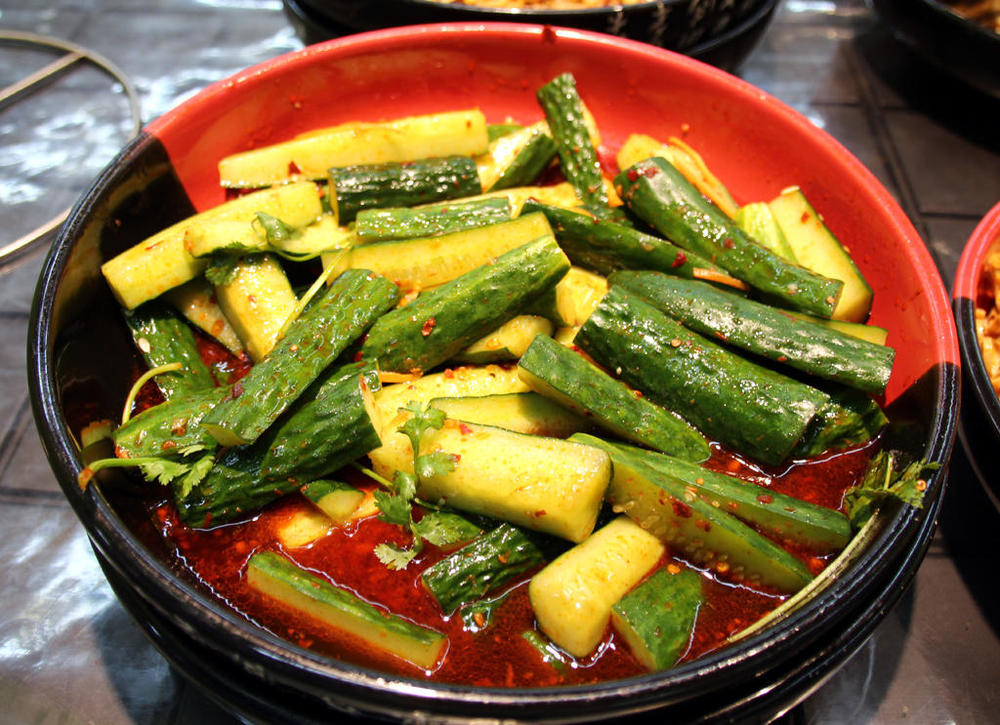
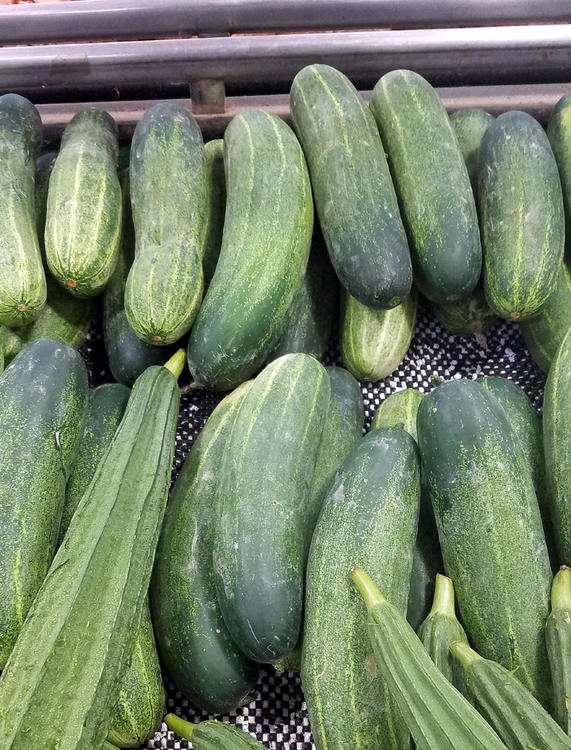
For the next few posts, we are going to be worshipping at the temple of the great god guā 瓜 guā (Mand: guā; Cant: gwaa1) is a multi-purpose Chinese word covering all gourds, squashes and melons. It does not differentiate between what we think of as fruits or vegetables. All types of melon are 瓜, as are pumpkins etc. (Yes, I know. Technically, they are all fruits.) First up, I'm going to start with one of the easiest. 黄瓜 (Mand: huáng guā; Cant: wong4 gwaa1) literally means 'yellow gua'. It is Cucumis sativus, the plain old cucumber. What makes them yellow, I have no idea. These are widely used in Chinese cuisine, but seldom raw. They are usually cooked, if even for only a few seconds. There are a number of Chinese "salads" using cucumber, but even in most of those the cuke is heated through at the very least. One exception is the Sichuan classic, smacked cucumbers. Recipes galore online. Smacked cucumber In this salad from a supermarket salad bar, though, the cucumber has been briefly cooked. We also get these. Usually described as 白黄瓜 (Mand: bái huáng guā; Cant: baak6 wong4 gwaa1), literally white cucumber. I have also seen them as 果黄瓜 (Mand: guǒ huáng guā; Cant: gwo2 wong4 gwaa1), fruit cucumber, but less frequently. The more bulbous ones at the top of the picture. The thinner ones are something else I'll get to later. They do have a whiter flesh and taste a little sweeter. Otherwise, the same. Pickled cucumber is also widely available as are miniature cucumbers for either eating or pickling yourself.
-
This is from the dreaded Wikipedia, but the sources cited seem reliable. Also, the flowers I posted are from commercially cultivated plants.
-
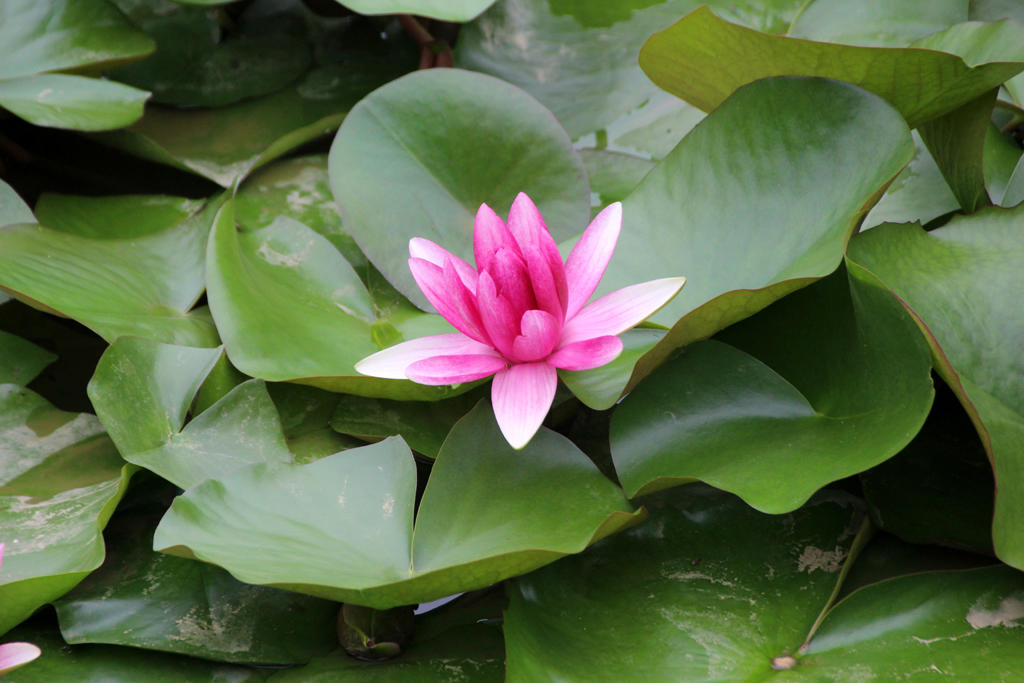
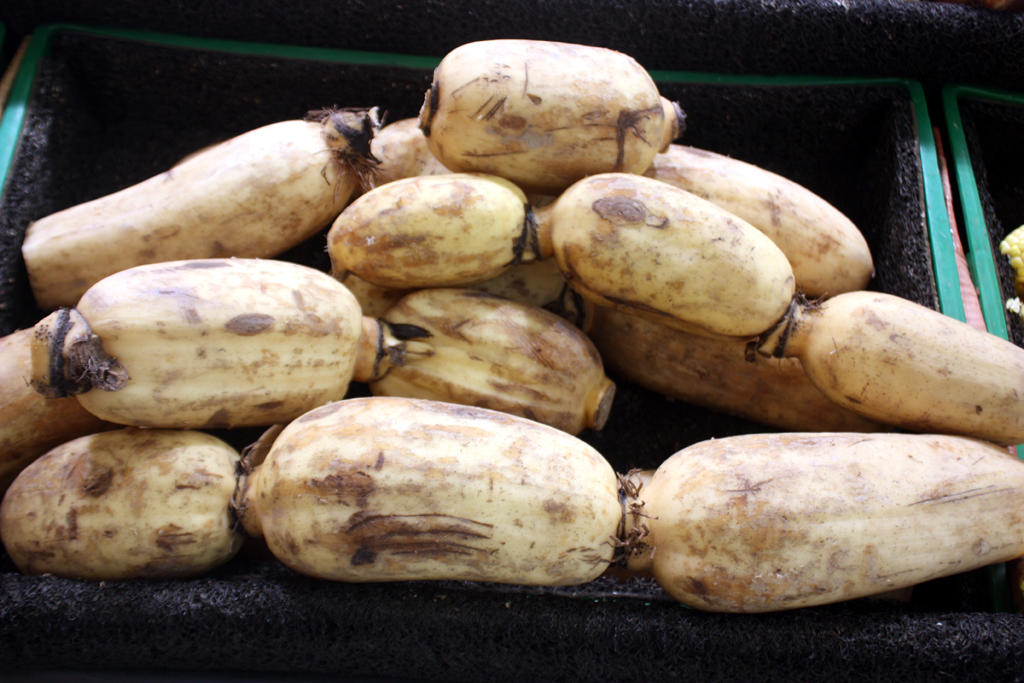
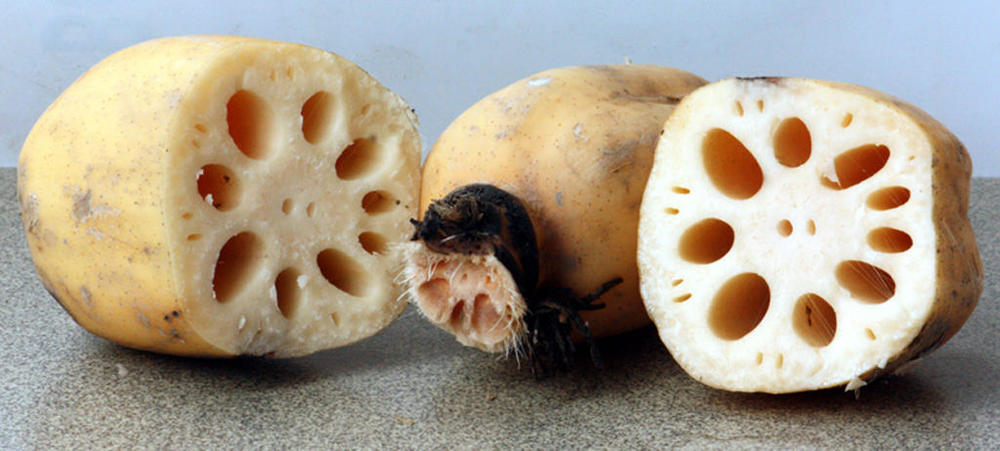
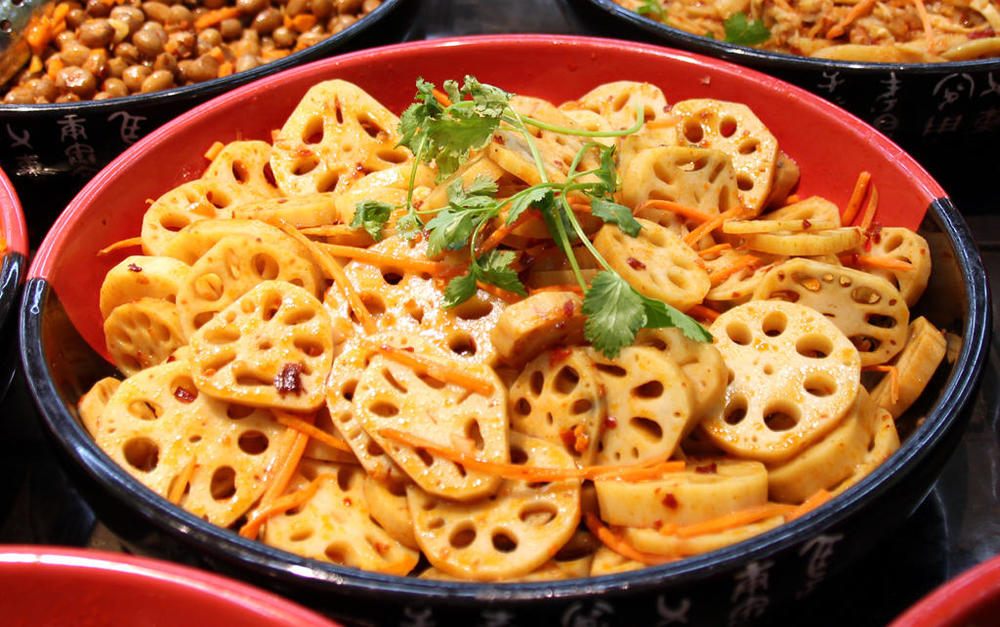
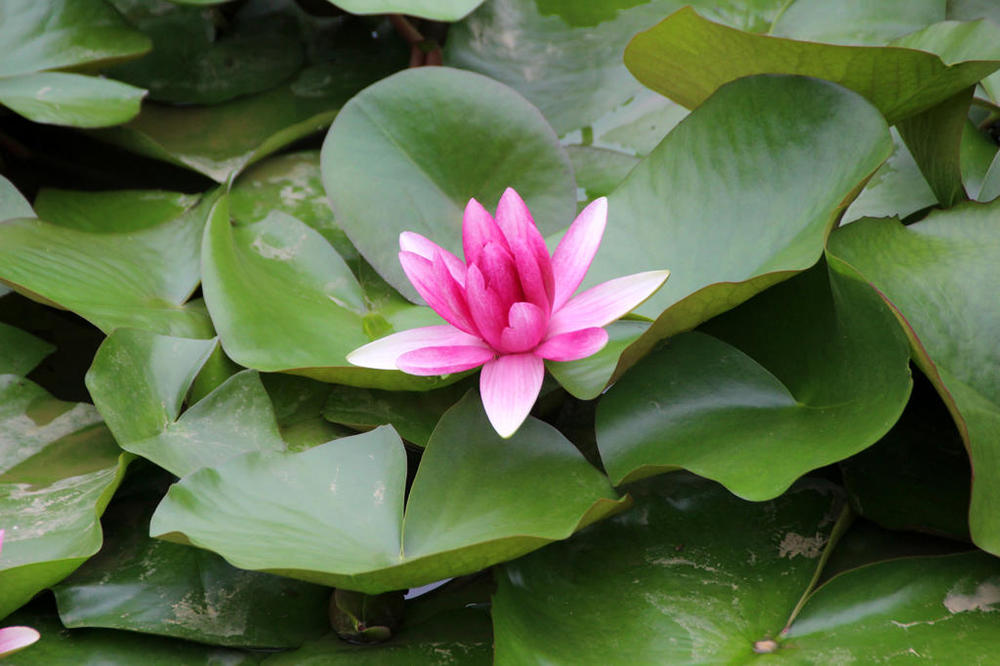
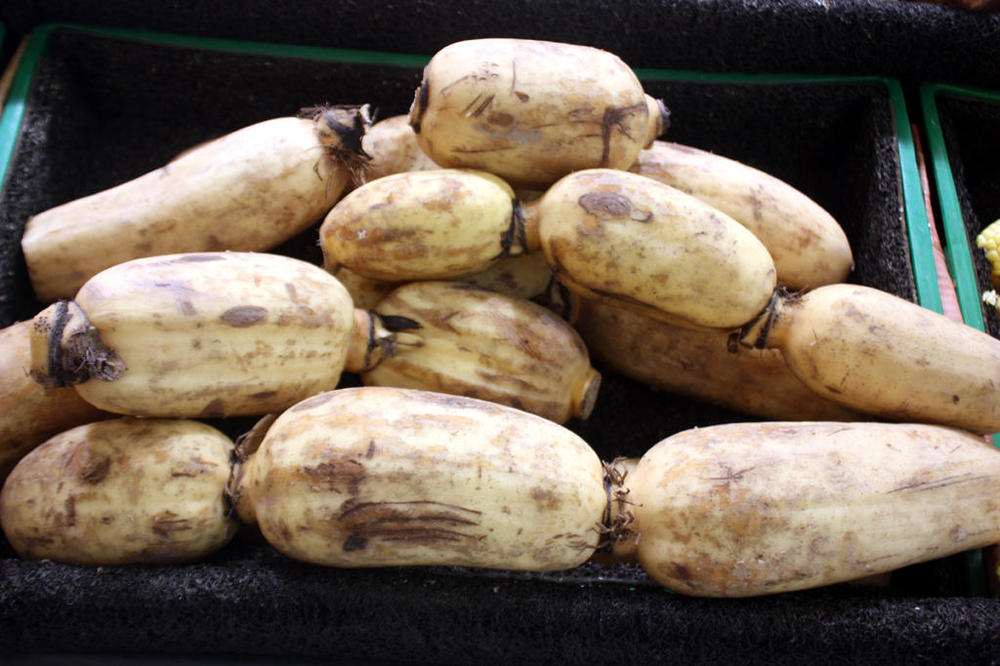
Nelumbo nucifera Trust the Chinese to invent a vegetable custom designed to be eaten with chopsticks. Well, part of it anyway. The whole plant is edible and it has one of the most beautiful flowers. This baby is just outside my countryside home. We are talking about the lotus plant, 莲 (Mand: lián; Cant: lin4). Everything you can see is edible and so is everything you can't. The most used part is what is commonly referred to as 'lotus root', but is actually the rhizome of the plant. These are found in the sticky mud at the bottom of the pond. Extracting them is difficult, filthy manual labour. In Chinese, they are 莲藕 (Mand: lián ǒu; Cant: lin4 ngau5), although often only the final character is used, especially on menus. These are usually sliced and fried (stir or deep fry) , steamed or boiled in soups and hot pots. They are also boiled with sugar syrup to make desserts. They are used in Chinese style "salads". Although they are edible raw, it is not advised to eat them that way as they are prone to infection by parasites which are killed even with light cooking. Anyway, the Chinese eat very little raw. The holes make picking up cooked slices with chopsticks easy. Spicy Lotus Root "Salad" A more refined dish is to cut chunks, stuff the holes with meat etc. and deep fry them. The starchy rhizomes are also dried and ground to make a flour used as a thickening agent for sauces etc. When in season, the seed pods, 莲蓬 (Mand: lián péng; Cant: lin4 fung4) are sold on the streets for you to extract and eat the seeds, 莲子 (Mand: lián zi; Cant: lin4 zi2). I posted about them back in 2012. See here. Finally, although the leaves and flowers are edible and used in Japan and Korea, I've never seen them used here in China, although the flower stamens are used to make 'lotus flower tea', 莲花茶 (Mand: lián huā chá; Cant: lin4 faa1 caa4). Exit singing that old Gershwin hit: I've got rhizome; I've got lotus....

-
I'm told the white ones are starchy and the yellow on the sweet side, but perhaps not as sweet as the ones you describe as " almost too sweet ".
-
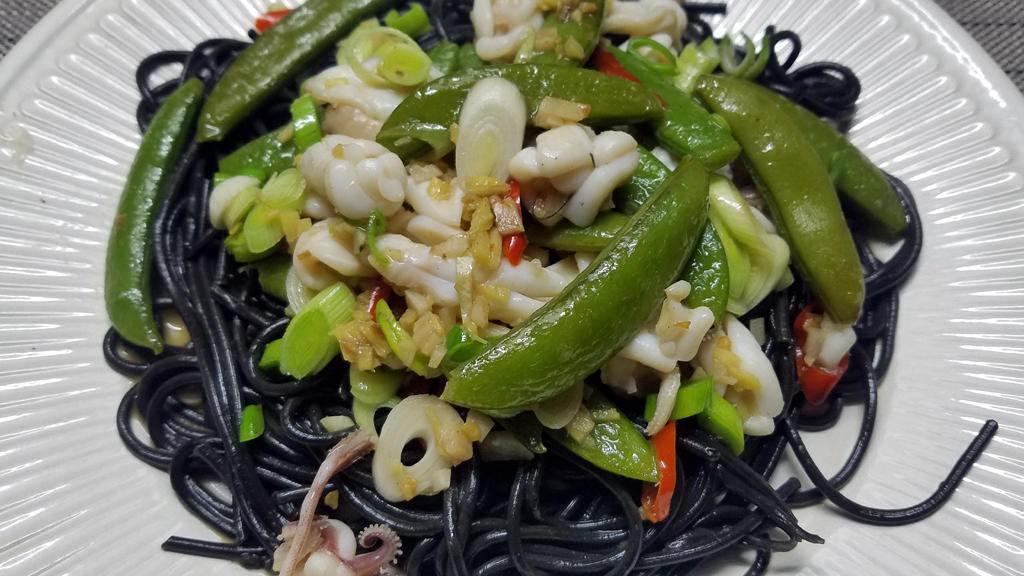
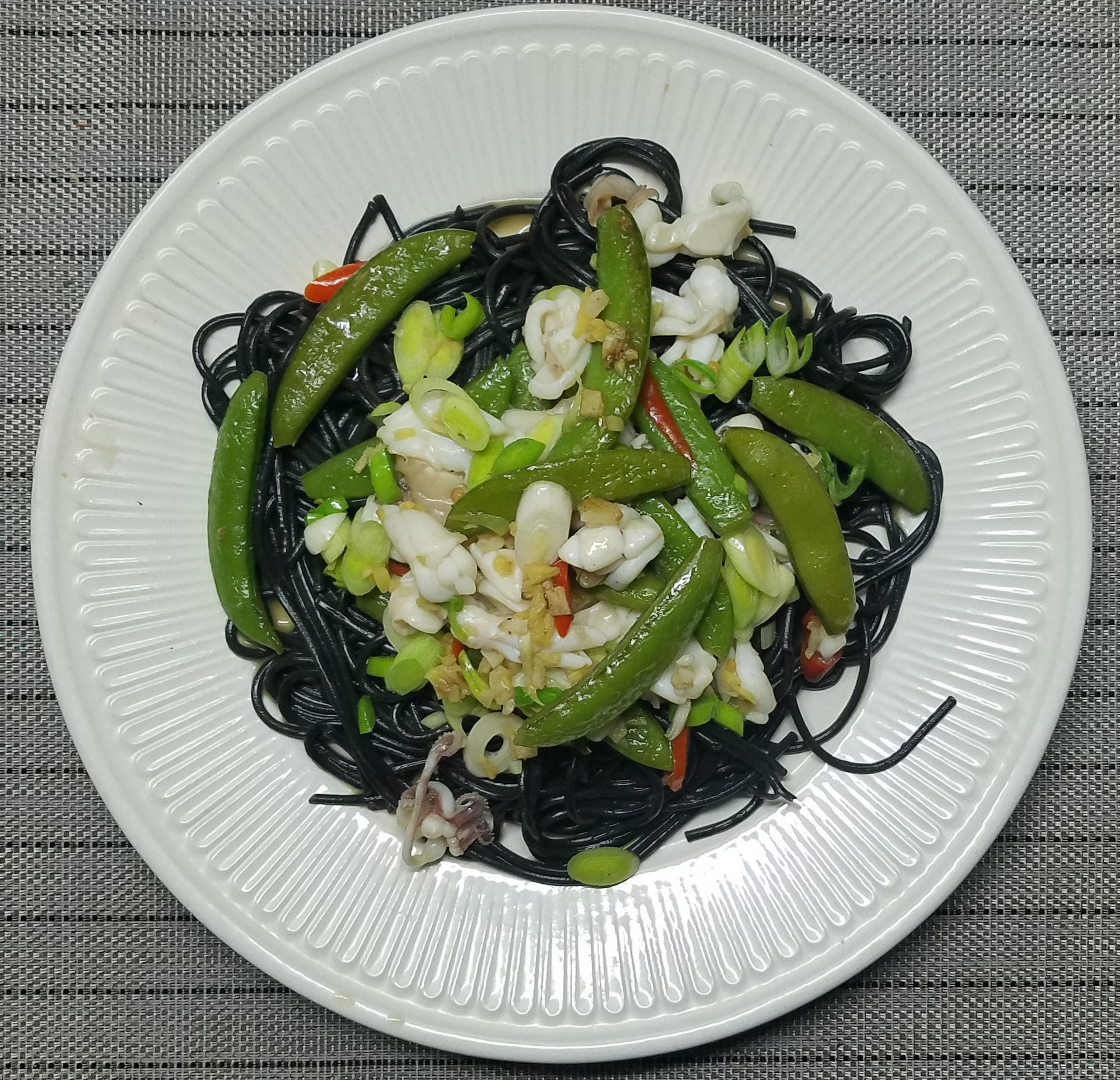
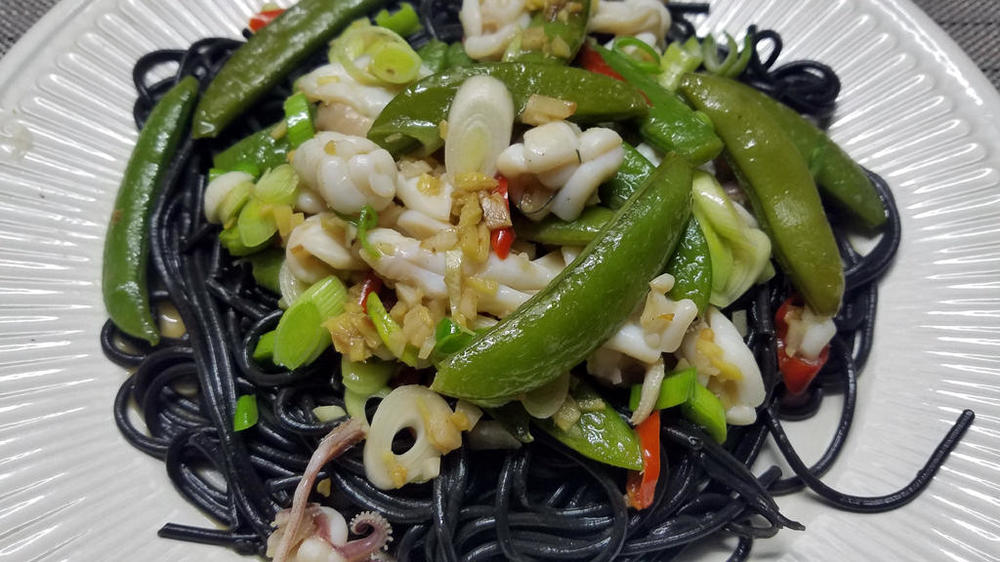
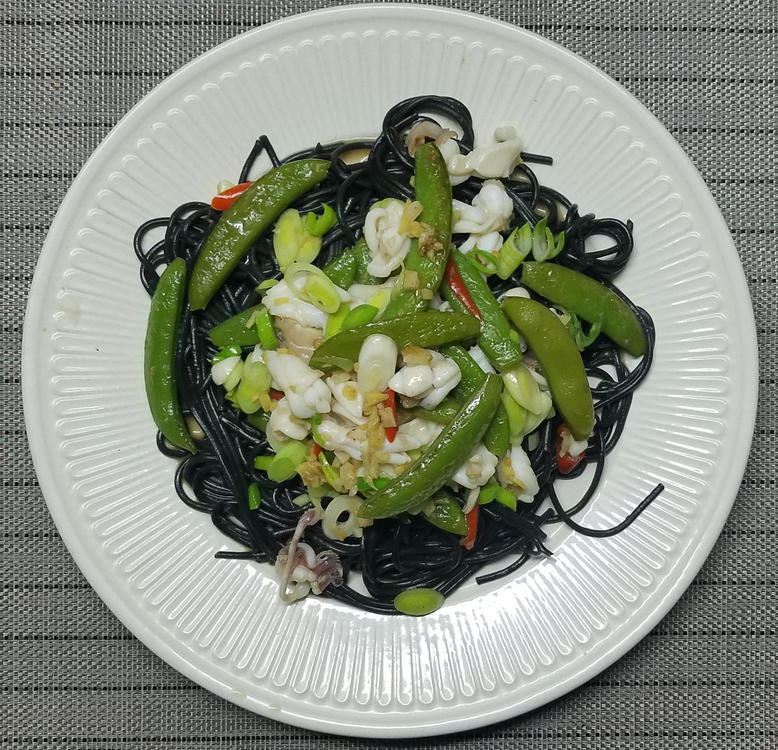
Squid, sugar snap peas, garlic, ginger, chilli, Shaoxing wine, scallions with cuttlefish ink pasta. No corn!
-
What is it with you guys? I've always been nice to you! Why are you doing this to me? Popcorn? I'd rather eat deep fried bees! Oh! I have done! Available at a cinema not very near you!
-
Corn pretending not to be corn! Shouldn't be allowed.
-
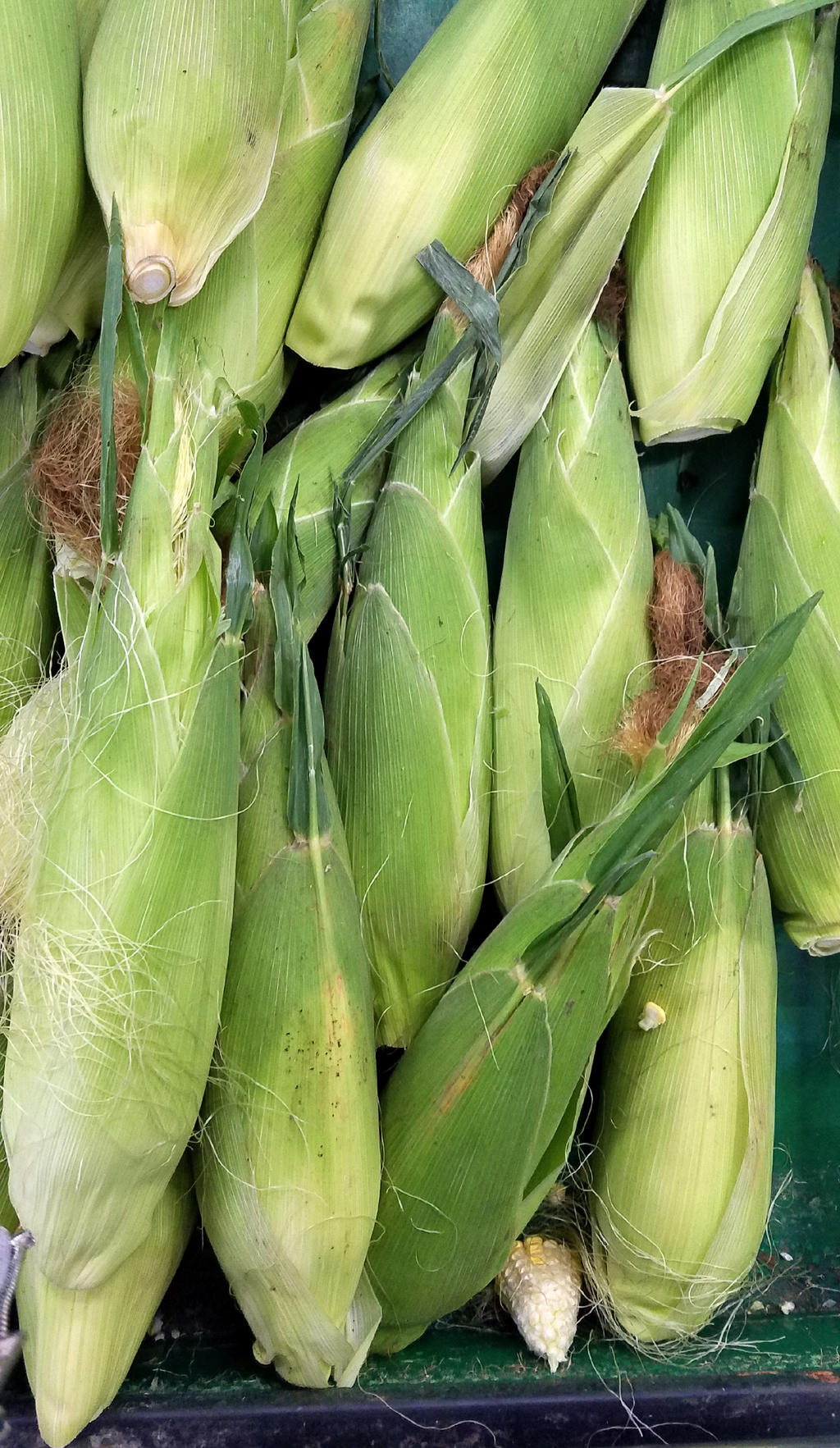
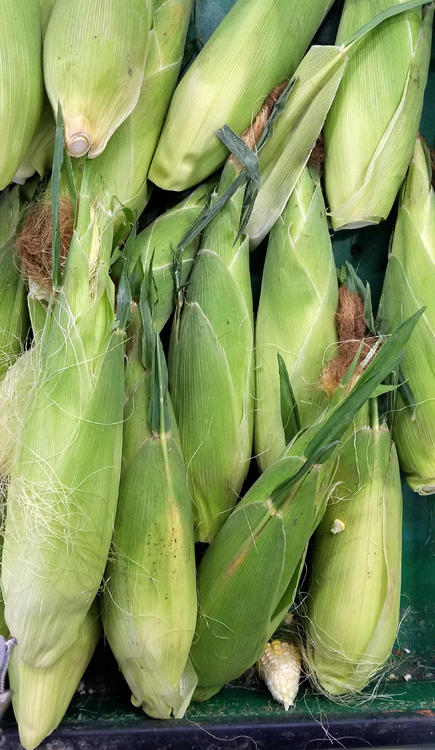
Here people just chuck the husks on the floor. Yes, we also get the plastic wrapped stuff. When I say we, I mean them!
-
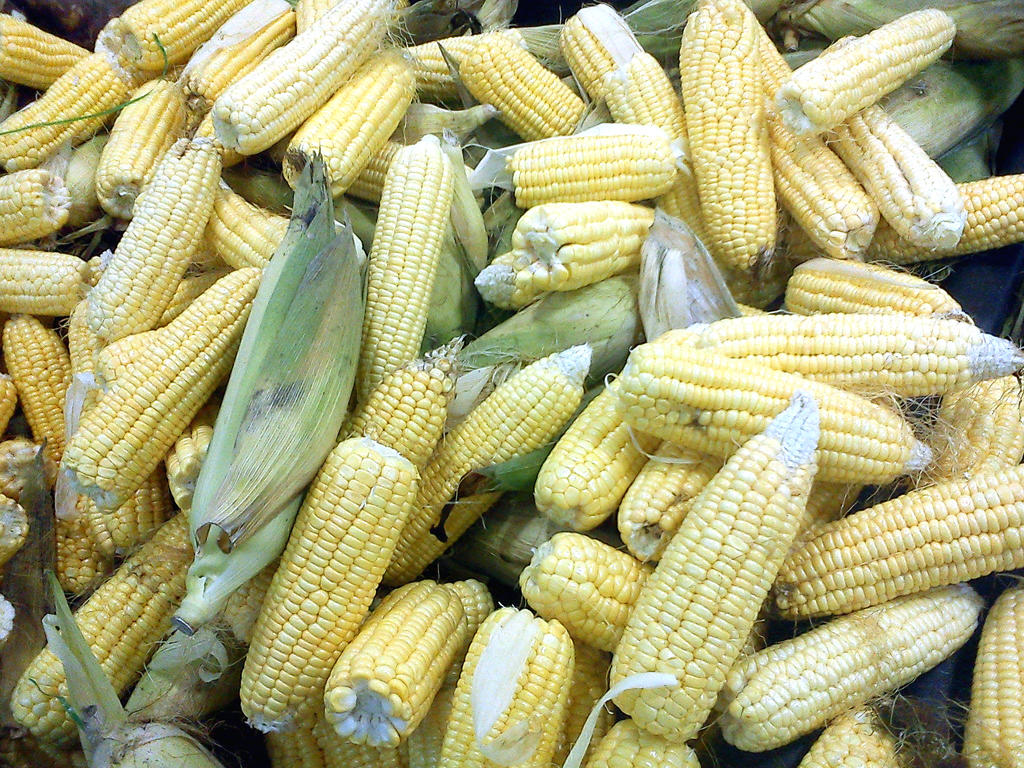
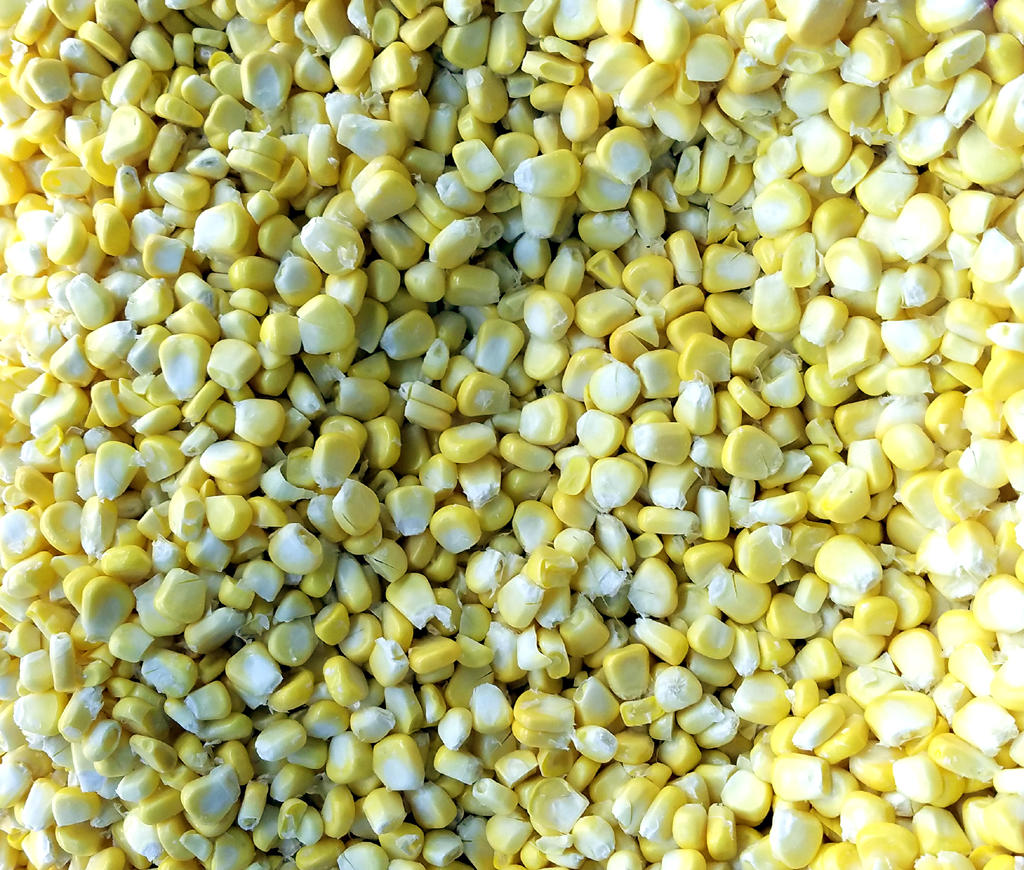
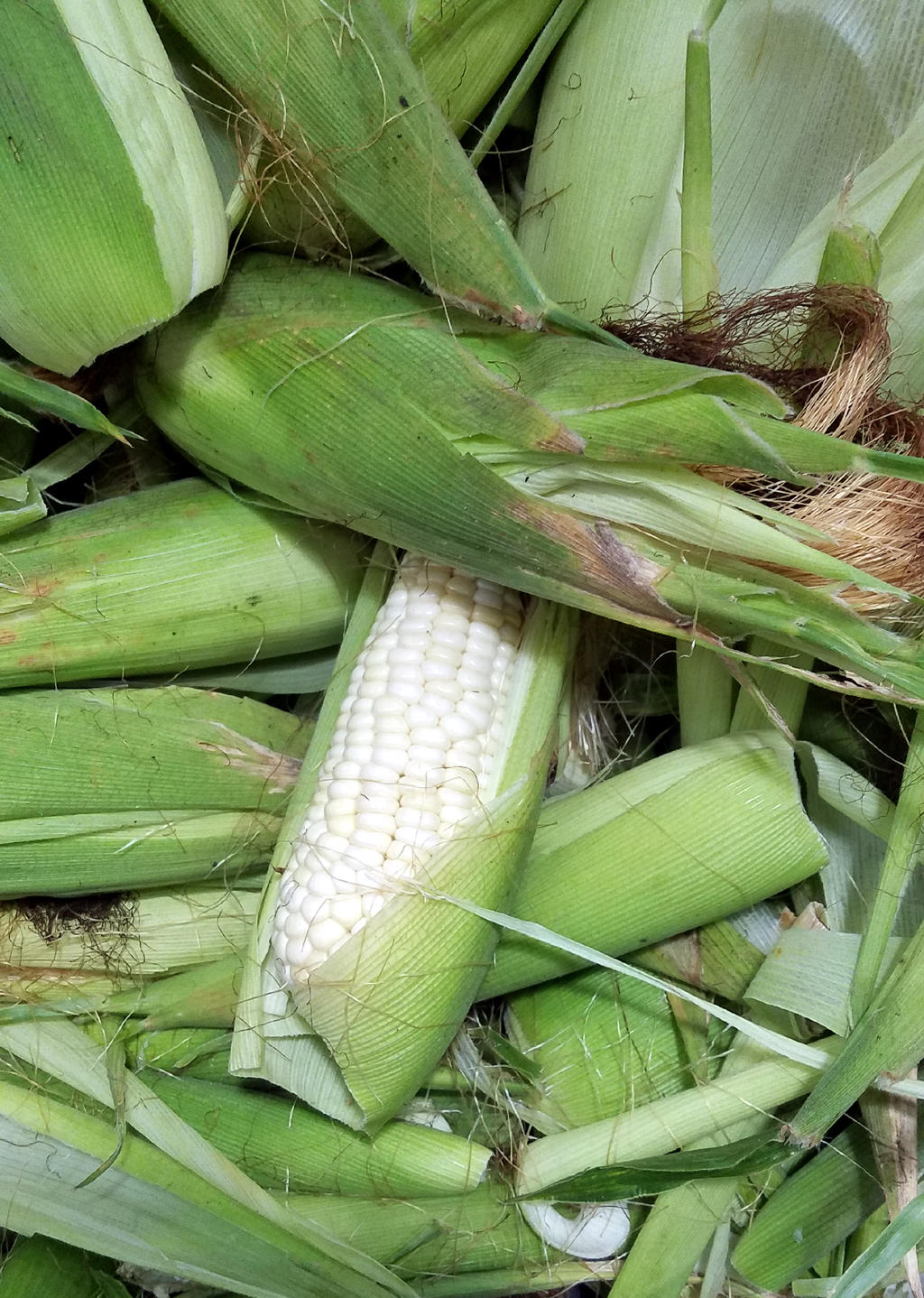
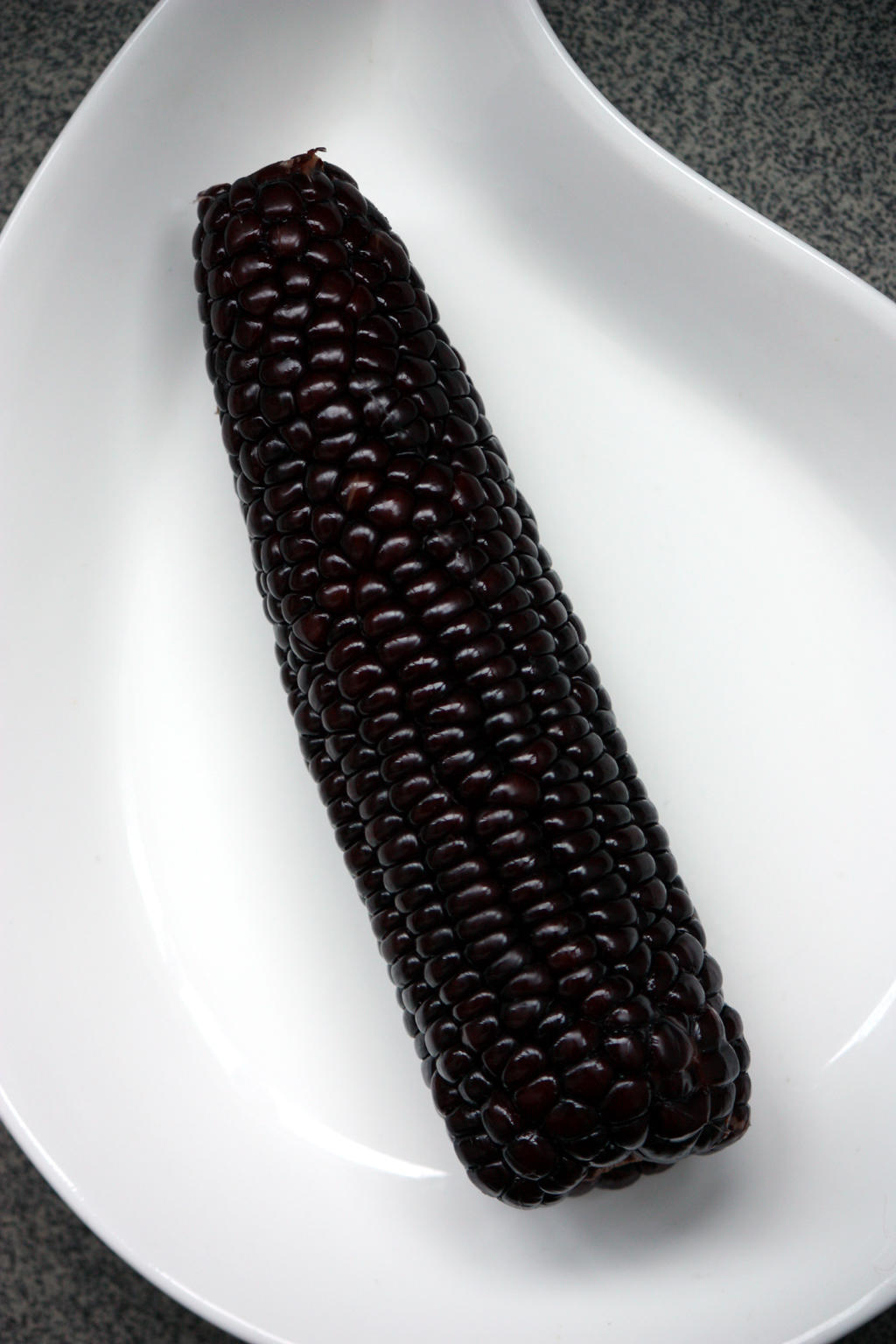
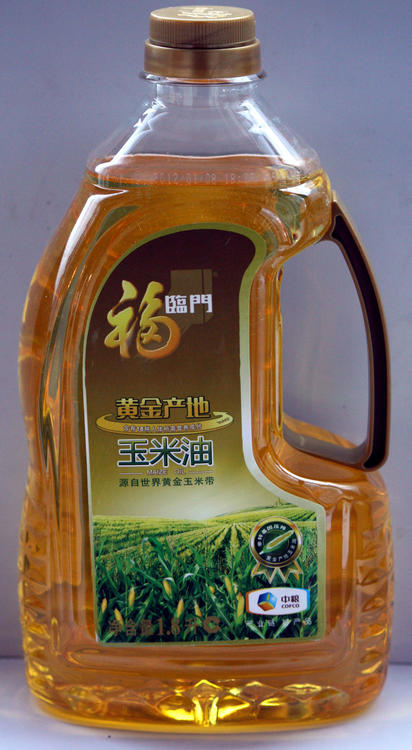
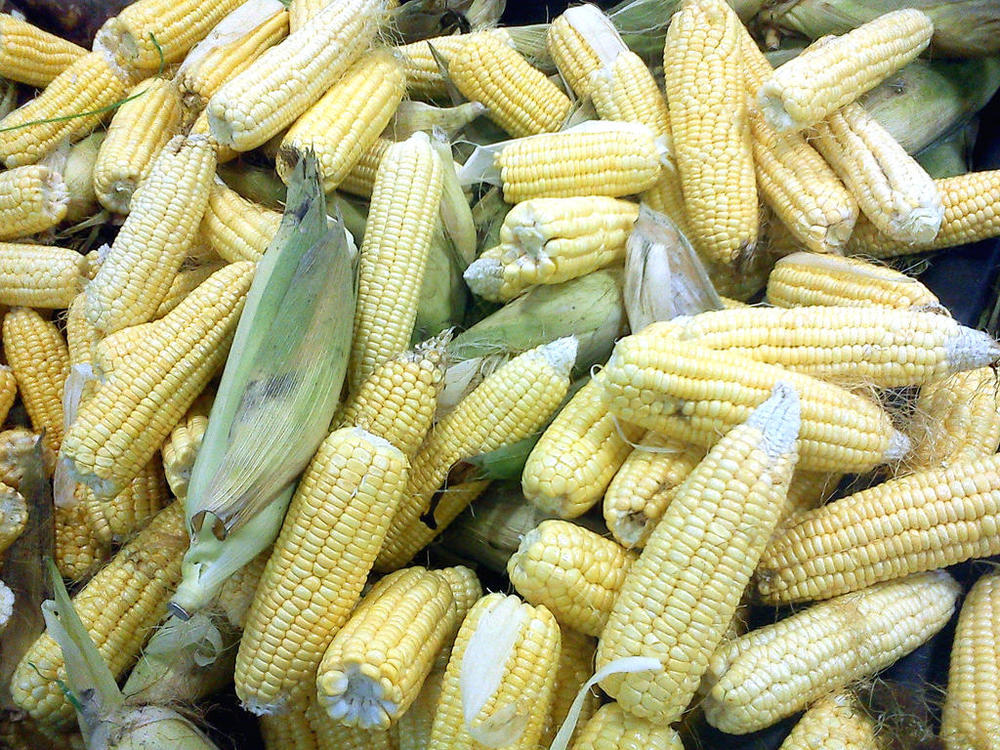
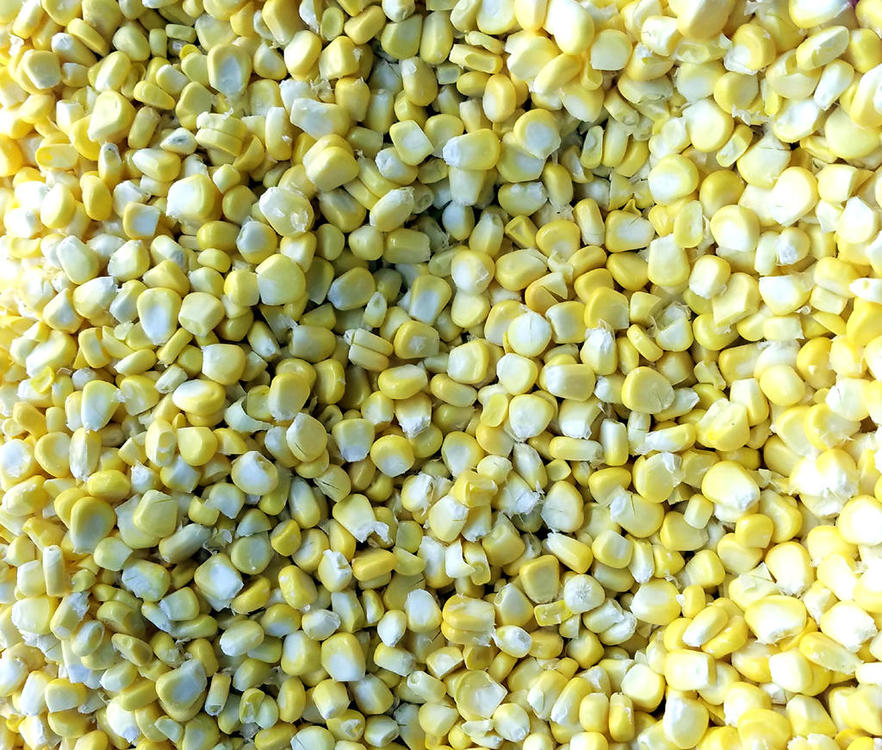
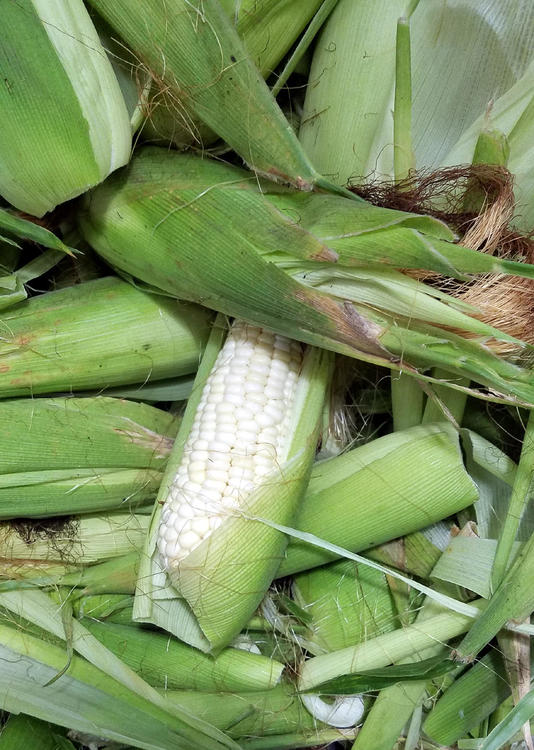
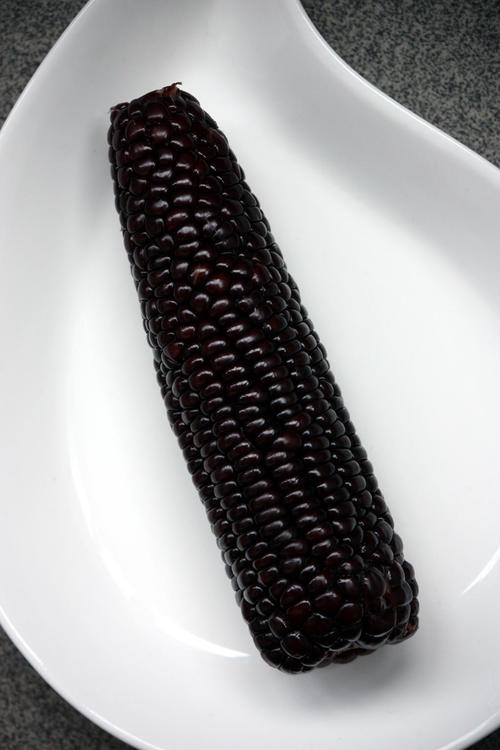
This is going to be traumatic, but I guess I have to do it. Zea mays You can call it corn or maize or anything else you like. I don't care. I call it 'revolting'. It never darkens my door or abuses my palate. Wretched stuff. But for the sake of completeness... In Chinese, 玉米 (Mand: yù mǐ; Cant: juk6/6*1 mai5) or, less often, 粟米 (Mand: sù mǐ; Cant: suk1 mai5). Two main varieties are sold. The regular yellow stuff as pictured above but also a white variety called 糯玉米 (Mand: nuò yù mǐ; Cant: no6 juk6/6*1 mai5), which means 'glutinous corn'. This foul abomination does come in various colours, but the most prized, I'm told, is black. See! I told you! The work of the devil. If you are too lazy to strip the ears from the cobs, worry not. You can also buy pre-stripped ears. One problem the troubled people who actually buy this stuff have is that in supermarkets and markets it is usually shelved un-husked, so they have to stand there and strip it to see exactly which type of hell they are facing. For the terminally lazy who can't be bothered to cook, evil street vendors littering every corner serve up cobs of vileness steamed over mobile stoves. This pestilence turns up everywhere. Corn in stir-fries, soups, hot pots. Corn randomly appearing on your plate on internal and international flights.. Corn ice cream! I kid you not. But most aggravatingly disgusting is that they throw corn kernels into all their pizzas. Even the friggin' wretched durian pizzas come with corn! Perhaps the only sensible use they make of it is corn oil, a very suitable emollient with which to lubricate the chain of your bicycle etc, but apparently they cook with it! I need a lie down and some major therapy now. Back soon with something edible.
-
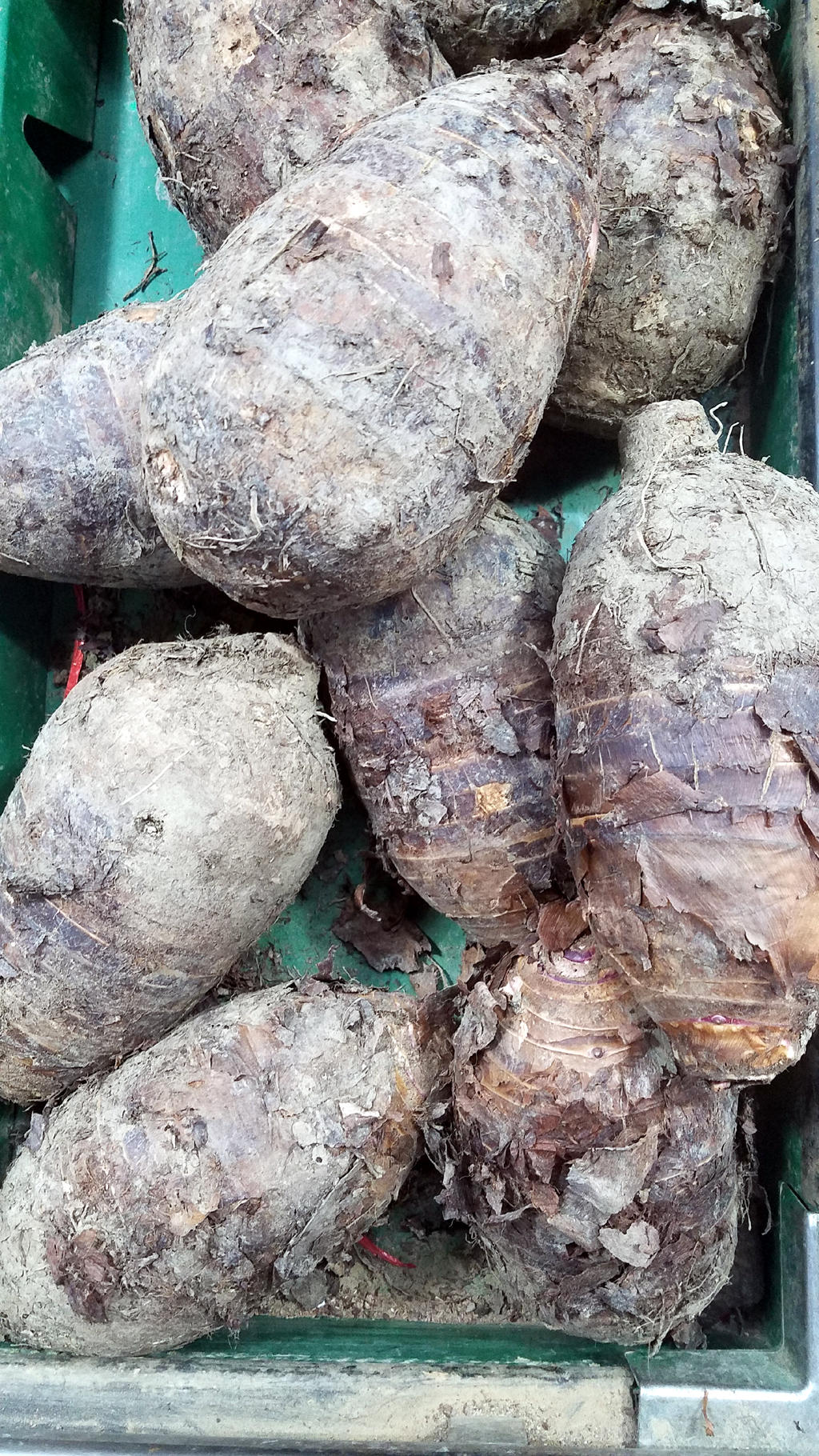
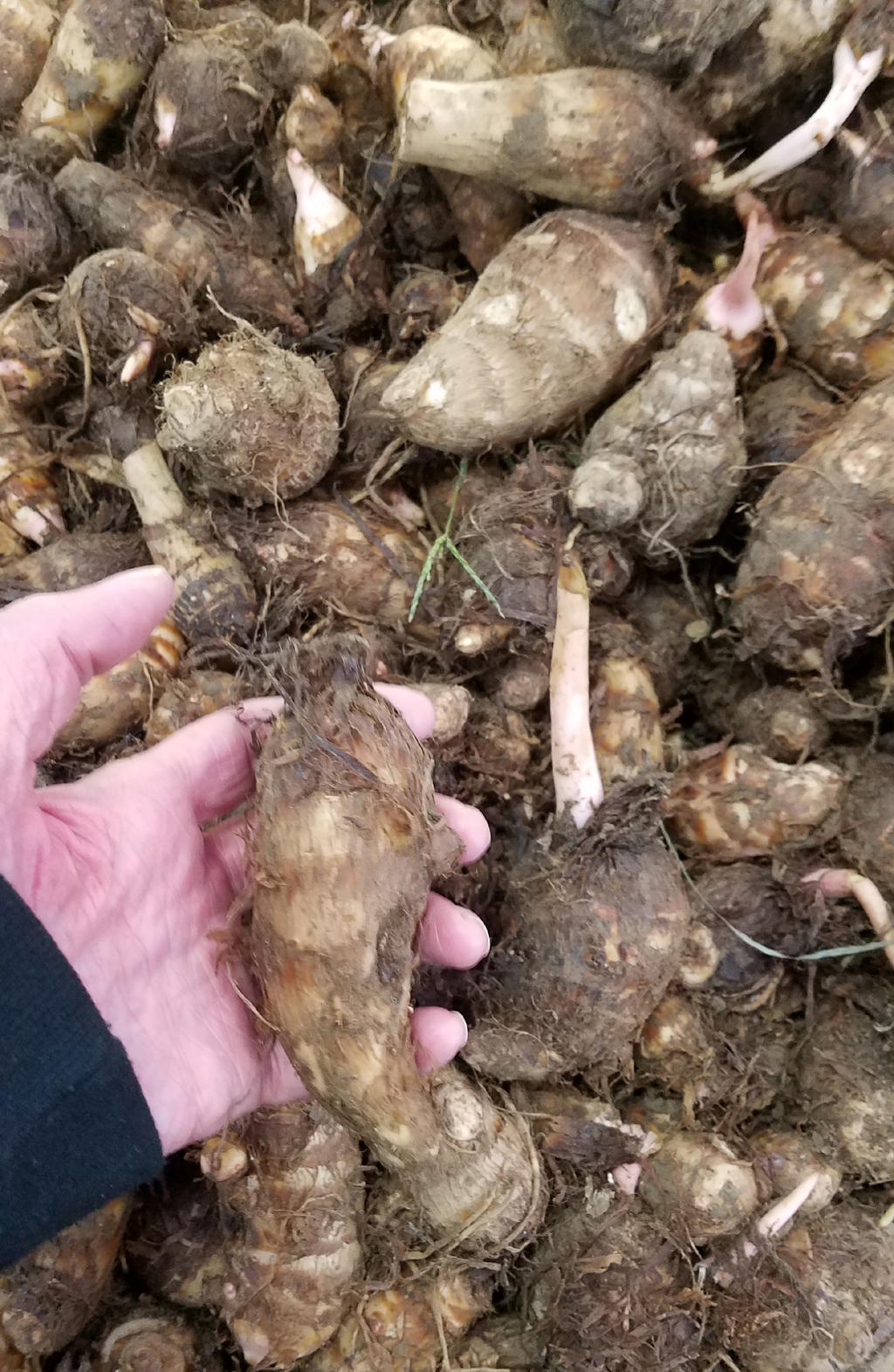
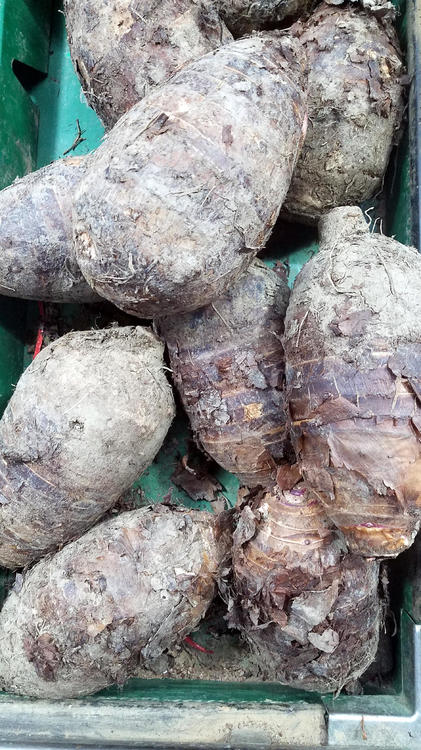
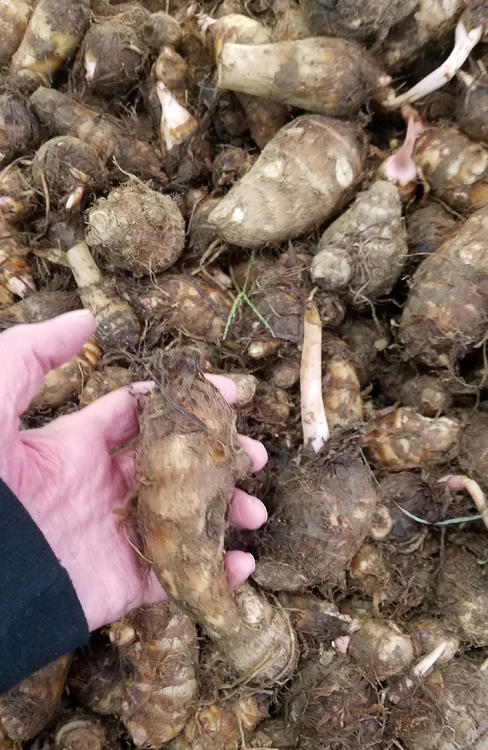
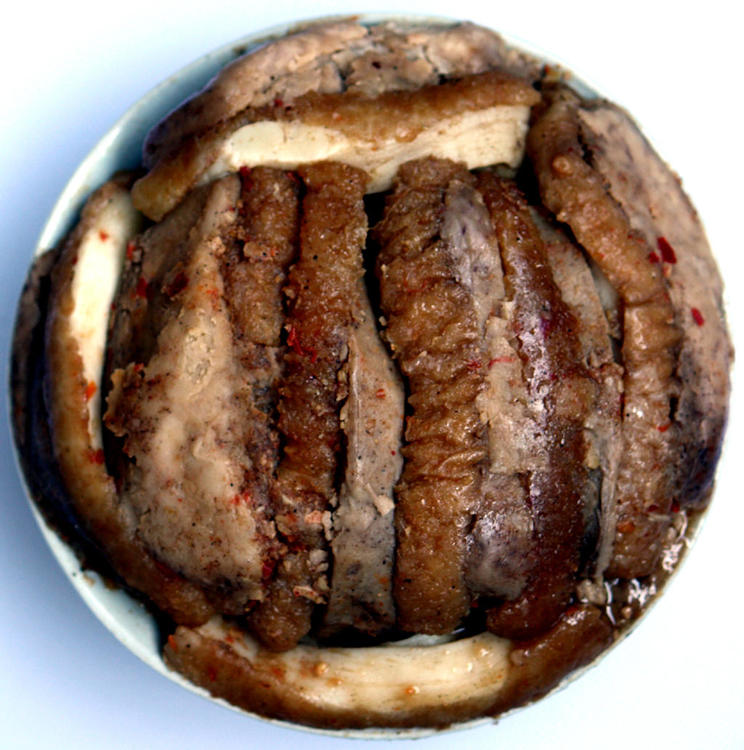
Colocasia esculenta Despite the indifference to the potato in China, there is one root vegetable they have taken to in a big way. Taro. In Chinese, 芋头/芋頭 (Mand: yù tóu; Cant: wu6 tau4*2). This is boiled, steamed (sometimes with sugar), braised or fried. It also appears in hot pots and soups. There are also a number of desserts which feature taro in the form of cakes and pies, often served as dim sum. McDonald's China also sell taro pies. A favourite local use is in a dish called 扣肉 (Mand: kòu ròu; Cant: kau3 juk6), literally 'upside down bowl meat), in which slices of taro are interleaved with slices of fatty pork belly, placed in a bowl and steamed. The bowl is then inverted onto a serving plate. The full process is explained in great detail over here. Baby taro is also available. These are a bit bigger than we usually get. Wrong time of year.
-
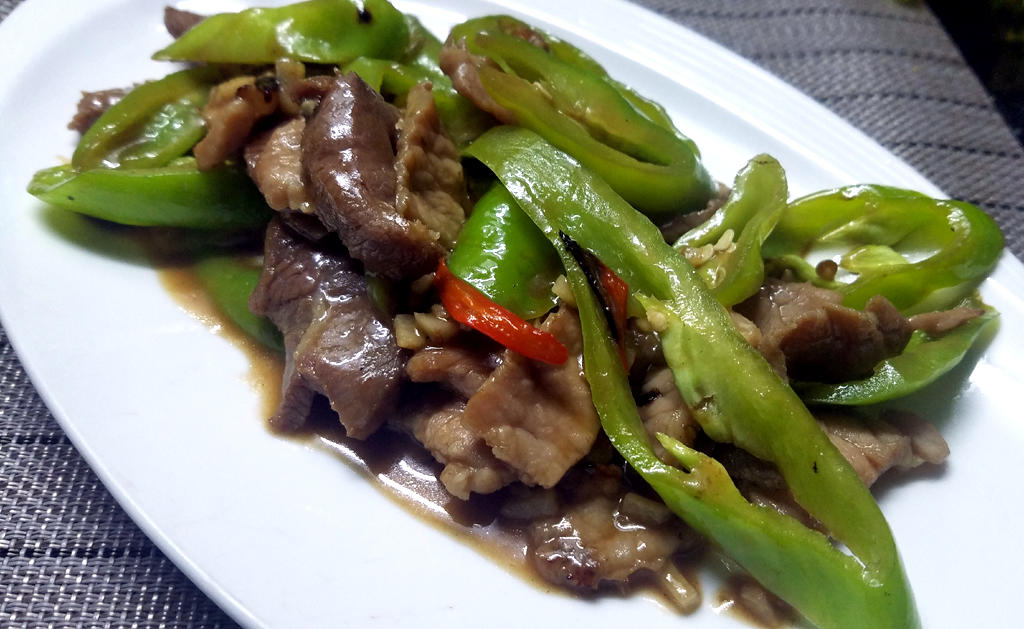
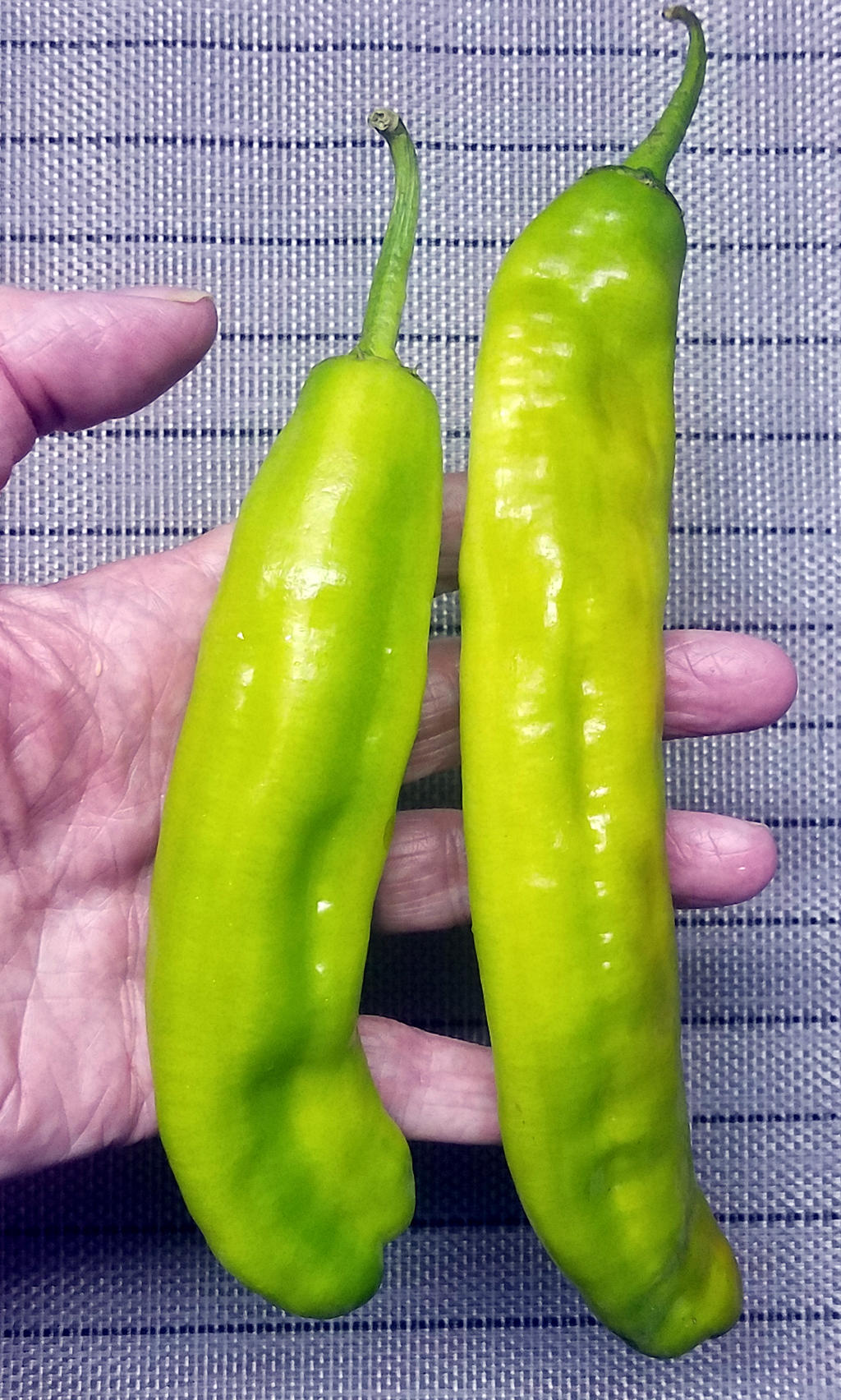
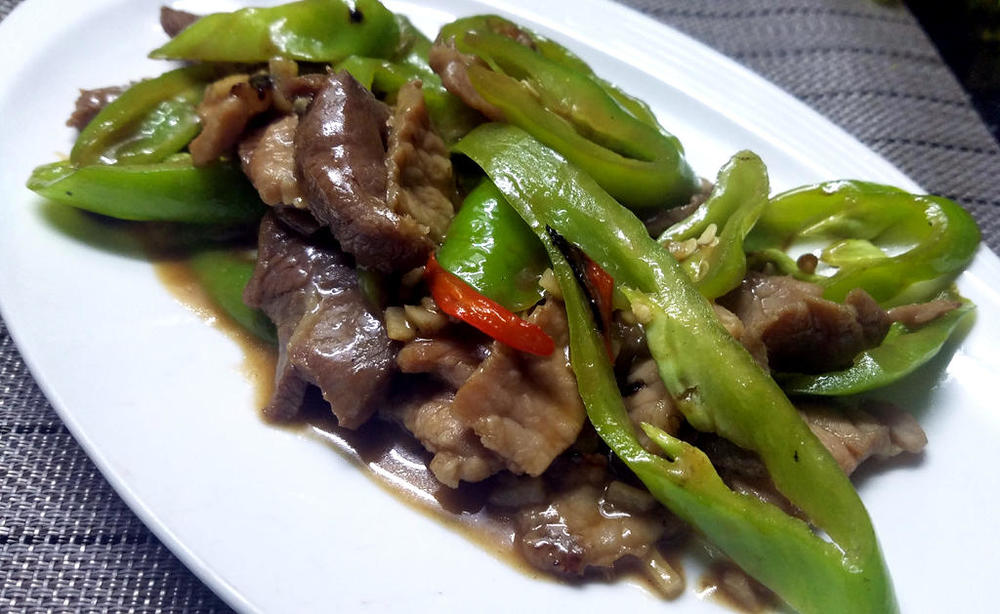
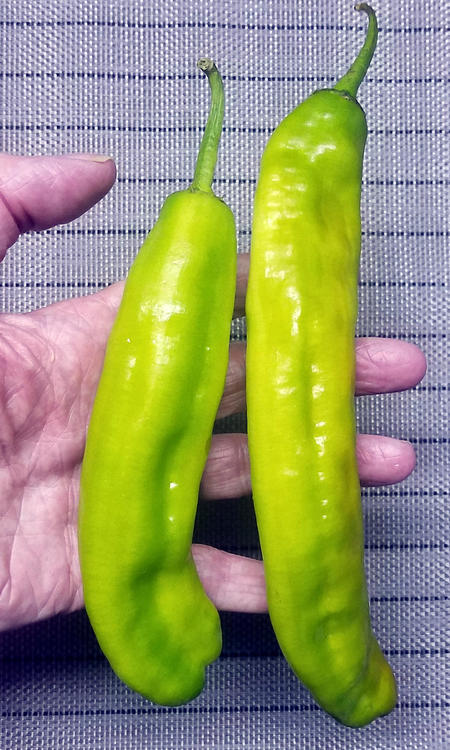
Tonight. 青椒肉片 (qīng jiāo ròu piàn) - Pork with green chillies. I threw in a small red one too as the green ones are a bit tame for my asbestos mouth. Pork slices marinated in the usual: Shaoxing wine, garlic, ginger, red chilli and potato starch. Stir fried with the green chillies. Finished with a splash of soy sauce and sesame oil. Served with rice and wilted spinach. I don't know what these large green chillies might equate to in American (or any other) terms, if anything. I only know the Chinese name which helpfully means 'green chillies'. They are fairly mild until one day one of them sneaks up and sends your head and mouth cutting around the cosmic.
-
I did ask around when I was in Ho Chi Minh (Saigon) back in May, but got nowhere.. Sorry, I forgot to tell you at the time. But, don't give up!
-
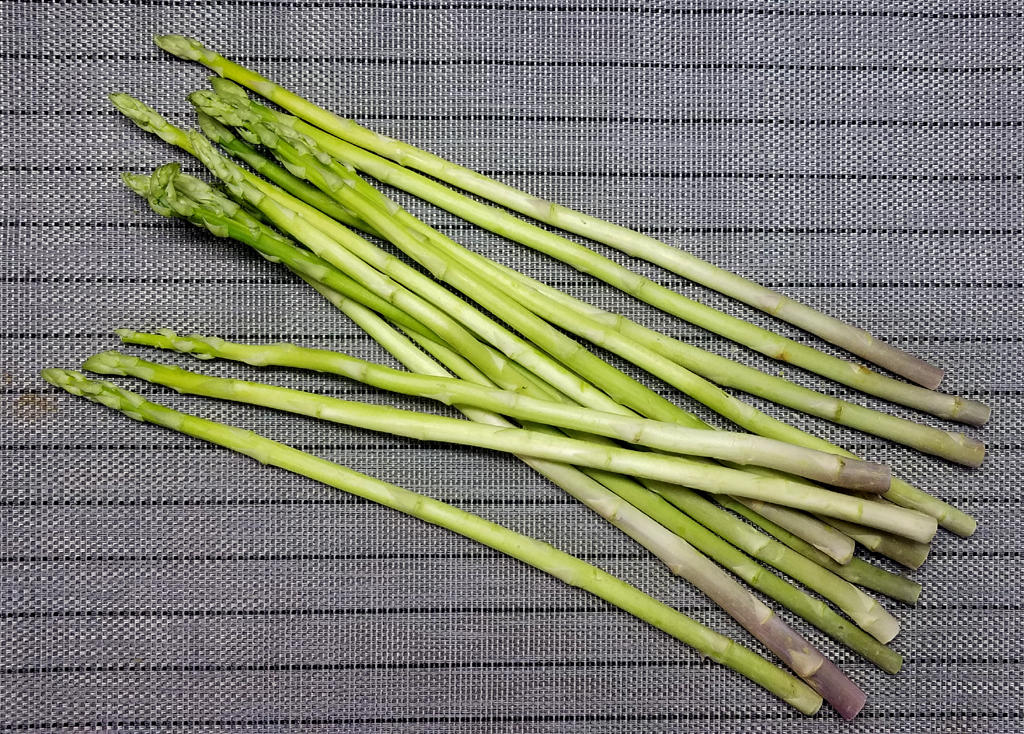
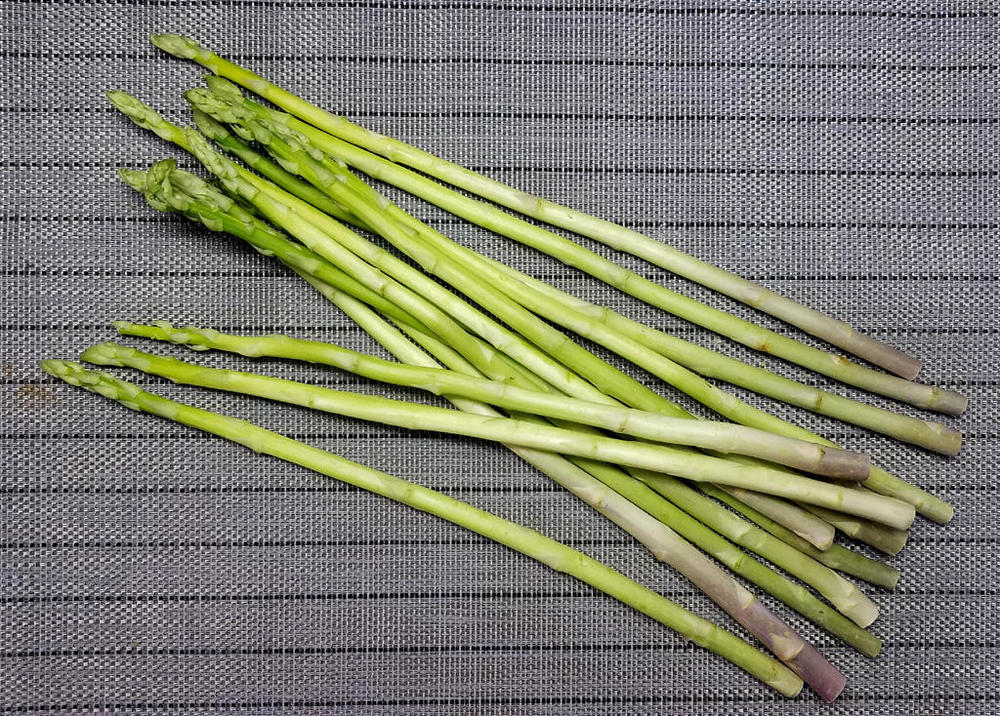
Asparagus officinalis For the first 15 years I lived in China, I never saw asparagus once. Then about 5 or 6 years ago it began to appear sporadically. Now it is everywhere and China has become, by far, the world's largest producer. Other names in English include sparrowgrass and sprue, although the latter is usually only used for inferior straggly stalks. My son, as a child, called it 'sparrow juice', which remains a family tradition. In Chinese, it's 芦笋 (Mand: lú sǔn; Cant: lou4 seon2), literally 'reed' bamboo'. This causes all sorts of confusion. Most Chinese friends are convinced it's a type of bamboo, despite it being totally unrelated. I've only ever seen it being stir fried in Chinese cuisine. Being from the UK, I know that the best asparagus (and my 100% favourite vegetable) is English asparagus, only available from April 23rd until mid-summer's day. End of argument.
-
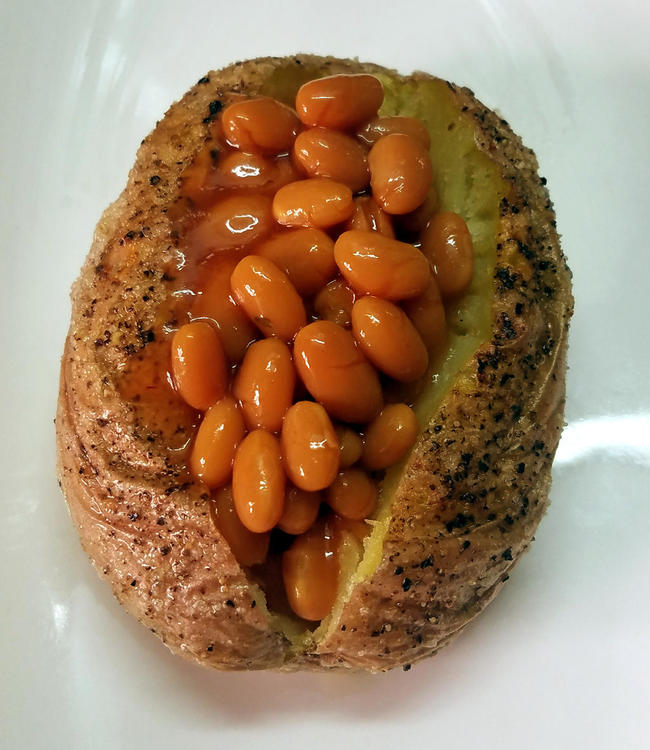
Busy day. Needed a quick lunch. Microwave baked potato with canned baked beans. 10 minutes. Sorted.
-
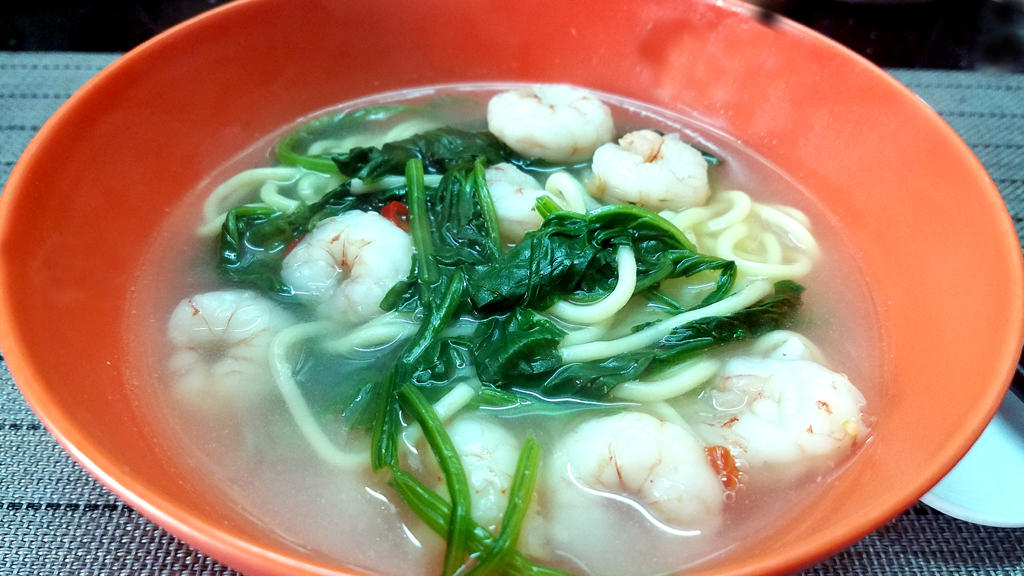
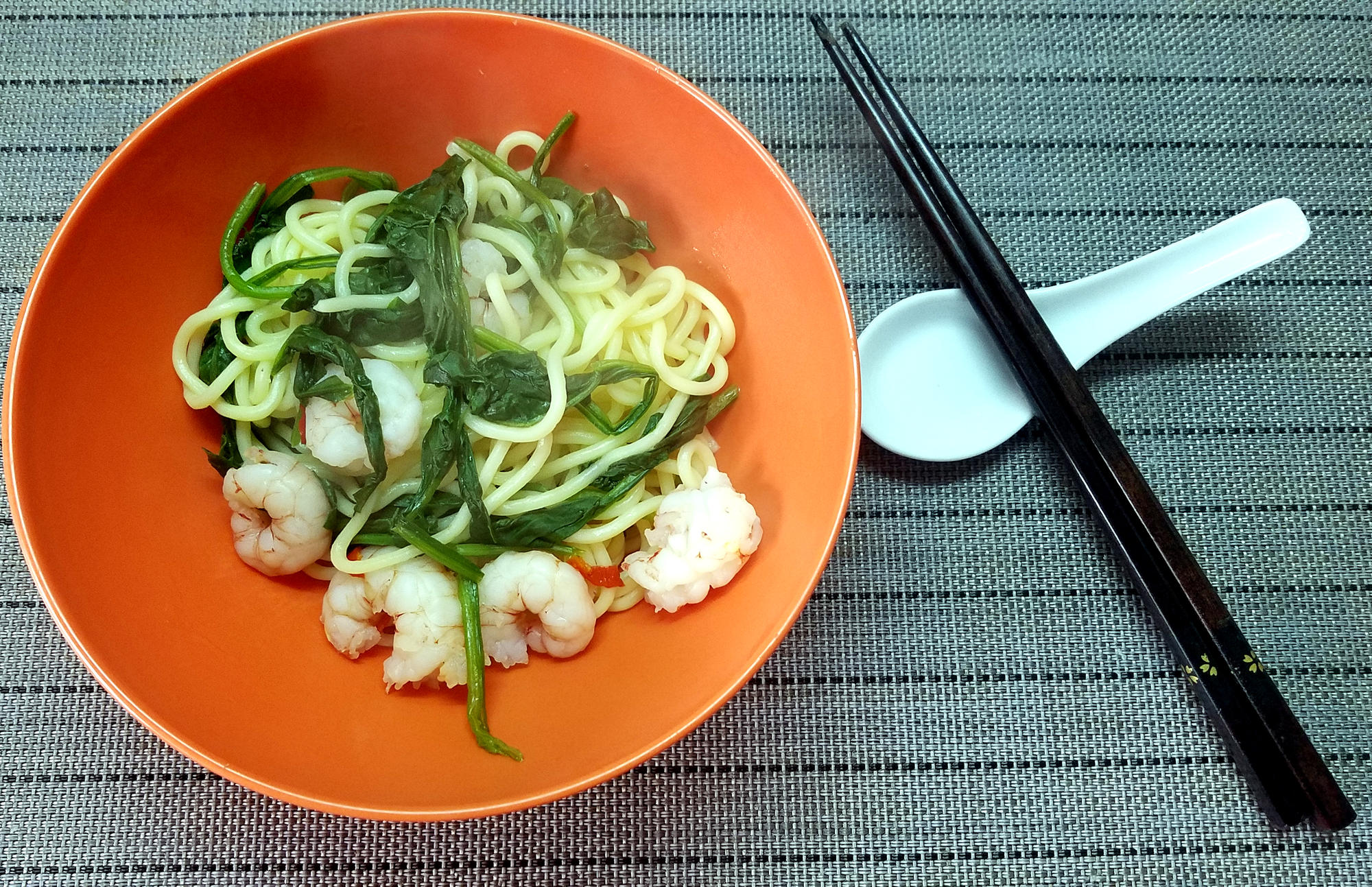
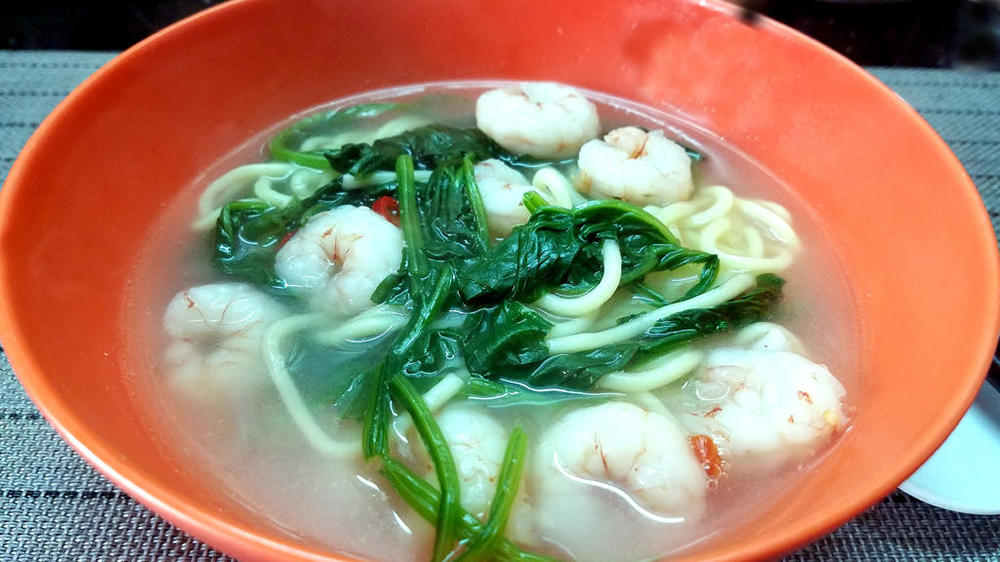
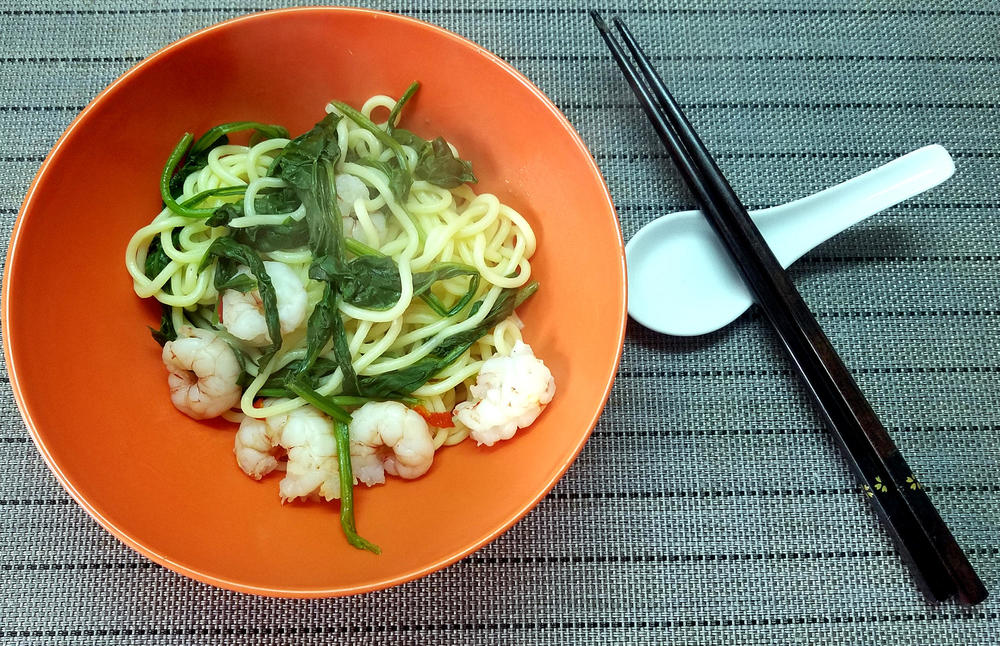
Wild shrimp in a fish stock with garlic, ginger, white pepper, fresh ramen noodles and spinach. I plated the solids separately first to let you see them, then added the broth.
-
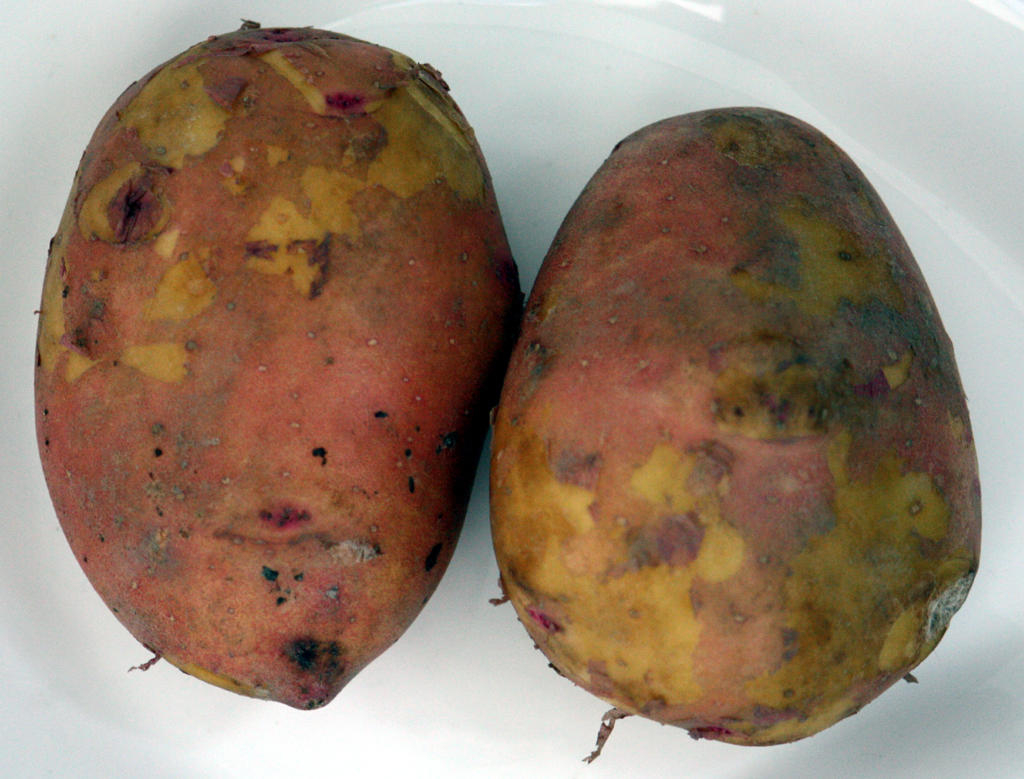
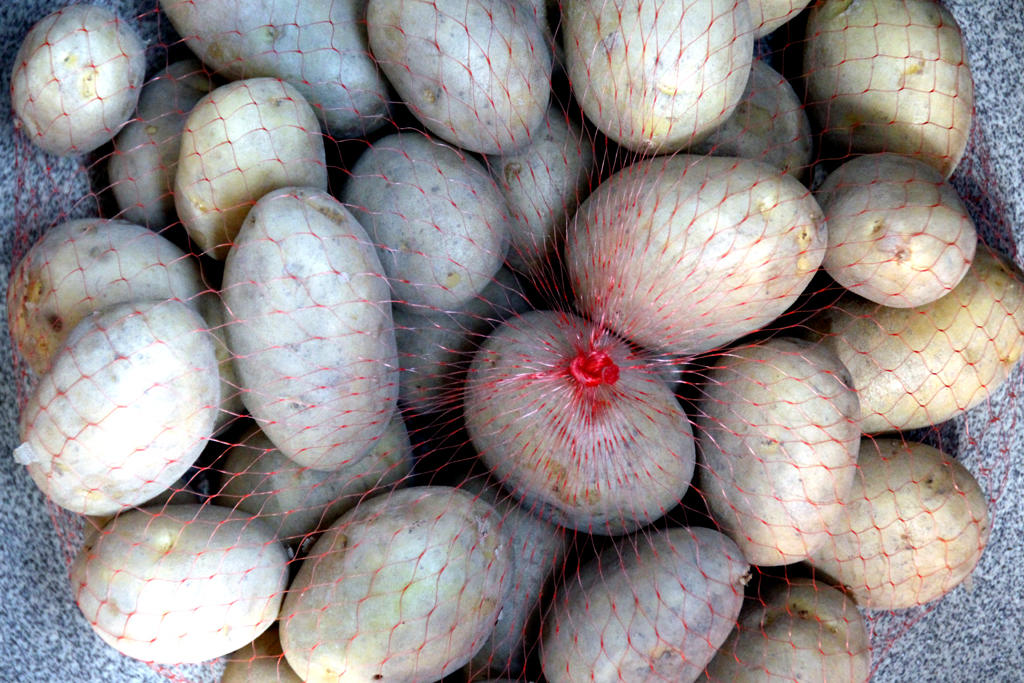
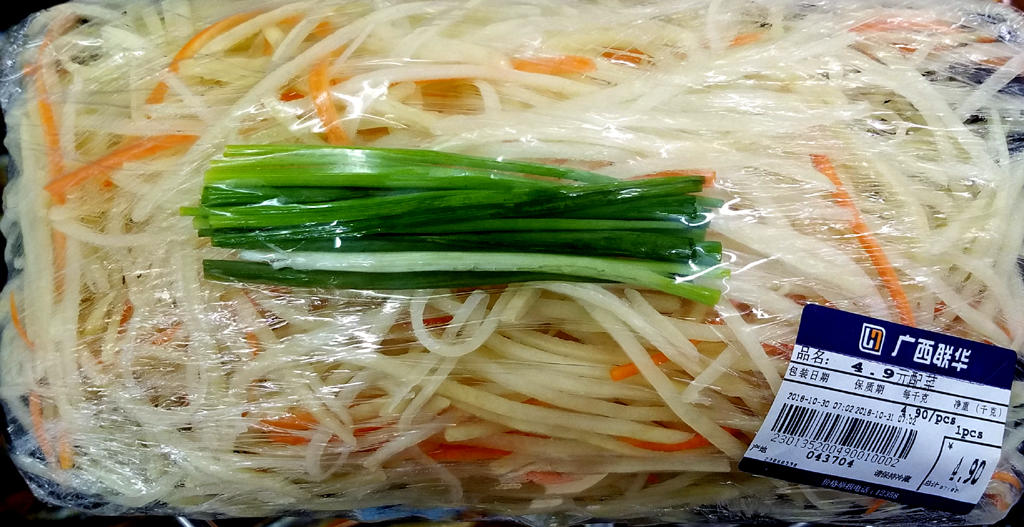
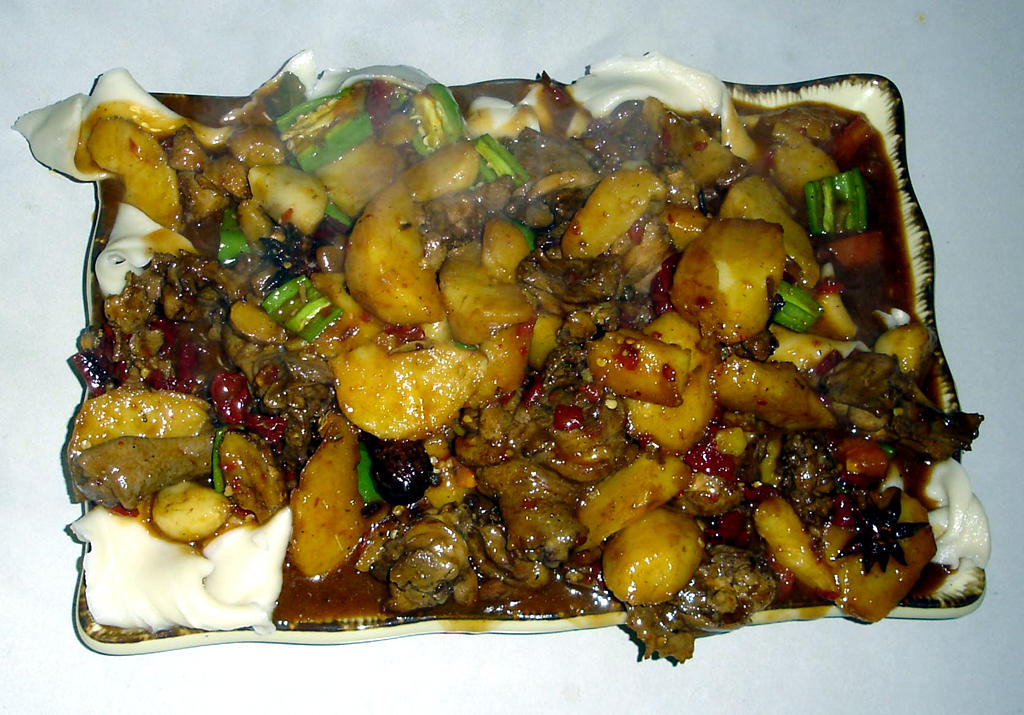
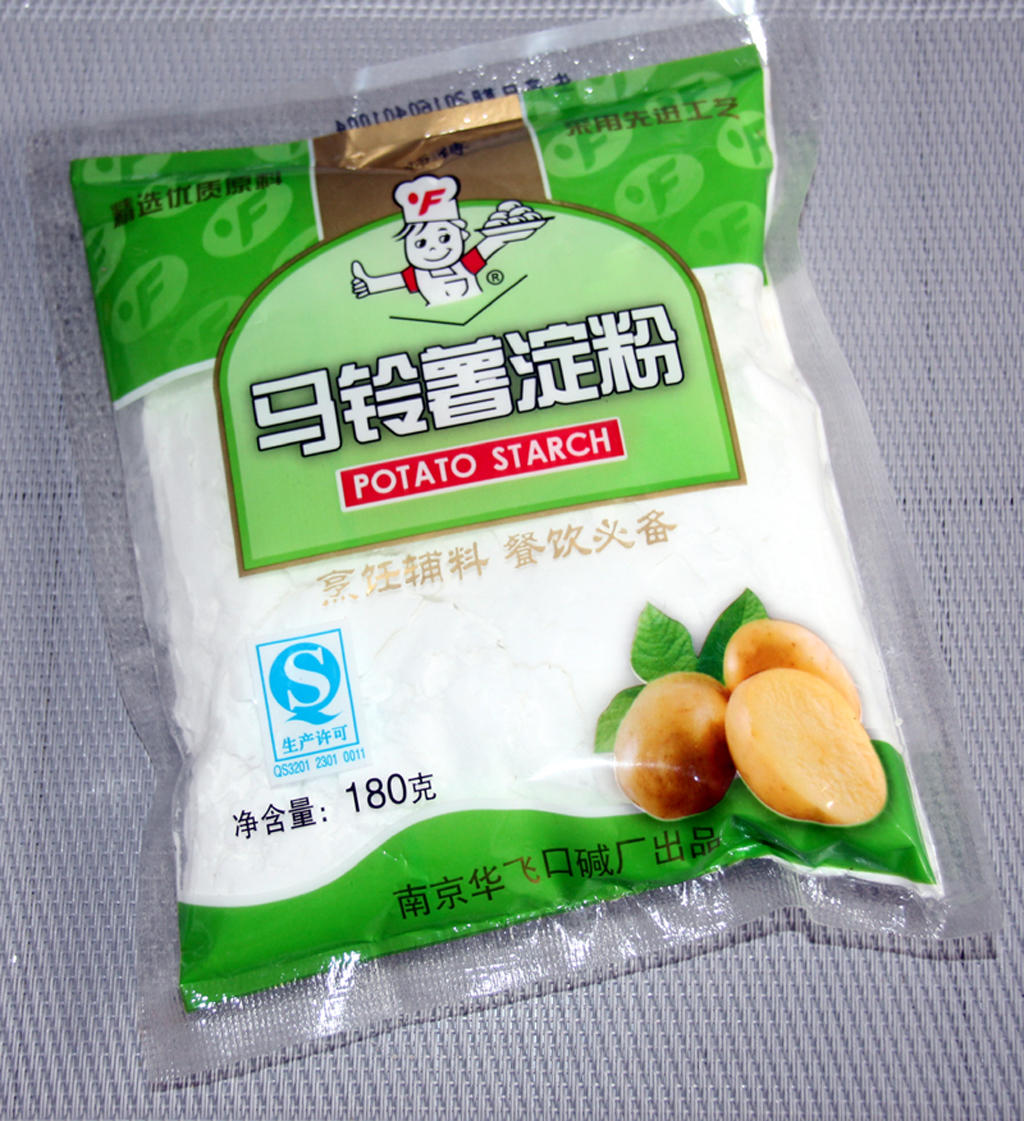
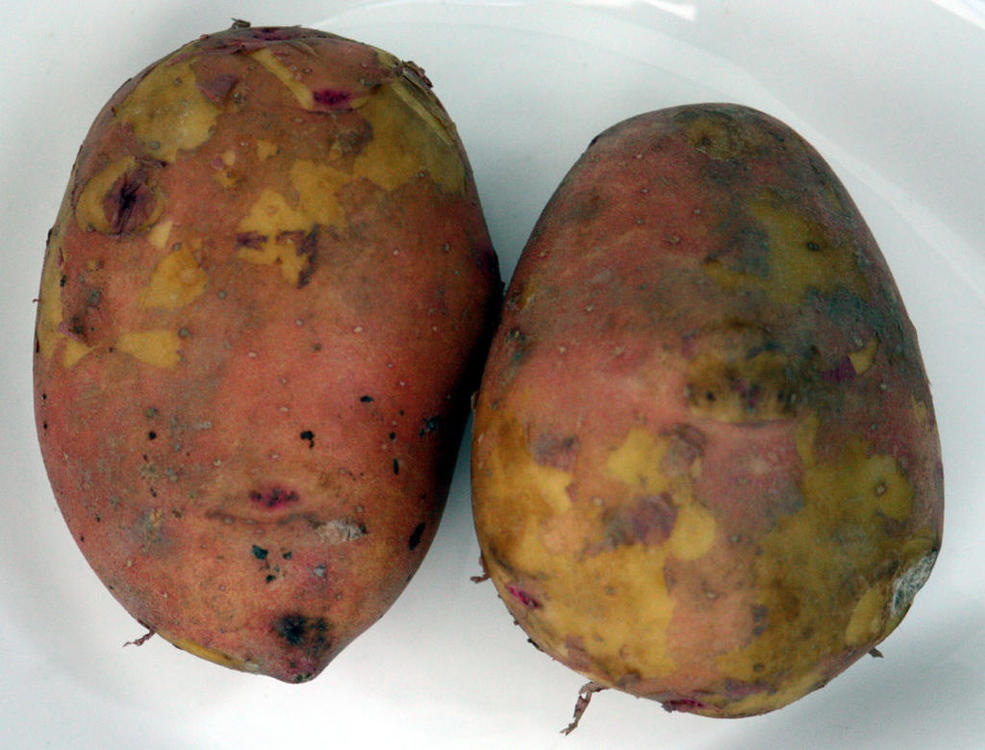
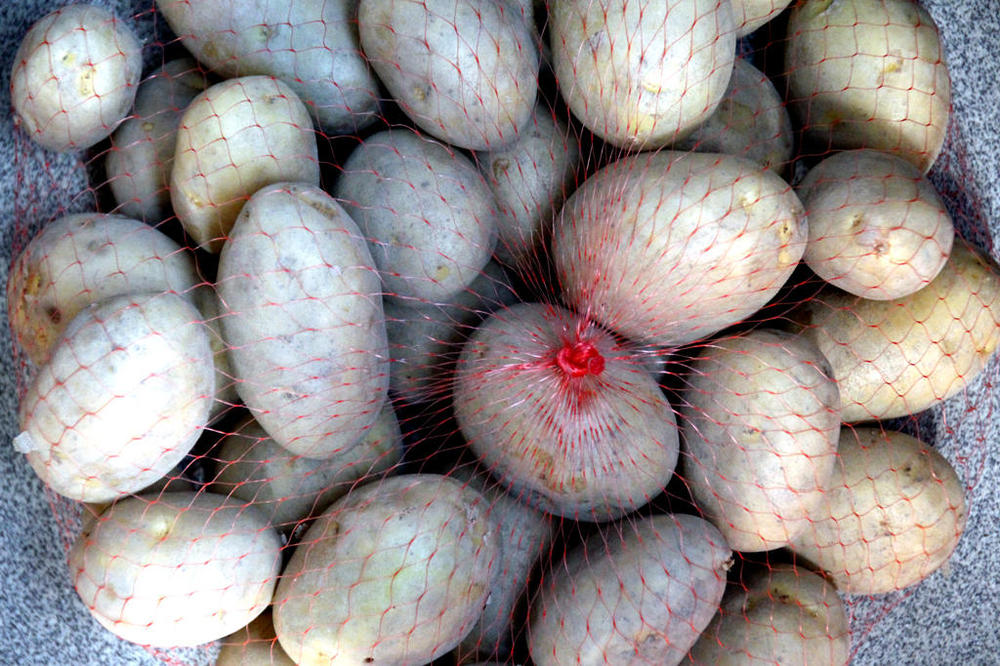
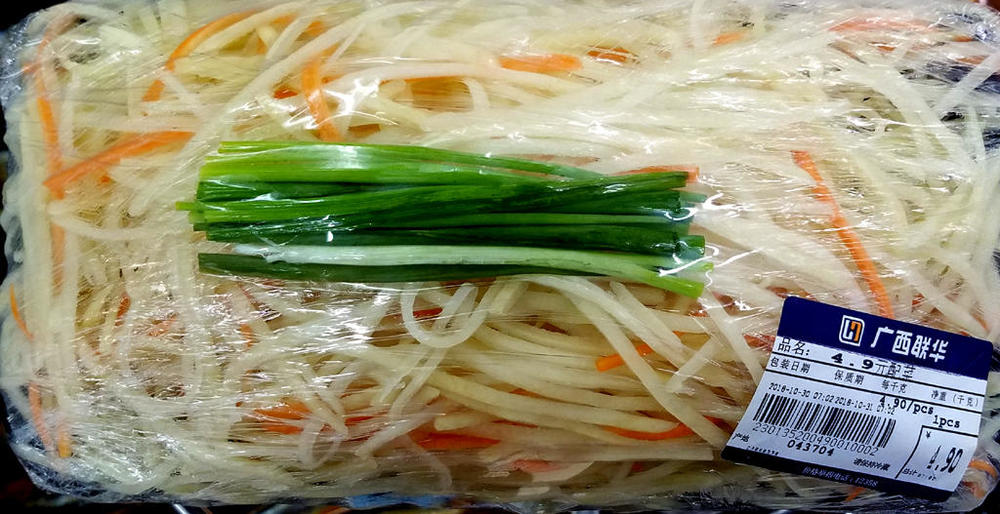
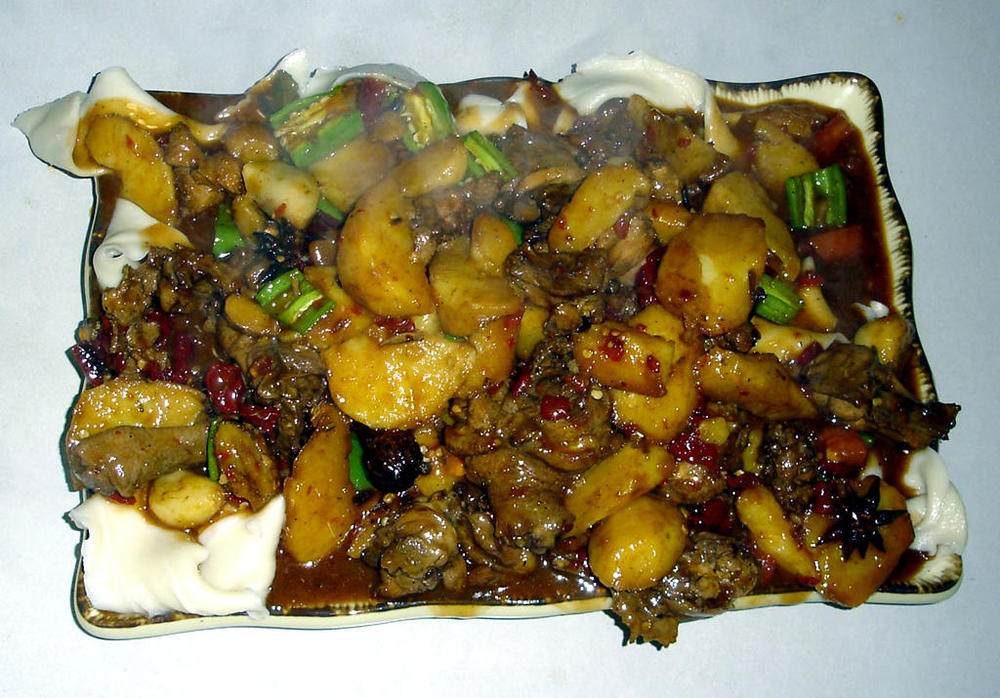
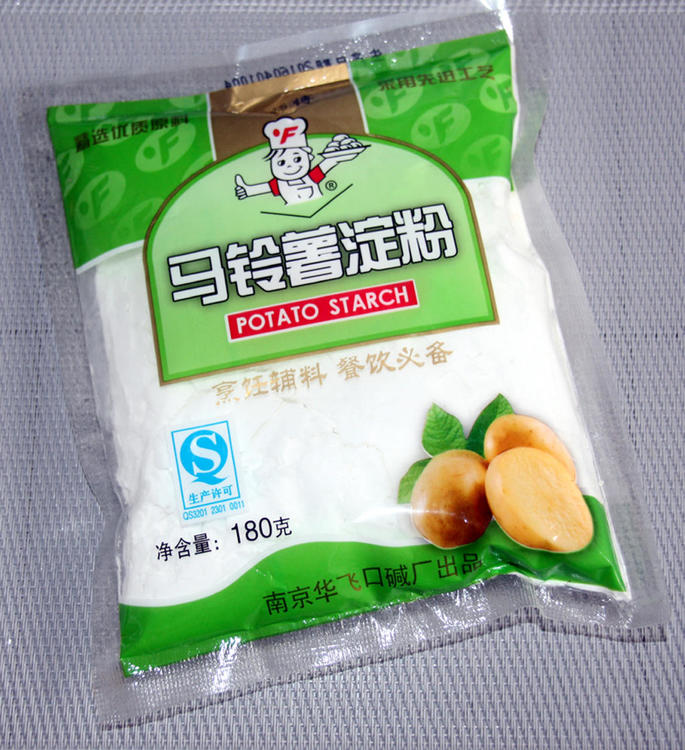
Solanum tuberosum, the humble potato, spud, tattie, tater. China also has. In fact China is the leading producer of potatoes, with 26% of the supply (2016). There are many different names in Chinese for the tuber of the potato plant, but the most common are 马铃薯 (Mand: mǎ líng shǔ; Cant: maa5 ling4 syu4*2), literally 'horse bell potato'), 土豆 (Mand: tǔ dòu; Cant: tou2 dau6*2), literally 'earth bean', and 洋芋 (Mand: yáng yù; Cant: joeng4 wu6), literally 'foreign tuber'. I am frustrated by Chinese potatoes. They only have one unidentified variety. In fact, many of my otherwise knowledgeable Chinese friends find my telling them that there are hundreds somewhat ridiculous. We get them both as regular sized spuds and as baby potatoes. Those we get are a waxy variety - the least useful in my opinion. However, there is no incentive for them to experiment with other varieties. Potatoes have long been considered 'peasant food' and beneath the dignity of the aspiring classes. That has changed ever so slightly since the introduction of fries through KFC and McDonald's etc, although those companies grow their own potatoes which are not sold directly to the public. One of my abiding memories of my first few months in China is serving chips/fries to some new Chinese friends and before I could stop them they sprinkled sugar all over them! There is however, one Chinese potato dish which I do like. 酸辣土豆丝/酸辣土豆絲 (Mand:suān là tǔ dòu sī; Cant: syun1 laat6 tou2 dau6*2 si1), 'hot and sour potato slivers'. Originally from Sichuan, but available all over China. Potatoes and carrots are finely slivered and stir fried with chilli, then dressed in white wine vinegar. Markets and some supermarkets sell the vegetables pre-cut, just for this dish. It is the only one most people know. Pre-wrapped potato and carrot slivers Then there is the wonderful Muslim dish from China's troubled Xinjiang Province, 大盘鸡/大盤雞 (Mand: dà pán jī; Cant: daai6 pun4 gai1). This is a stew of chicken and potatoes served over noodles. Wonderful. In addition the potato is an important product for the manufacture of potato starch - 马铃薯淀粉/馬鈴薯澱粉(Mand: mǎ líng shǔ diàn fěn; Cant: maa5 ling4 syu4*2 din6 fan2), used as a thickening agent in many parts of China, particularly Sichuan.
-
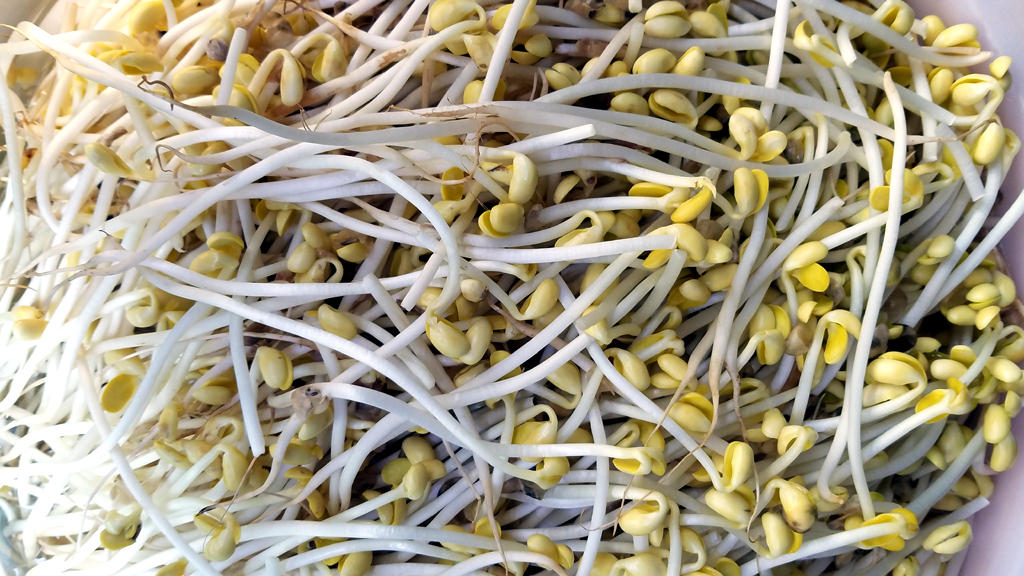
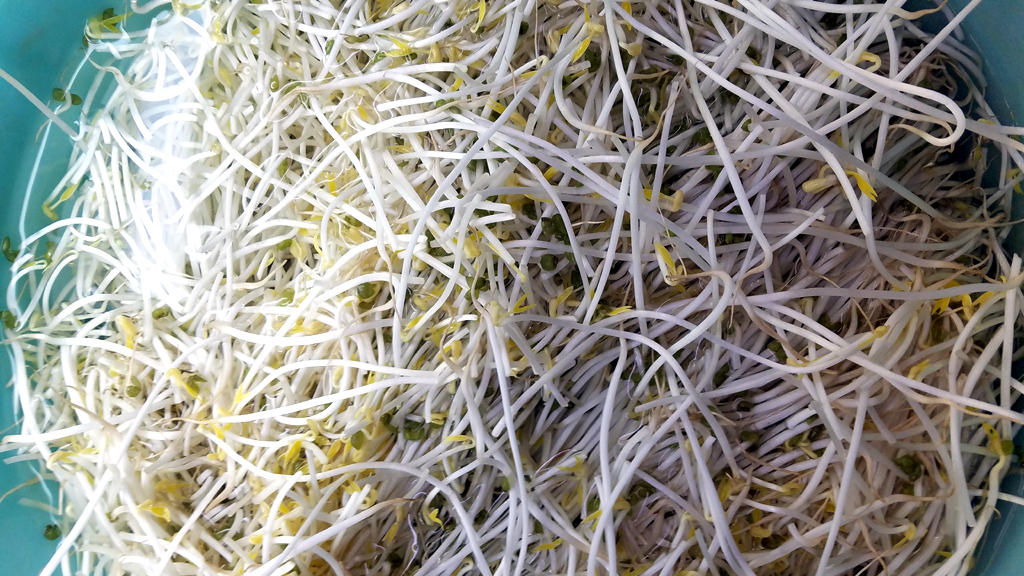
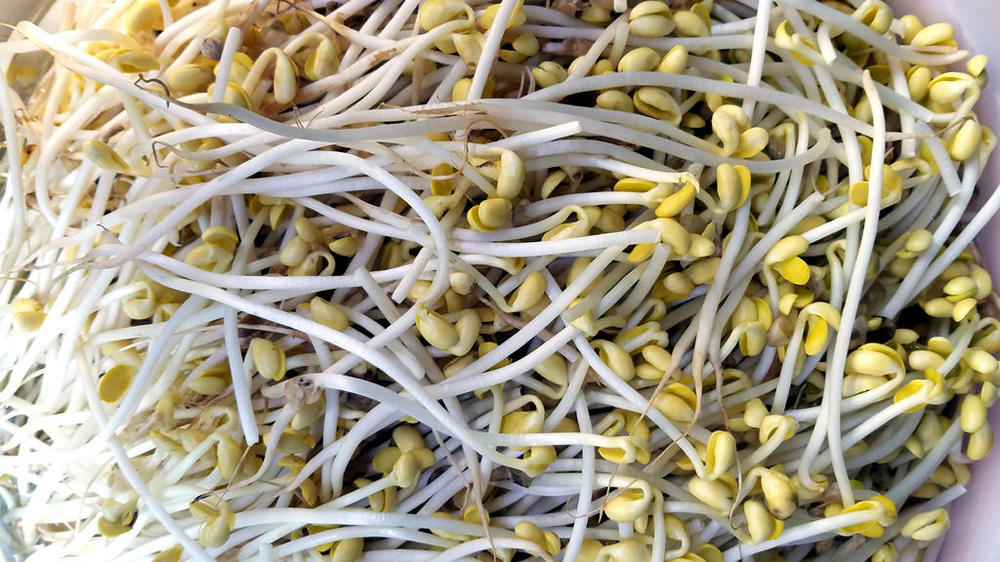
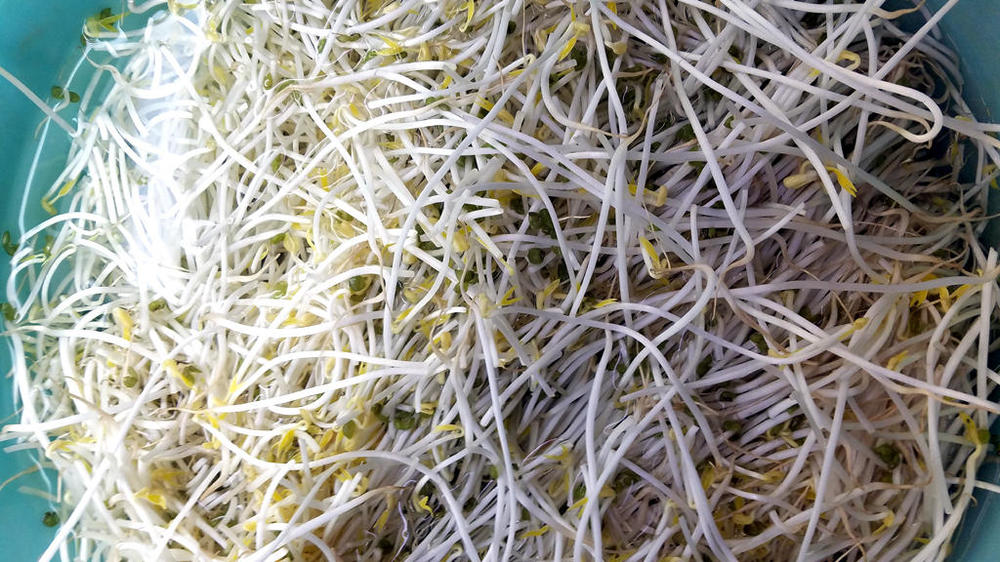
Talking of sprouts, we also, of course, get beansprouts. In Chinese, 豆苗 (Mand: dòu miáo; Cant: dau6 miu4) or 豆芽 (Mand: dòu yá; Cant: dau6*2 ngaa4). These generally come in two varieties: 'yellow' and 'green'. The 'yellow' one' are sprouted soy beans (Glycine max ). They are 黄豆芽 (Mand: huáng dòu yá; Cant: wong4 dau6 ngaa4), literally 'yellow bean sprout' or 大豆芽 (Mand: dà dòu yá; Cant: daai6 dau6*2 ngaa4), literally 'big bean sprout. The 'green' are mung bean sprouts. Vigna radiata. 绿豆芽/綠豆芽 (Mand: lǜ dòu yá; Cant: luk6 dau6 ngaa4), literally 'green bean sprout'. Both types of bean sprouts are used in stir fries, with fried noodles, in soups, hot pots, spring rolls etc. They are always cooked.
-
Thanks. Yes, they have a mild peanut flavour.
-
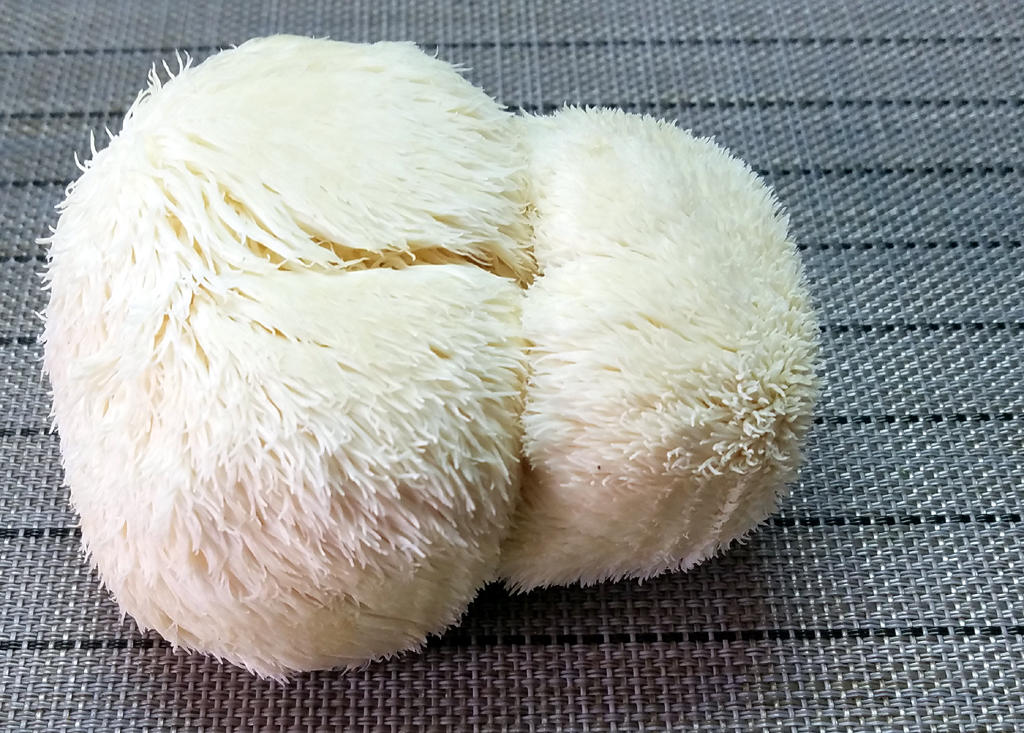
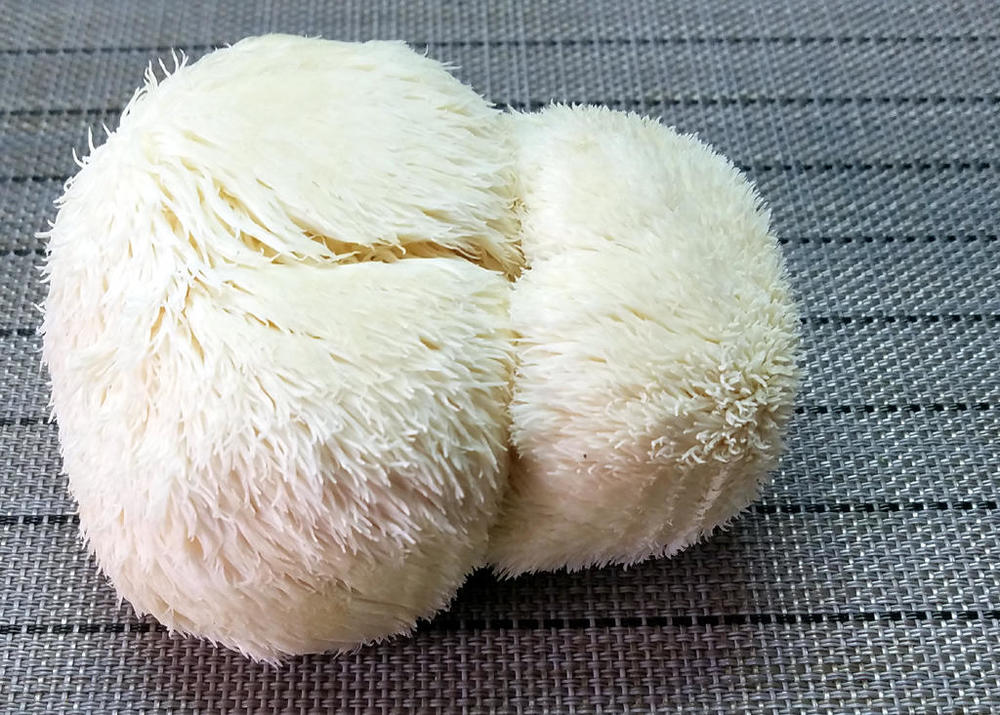
Way back when, in this post, I mentioned the dried version of these. A couple of days ago, the fresh ones turned up in one of the local supermarkets. Hericium erinaceus 狮头菇 (shī tóu gū), 'lion head mushroom' or 猴头菇 (hóu tóu gū), 'monkey head mushroom' in Chinese. In English, lion's mane mushroom, monkey head mushroom, bearded tooth mushroom, satyr's beard, bearded hedgehog mushroom, pom pom mushroom, or bearded tooth fungus.
-

Should I start a blog with the recipes of Antoine Carême?
liuzhou replied to a topic in Cookbooks & References
To be honest, the chances of you earning money from such a niche interest is negligible, either through a blog or a book. Do it out of love for the subject, which I think is very worthy. -
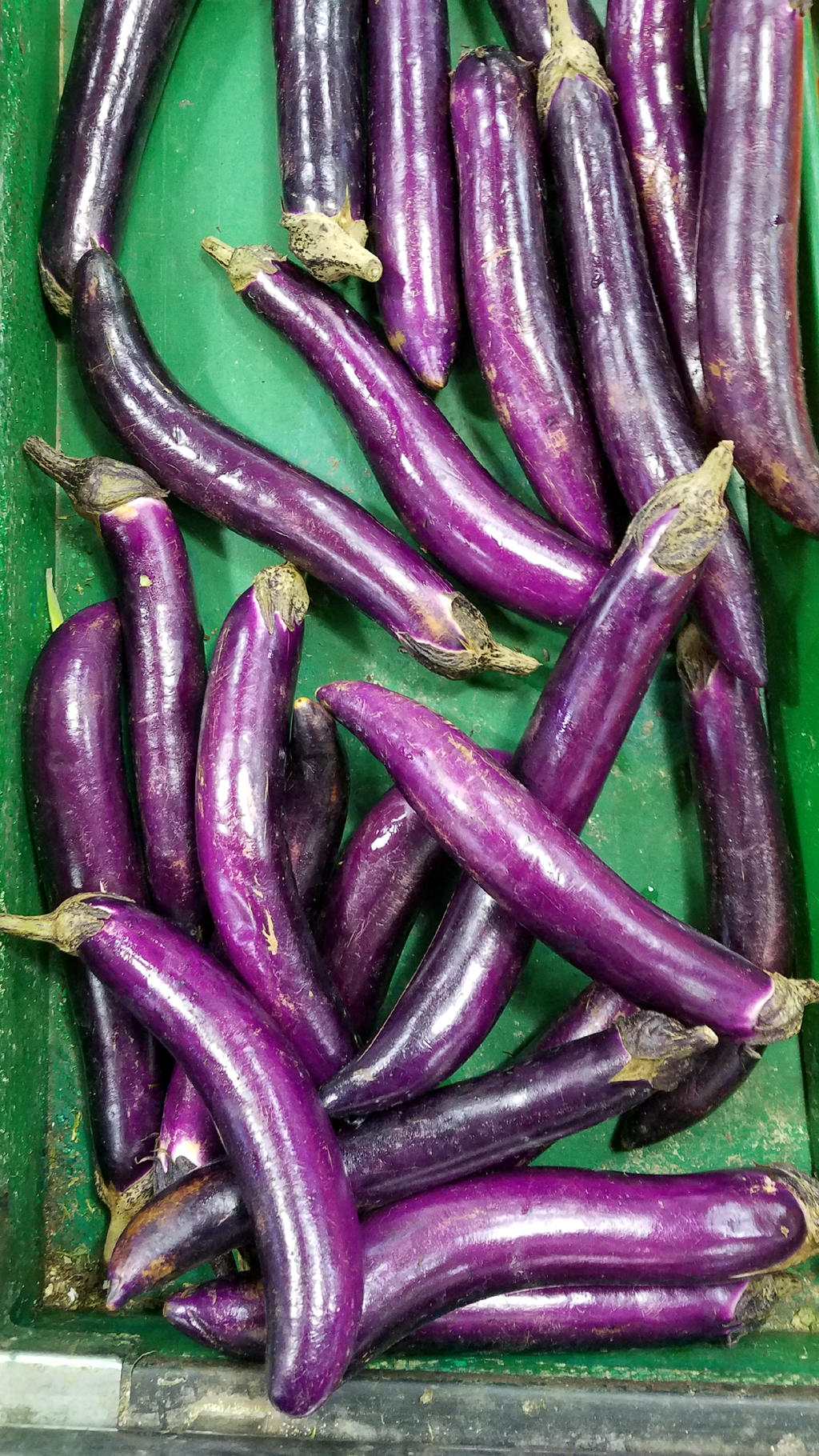
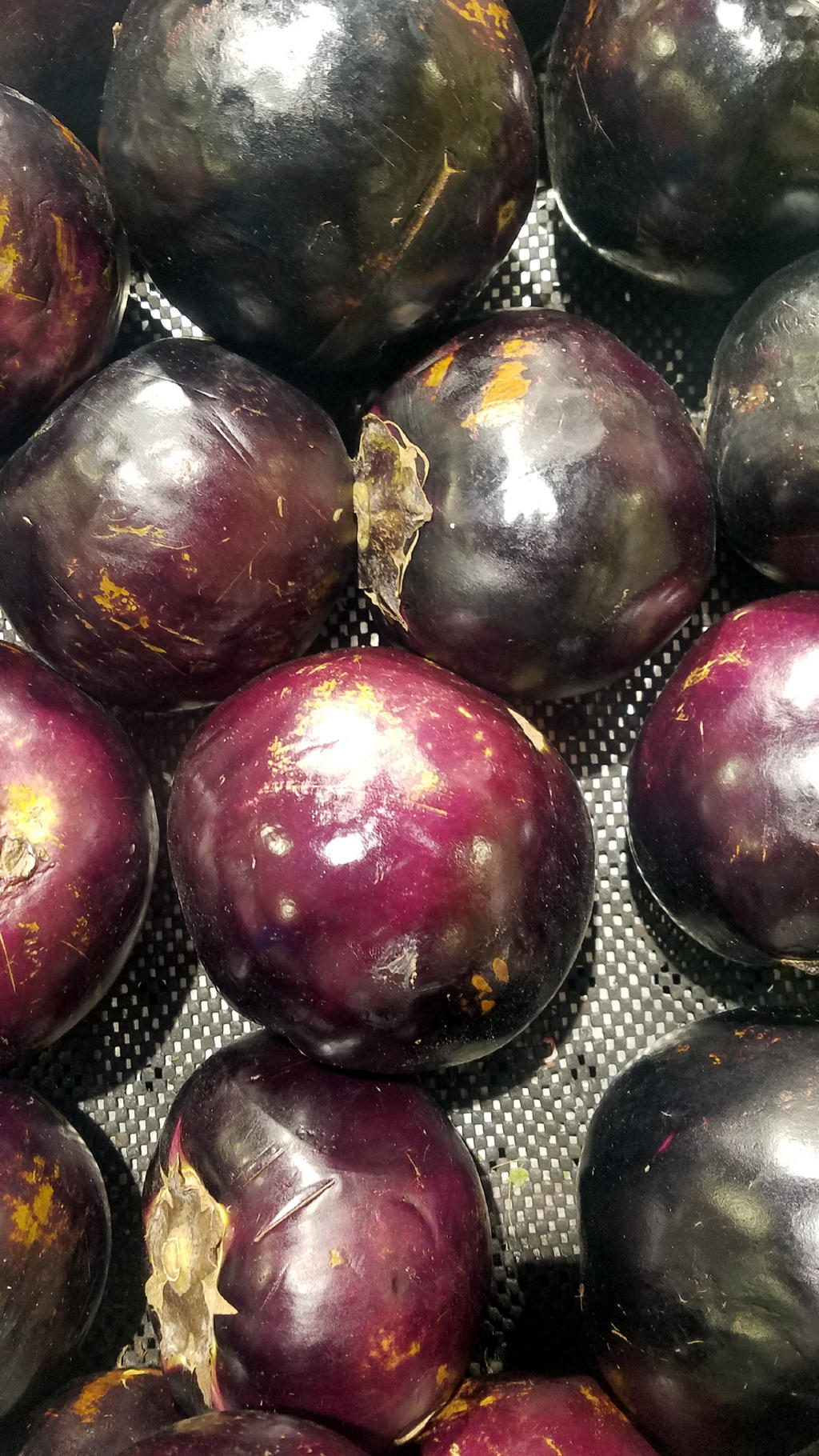
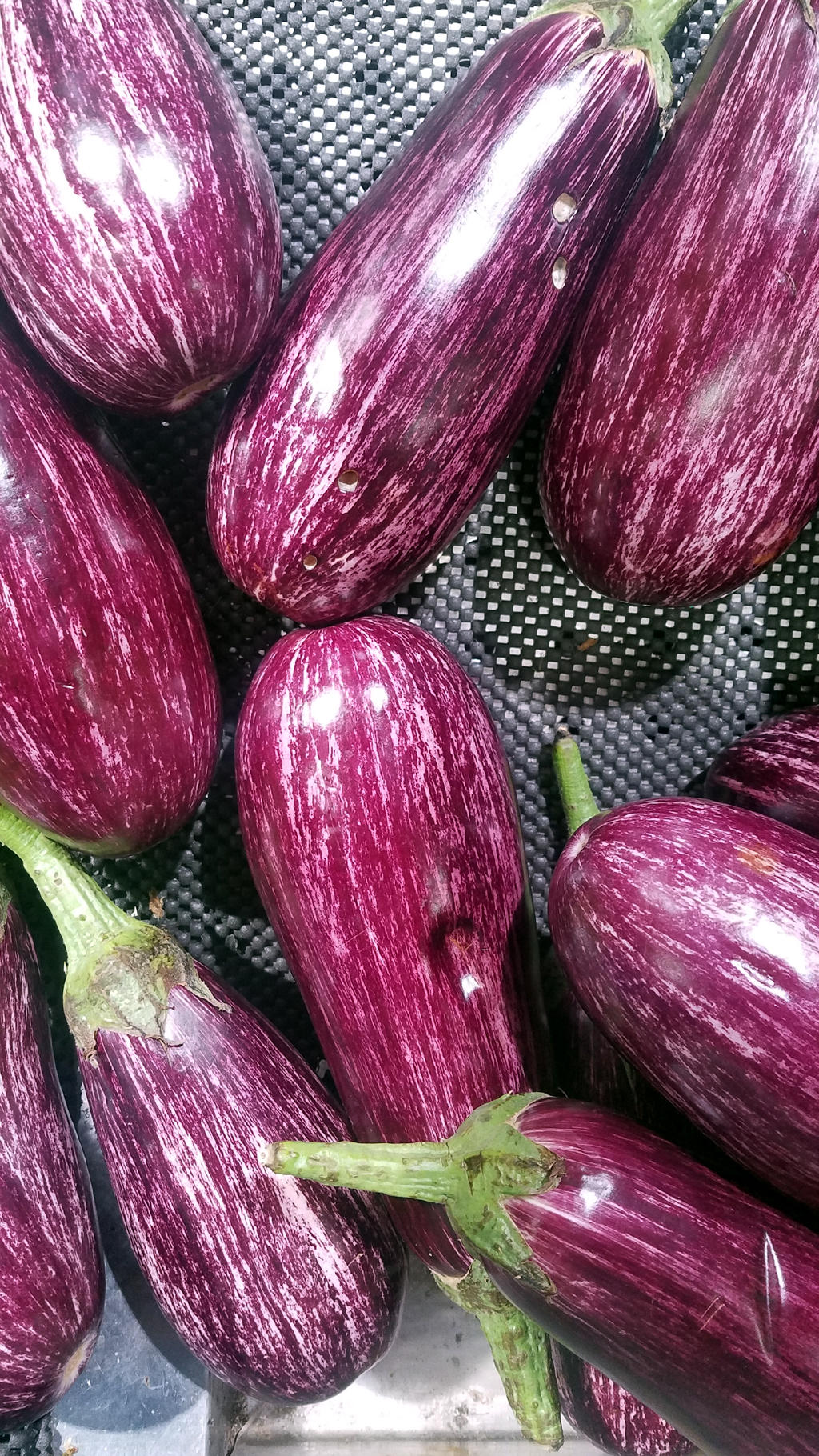
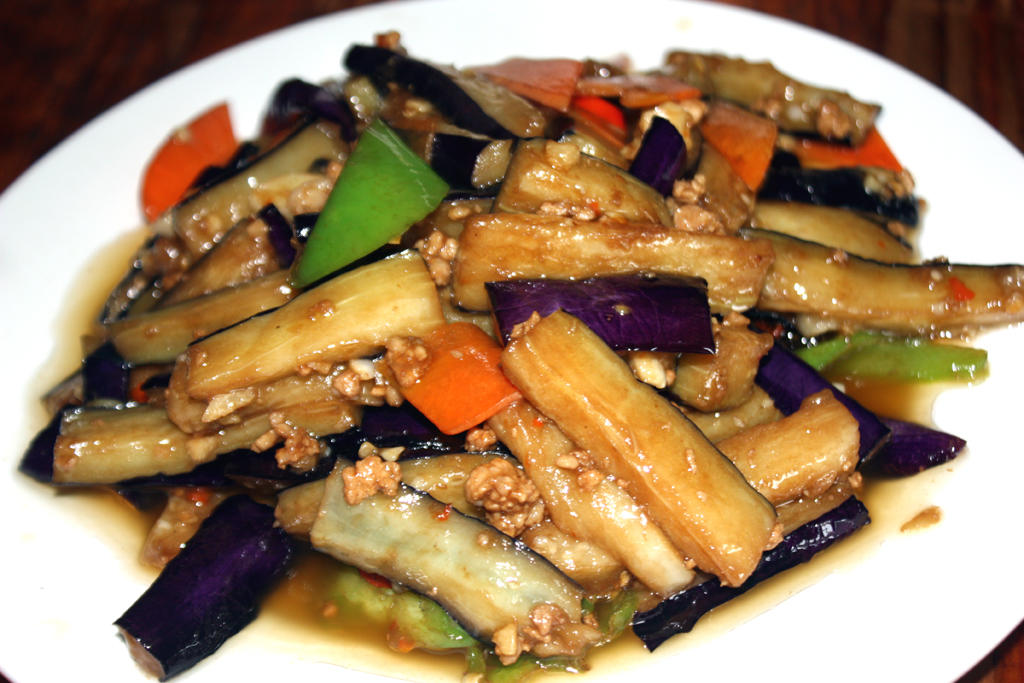
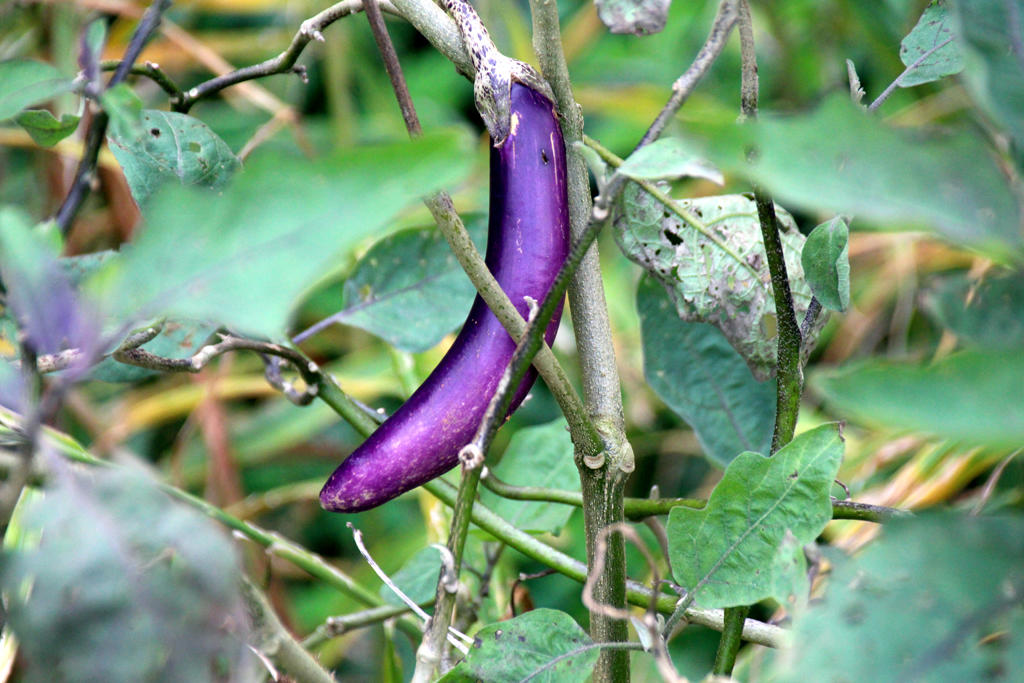
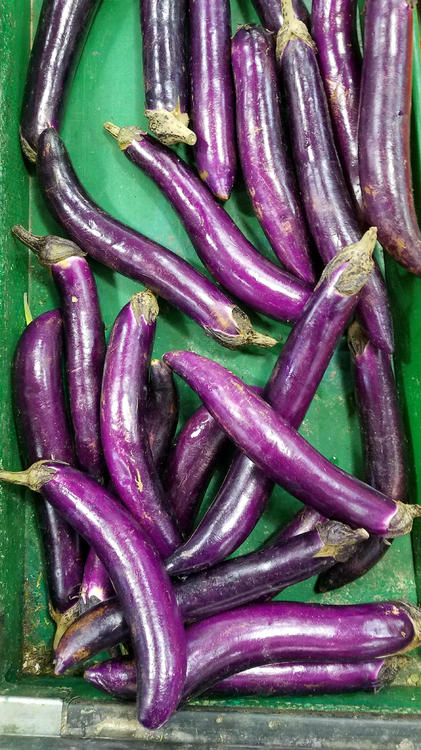
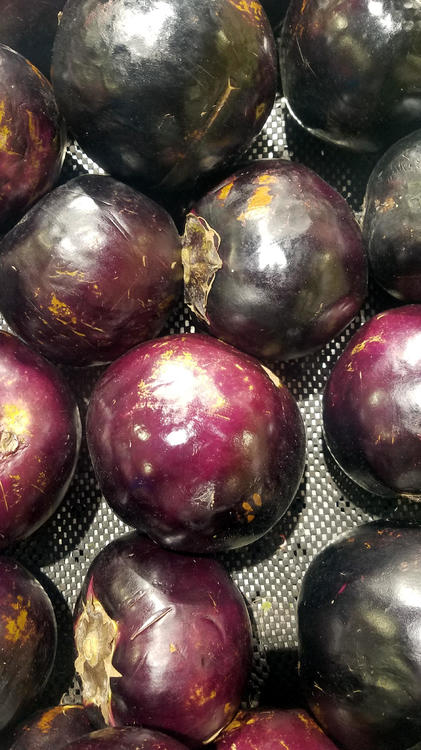
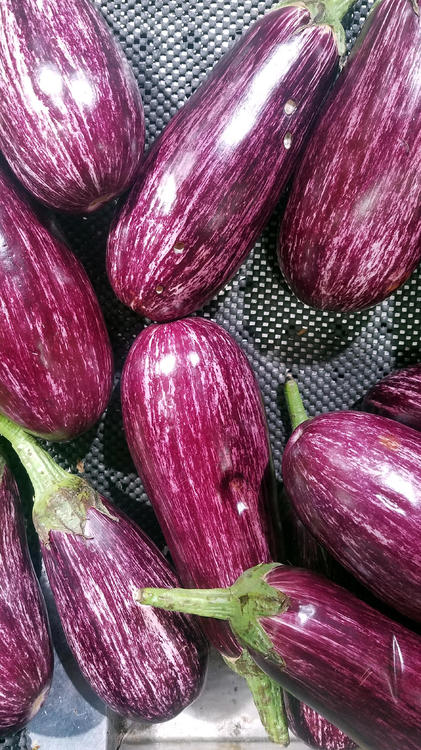
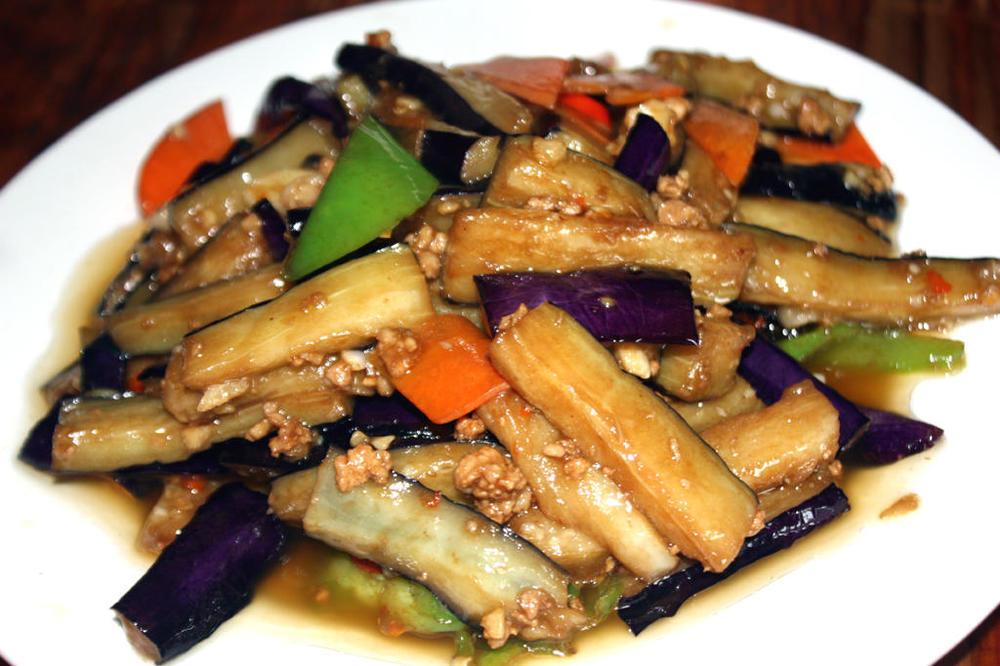
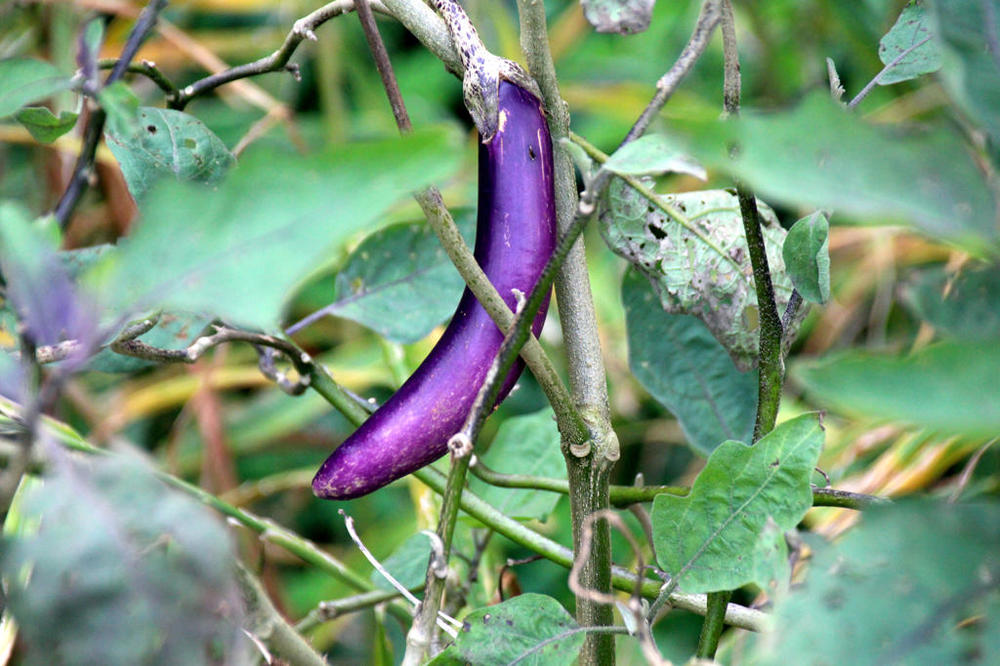
Solanum melongena Here is another that I never associated with China until coming here. Again it turns out that China grows most of the world's supply - 62% in 2016. I am talking aubergine or eggplant. Being British/French , I default to 'aubergine' from the French, but here I will force myself to use 'eggplant'. not out of deference to sensitive members, but because it is shorter and I'm going to have to type it a lot. 😄 In Chinese, it's 茄子 (Mand: qié zi; Cant: ke4*2 zi2). Technically it's a fruit or berry, but always treated as a vegetable, so here it is. China being in Asia, we usually get the long slim Asian variety. That said, other varieties do turn up on occasion. My local supermarket had three, today - the ones above and these round ones... and these Sadly we do not get the white variety, 白茄子 (Mand: bái qié zi; Cant: baak6 ke4*2 zi2) here, although I've seen them in Hong Kong. Nor do we get the mini Thai eggplants which I love so much, 迷你茄子 (Mand: mí nǐ qié zi; Cant: mai4 nei5 ke4*2 zi). You will notice that the Chinese name includes a Chinese phonetic equivalent if the English 'mini". Eggplants are used in many dishes, but there are two dishes which are well known throughout China. The first, eggplant with minced/ground pork is either 茄子肉末 (Mand: qié zi ròu mò; Cant: ke4*2 zi2 juk6 mut6) or 肉末茄子 (Mand: ròu mò qié zi; Cant: juk6 mut6 ke4*2 zi2). The names indicate which ingredient is predominant. The first indicates that the dish has more egg plant than minced pork, the second the reverse. Some restaurants have both on their menus. The second is 鱼香茄子/魚香茄子 (Mand: yú xiāng qié zi; Cant: jyu4*2 hoeng1 ke4*2 zi2), which translates as 'fish-flavour eggplant'. It contains no fish. In fact, it's vegan in its traditional form. The moniker just means that it is cooked with the flavourings usually used with fish. Many online recipes for these two dishes conflate them into one, but they are from two distinct Chinese cuisines and have very different flavours. The first is from eastern China, especially Hangzhou near Shanghai; the second is from Sichuan. In Yunnan province , the Dai ethnic minority often roast eggplants. Delicious. Eggplant leaves and flowers are not edible and even handling them can cause nasty skin reactions. Eaten in large quantities the leaves are poisonous.
-
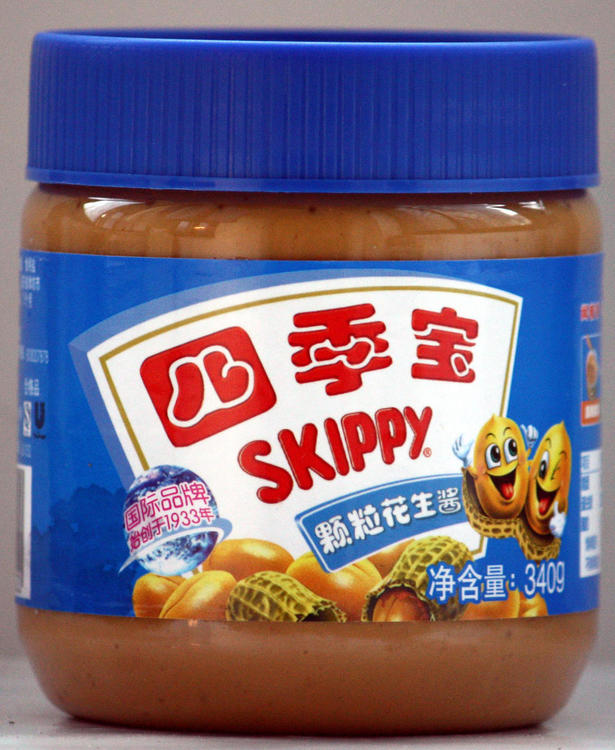
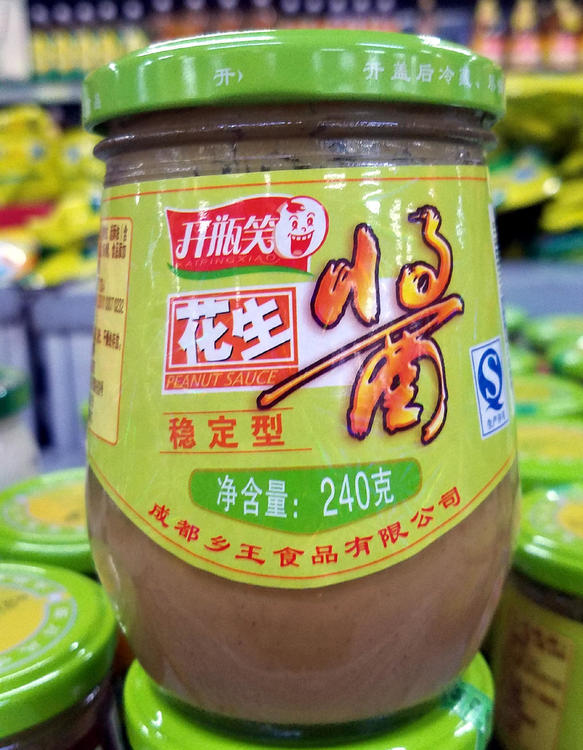
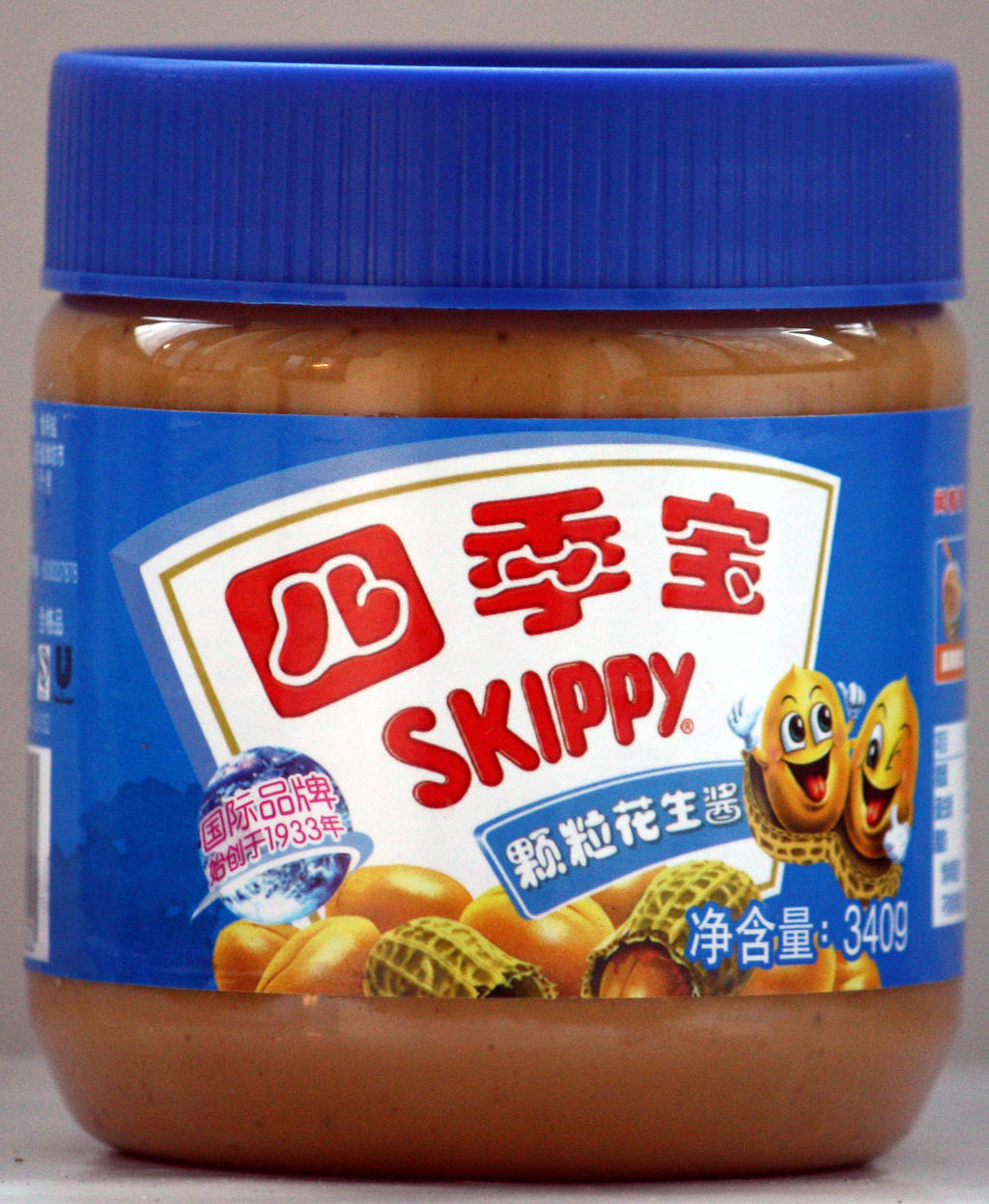
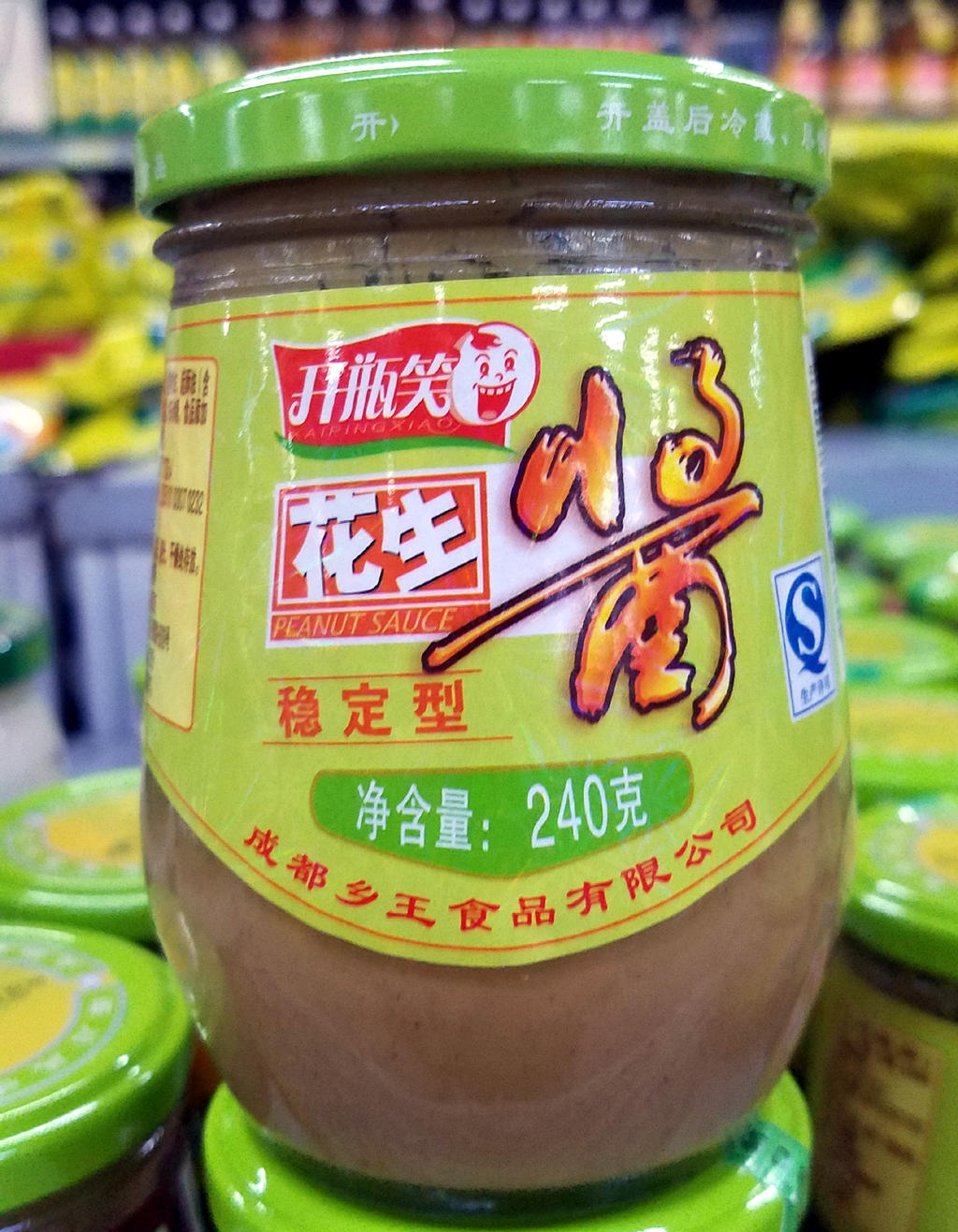
Oh yes. We get the Skippy brand, but also local types. They call that one peanut sauce, but it's peanut butter, really. But it's not a big thing here.