
Okanagancook
-
Posts
4,705 -
Joined
-
Last visited
Content Type
Profiles
Forums
Store
Help Articles
Everything posted by Okanagancook
-

Problem sealing liquids in chamber vac machine...
Okanagancook replied to a topic in Kitchen Consumer
Yes, you have too much vacuum. You will have to play around with the settings. First I would reduce the settings you were using to half, then try again. You don't want the liquid to boil up, but just before it does that. Also depends on how hard a vacuum you need. When I package sauces, I just want to exclude most of the air for freezing but if I am sous viding a stew or solid pieces of meat I want a little stronger seal so the bag doesn't float. The liquids need to be cold also. So, just experiment unless someone else has something more definitive. -
Thanksgiving 2015....One thing old, one thing new
Okanagancook replied to a topic in Food Traditions & Culture
I cooked a spatchcock turkey for our Canadian Thanksgiving, also my first time with a turkey. It was around 15 lbs and the thighs were done before the breast meat! It did not take as long as I thought, so my advice is to check it often. I brined it first. Comments around the table: "this is the best turkey I have ever eaten" -
So simple but so good! Looks like Spanish chorizo. What kind of rice did you use?
-
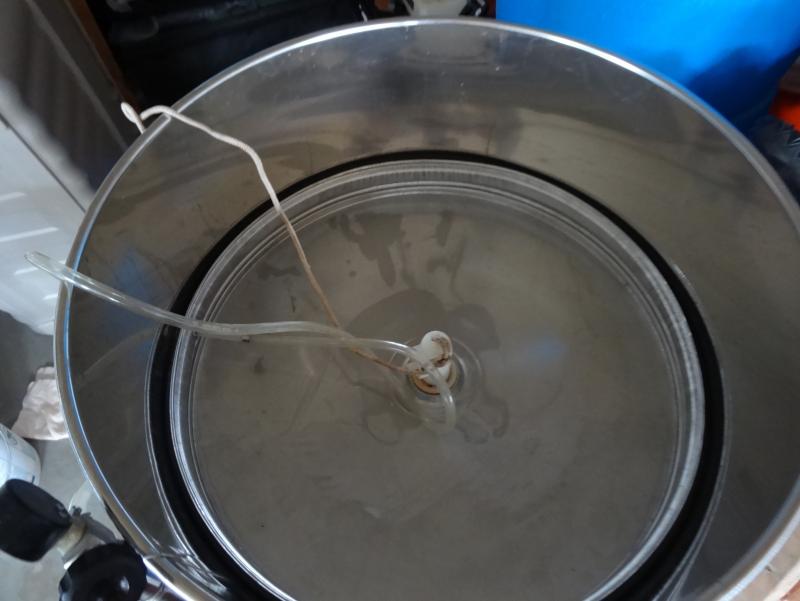
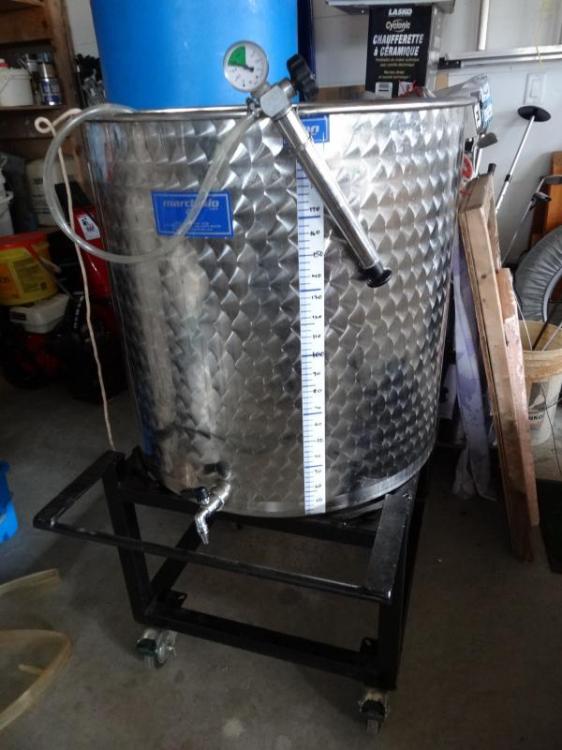
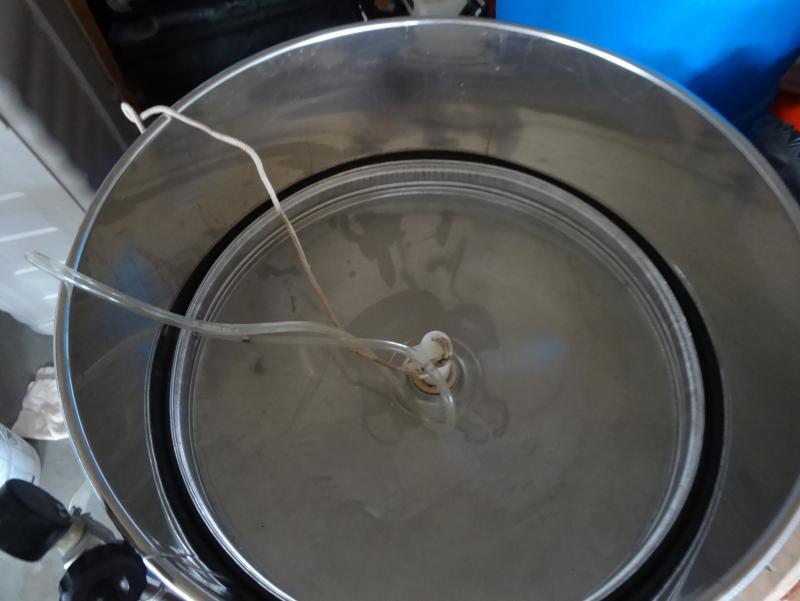
Time to update. The sulfur kills wild yeasts but the wine yeast that we add is resistant to sulfur and thrives. Actually there are thousands of strains of grape yeasts. Each one produces different aromatic compounds as they use the grape sugars for energy. This obviously produces different tastes in the final wine product. Many winemakers have their favourite yeasts which they use on various grape varieties. All very scientific. Deryn, I'm glad you found our little wine making operation interesting. It is a 4 1/2 hour drive to Nelson. My brother lives there. He retired from Toronto a couple of years ago and loves it. Nelson has pretty mild winters also. Kootenay Lake provides the warmth in winter as does Lake Okanagan for us. Your son sounds like he just has fun with this 'beverage making' operation. To answer your question: the grapes are never washed. All the crap and corruption that is on/with the grapes which includes dead and live critters plus their webs, etc. goes into the grape distemer and gets fermented in the primary vessels (the blue ones in the previous post). After the main fermentation is finished which takes around ten days, the grapes get pressed and that liquid is put into our secondary fermenting vessels. These are 200 litre stainless steal vessels. They are not full. We have about 119 litres of Pino Gris and 105 litres of Merlot. Here is a picture of the Merlot: The lid has a bladder around the edge that gets pumped up to keep the top just above the wine as it goes through its secondary fermentation and the gas produced escapes through a one-way valve. We had trouble with one of the bladders and managed to order a new one quickly. So, the wine, both the Merlot and the Pino Gris, have been in the vessels since October 10th. We checked the sulphur levels then and there was none left (the wild yeasts consume it and die) so we added more and then rechecked the levels Oct 25 and it was low again. We topped up the sulfur again and will continue to check the levels every month. It is important to get a good seal to keep the oxygen out which will spoil the wine. Last week my DH 'racked' the wine. He takes the wine out through the facet that is near the bottom of the tank and puts it back into the blue barrels temporarily as he cleans the stainless steel tank. There is a lot of sediment at the bottom of the tank which is composed of dead yeast cells and suspended particles from the wine that settle out. Once the tank is cleaned he puts the wine back in and seals the tank. This racking process clarifies the wine and will be done another two or three times depending on how clear it is getting. You can filter your wine to get it clear but we don't have a filter machine and many think the filtering process takes out flavour from the wine. You may see on the description of some wines that the winemaker filtered the wine or not, depends. The larger wineries producing cheaper wine will filter as it is easier and another reason is so no sediment enters their bottles. Our wine develops sediment in the bottle and needs to be decanted before consumption.
-
kayb, I must admit, I am not a fan of rouladen but yours really did catch my eye with the BACON wrapped around. And of course braised red cabbage is a perfect match. Nice choice. We made some Brats a month ago so I think those would be wonderful. Thanks.
-
Oh, baked beans for breakfast
-
Oh yes toast every morning. My DH's sour dough. The first reason to get one with leftovers a close second. If I were to buy another one, I would be sleeping in the wood shed. It would make a nice Christmas gift though.
-
Just received the latest London Drugs flyer out here in British Columbia: $229 is their current price, wow, that's the cheapest I've seen it in a long time. We have been using ours to reheat leftovers a lot this week. It does such a lovely job compared to the microwave. Reason alone to get one. Merry Christmas.
-
I had some chapati dough in the fridge which I used for the flat bread part. Oh, my egg was right out of the fridge. A room temp egg would work better. Thanks.
-
Just made one for my DH's birthday breakfast. Of course I had some baked winter squash in the fridge which went on there with some beef bacon (double the carcinogen) from our local sausage maker. He really liked it but his egg white wasn't quite done , he ate it anyways....he's too impatient to put it back in for another minute
-
Nice BD, that's going on my spread sheet!
-
I love, love Mulligatawny Soup. I used to be able to buy the soup paste made by Bolts I believe but have not seen that brand anywhere in years. This is the combo of spices I am currently using which is pretty nice but not the same as the Bolts. Does anyone have a recipe for the soup paste? 1 teaspoon turmeric 2 1/2 teaspoons madras curry powder 1 tablespoon coriander seeds, ground 1 tablespoon cumin seeds, ground 8 whole cloves, ground 1/2 teaspoon nutmeg, ground 15 whole black peppercorns, ground 3/4 teaspoon cayenne pepper, ground 200 grams onions, chopped finely 20 grams ginger root, chopped finely 15 grams garlic, minced 4 cups stock, chicken or lamb 1/2 cup tomato sauce lemon juice to taste salt to taste coriander leaves chopped as garnish, optional rice or lentils about 1/4 cup optional lamb or chicken pieces, browned optional Directions: The paste Combine the turmeric, curry powder, coriander, cumin, cloves, nutmeg, black pepper and cayenne. Toast in a dry pan until fragrant. Set aside. Saute the onions and ginger in 1 tablespoon ghee or oil on medium heat for about 5 minutes. Add garlic and saute another 2 minutes. Add tomato sauce and saute 2 minutes. Add stock and simmer until onions are done, about 20 minutes. Add lemon and salt to taste. To serve put a thin slice of lemon in the bottom of each bowl and add the soup. Garnish with coriander, optional.
-
How about some tortillas, corn or flour to go with the soup?
-
Hubbard squash are enormous alright. I have a funny story about a friend of mine who is new to this part of Canada which is growing zone 7a (she is from growing zone 3b). She planted TWO hubbard squash plants in her garden first year she was here. Well, she had like 10 of them and they were big. Well all got one and she still was eating hubbard squash in March, ha, ha. So, the next year I asked her if she planted any hubbard squash and she replied with an emphatic 'NO'. Later in the season I bought the biggest, baddest hubbard squash I could find and hid it in her garden while she was away. Ha, ha.
-
I made this the other day, sorry no picture: Pork Curry with Butternut Squash Serving Size: 4 Ingredients: 1 tablespoon oil 1.5 tablespoons Red Curry Paste 500 grams Lean pork, cut into thick strips or chunks 1 cup Coconut Milk 1/2 cup water 350 grams Butternut squash or other winter squash 6 whole Kaffir Lime Leaves, quartered 1/4 cup Cocunut Cream 1 tablespoon Fish Sauce 1 teaspoon Brown Sugar 2 whole Red chillies, thinly sliced Directions: Heat the oil in a wok or heavy based pan; add the curry paste and stir for one minute. Add the pork and stir fry over modernly high heat until golden brown. Add the coconut milk, water, squash and lime leaves, reduce the heat and simmer for 20 minutes, or until the pork is tender. Add the coconut cream, fish sauce and sugar to the work and stir to combine. Scatter the child over the top. Garnish with sprigs of Thai basil if you like and serve with steamed rice.
-
I believe that all foods can have a place in one's diet. Moderation and variety.
-
In his definition of bhunoa he does not specify how much water or yogurt. I guess I should have included the whole method for the recipe which illustrates the liquid additions. I was just trying to show the use of the word "bhunno". The boiled onion paste quantity is 2/3 cup which would contain some moisture which would add in the bhunoa process (the paste is made by frying onions with some water until they are cooked and most of the water is evaporated then it is blended....it would still need to be quite moist in order to blend it, I would think.). The rest of the recipe states: After the water and pastes are added then chopped ginger and green chillies are added and stirred for 30 seconds. Then red chillies and coriander powder are added and stirred for 30 seconds. Then 1 1/2 cups of yoghurt and salt are added along with 3/4 c water. It is brought to a boil and simmered until the fat leaves the masala (the second bhunoa in the recipe as he described in this definition). After that fresh coriander is added along with 1 1/3 lb of mushrooms and simmered for 2 minutes then cashew nut paste is stirred in and brought to a boil before serving. Looking at a few of the other recipes they usually have you add to spices either onion paste or garlic paste and 4 to 6 tablespoons of water to bhunno or just onions with the spices which would provide the moisture to help prevent burning. The onion pastes are onions blended with water then reduced until most of the liquid has evaporated or onions fried then blended with some yoghurt to make a paste. Quite often the second bhunoa involves tomatoes, nut pastes, yoghurt. Hope that answers your questions, if not ask again. cheers
-
I had another thought, I wonder if home cured bacon and other home cured sausage have less curing agent per gram weight than the commercial stuff. ???
-
Found this article with a bit more interpretation: http://www.cbc.ca/news/health/cancer-red-meat-processed-1.3288601
-
Hummm, another reason not to die of embarrassment and get your regular colorectal cancer screening/testing done.
-
typo: "Heat ghee in a handi, add whole garam masala and salute over medium heat until it begins to crackle." Should be ...."and saute over medium heat...."
-
I have the book Prashad: Cooking with Indian Masters by J. Inder Singh Kalra. He also taps into the expertise of many of India's well known chefs. It is a fabulous book with quite involved recipes. There is no index just a listing of recipes in their Indian names so difficult to find stuff but I am working on indexing it for myself. I hope I am not breaking any posting rules regarding copy right, here goes: In the Preface he states: "It is unfortunate that the excessive use of desi ghee or vegetable fat and masala by a handful of half-baked Chefs made ours an unsaleable food. It was 'rich'--read that as 'fatty- and 'spicy'- to be read 'chilli hot'. Our food is 'rich' but not 'fatty'. It is true that we sometimes cook in excess fat, but the amazing thing about our cuisine is that the cooking is deemed complete when the fat leaves the sides (of the utensil in which the food is being cooked) or comes to the surface. In other words, the ingredient 'expels' all fat when fully cooked. The excess fat merely eases the cooking process and is supposed to be drained off before service. In fact, the drained fat or 'rogan' can be re-used and inevitably makes a better fat medium because of the flavour and aroma of spices it has acquired during the cooking of the first delicacy." In the Culinary Terms section of the book he states: "The heart and soul of India's culinary art is to be able to combine the two with the nitty-gritty of Indian cooking: "dum, bhunao, talna, baghar, dhuanaar and bhunnana". Each one of these 'methods' or a combination of two or three or even all may be necessary to prepare a delicacy." He goes on to describe each one of these methods in detail. Here is what he says about "Bhunao" "Bhunao is a combination of light stewing, sautéing and stir frying. It is the process of cooking over medium to high heat, adding small quantities of liquid - water or yoghurt - to prevent the ingredients from sticking, which also makes it necessary to stir constantly. Almost every recipe needs bhunao at some stage, very often at more than one stage. At the outset it may be the spices and/or ingredients like onions, ginger, garlic, tomatoes, etc., which require bhunao. The process would not only extract the flavour of each of the spices and/or ingredients, but also ensure that they do not get burnt or remain raw. In fact, the masala must be fully cooked. Subsequently, the main ingredient may also require bhunao. This ensures that the initial cooking is done in the ingredients' own juices. The process is complete only when the fat leaves the masala or the sides. Bhunao is not a complete process in itself but a part of the process that helps to prepare a dish. It usually requires the addition of substantial quantities of liquid to complete the cooking process." In his recipes when he wants you to use this method he uses the term "bhunno" for example here is an excerpt from a recipe: "Heat ghee in a handi, add whole garam masala and salute over medium heat until it begins to crackle. Add boiled onion paste, bhunno for 2 minutes, add the ginger and garlic pastes dissolved in 1/4 cup of water then stir for a minutes......."
-
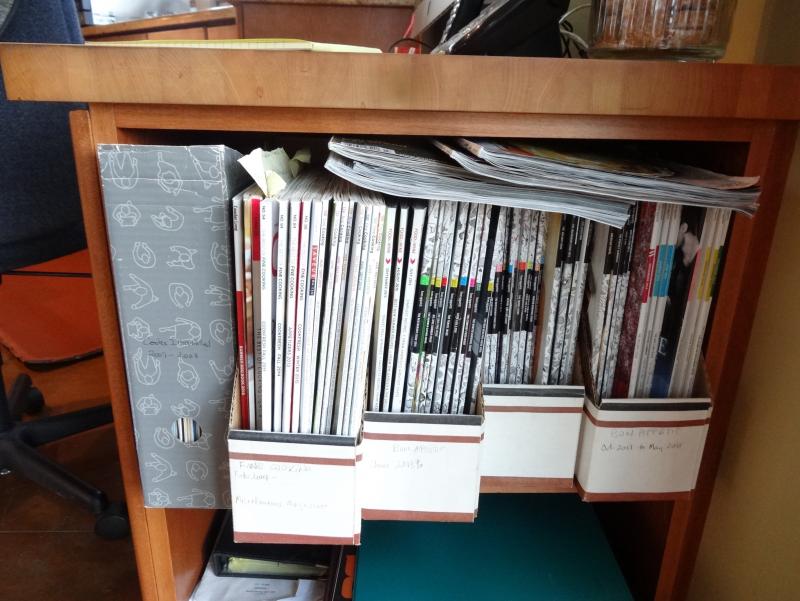
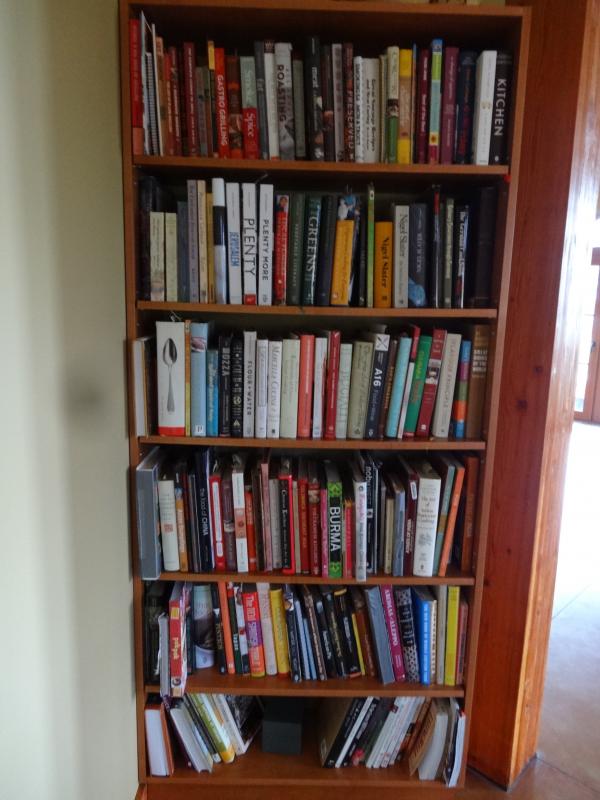
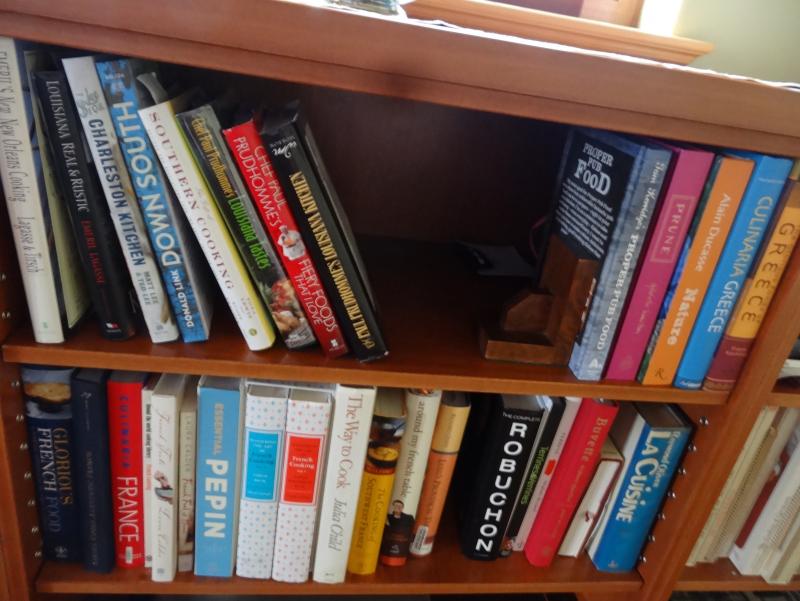
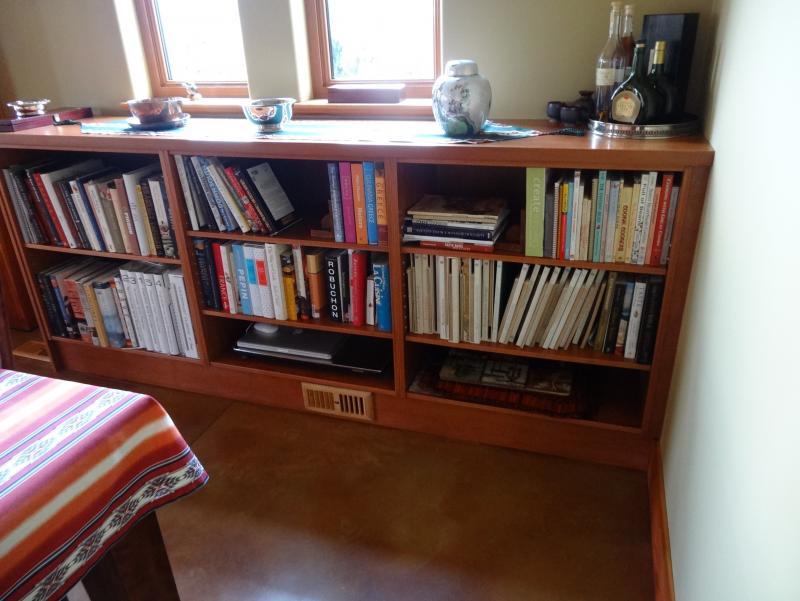
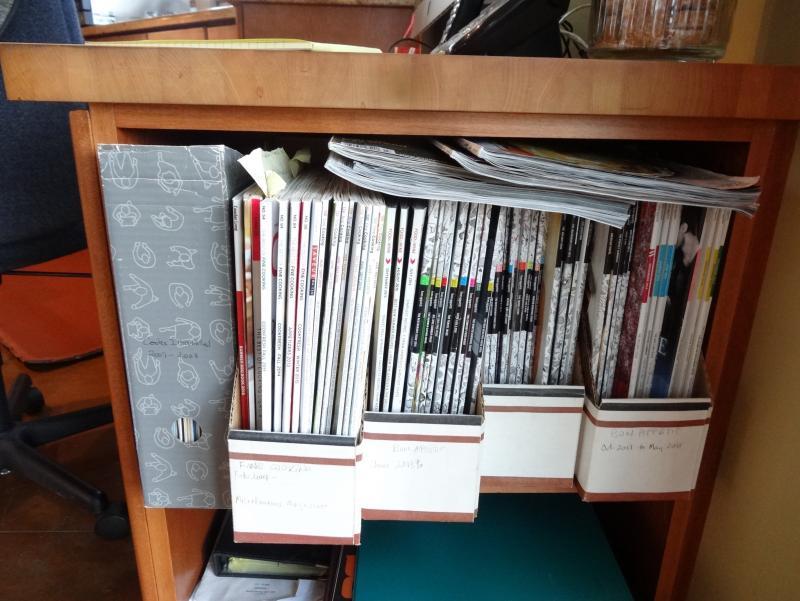
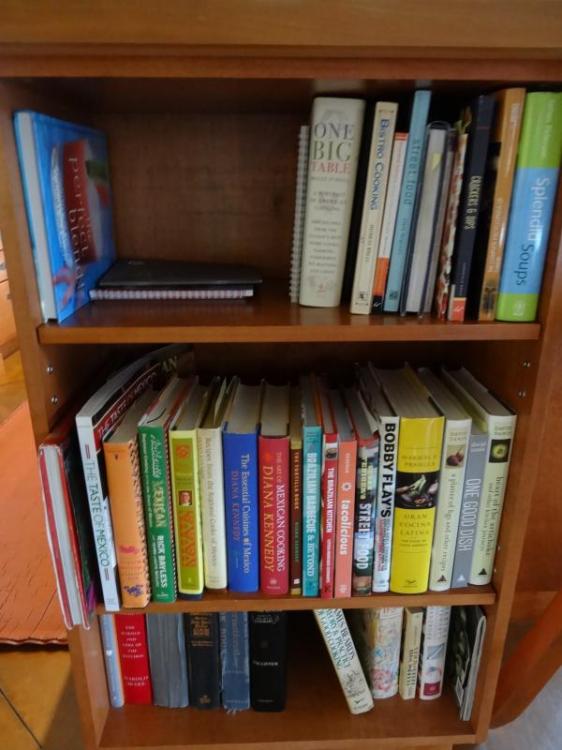
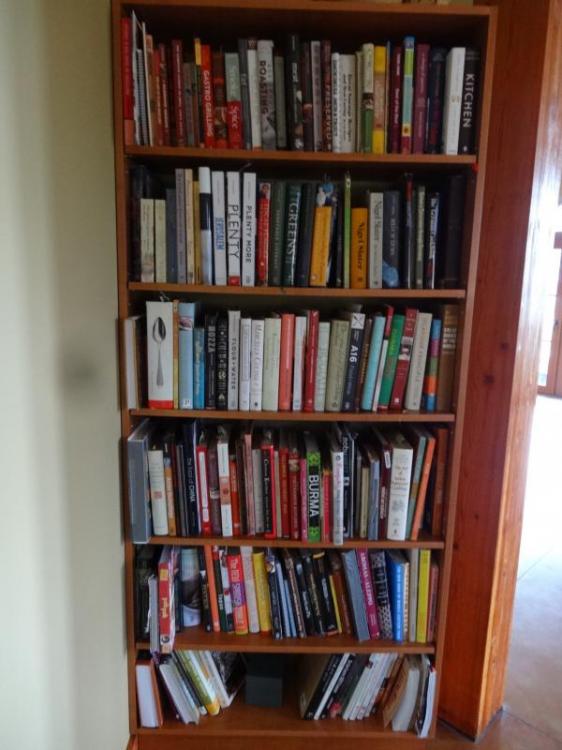
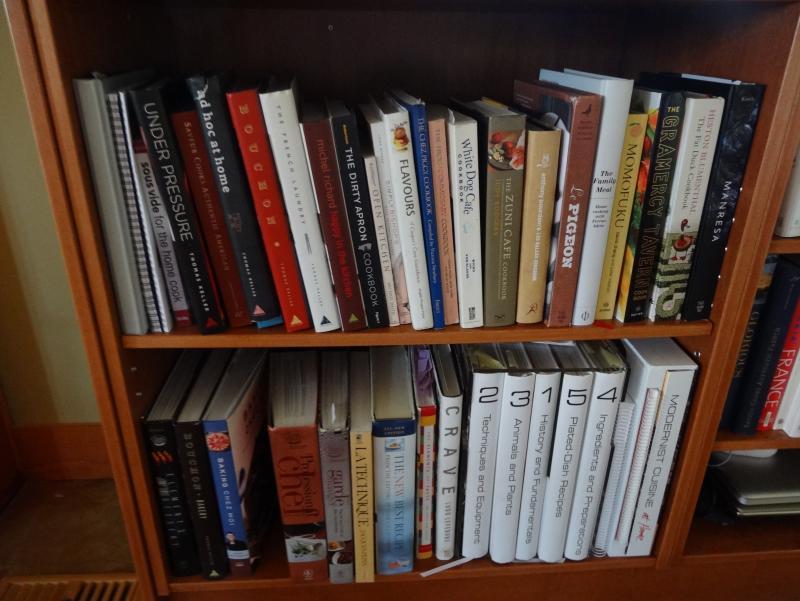
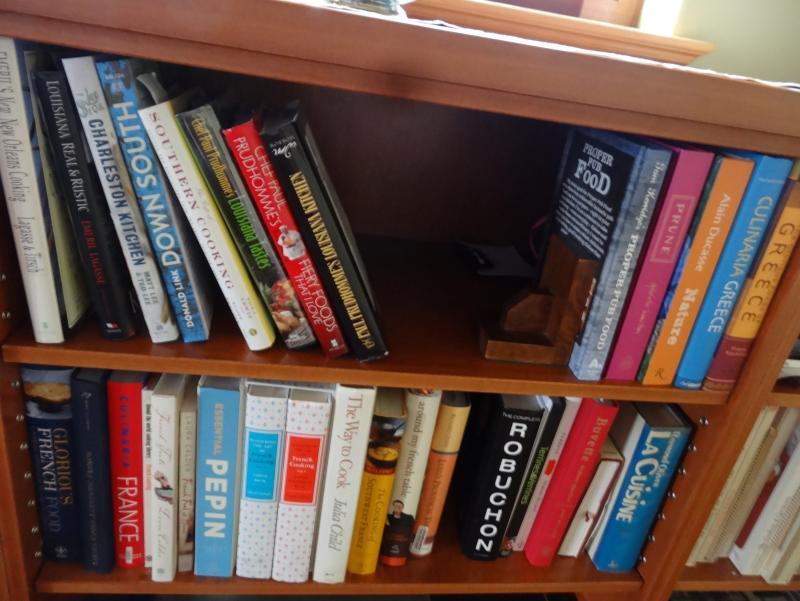
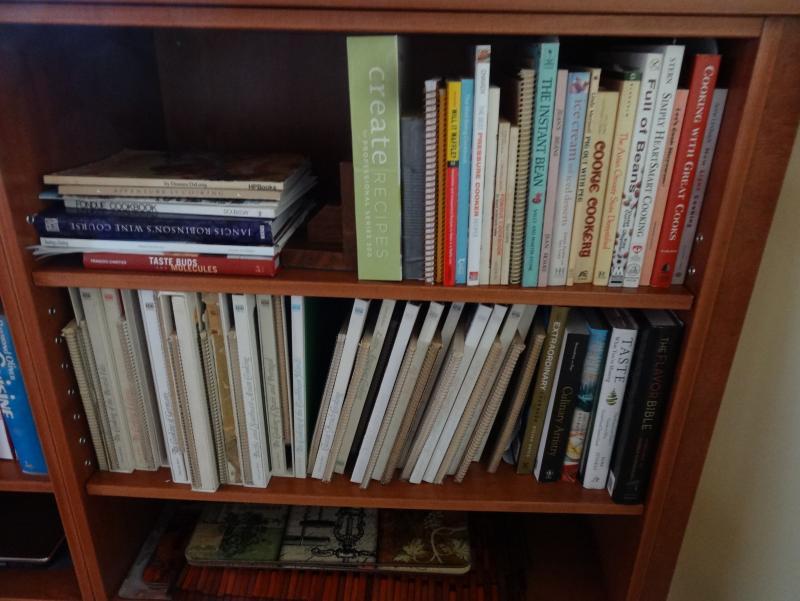
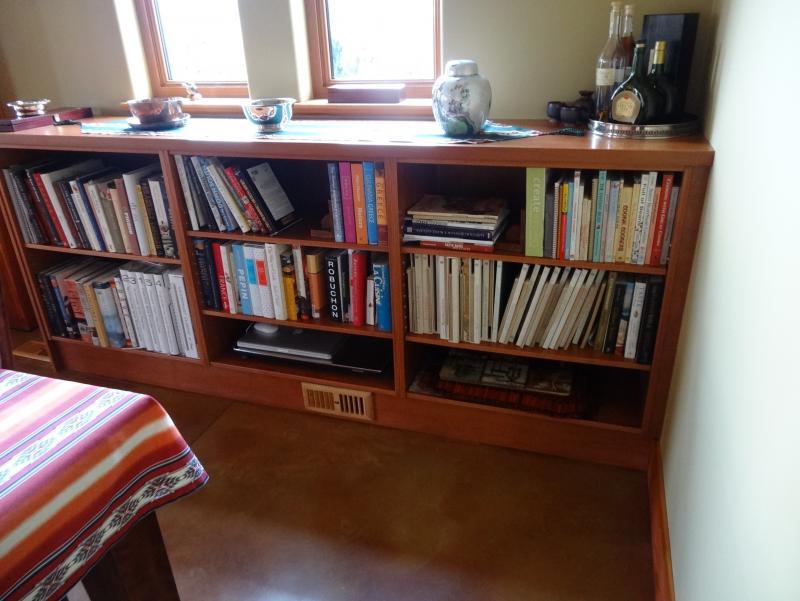
I have a few bookshelves for my magazines and books Magazines: Fine Cooking; Bon Appetite, Food and Wine; This is the entire bookshelf we had built in a few years ago: And these are the three sections: A couple more built ins:
-
Oops, duh, that thread on Bhunooing was start by you! Sheesh, need another cup of coffee this morning.
-
Welcome Phil. I too love Indian food and am living in a place where one has to make one's own 'culturally diversified' food. When asked where's a good place to eat Chinese food, my reply is "my place", ha, ha Same goes for Indian food. Check out the Indian cooking thread over in the Regional Cuisine Forums. We recently had a discussion about bhunooing which you will find very interesting and there is a link in there to another discussion about frying Indian spices: http://forums.egullet.org/topic/152184-bhunooing/ Jump into the conversation!