
liuzhou
-
Posts
16,752 -
Joined
-
Last visited
Content Type
Profiles
Forums
Store
Help Articles
Everything posted by liuzhou
-
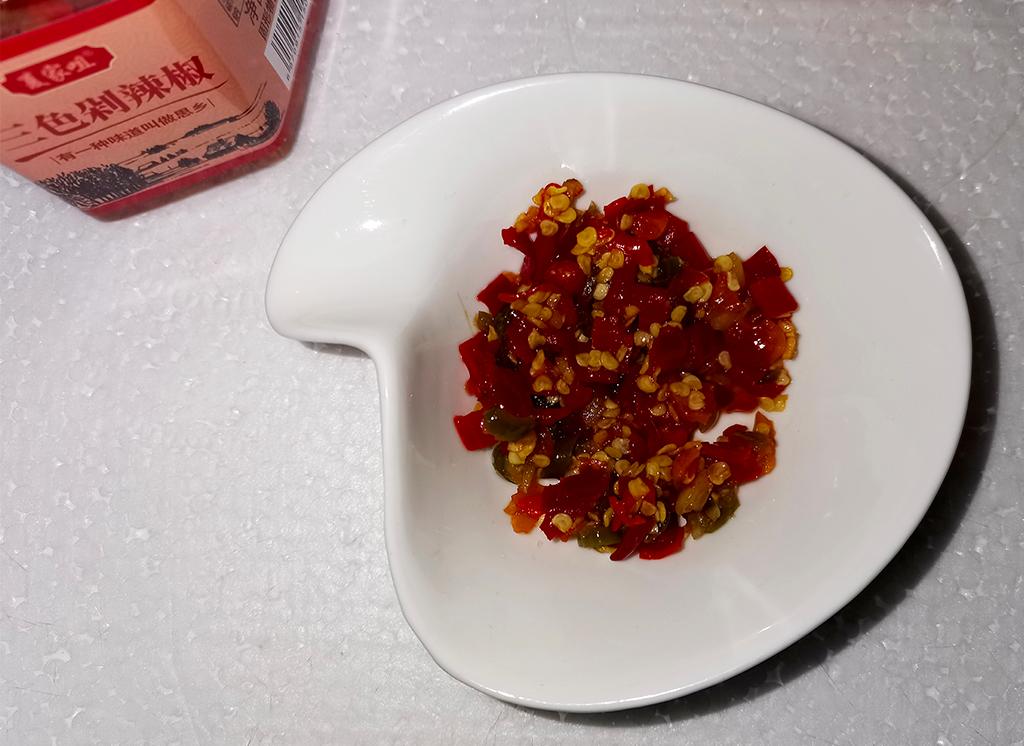
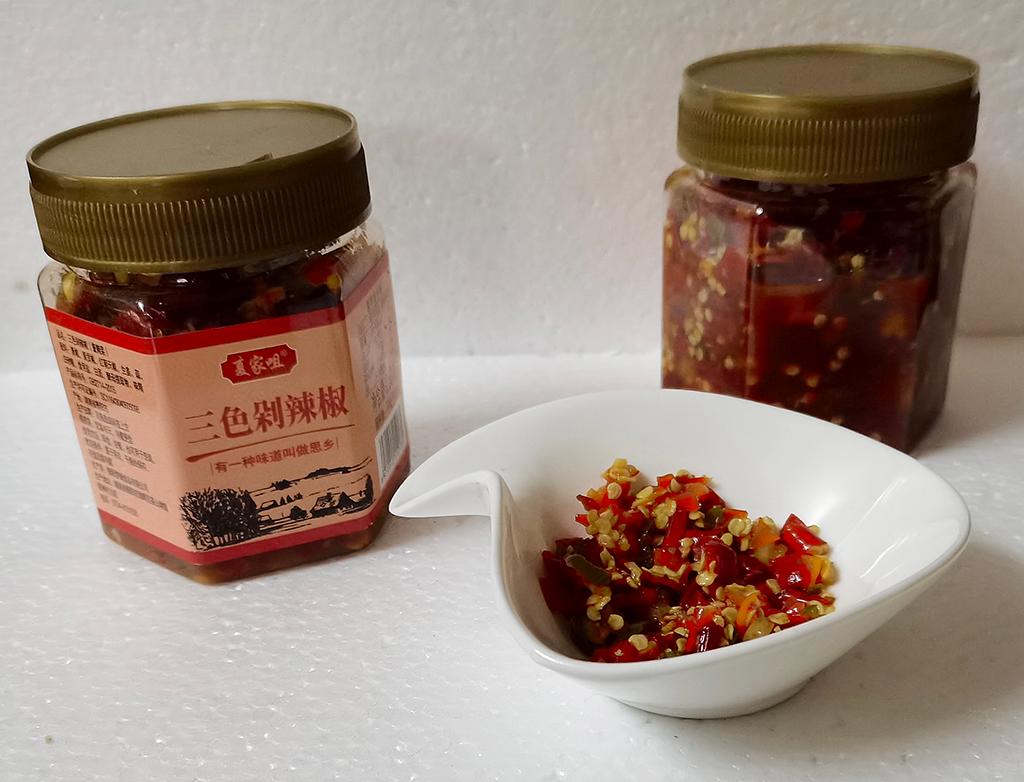
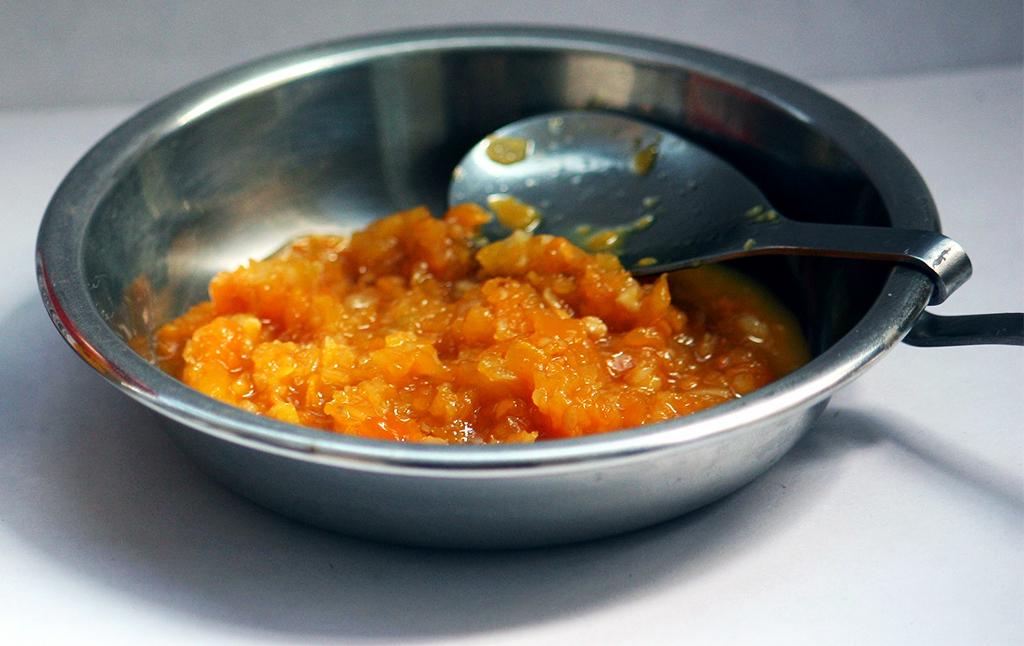
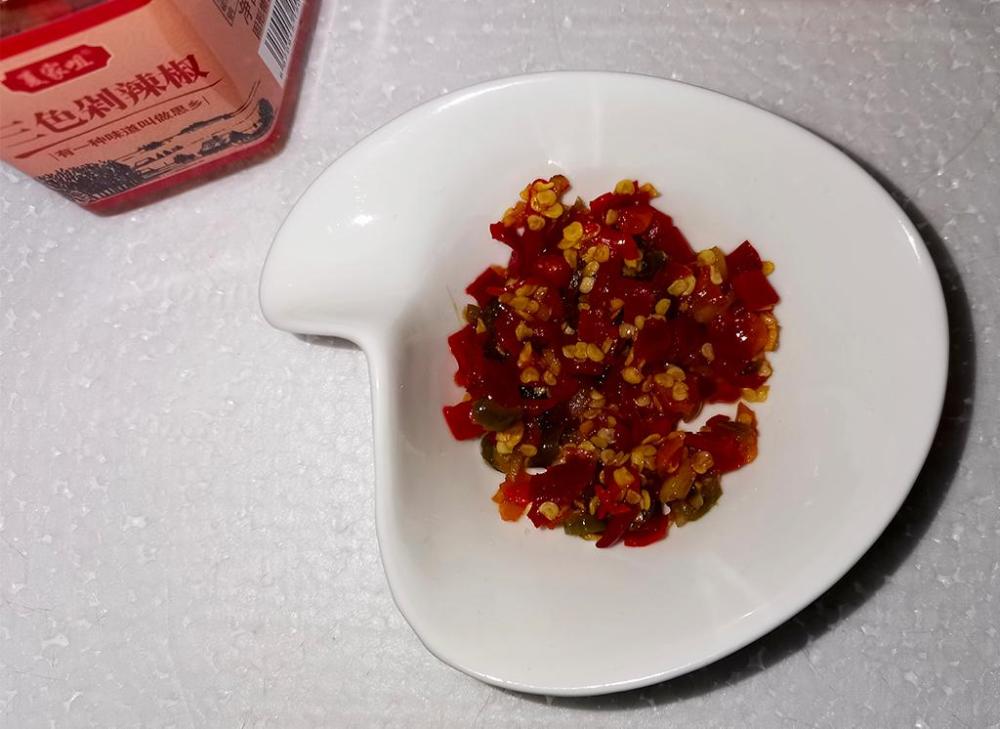
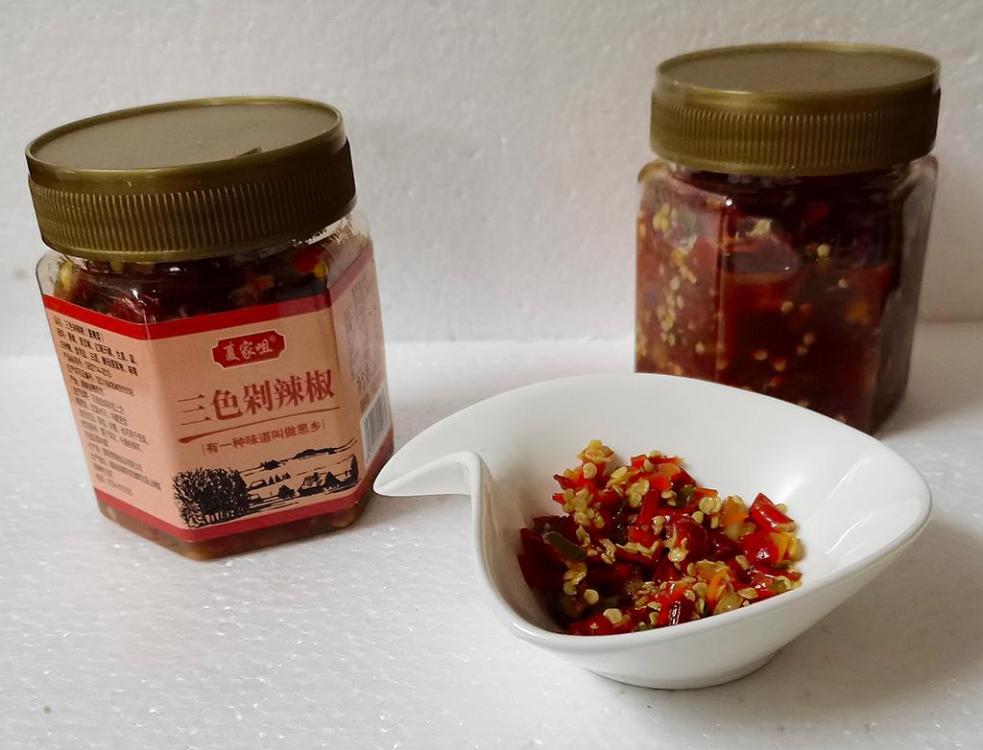
Another Hunan favourite, this time from Hengyang in south-central Hunan. Known as 三色辣椒酱 (sān sè là jiāo jiàng), or three-coloured chilli sauce, it contains red, green and yellow peppers. This is an industrial product, but very similar to the rustic version the peasants make. Like all Hunan sauces, it take no prisoners.
-
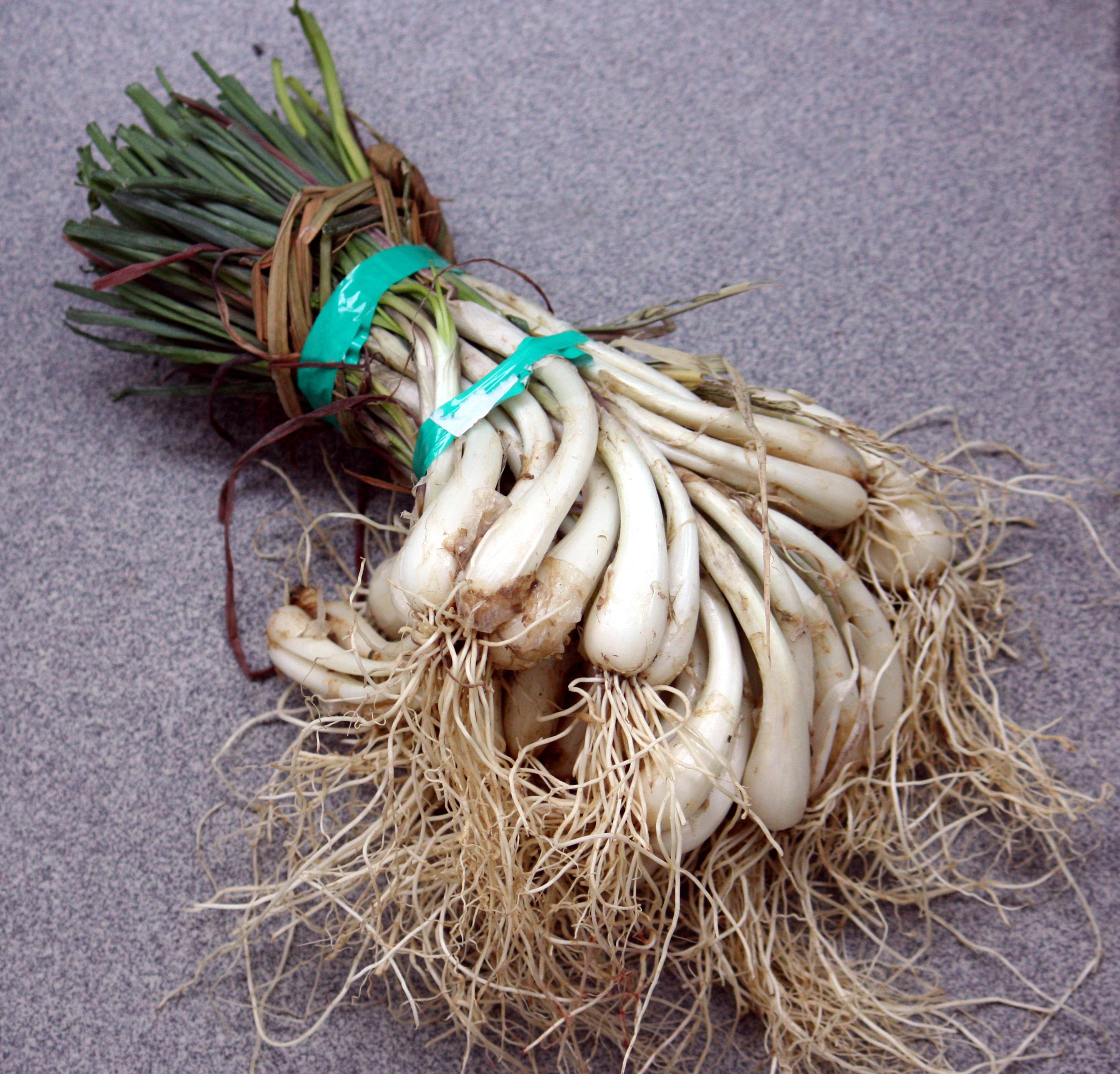
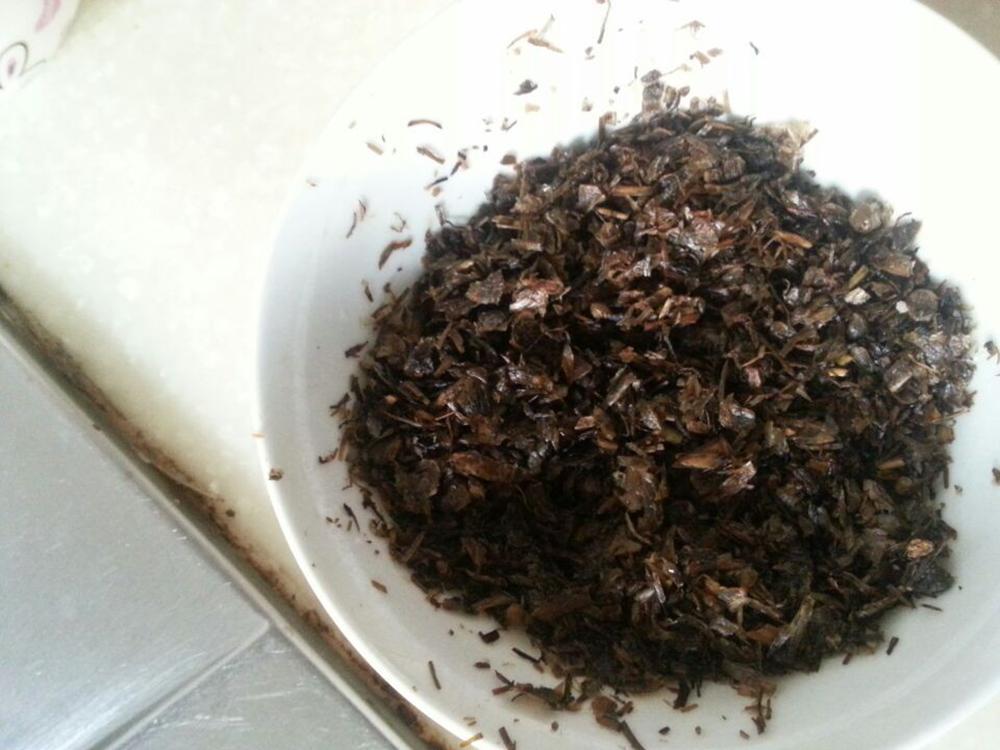
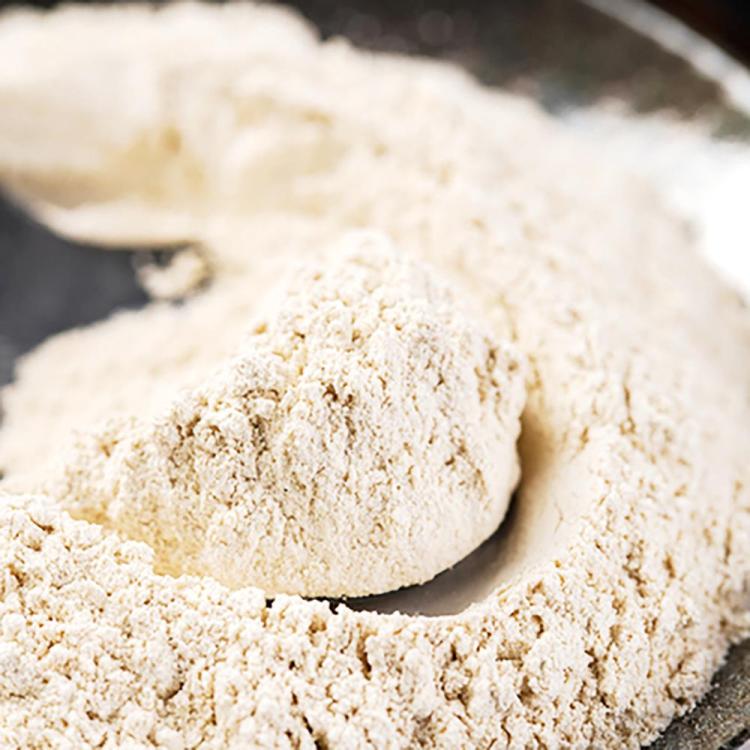
I confess myself baffled by onion powder. It seems that almost every American recipe uses it (slight exaggeration!) Same with garlic powder. I'm sure it is available in Europe, but have never seen it in the stores or seen anyone use it. If we want onions, we use onions. If we want garlic, we use garlic. What is the explanation? Don't you have access to real onions and garlic? Onion Powder Thinking about this odd culinary phenonemon, I went looking for onion powder in China. It is available. In 100 cwt sacks for industrial usage. It is also available in more sensibly sized containers for use in the domestic kitchen - but only from expensive import stores. (Even though it was probably produced in China, in the first place.) The only thing I do come across other than fresh onions (in many forms) and garlic is this dried wild onion, although I've no idea what people do with it. I have asked friends, but just get blank looks. Most mysterious.
-
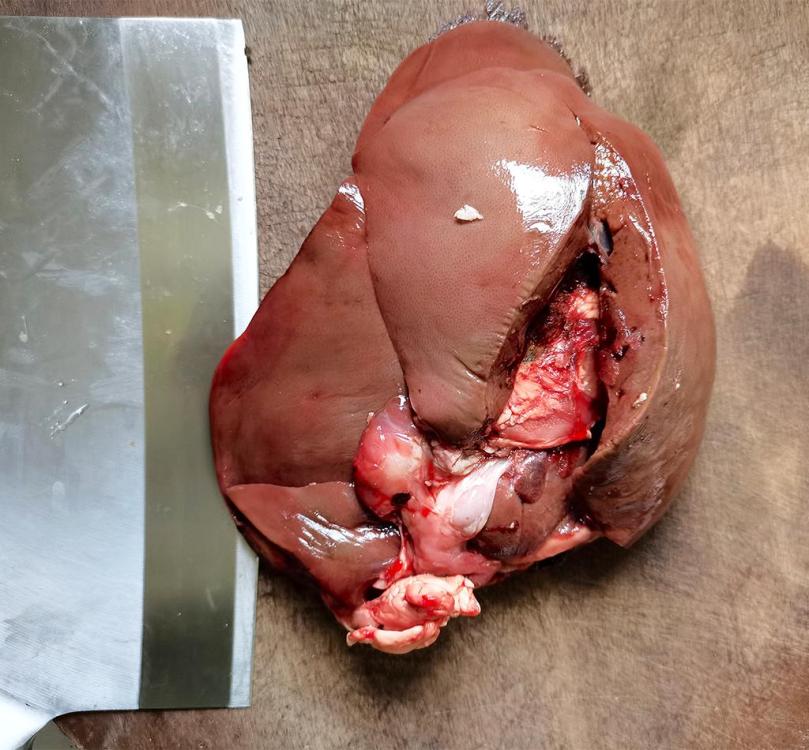
Lamb's liver is the most common in the UK and was what I grew up on, calves liver being somewhat beyond our means. Here in China, only pig liver is widely available, although beeef liver is sometimes available (I used to feed that to my cat). Many people here in the south complain of lamb's gaminess in general; not only the offal. The even complain about the smell of raw lamb. In Inner Mongolia, and Xinjiang in the north and west, they can't get enough and don't understand what it is people don't like. Despite living in the south, I'm with them. I don't find lamb or mutton particularly gamey and certainly not the livers. Among the major meats, apart from calves liver, it is the mildest. Same with the kidneys.
-
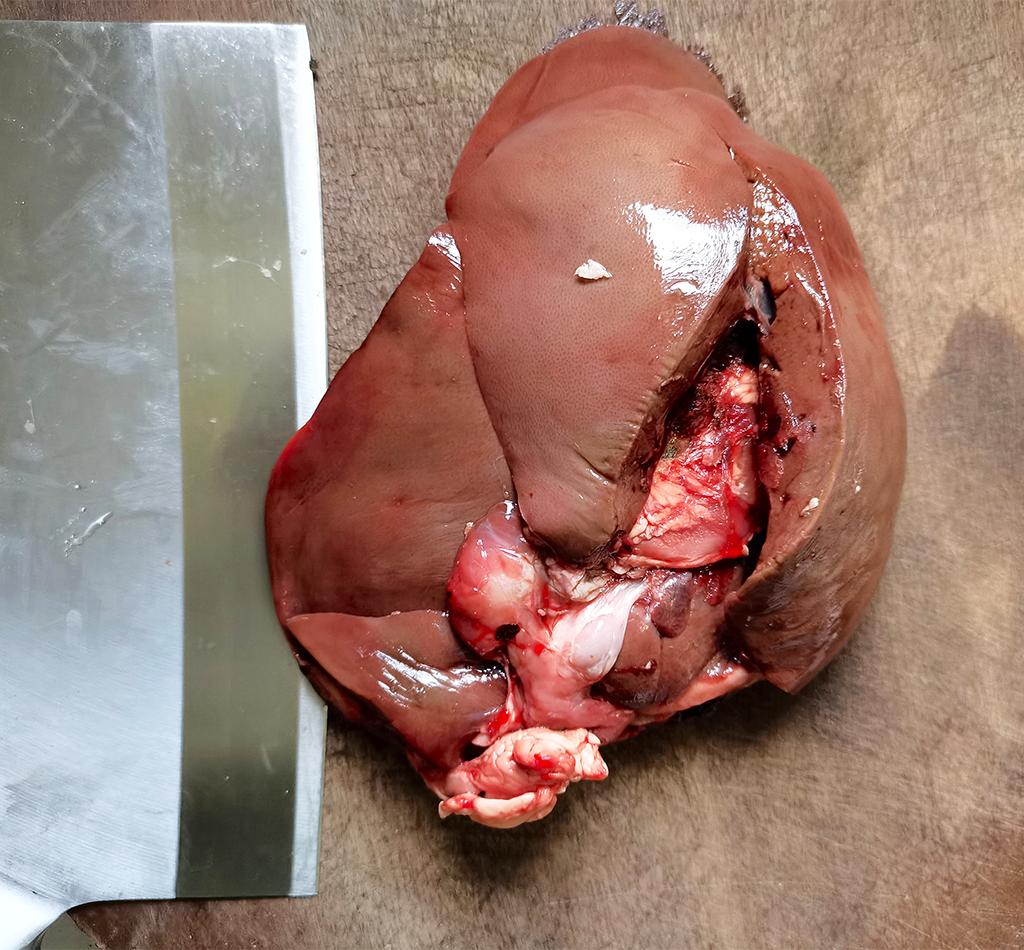
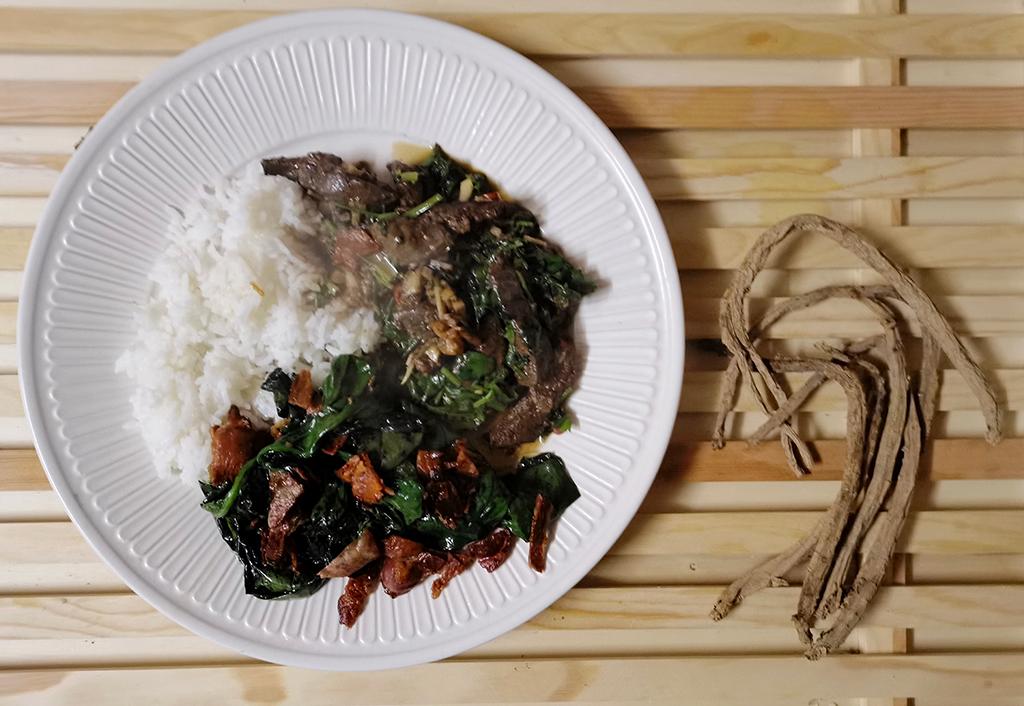
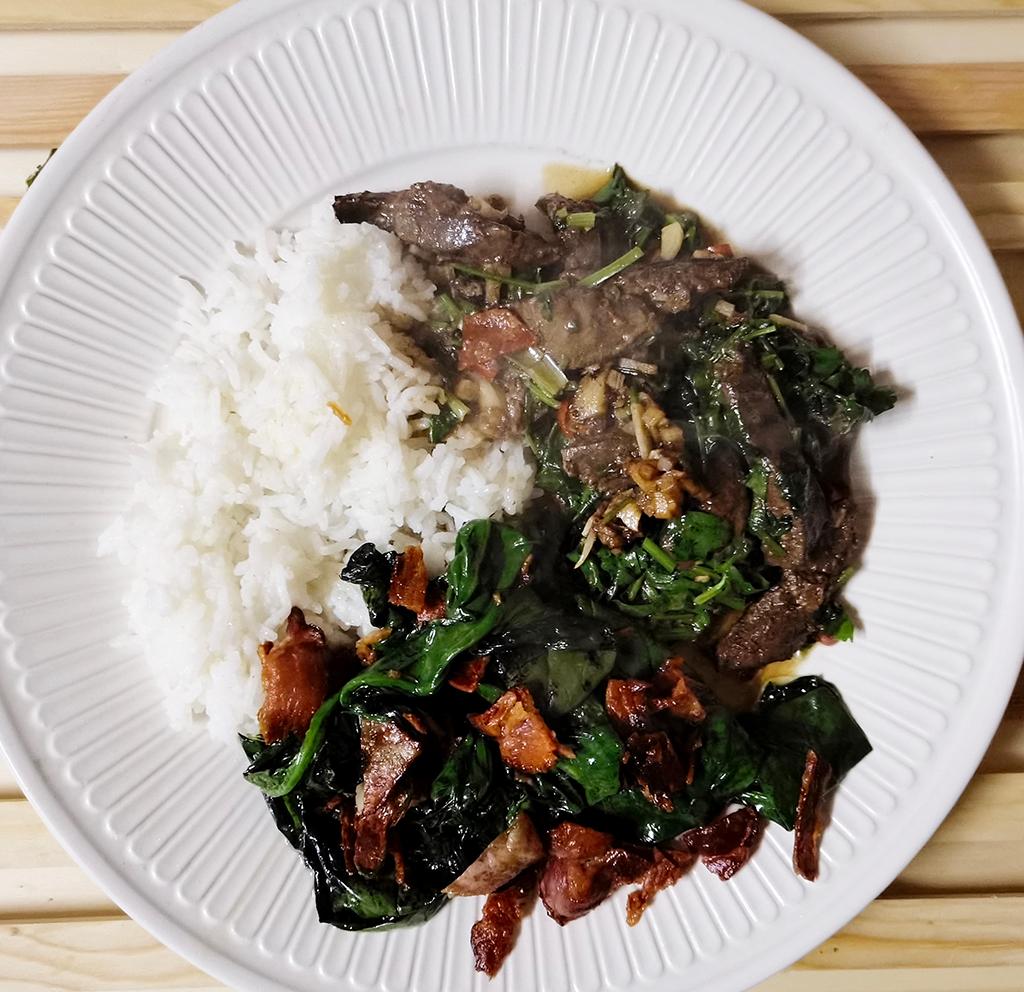
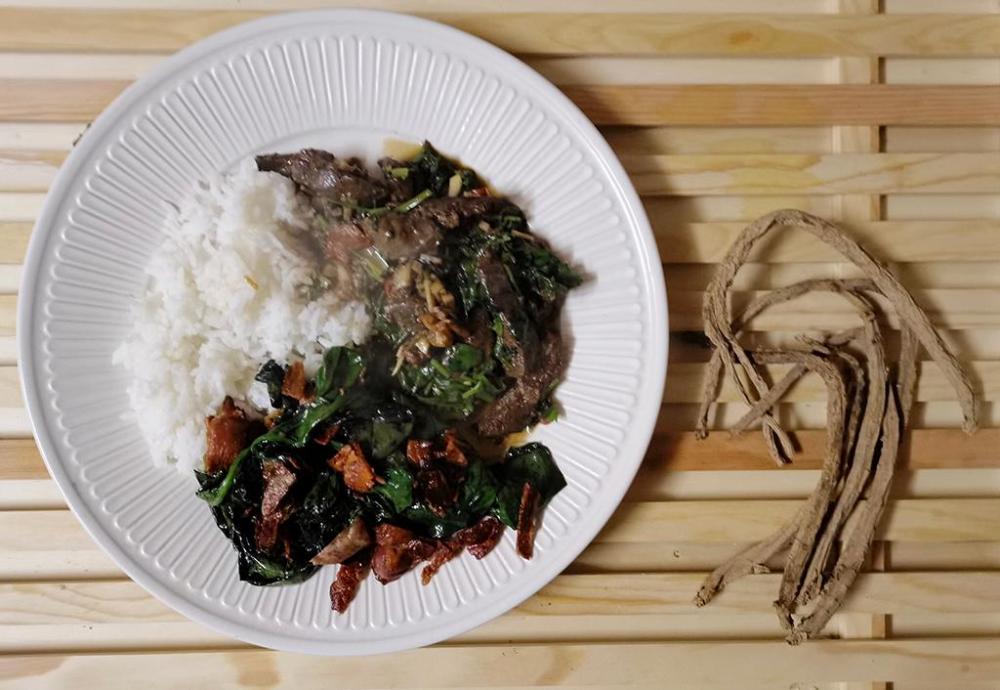
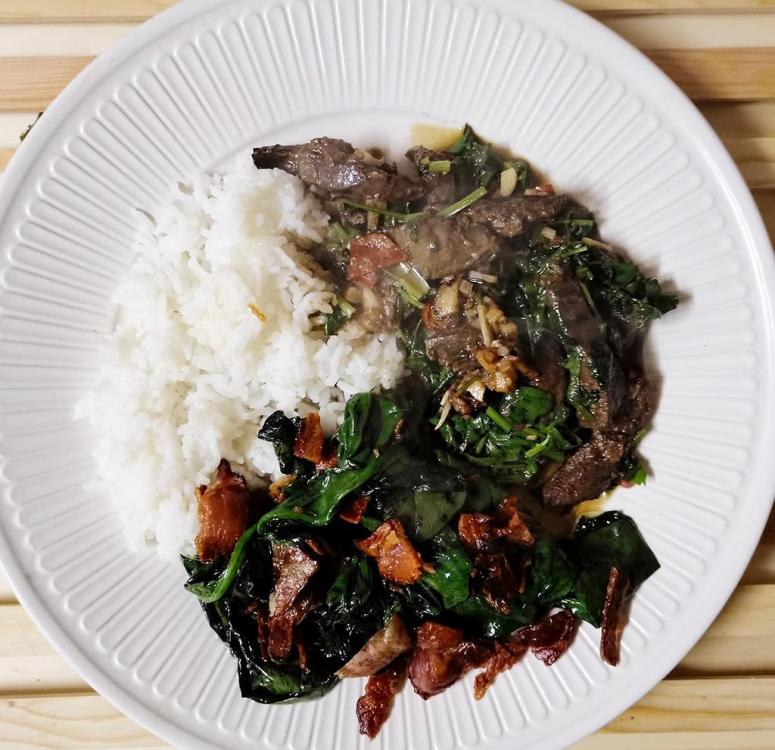
For first time in 26 years here in China, I found myself a lamb's liver. Lamb and mutton are not popular meats in southern China and the offal is never seen. If you are a sheep lover heading to China, go north and west. What I got was a whole liver - bigger than I imagined - and I've sectioned it and frozen three-quarters for future enjoyment. The other quarter became part of dinner. I sort of combined a Chinese way and a western way. The liver was sliced thinly and marinated in Shaoxing with garlic and chilli. I crisped up some bacon rashers and stir fried spinach with the crumbled bacon. The liver was also stir fried at the same time (two woks) and finished with a little stock and freshly chopped coriander leaf / cilantro to make a sauce. Served with rice. Spinach with Crisp Bacon (bottom), Stir-fried Lamb's Liver (top-right) and Rice. Stray TCM material far right! Not unhappy. Close-up with steam
-
There is one restaurant here in Liuzhou which claims its 卤水 (lǔ shuǐ) is over 70 years old. By the way, the article linked to says the Chinese is 'lou mei'. It may be in some obscure dialect, but in Mandarin, spoken by the vast majority, it is lǔ shuǐ (pronounced roughly like 'loo shway'). Several sites claim this means 'old water'; wrong! It just means 'master stock' and the etymology is 'brine water'. No mention of its age.
-
Negi (ネギ) is just the Japanese for Welsh onion.
-
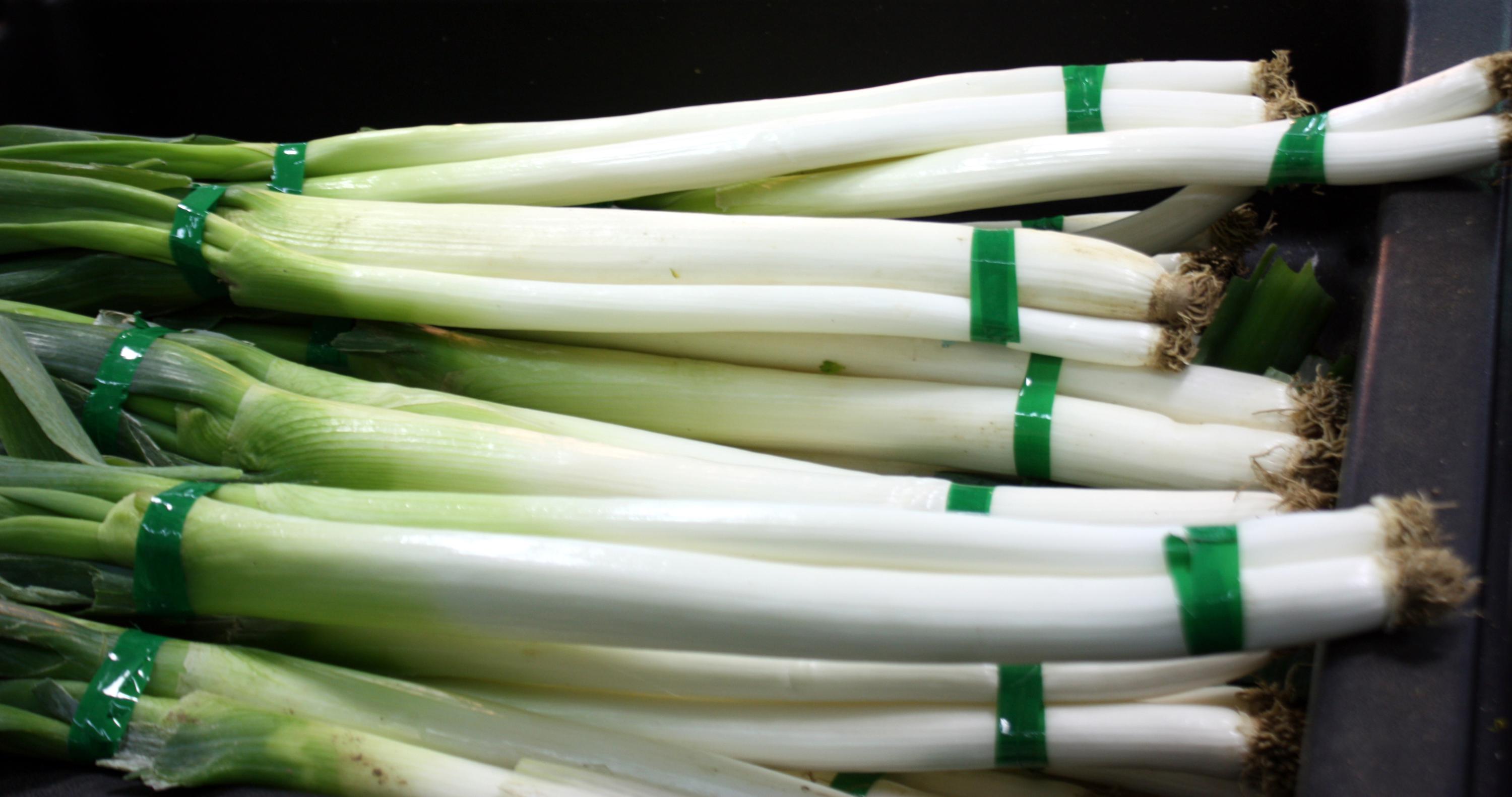
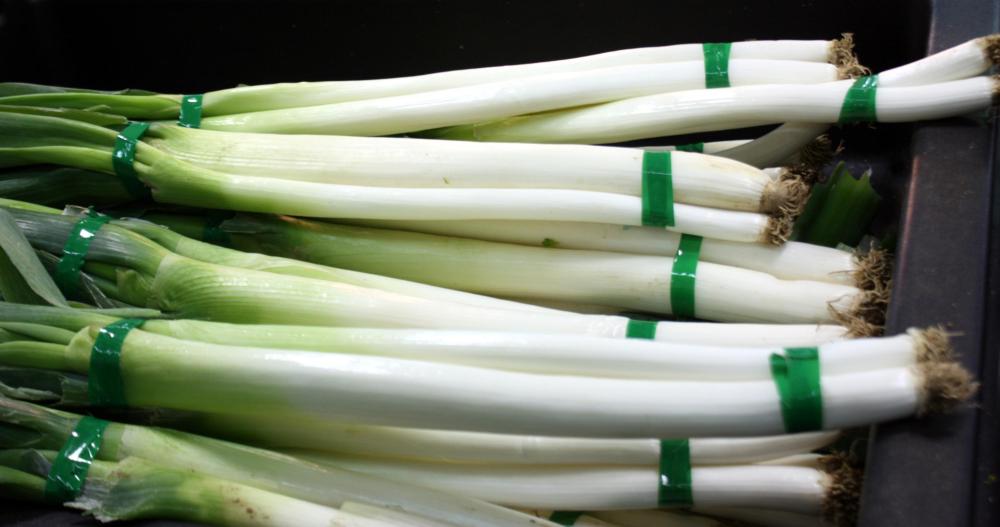
Brace yourself! Besides red onions, the most common onions round these parts are these: 大葱 (dà cōng), literally 'big onion'. Dictionaries tend to translate that as 'green Chinese onion' or 'leek' or give the scientific name, Allium fistulosum. 'Leeks' aren't allium fistulosum, but Allium ampeloprasum var. porrum, also known as Allium porrum, so I am dismissing 'leeks', leaving Allium fistulosum which is usually taken to be scallions, green onions, spring onions, as you prefer. However, that group is actually Allium ascalonicum and Allium Fistulosum is more properly Welsh onions, which lie somewhere between onions and leeks. Are you confused yet? I''m going to call them sybows or sybies (the 'sy' is pronounced 'sigh'), the Scots variation of the now obsolete English term chibol or cibol. The Scottish version lives on in some dialects, including mine, in which we prefer sybies! Or I'll stick with the Chinese notion and call them 'big onions'.
-
 As you say, we don't know when this was actually made, but the television company still had choice of whether or not to broadcast it in the current situation. My own point of view is that these programs are mainly just entertainment (how many people actually go on to cook the dishes?) and as such it is more about fantasy than fact. So, times are hard for many people; that doesn't mean we should ban all upbeat television! Even the people moaning are probably enjoying themselves!
 -
RIP Ali Ahmed Aslam, probable inventor of Chicken Tikka Masala, proprietor of the Shish Mahal in Glasgow Scotland, where I ate many a Ruby back in the day!
-
- 3
-

-
... swimming in black pepper sauce.
-
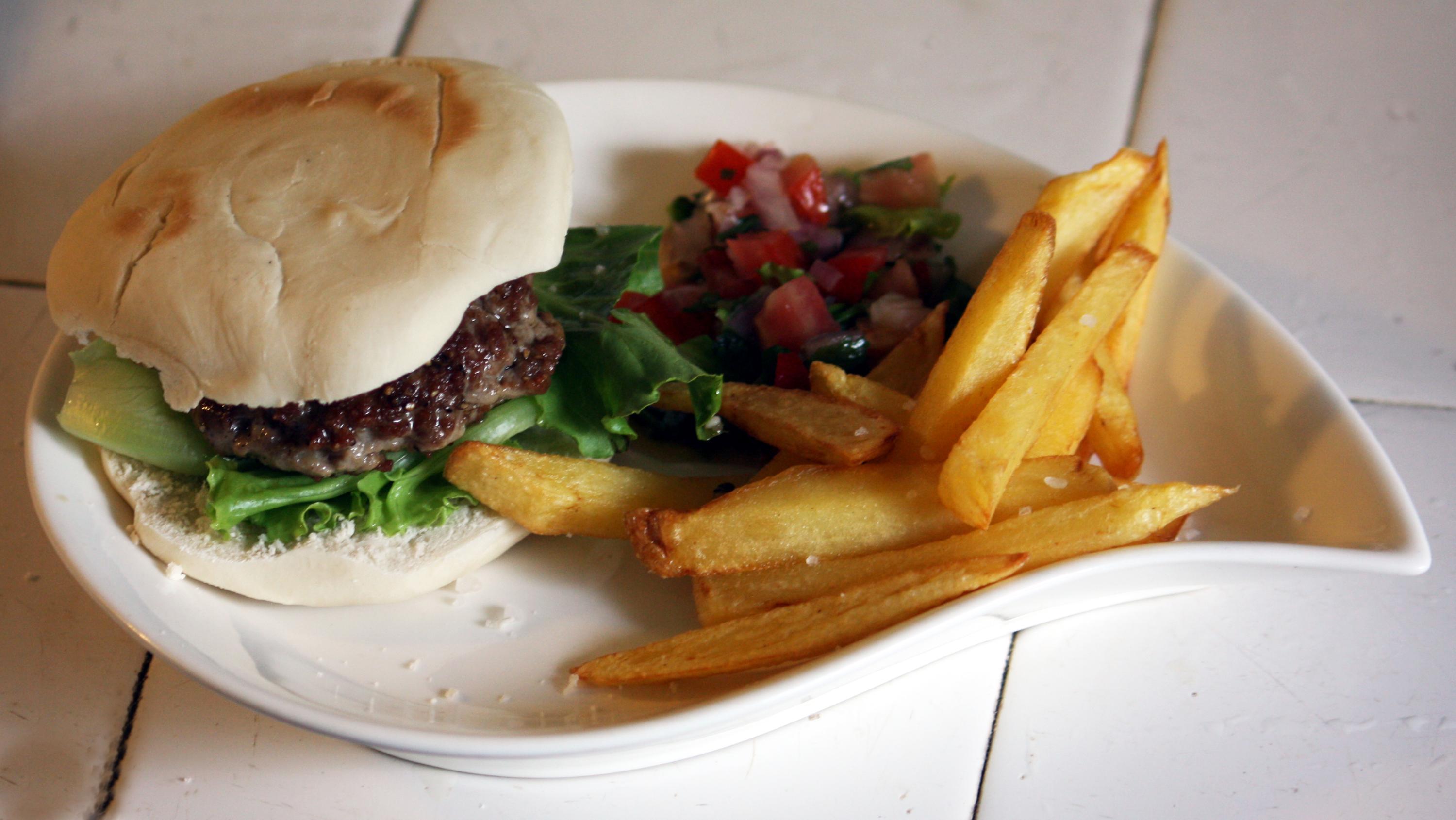
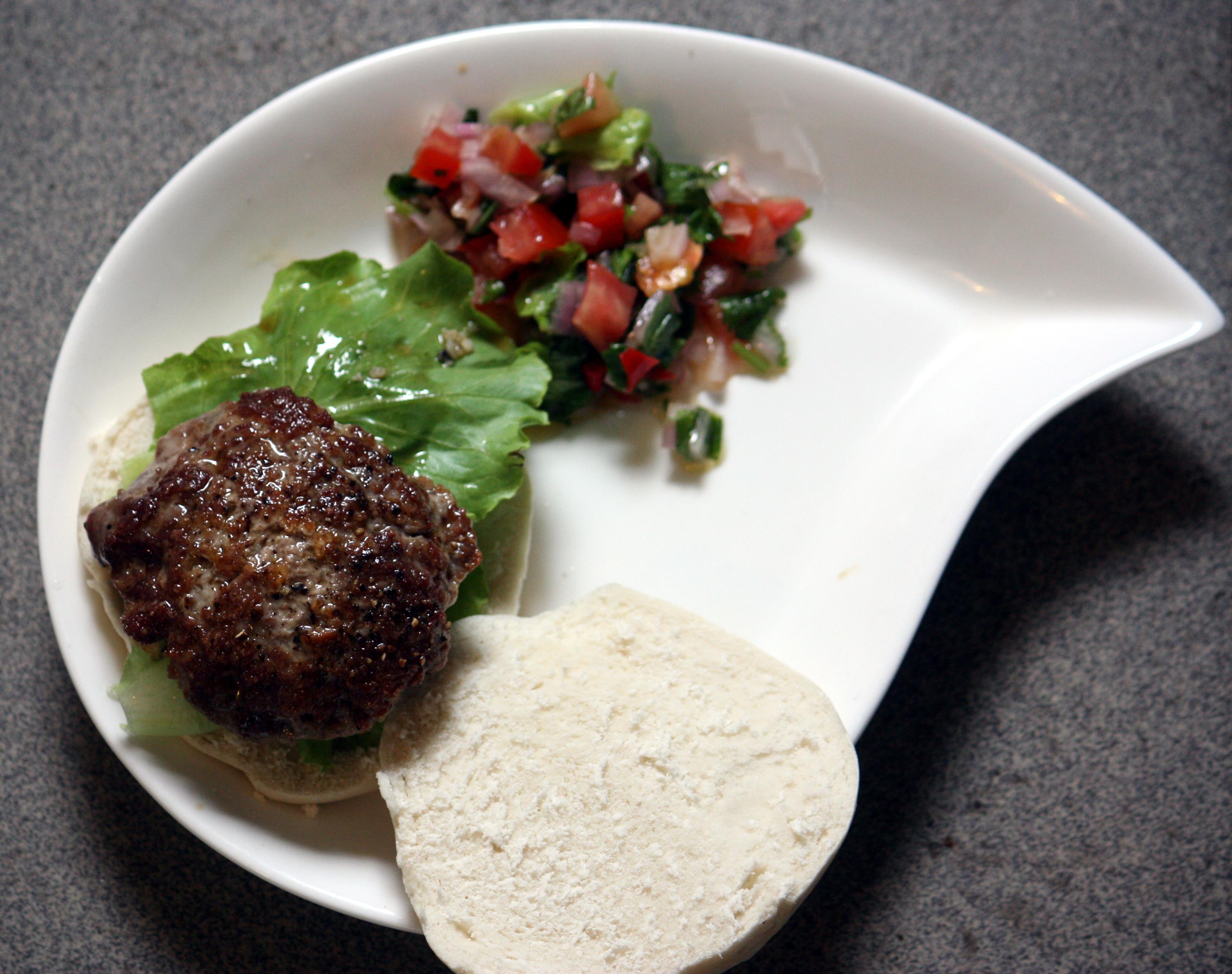
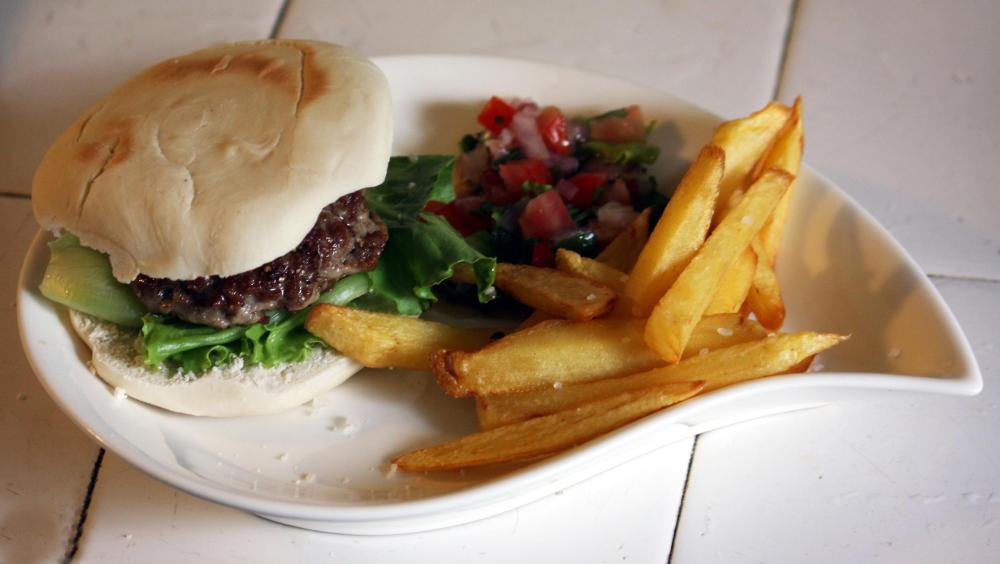
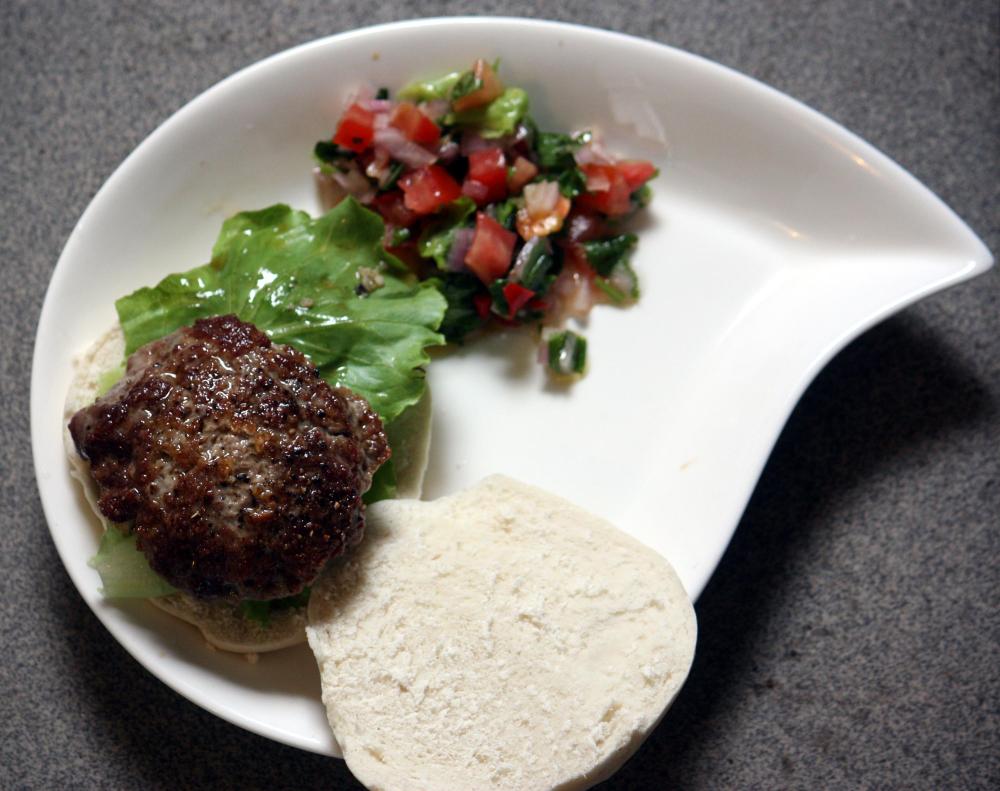
I'll just have to franchise out my world famous duckburger and chips with salad themed eatery and get N. America on the duck trail!
-
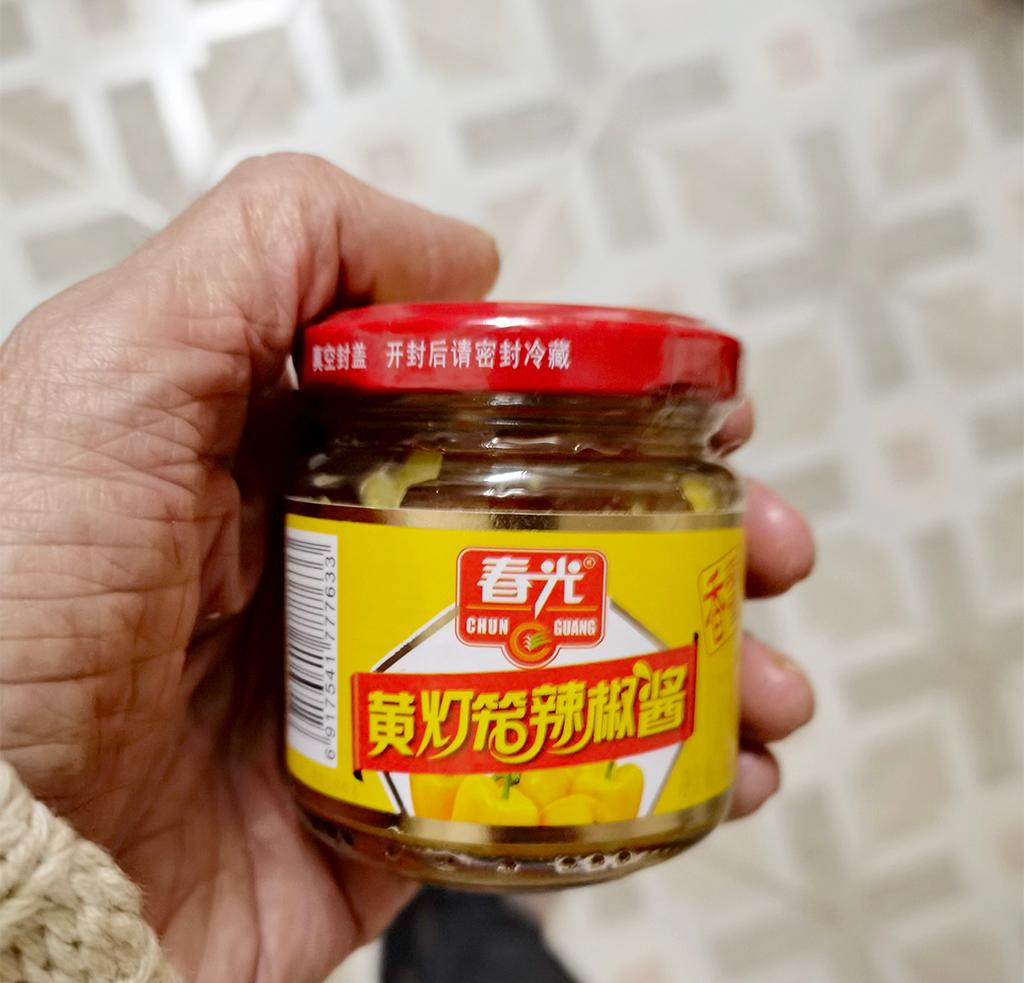
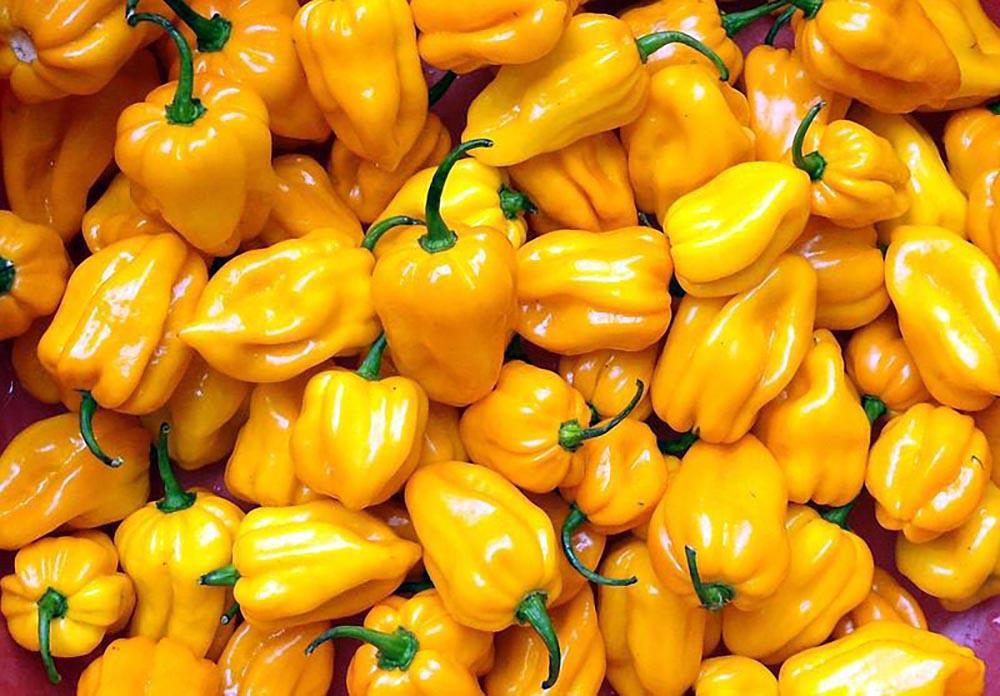
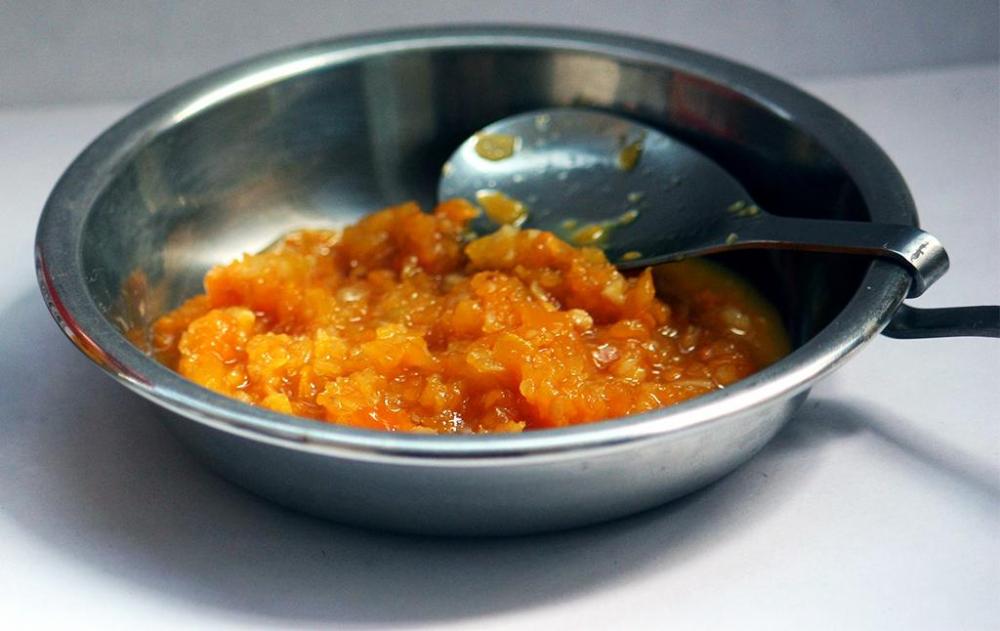
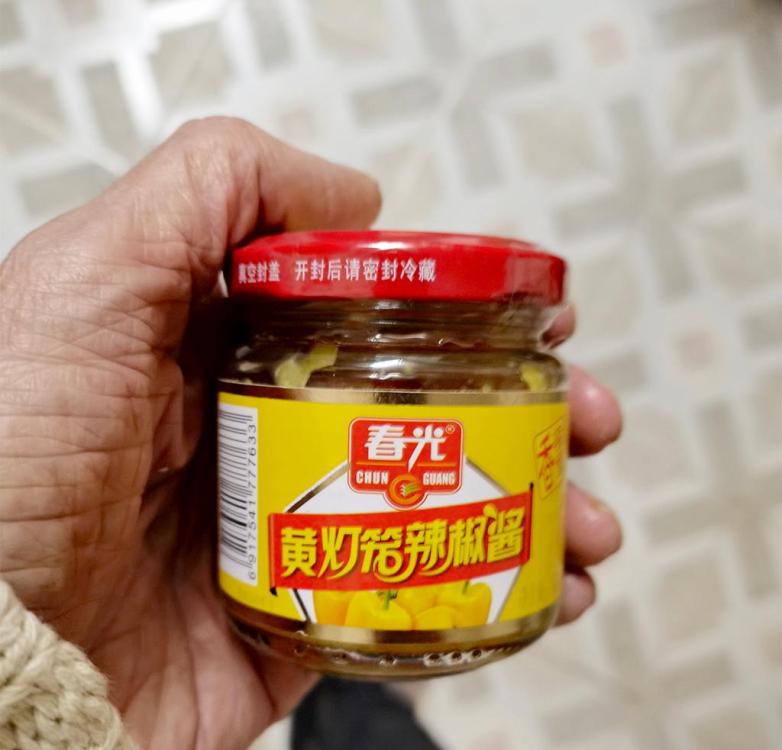
黄灯笼辣椒酱 (huáng dēng lóng là jiāo jiàng) Yellow Lantern Chili Sauce from Hainan, China's southernmost, island province. Yellow Lantern Peppers are perhaps China's hottest. The sauce is fiery and vinegary. The jar is relatively small (100g), but when it's this hot a little goes a long way!
-
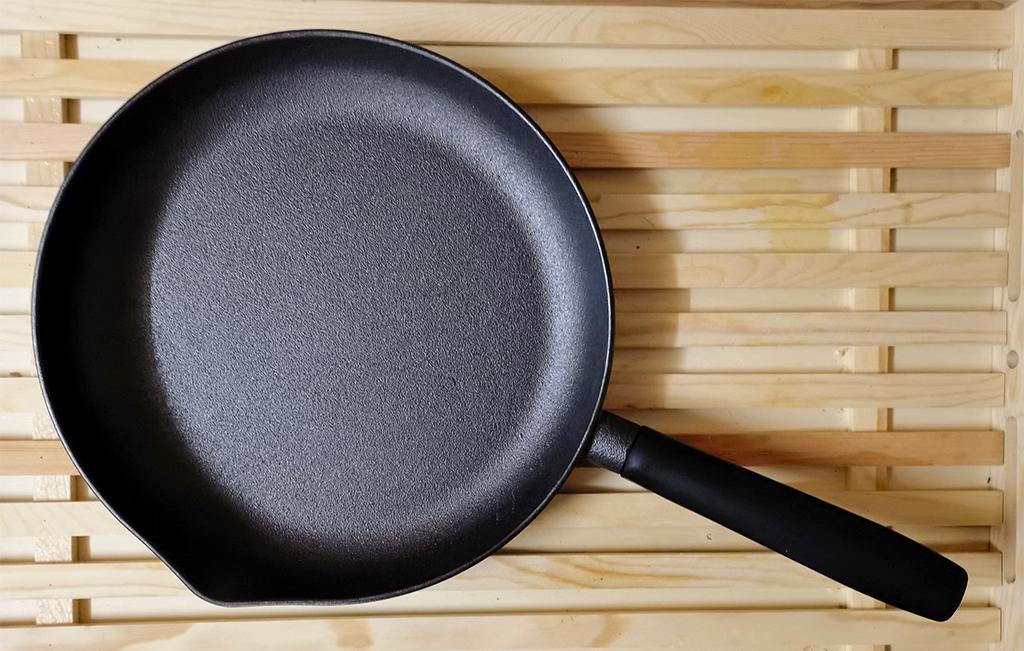
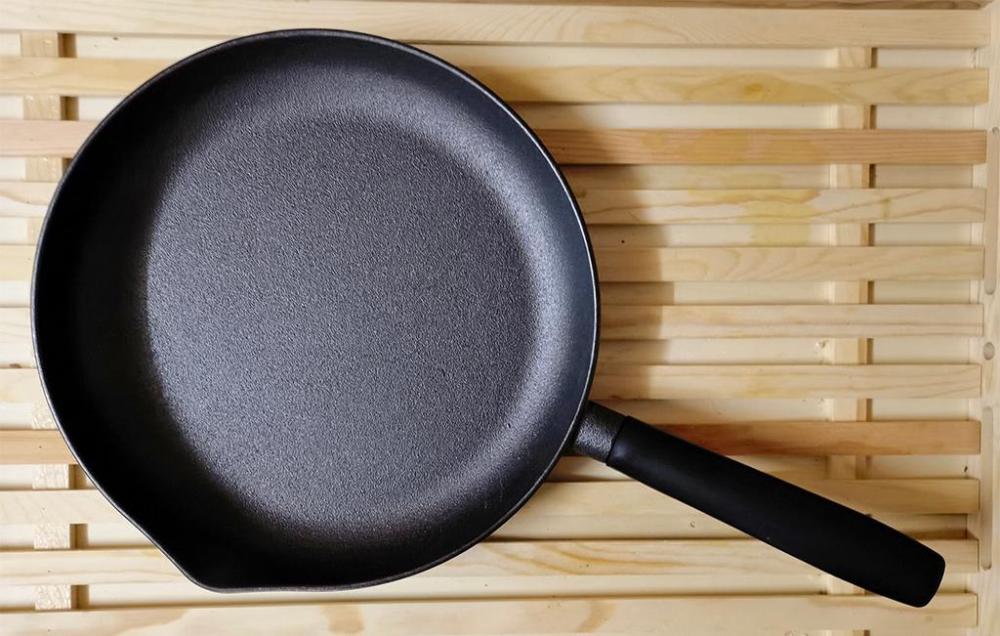
Not a new oven, but just as important for me. Japanese 26 cm cast iron skillet / frying pan. I have a 20cm one, which is fine for one steak or the likes (I never cook and rarely eat steaks!) but needed a larger one for more complex (or just bigger) things.
-
What is the problem with duck? Is it unavailable because people generally don't want it or don't know how to cook it. Or something else? Here, it is the most easily available (and the cheapest) major protein and, dare I say, the most delicious. Lends itelf to all sorts of dishes.
-
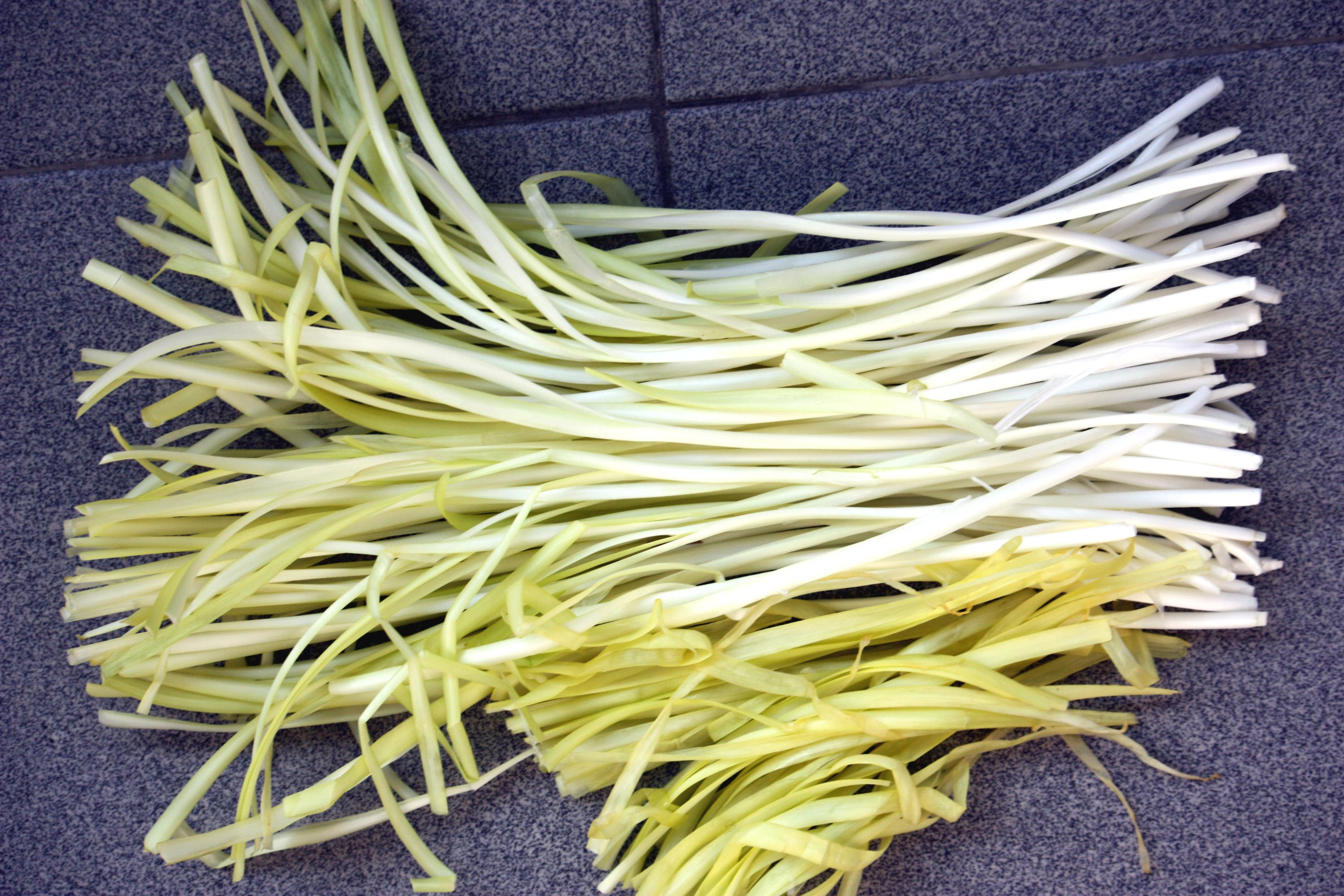
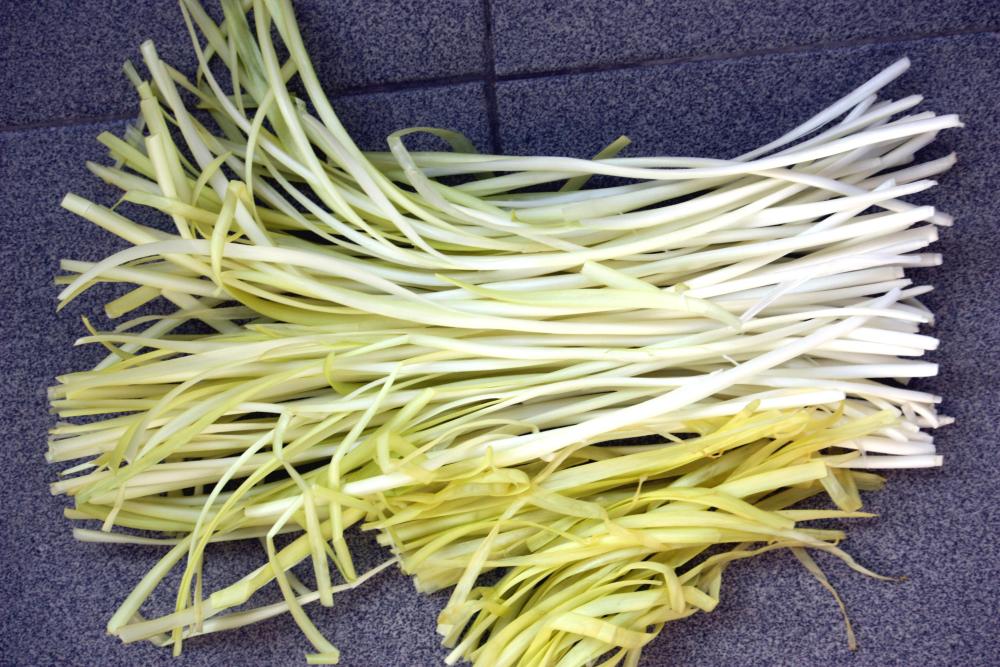
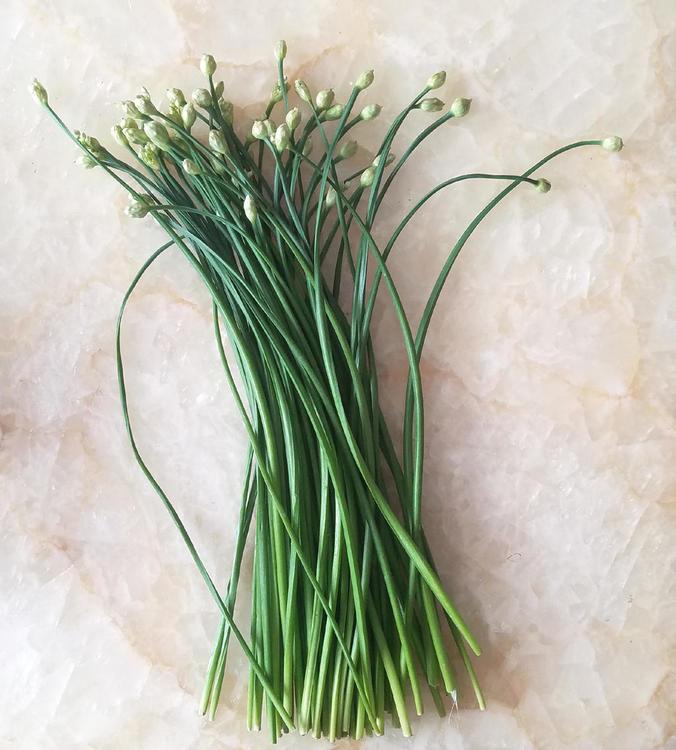
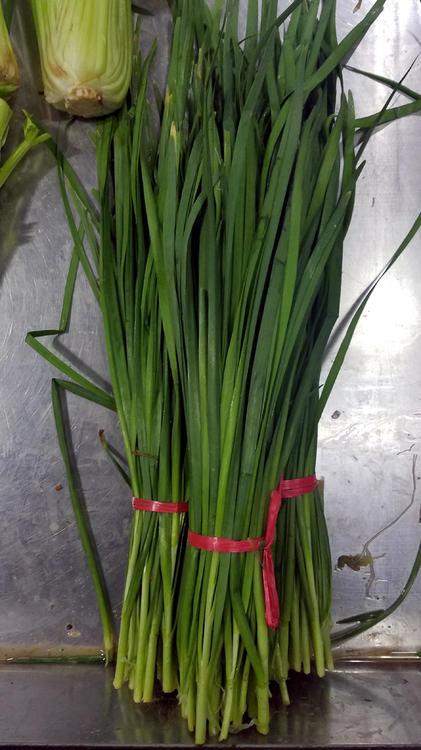
... but my favourite local allium has to be Allium tuberosum, 韭菜 (Mand: jiǔ cài; Cant: gau2 coi3), garlic chives. We get them in three formats. Regular Left to grow a little. they develop flower buds. At this stage, they are sold as 韭花 (Mand: jiǔ huā; Cant: gau2 faa1) where 花 means 'flower'. so, flowering garlic chives Then my favourite of the favourites. 韭黄 (Mand: jiǔ huáng; Cant: gau2 wong4), which are the stems of the same plant, but grown under reduced light conditions so that they do not develop the green colour, but are yellow, the meaning of 黄. To my palate and nose, this technique also increases the garlic flavour and scent considerably. This is a good thing in my book. I love when I get home with these and open the bag and the whole kitchen fills with the scent of garlic (in a good way).
-
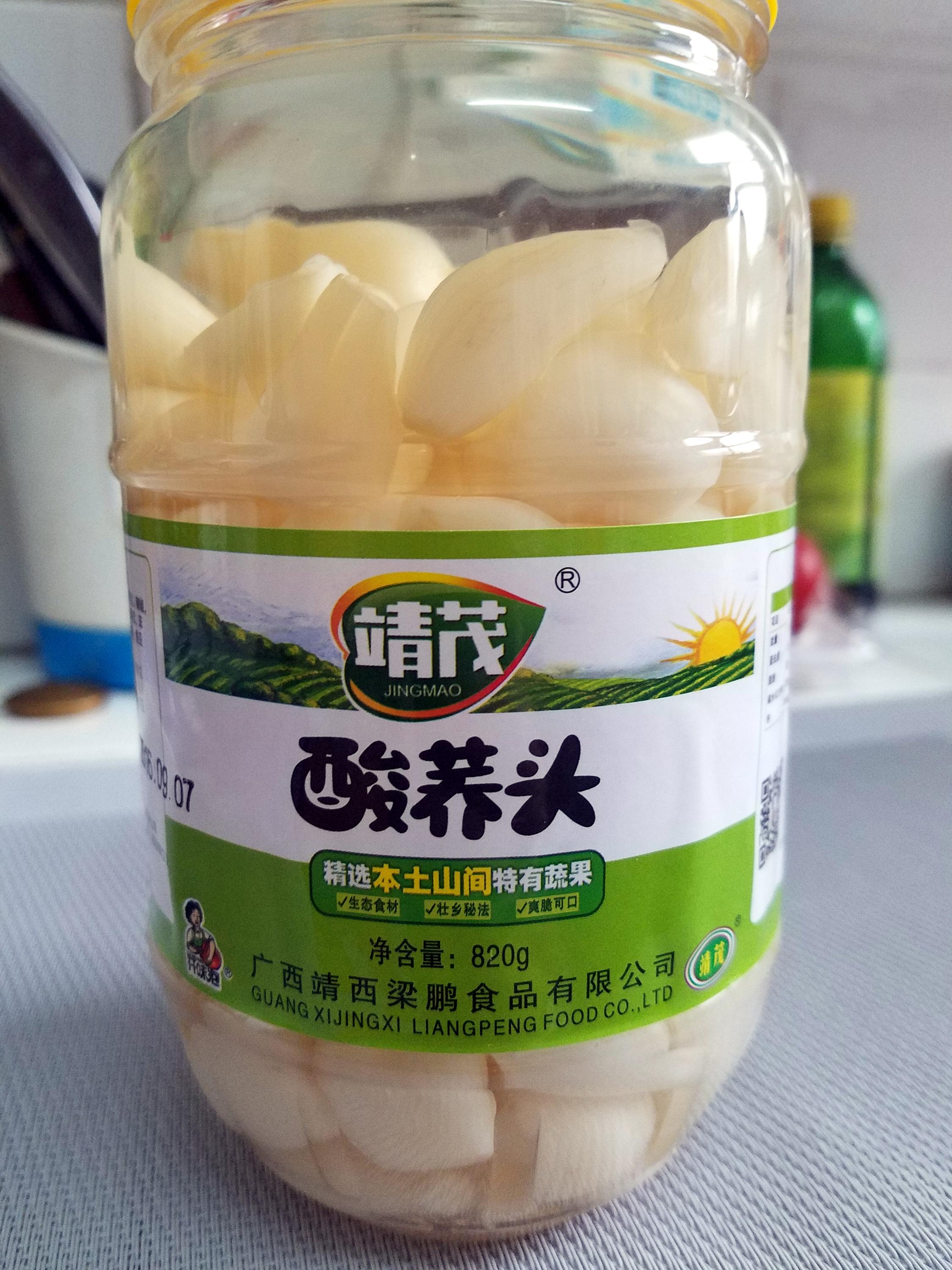
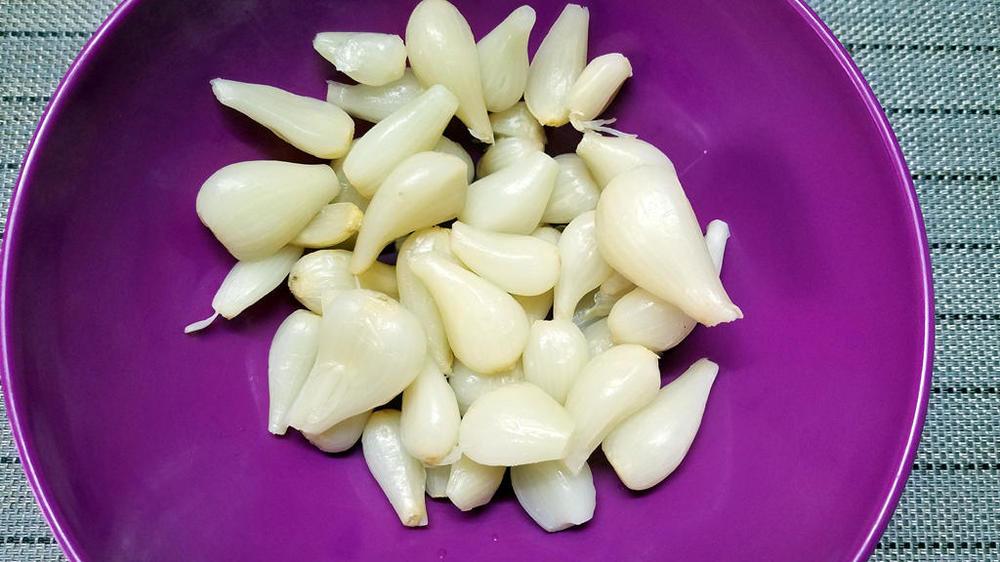
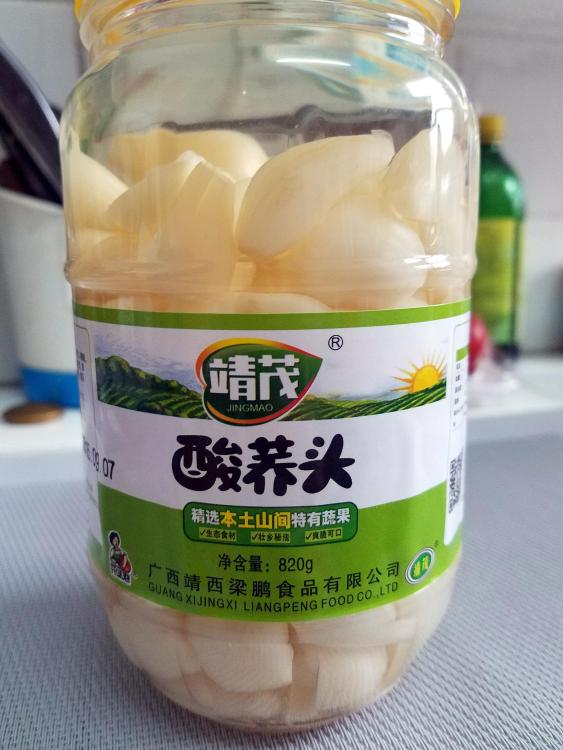
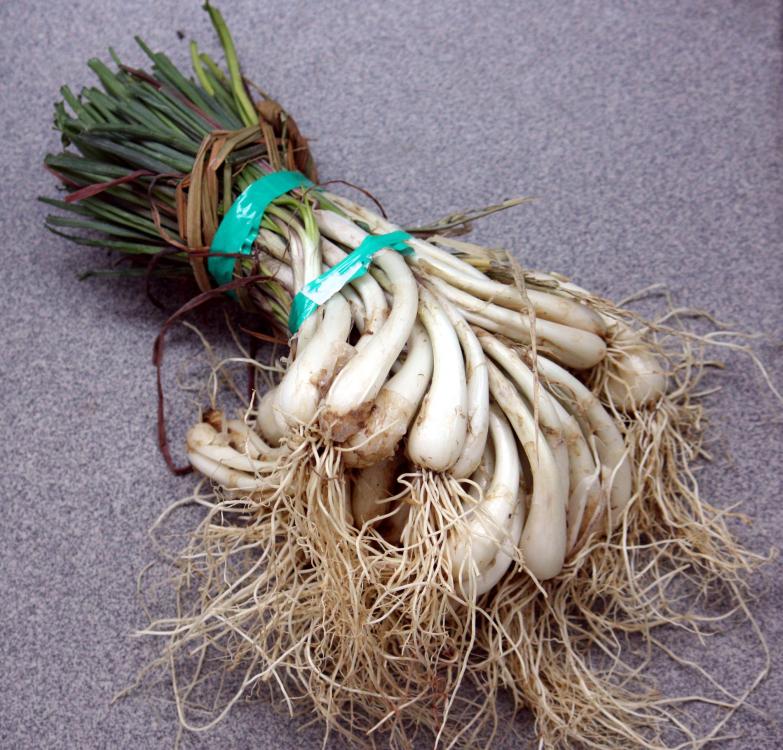
If I buy pickled onions, they are usually the bulbs of the Chinese bulbous onions above. They come loose in the markets and bottled in supermarkets. Pickled Chinese Bulbous Onion Bulbs Pickled Chinese Bulbous Onion Bulbs I can also get imported silverskin onions, but rarely bother. Those above are fine.
-
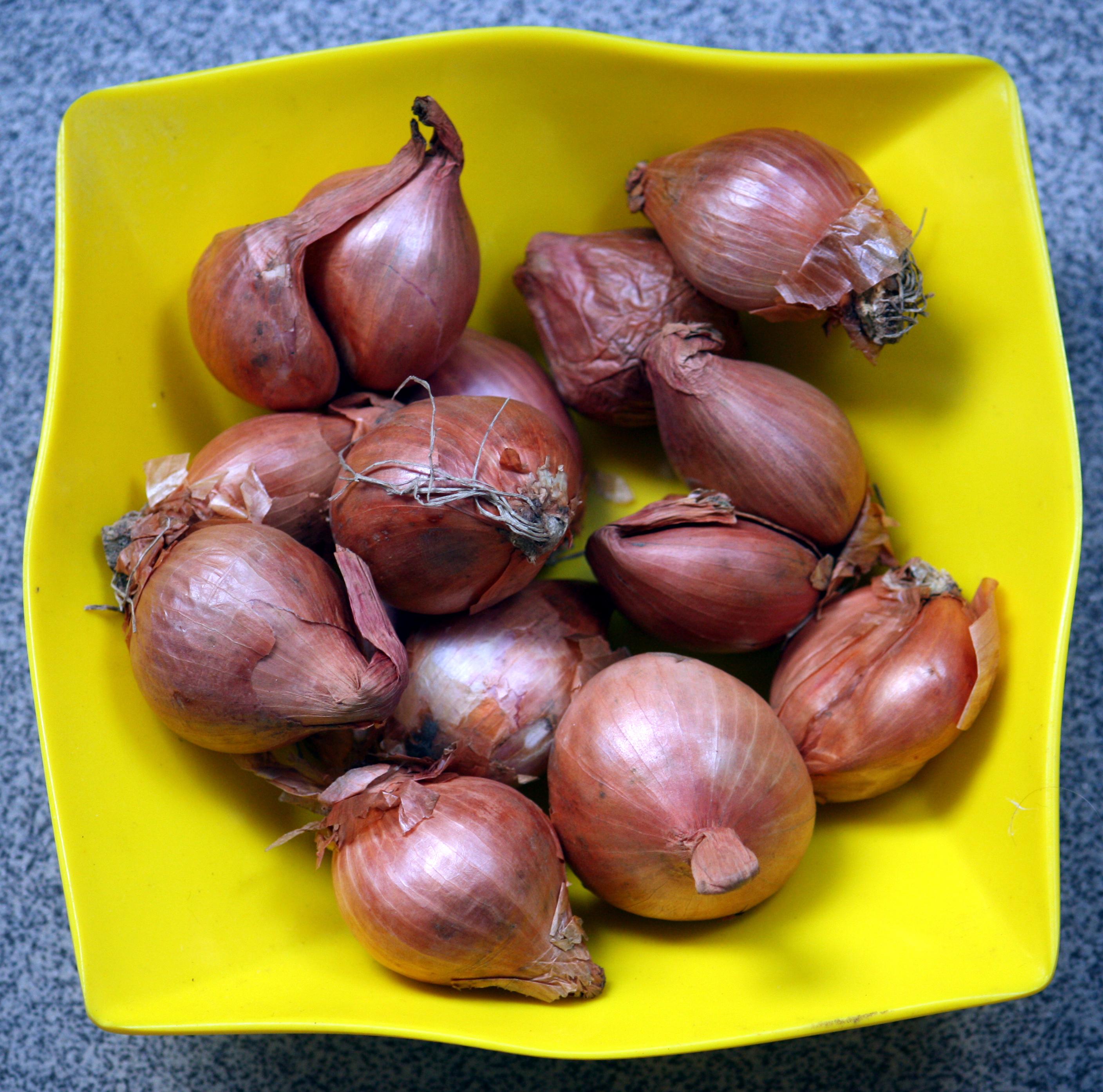
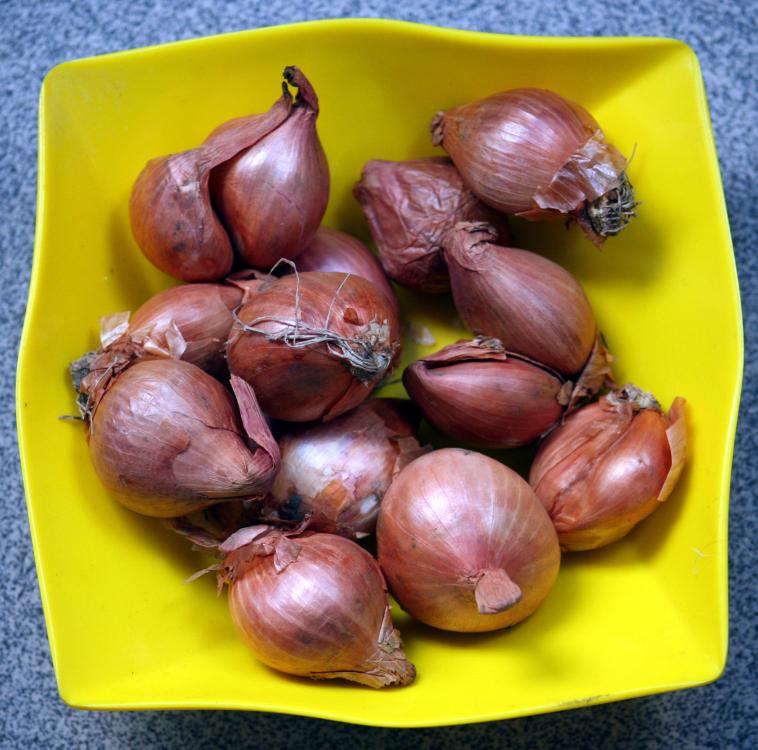
I've never found shallots here although we get these which are sometimes described as shallots. In fact, they are baby red onions. I find them useful for some things, so I usually have some to hand.
-
Do you get these where you are. Common here. Allium Chinense 荞头/蕎頭 (Mand: qiáo tóu; Cant: kiu4 tau4) are also known in English as Chinese bulbous onions, Chinese onion,[Chinese scallion, glittering chive, Japanese scallion, Jiangxi scallion, and Oriental onion. They are mildly flavoured.
-
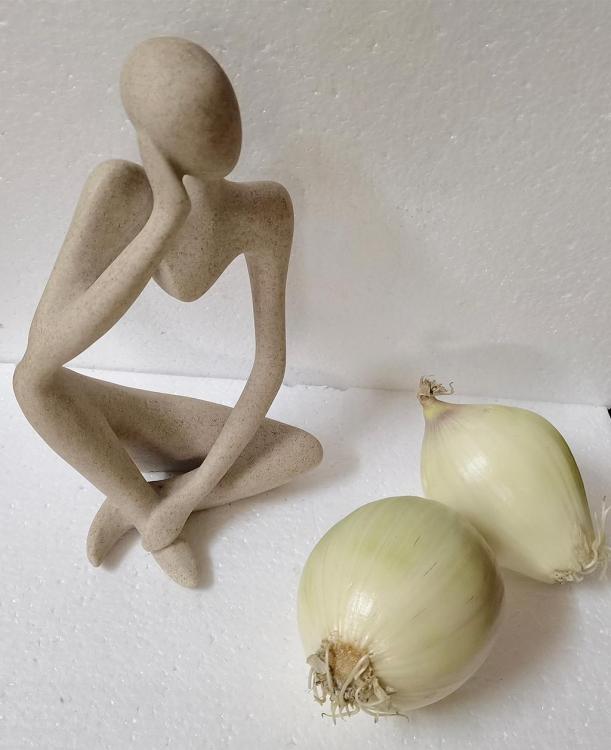
I see her as 'resting' and she sits on my desk to the left of my main monitor. My constant companion, except when I move her to appear in food pictures!

-
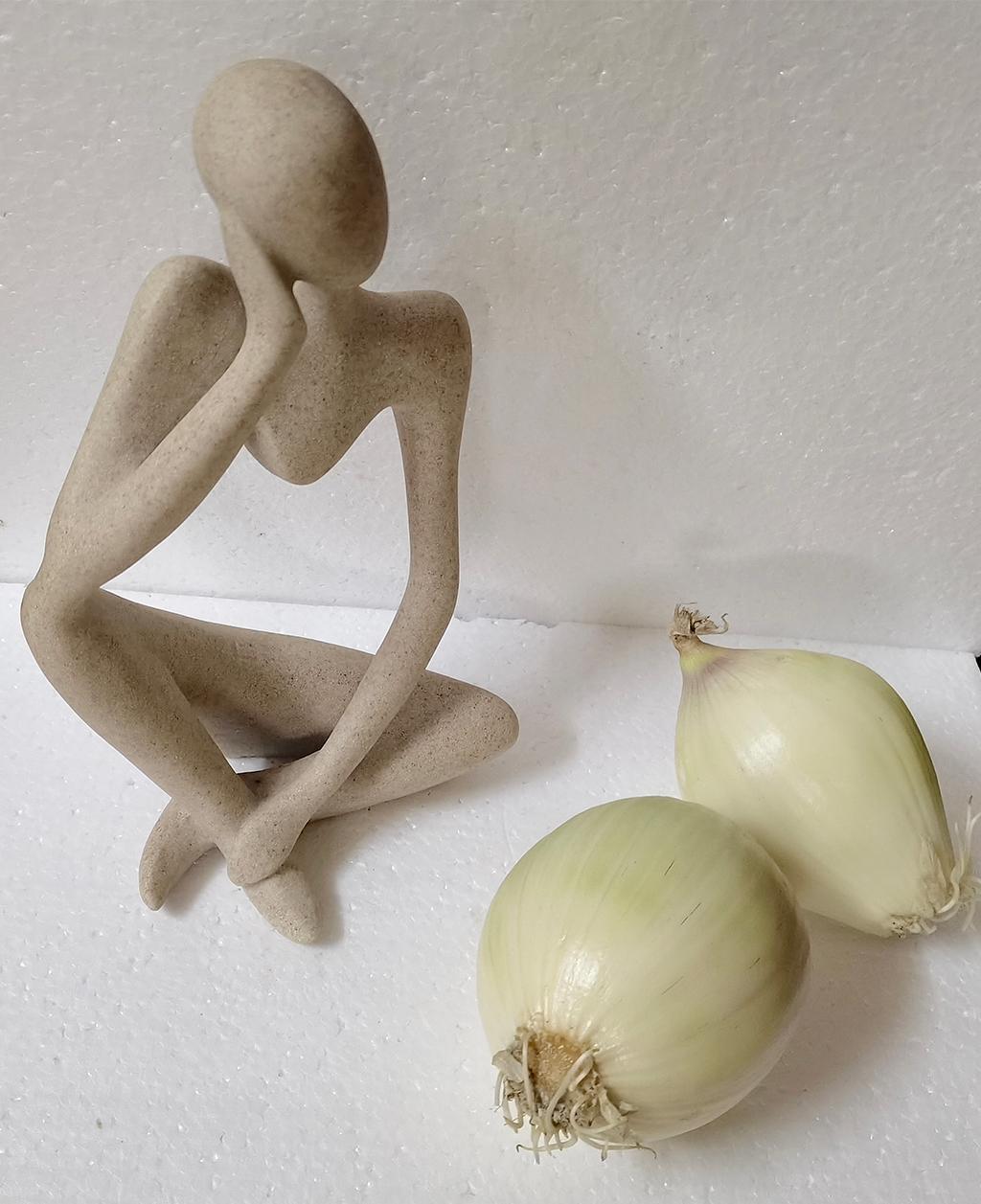
I don't refer to the ones in the first image as 'white' but the stores here did. I refer to the onions in the second picture (with the lady statue) as white. They have the white skin, as I mentioned.
-
I agree, but the locals called the ones on the right 'white'. That said, we only got those 'white' ones once. The white onions I get now are these. They still have their skin on.
-
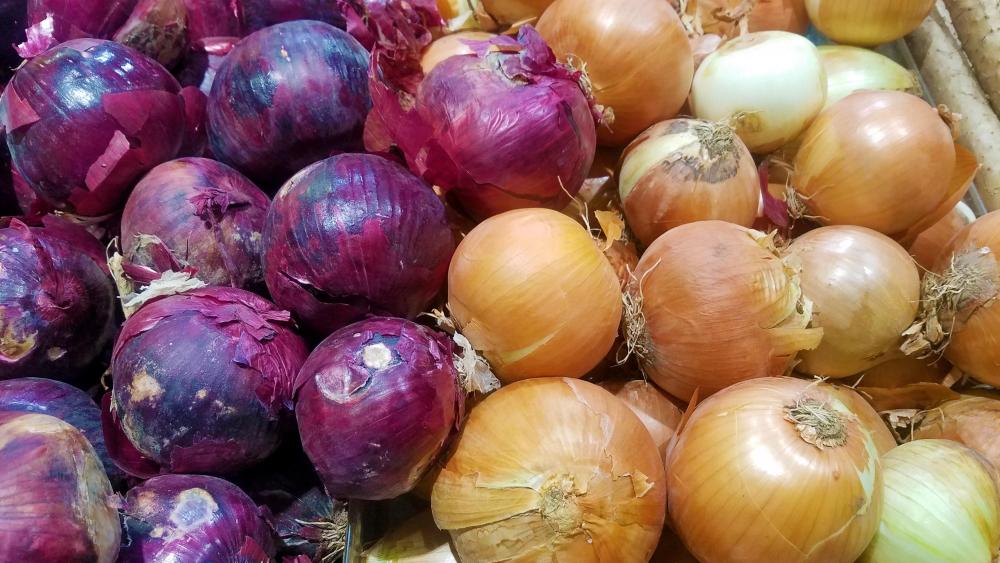
Of the bulb onions, for years I only got red onions but over the last year, white onions have become available. Can't help on Spanish / brown or yellow. Of what I call the stem onions, we get all sorts: scallions/green onions. Welsh onions, Chinese chives and several local cultivars.
-
I've just uploaded a 13.6 Mb image. Another at 17.7Mb failed. I'm not sure that size is the main criteria; could be a timing thing.