I’ve been chatting about Good Things (eG-friendly Amazon.com link) here and there and apparently I’ve convinced @Smithy to pick up a sale-priced copy so I figured I should share my thoughts.
This is Samin Nosrat’s second book, following Salt Fat Acid Heat (eG-friendly Amazon.com link) which was quite successful and spawned a 4 episode TV series. The first 4 chapters of that book are an excellent intro to the elements of cooking. There are plenty of recipes that follow but IMO, the real meat of the book is in those first chapters.
In a way, Good Things is similar with a lot of interesting condiments up front and less interesting recipes that follow. I see it as an “Idea” book rather than a “Recipe” book. I was initially frustrated by how many of the recipes I wanted to try required one or several of the condiments or dressings in the front of the book. I reset my focus, spent a few hours making a few of those “good things” and set off to use them.
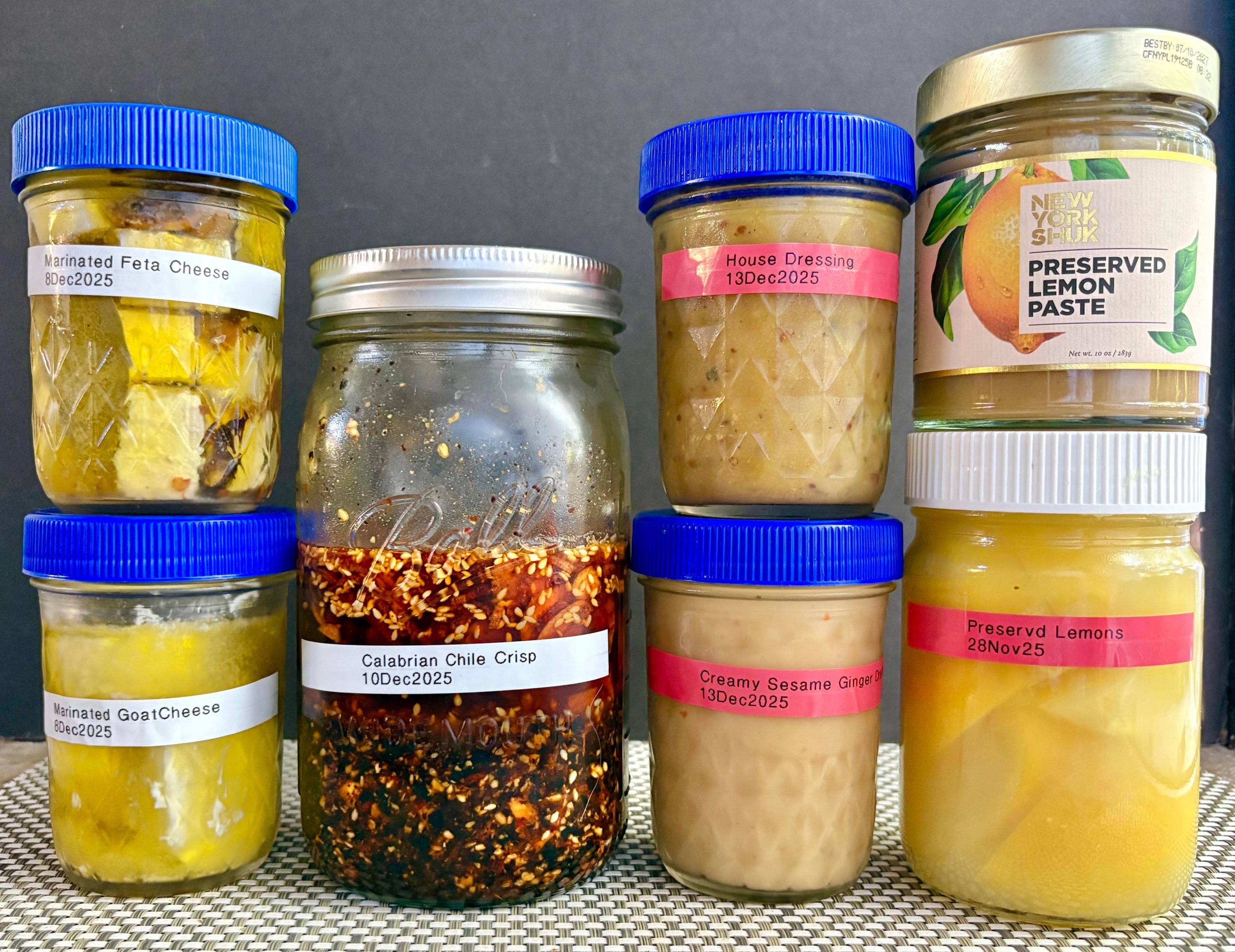
The pickled Thai chiles and pickled red onions were hiding in the fridge but were also part of my first prep session. The preserved lemon paste takes a lot of hands-off time to make the preserved lemons but that NYShuk brand is readily available at Whole Foods or online.
The Calabrian Chile Crisp requires a fair amount of hands-on time but it’s awfully good. I ordered the Calabrian chiles from Oaktown spices but she offers substitutions.
Back to the book, most of the recipes for these condiments are followed by multiple suggestions for their use and the index is very complete in listing all the uses of each condiment, sauce or dressing by name and page number. Even the page of general substitutions is listed. A lot of my cookbooks have similar sections of basics, condiments etc used throughout the book but such a complete index is fairly rare. I’ve spent hours with some books (looking at you, Six Seasons) basically making my own index for stuff like this. The Good Things index is complete, easy to read, and greatly enhances the utility of the book.
There’s a section of vegetable “recipes” by season that are mostly simple cooking suggestions and ways to incorporate those condiments. Nothing fancy, but I picked up a few tips like roll cutting carrots for roasting. I routinely do that for stir-frying but it also makes perfect thin edges to brown while roasting. I make marinated or pickled beets often but her use of the preserved lemon paste instead of vinegar was intriguing to me.
Included in those veg sections are a number of flow charts for assembling salads or cooked veg dishes. Generally, I don’t find flow charts, diagrams or spreadsheet arrangements to be the best way to communicate recipes but for some reason, these have resonated with me and I’ve been using the roasted veg salad pages in particular for lots of salad ideas.
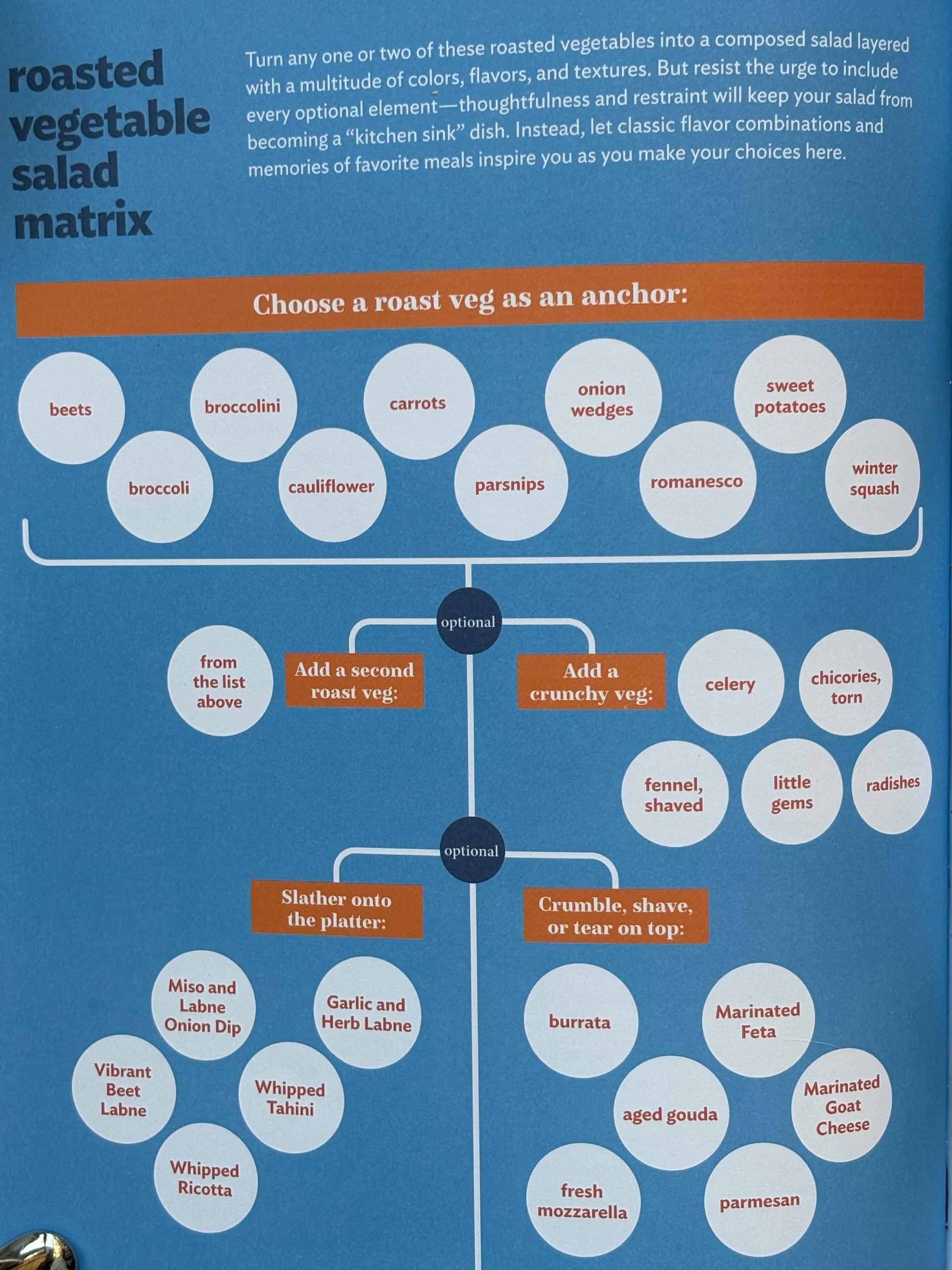
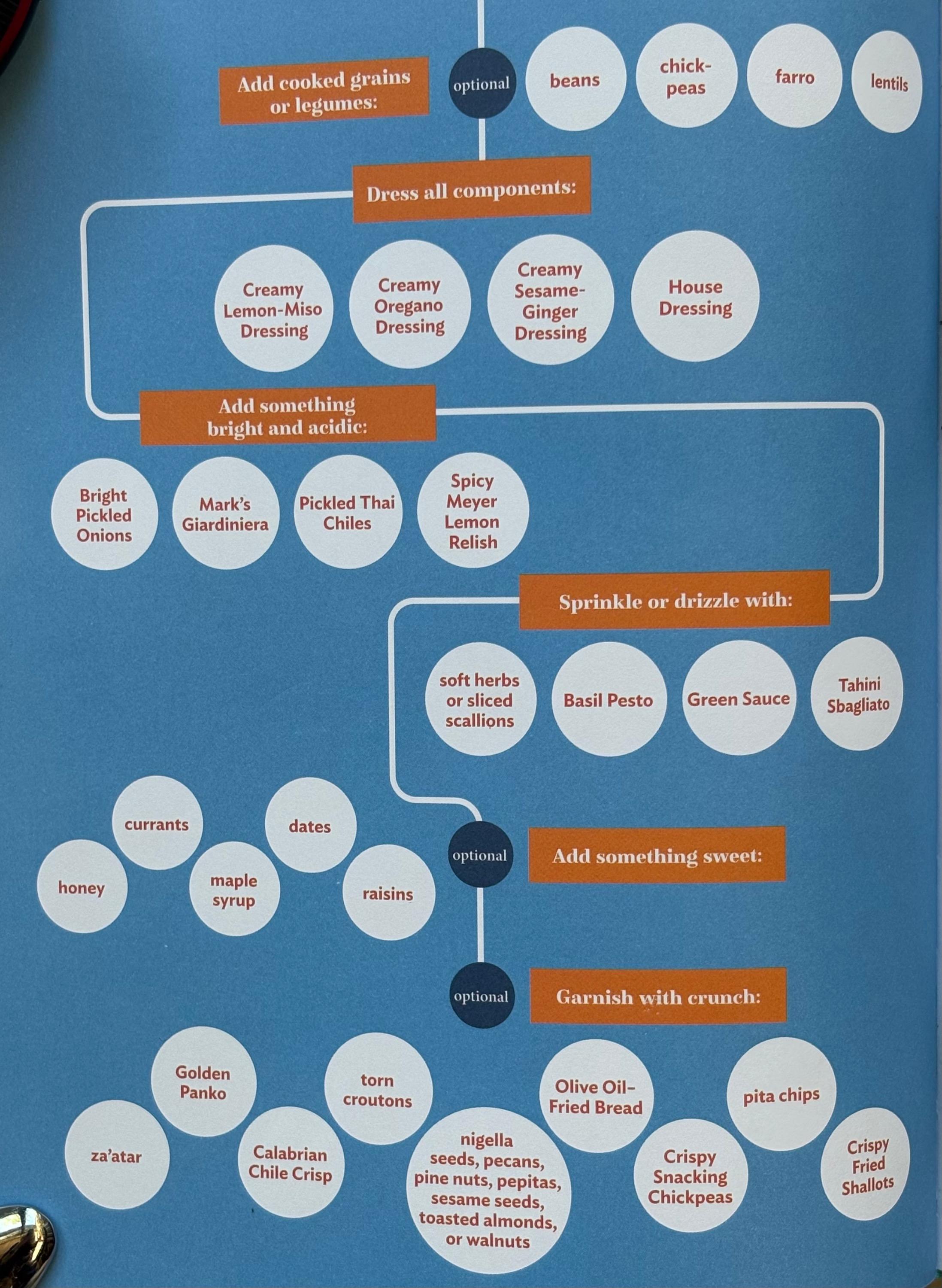
These matrix pages are accompanied by examples that demonstrate restraint in choosing a few ingredients and not something from every category.
Those are my highlights of the book, so far. I intend to work through all the salad dressings and play around with her uses for each. There are plenty of other recipes, a whole chicken chapter, and desserts, too. The harissa chickpea stew and spicy tuna pasta were both excellent but the ideas I’ve gotten from those condiments, dressings and salad matrix pages are the best parts of the book for me.
The book’s not perfect. Its use of metric measurements is spotty which is annoying since it was published at the same time overseas with complete metric measurements so they could easily have been included.
I thought the popcorn was way too salty, the olive oil fried bread was too oily and my first pass at the preserved lemon paste was inedibly salty but the wins exceed the misses by a lot.