
liuzhou
-
Posts
16,814 -
Joined
-
Last visited
Content Type
Profiles
Forums
Store
Help Articles
Everything posted by liuzhou
-
In addition to my sesame oil surprise above, let me point out that we don't sprinkle sesame seeds on every dish. In fact, we do so extremely rarely. I have literally hundreds of photographs of dishes cooked here by home cooks, restaurants and a few from me. I've been looking through them and can't find any with sesame seeds on them.
-
I don't know that specific brand, but Shanxi Aged Vinegar is possibly the most easily available black vinegar here. Being cheaper than Zhenjiang may help. I'm a bit surprised by some of the ingredients, though. Peas? Also, surprised it doesn't seem to give an age. That would be more normal.
-
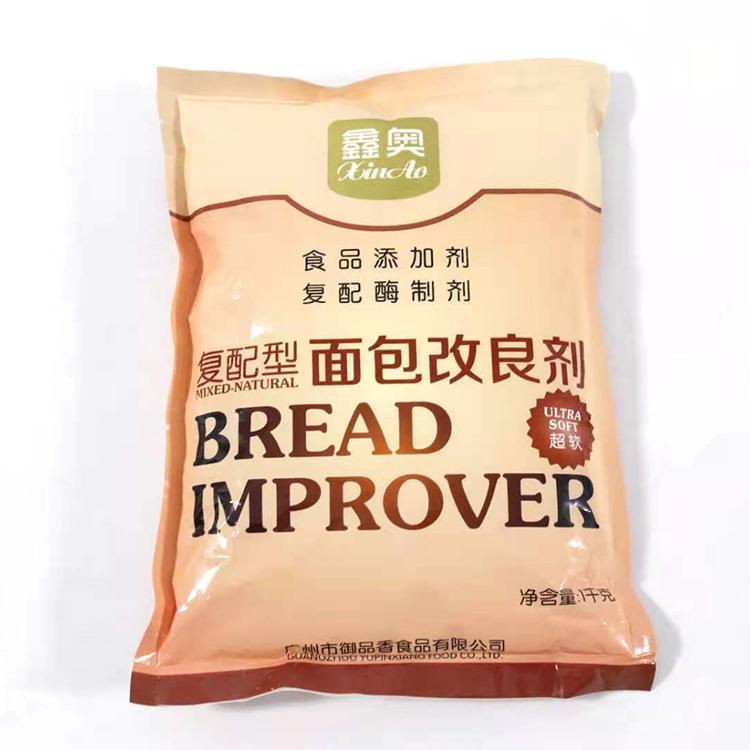
I would just add that it is very common in China to add a flour improver formulated specifically for steamed breads and buns etc. Do you have a Chinatown in Capetown. I know Johannesburg does (I have a cousin living there). Amyway, they would proably have it. If there is no English on the packaging, you can look for the characters 改良剂 or 改良劑 (both pronounced gǎi liáng jì, which means 'ímprovement agent'. However, it isn't essential. I seldom use it.
-
I look forward to seeing your results!
-

Don't Eat Animals that Defecate Where They Eat
liuzhou replied to a topic in Food Traditions & Culture
Why pick on farmed fish? Wild fish don't exactly climb out of the water and visit a public convenience, do they? I've never seen cows abandon their fields to visit a bovine lavatory elsewhere. Nearly all animals shit where they eat - very few don't and most of those are creatures we don't normally eat. -
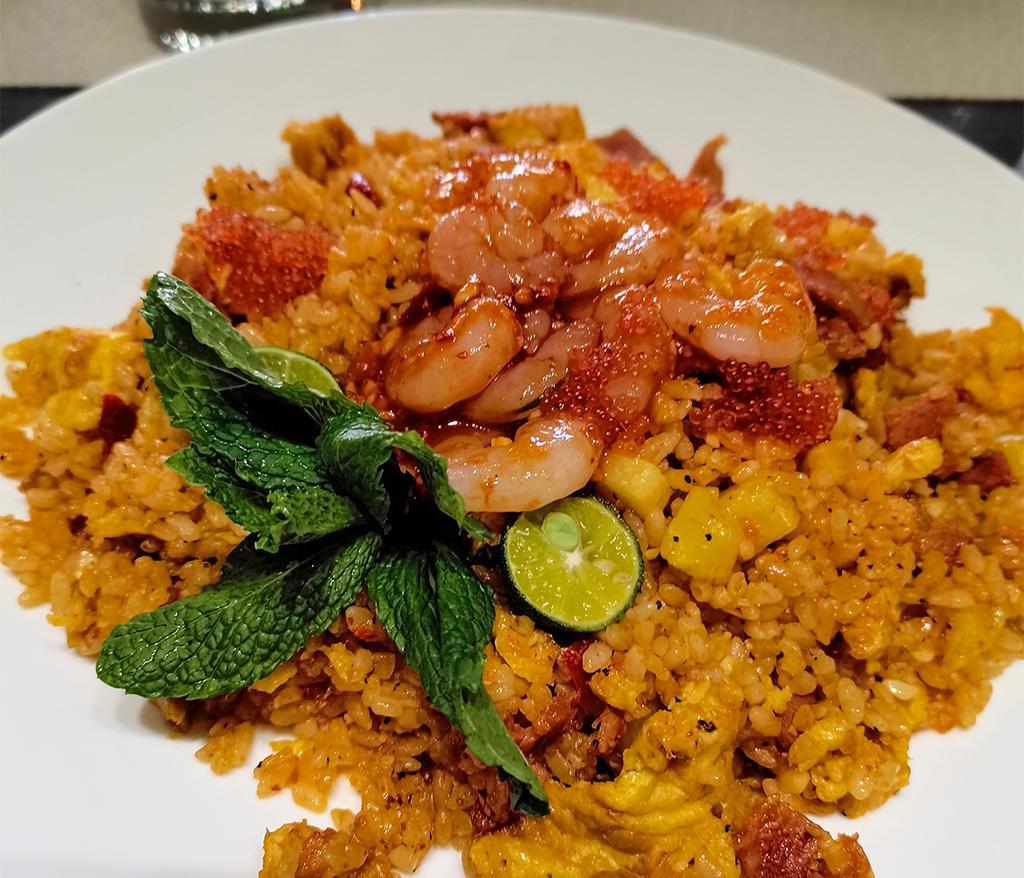
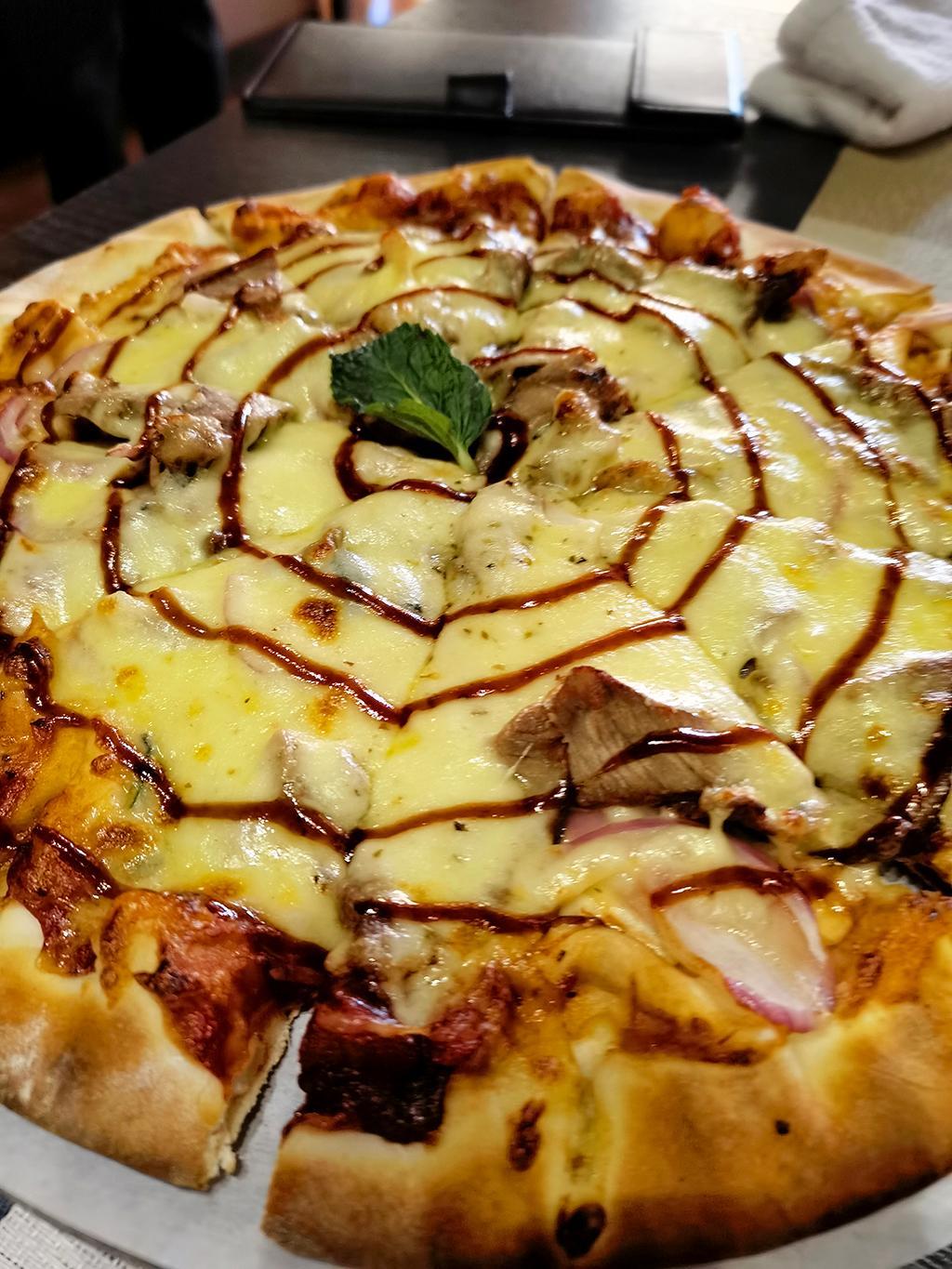
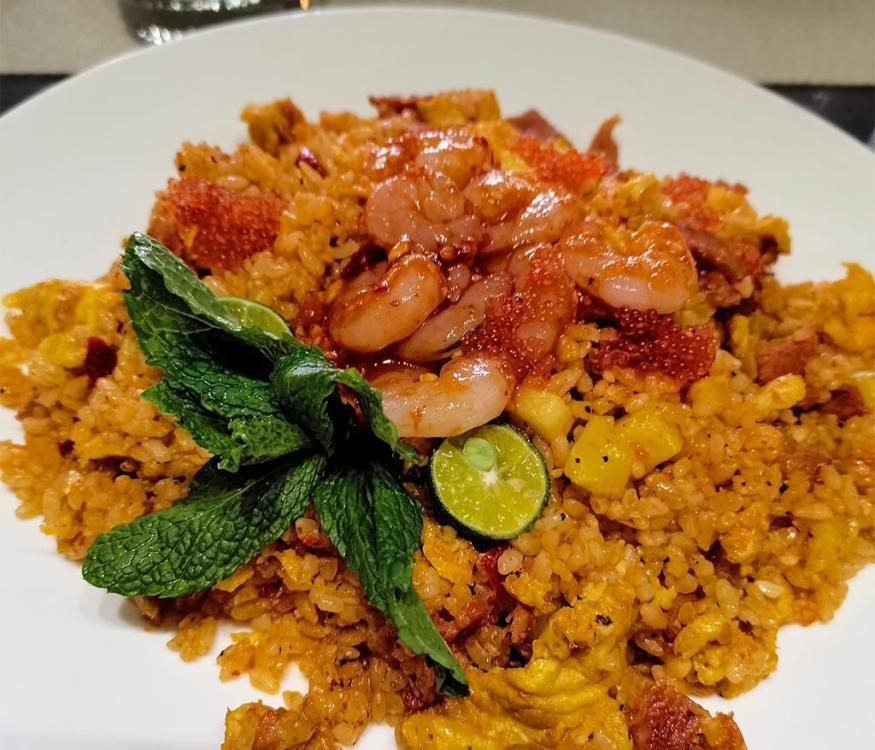
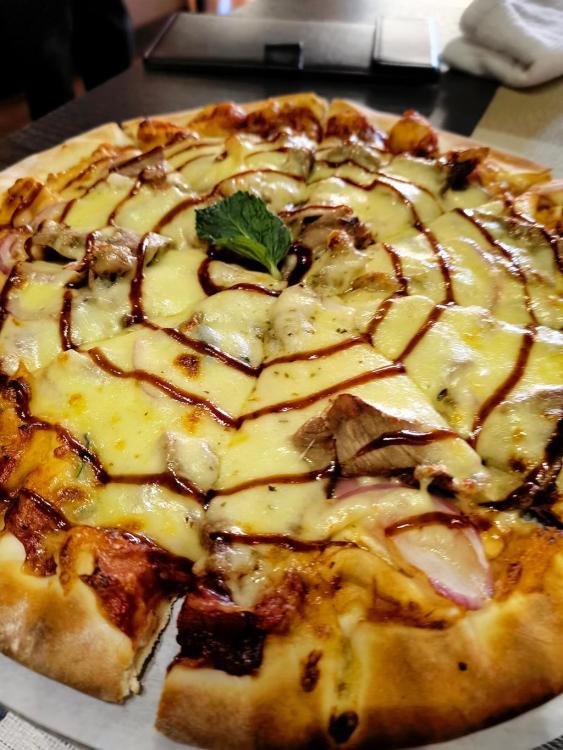
Lunch with a friend in a local restaurant. It's a weird kind of place. The menu is a blend of Chinese and other Asian dishes alongside steaks, pizza and Italian pastas. This was billed as Texan beef pizza. It consisted of a spongy, wafer-thin, undercooked crust on which were some raw onions, bacon of some sort, 'cheese' apparantly made from recycled toothpaste tubes and oversweet BBQ sauce. The bovine had obviously run away and left no trace behind. We should have done the same. Next came a better dish. Spicy shrimp fried rice. Nothing I could have done better at home, though. Still it was nice to catch up with my friend. She is the director of the city CDC, so has been very busy. This week we have a Guangxi only public holiday. Three days off, although she still spent have our lunchtime on the phone. Always on duty.
-
135 grams. Apologies. Have edited.
-
It doesn't make sense, does it. I'll check when I'm home. Eating lunch in restaurant, now.
-
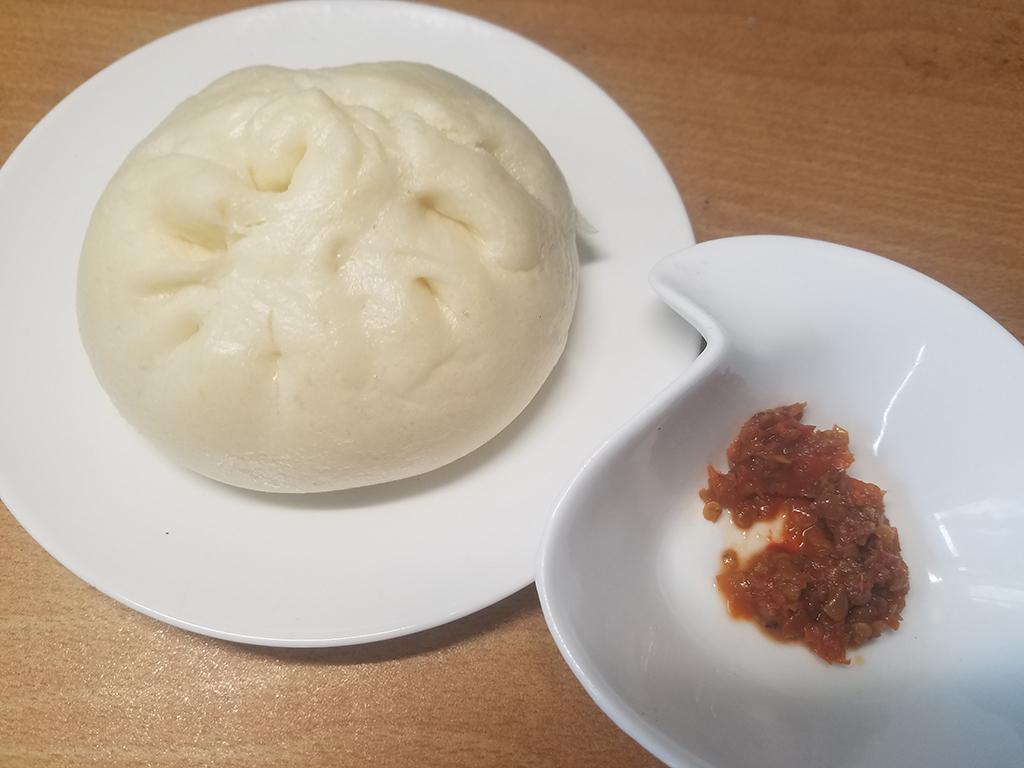
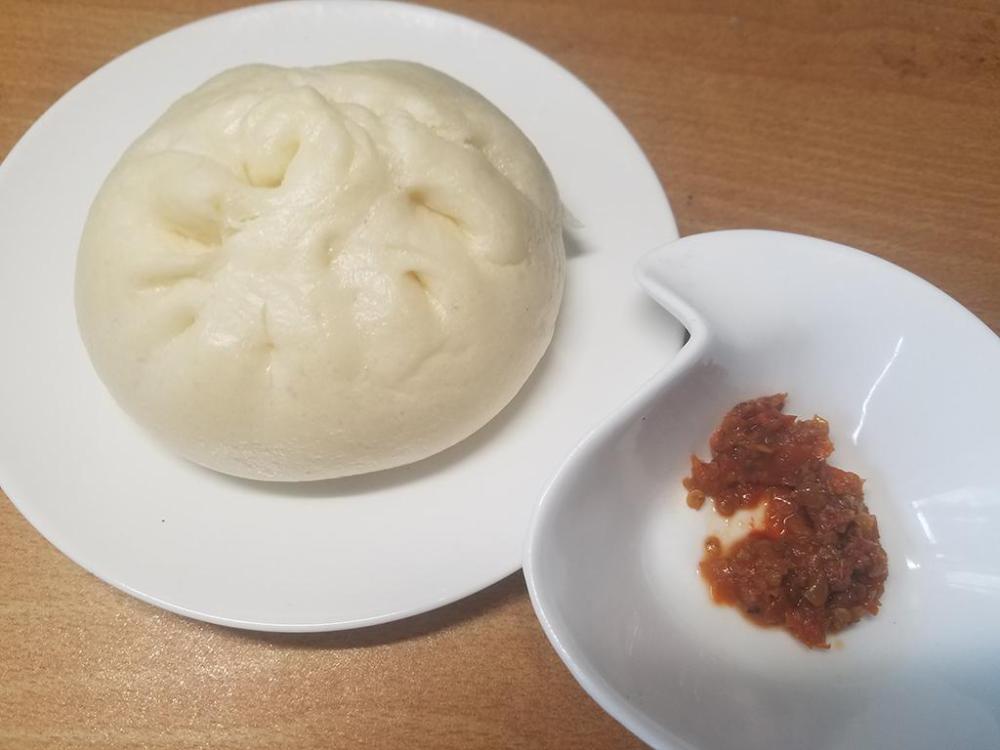
For size. The bun below (which I made) is sitting on a 6 inch diameter plate. Normal size bun.
-
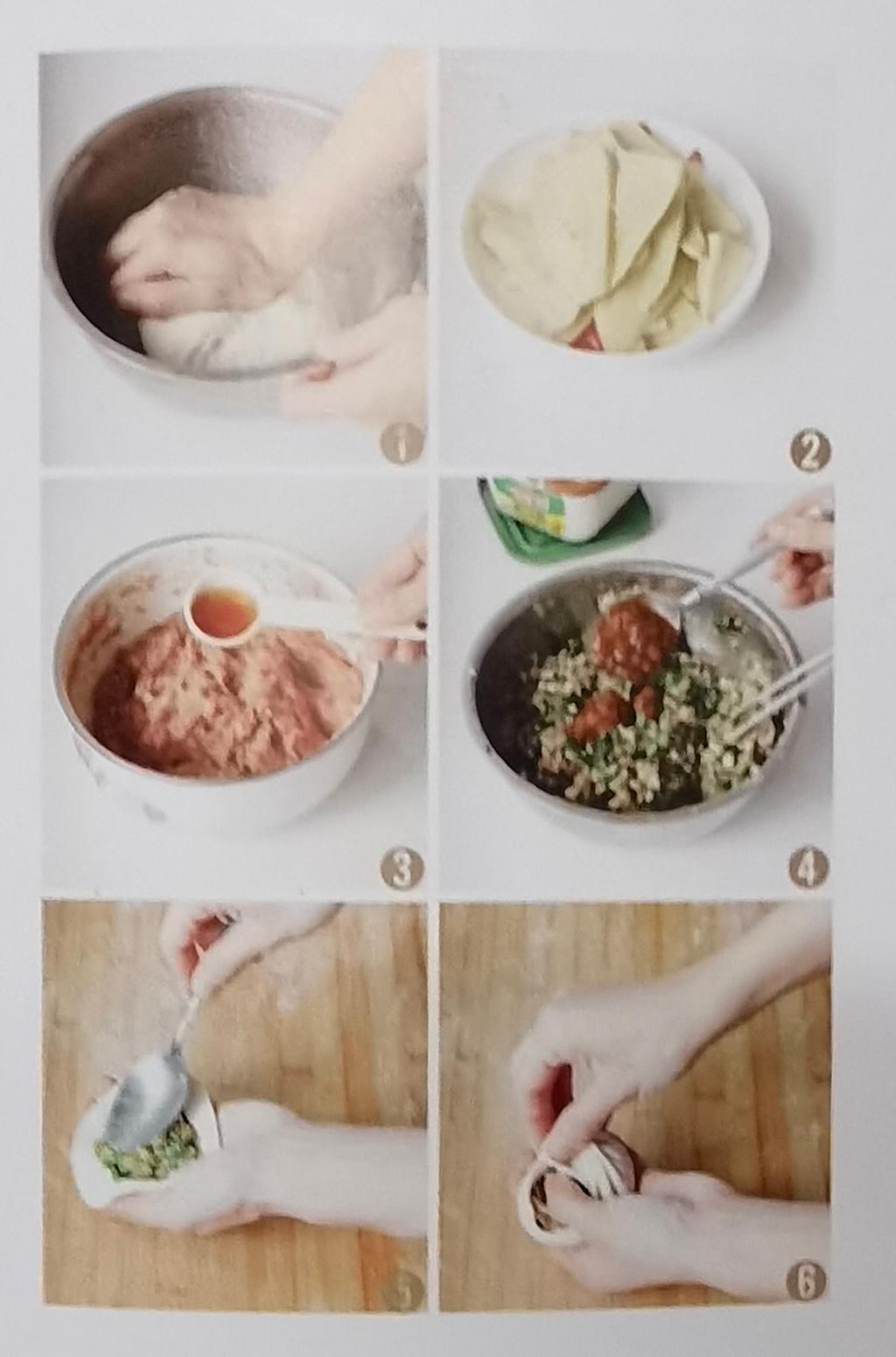
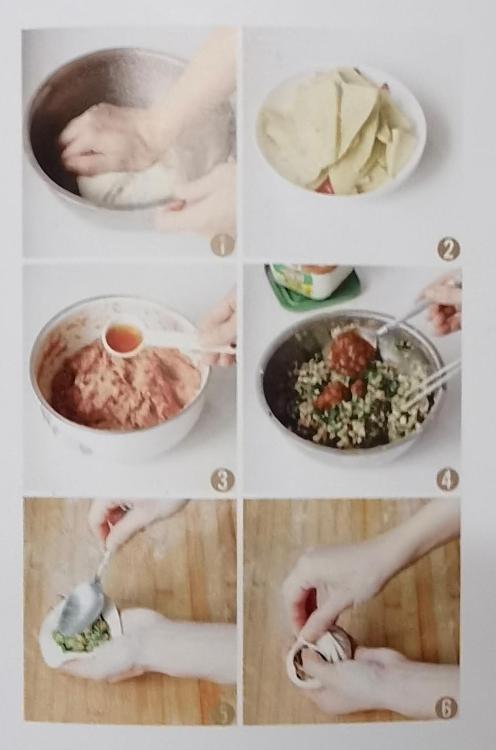
Here is my summary translation of the recipe for baozi dough in a Chinese language cookbook. As ever with these cookbooks, they do assume a bit of prior knowledge. Dough Ingredients Flour 250 grams ter 135 grams Instant Yeast 3 grams White Sugar 10 grams Vegetable Oil 1 Small Spoon Mix all the ingredients for the dough and form into a soft ball. Place in a bowl, cover and leave in a warm place until it doubles in size. In the meantime, prepare your filling of choice. Take the double-sized dough, punch out the air and knead thoroughly. Roll out and cut into even bun-sized pieces. Roll each out into circles, making them thicker in the centre and thinner at the edges*. Press the wrappers to together and twist at the top, making sure they are fully sealed. Do not overfill. Place into a lined steamer basket above a pot of water and cover with a lid, but do not apply heat yet. Leave the buns there 15 minutes to rest. Turn heat to high. When the water is boiling, reduce heat to medium and steam for 15 minutes. Turn off heat, but do not remove the lid until five minutes later. Serve. * Chinese stores sell special tapered rolling pins to make this easier, but they are not essential. Here are some guide pictures to give an idea of sizes. Pics 1, 5 and 6 are of the dough.
-
Baozi are not stuffed mantou. Both are steamed, yes. Otherwise ...
-
I do have a Chinese language cookbook aimed at home cooks. It has nine variations. I'll translate / paraphrase the basics of the bun and leave the filling up to you. Give me till tomorrow.
-
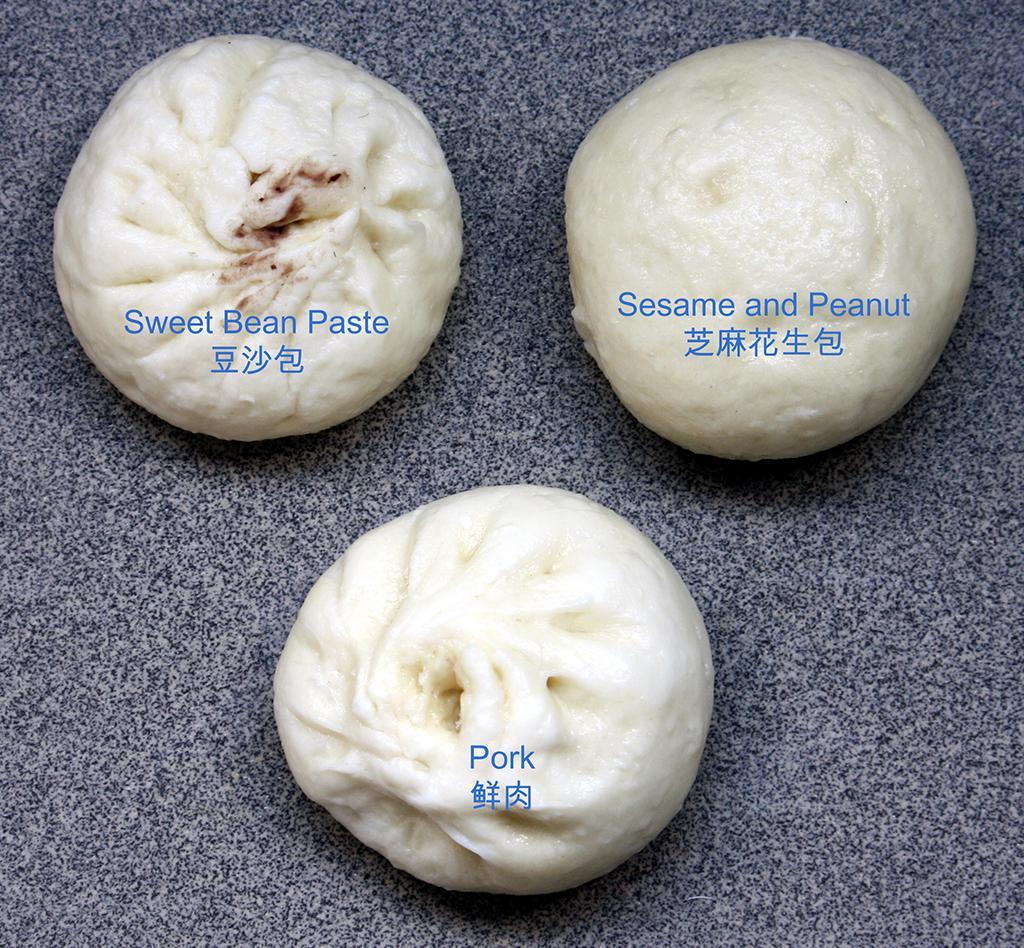
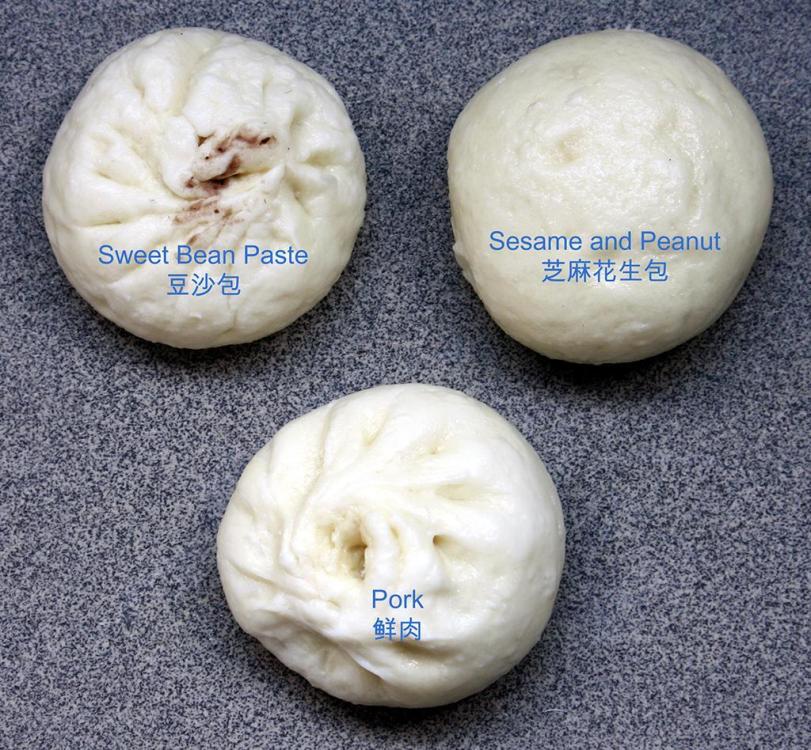
I'm not surprised. They aren't really a restaurant dish. I don't recall seeing them in a restaurant here in China, either. Most are home made or sold from steamed breakfast street food snack joints, to go. They are also sold frozen in supermarkets. I don't have a recipe in English other than the one in my head, sorry. Also, remember that they come with many different fillings. The ones I make most often contain pork and shiitake, but that's just my preference. Here are just three.
-
No. It is Thai. It is imported via Vietnam, though, hence the Vietnamese on the label. I think it's imported from Vietnam just because Vietnam is nearer! The store I buy it from has a lot of stuff imported via Vietnam, but originating from all over SE Asia. Is the "Real Thai" brand available in the USA? It's pretty good.
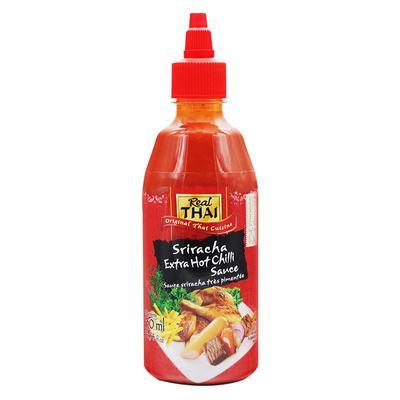
-
Yes. From Thailand. The popular American brand was invented in America by Vietnamese immigrants, as I recall. People in Sriracha say it's very different. I can't comment; I've only ever had the real stuff. I am currently using this one.
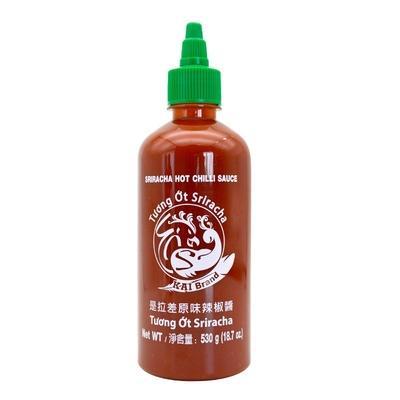
-
Not always
-
Chickens round here are small. I just returned from a local supermarket. All their birds were around 2 lb and that includes feet and heads. Living on my own, that suits me just fine. I can get slightly larger birds (maybe up to 3 lbs) from the markets, but rarely do. For soup, I often buy silkie (乌骨鸡 (wū gǔ jī) - black bone chicken) and they are about 2 lb as well.
-
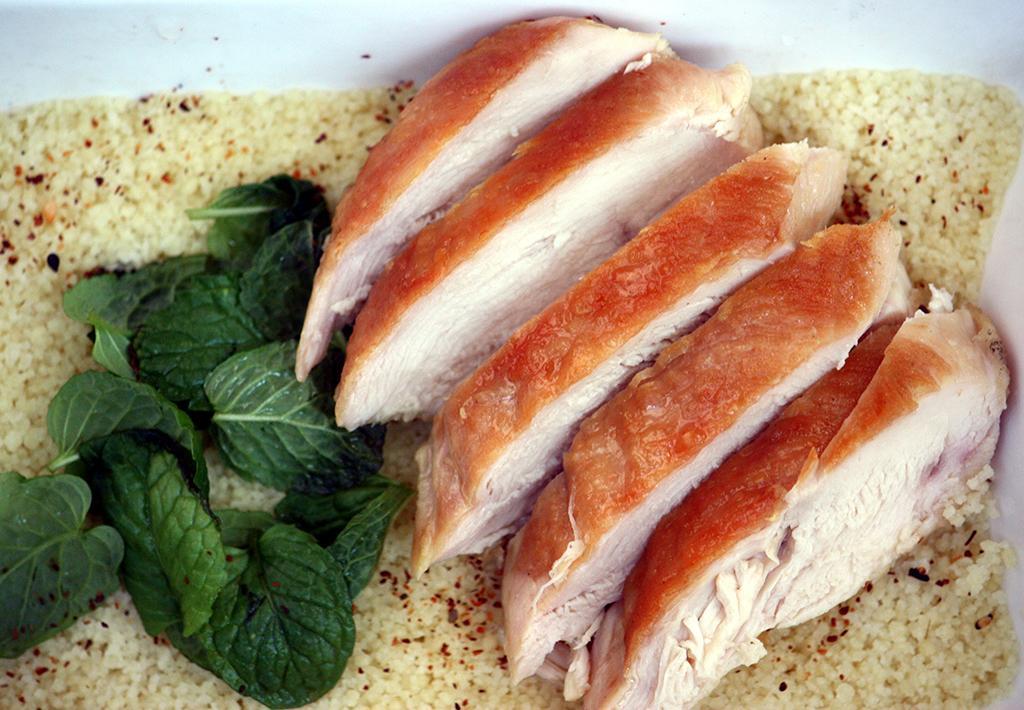
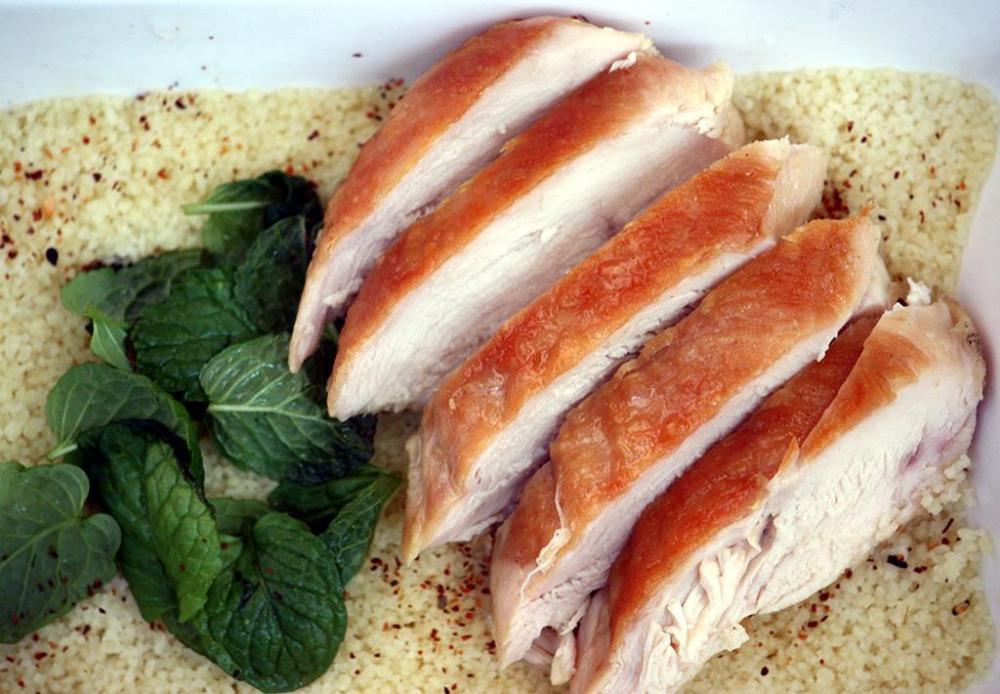
Pan fried chicken breast with couscous and mint.
-
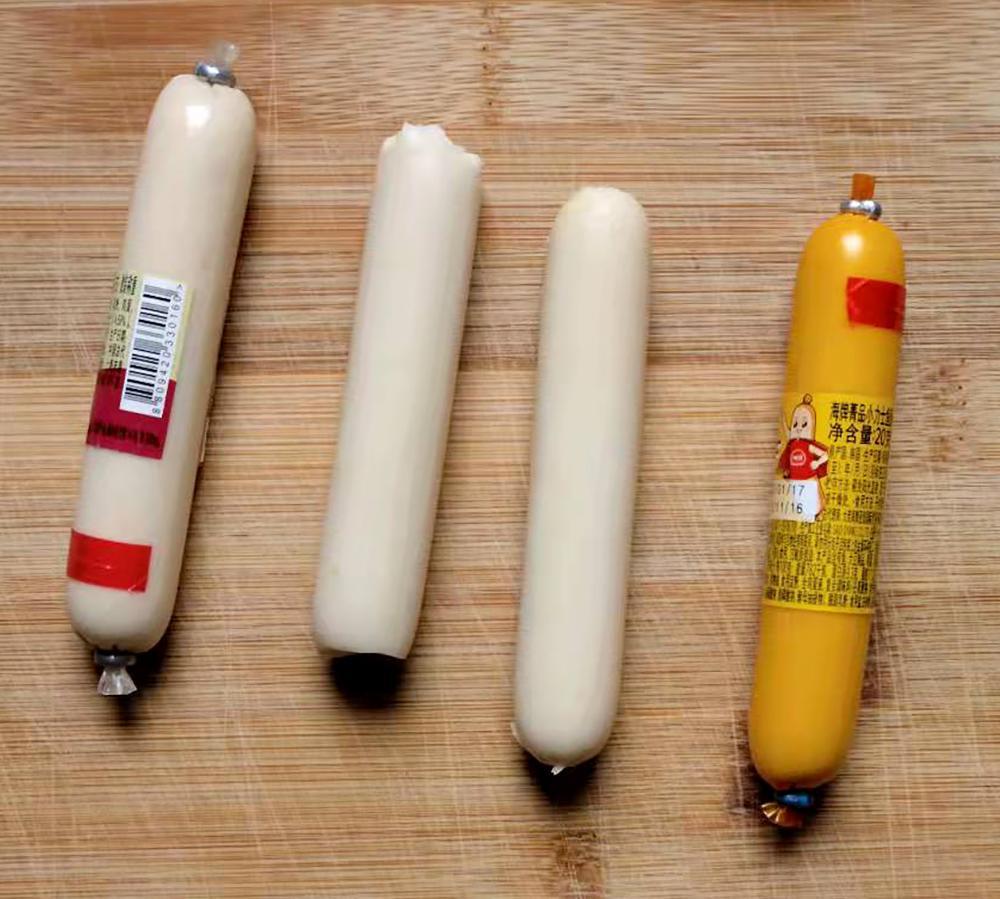
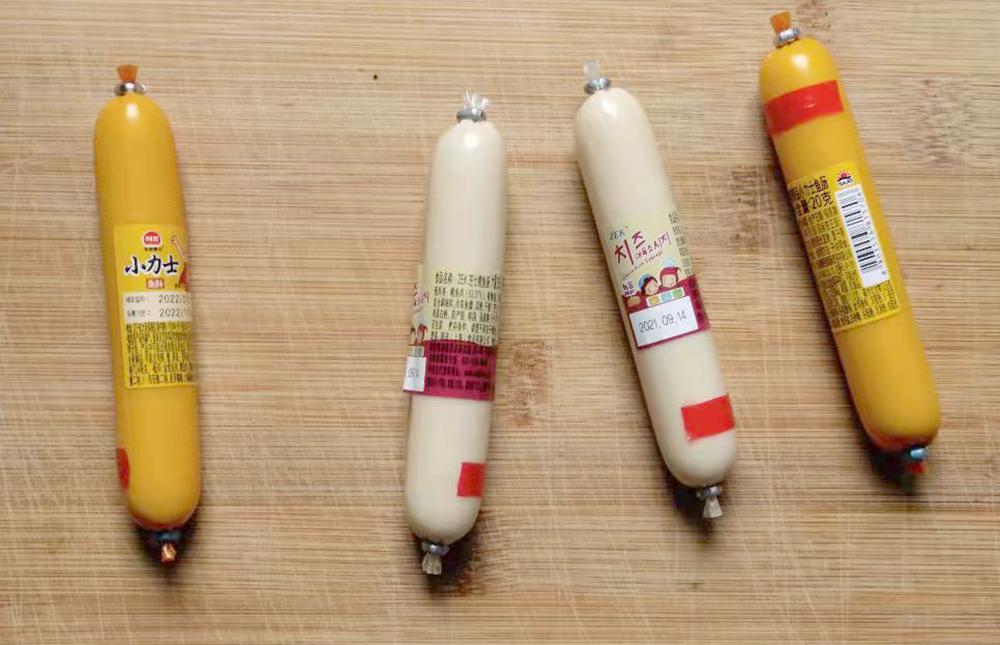
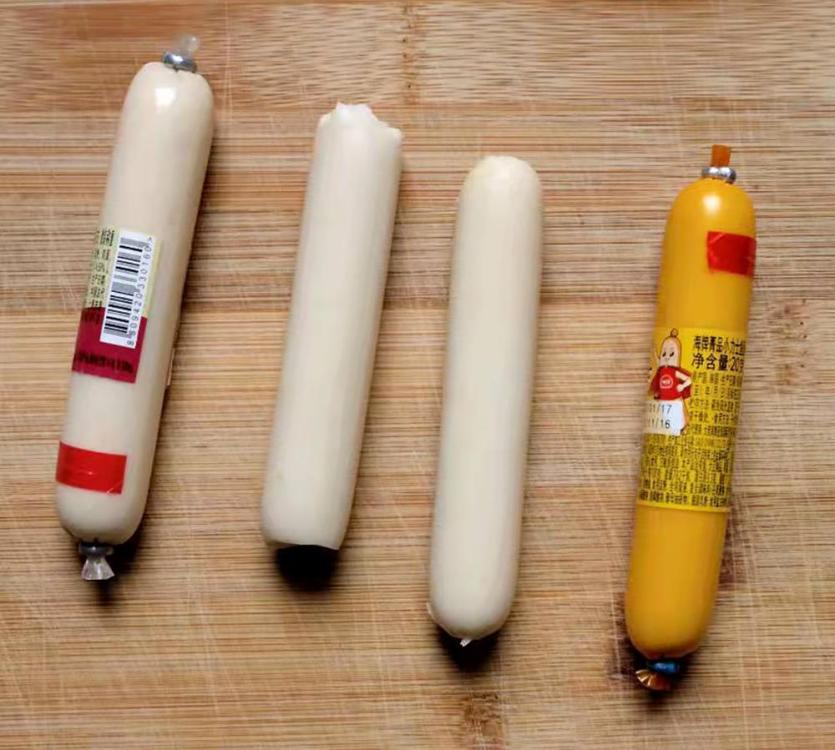
Another horror story is these. If you agree that fish and cheese make a diabolical pairing, then look away. In fact, even if you disagreee, it might be best to look away, anyway. The two in the centre are labelled as 'Fish and Cheese Sausages". The fish is line-caught surimi from unpolluted crystal clear waters in a secret exotic location, The cheese is well-matured, artisan, industrial paste. They are marketed at children and idiots. The other two wrapped in the yellowish condoms are just the fish. In fact both sausages are the same color - a delicately subtle shade of vacuity. The slightly smaller one is the fish and cheese.
-
What is?
-
I understand that, but I cook rice almost everday - sometimes more than once. One that I use when it's just me eating (most of the time). It cost $17 USD at today's exchange rate. I've had it for about two years. The other is what I use when I have company. That one I've had for maybe 5 years and it cost maybe $40 USD. Both cook any kind of rice, as well as other things.
-
Well, let's start with getting her name correct. It Is Fuchsia Dunlop. Yes , some of her books and recipes are very much aimed at beginners / less experienced people. Probably the most accessible is Every Grain of Rice: Simple Chinese Home Cooking. Then move more widely. Although her Sichuan book is a classic, my favourite is Land of Rice and Fish, but then I've been eating and cooking Chinese food in China for a very long time.
-
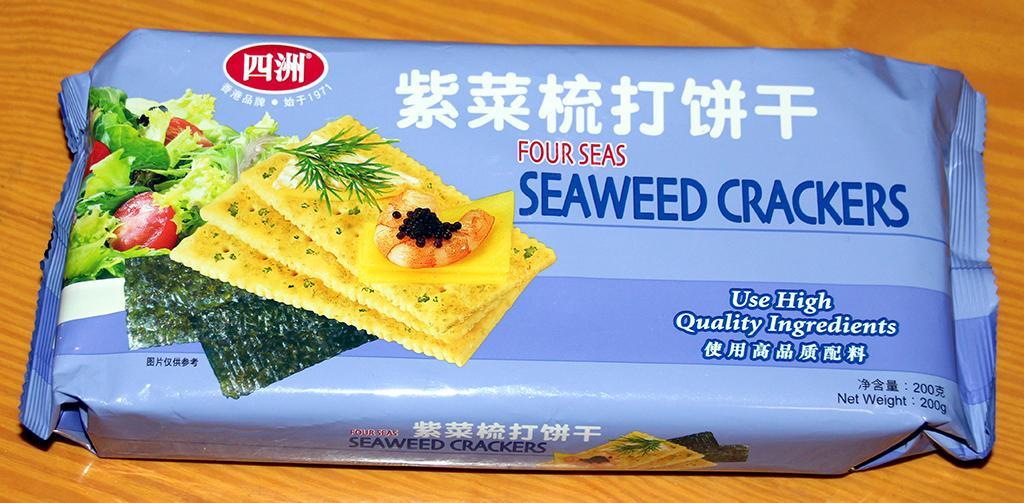
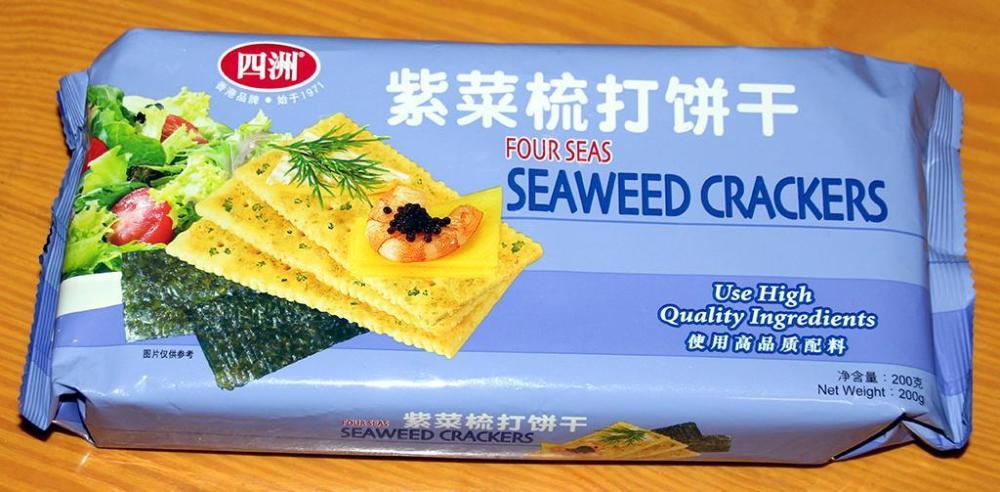
I mostly just eat it as it comes, as a snack, but I have also ground it and added it to a batter for fish and chips and was very happy with that. My favourite crackers to eat with cheese or even chicken liver pâté also contain ground nori. I never make them though.
-
There is no simple rule. It depends on many factors. The specific wine, not just a grape or district; the vintage; how it has been made; how it has been stored etc. Legally protected descriptors, at least in Europe, are helpful, but not infallible. I would say you have to research each wine individually considering all the factors involved.
-
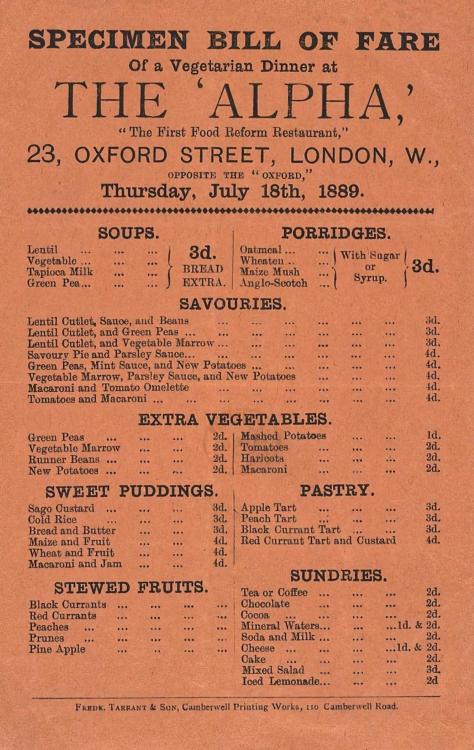
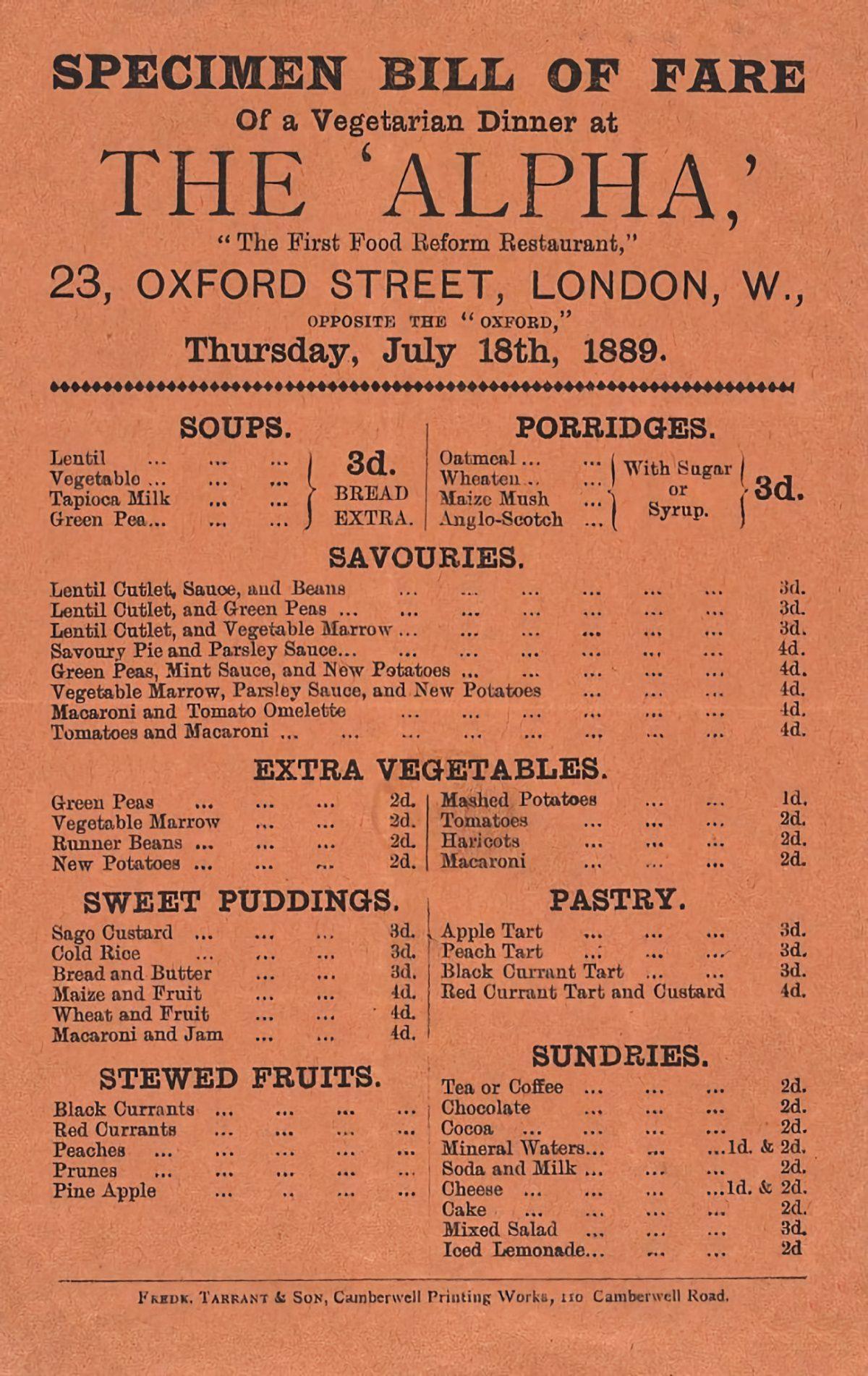
A fascinationg selecton of London restaurant menus from the late 19th century and (mostly) early 20th century. https://flashbak.com/a-collection-of-fascinating-20th-century-london-menus-451328/ Featuring, among more regular cuisines, this 1889 menu from what is believed to be the first vegetarian restaurant in England.