
haresfur
-
Posts
2,433 -
Joined
-
Last visited
Content Type
Profiles
Forums
Store
Help Articles
Everything posted by haresfur
-
I think its down to $80 here. I would bet they are seeing increased competition from the designer rye whiskeys and felt a new label would get more attention. With their big backing, I don't think they are going to be beat on price/value. But they could still think there is more profit to be made if they bump the price some.
-
Stuff You Do In the Kitchen When No One's Looking
haresfur replied to a topic in Food Traditions & Culture
Off the stove and back into the pan. It was easier with an induction cooktop, though. -
What did you think that extra tap was for?
-
Thanks, that is pretty vague on what makes the style distinctive, though. IIR the diacytl is what gives beer the buttery flavour that they associate with English Pale Ale, so this would imply that the difference is mainly in the yeast and perhaps softer water for the APA. And of course more hops, because American beer tends to the extremes. I still associate the citrusy hops with APA, which I think can be traced back to the early WA State microbrew, Grant's Scottish Ale (now sold out to some major and ironically in no way like a Scottish Ale, but that was good marketing). Incidentally, I think of English Pale Ale, especially real ale, as usually having a low ABV and lower hop bitterness leaning towards the malty. Must use English hop varieties or similar offshoots. The water hardness varies by region, of course so isn't anything that defines the style. I can't say buttery has jumped out at me but that doesn't mean it isn't there. BTW, I'm really not a style-Nazi but sometimes it helps to have an indication of what you should be getting. Context is everything and I find really estery beer more acceptable if it is a Scottish Ale than if I get a glass of something billed as something else.
-
That sounds odd to me. I mean, when I think of an American Pale Ale (interesting that that has become a distinct style here - is it considered one in the US these days?) Anyway, it seems to me that this is pretty much defined by Cascade hop flavour/aroma or perhaps a very close relative of Cascade. I mean if you put Hallertau or Goldings hops in, it wouldn't be much of an American Pale Ale IMO.
-
That certainly is an adult drink.
-
I'd file this under 'shit happens'. Like rotuts, I would suspect something in the aging which then was exacerbated by the rolling and low temperature cooking. Try again with unrolled meat and be sure your temperature is accurate. You are in the range where a degree or two can make a big difference to the pasteurization time. If you look back through the SV threads, I think there are a few examples of fairly random problems like this. If you still have the problem, cook the meat a different way or find a different butcher.
-
I guess the first very hot step is to kill surface pathogens. At what temperatures do the enzymes break down and at what temperature are they the most active?
-
I suppose you might lose some moisture - I didn't notice any drying around the cuts, though. On the other hand I would think you could get more smoke into the inside of the chiles.
-
For the record, tonight's supper was goat shanks SV at 60 C for 78 hrs meat removed and slightly shredded then added to vegetables (swede, carrot,, and fennel) roasted then slow cooked on low with a can of crushed tomatoes. Added the SV jus to the veg and mixed the meat in. Not photogenic but this is one for the meat eaters. The tendons were almost completely gone, the meat tender and very red (personally I'd go a couple of degrees higher but I'm sure many would prefer this temp). Rich. The goat shanks weren't at all gamy but certainly were meaty. I don't think you would mistake them for lamb and would be a good choice for someone who, say, wanted beef+. I don't think you could do better than SV for these shanks.
-
Blues band name.
-
You guessed correctly. Let us know how it works for you.
-
I just tried the method of removing the seeds before roasting and it worked really well.
-
Dubonnet = Carla Bruni
-
It won't be the same, but it might be good. Campari will add some sweetness. One way to find out.
-
Proving his point, I think. I'm not much of a Martini drinker but I think that it is a drink where the enjoyment is very sensitive to environmental variables like the ambiance, the weather, your mood, and probably the phase of the moon. I would at the very least try it again with a good friend or better yet made by a good friend or a qualified professional. It's harder to feel pampered when you are doing the work.
-
My MIL is visiting so we stocked up on Australian (tawny) port for her to make the visit more relaxing for everyone. I was left alone for supper so it seemed to be a good time to finally try a coffee cocktail. Nice. I'd maybe leave out the sugar next time and/or bump up the brandy a bit. I used Courvoisier so maybe something with a bit more assertiveness might be good to explore. A lighter hand with the nutmeg would have been smart, too.
-
FWW, isn't your home-made stock less expensive than boxed stock? Seems to me it would be less expensive to waste good stock with a bonus that you might end up with something nice.
-
Everyone likes gin. Some people just don't know it yet. I would recommend starting with something not too in-your-face juniper. I would start with Beefeater over Tanqueray. Bombay Sapphire may be an ok entry. and then try several cocktails in different categories before you decide if you like it or not. I would suggest a French 75, Tom Colins, Negroni, Gin gin mule. Then splurge on a lime and good tonic for a gin and tonic - sipping it outside as a sundowner.
-
Is there a reason you used tongue and groove instead of plywood?
-
Do you concentrate your stock after making it? I do and I can't see how the little bit of volatiles lost during pressure cooking the stock could possibly compare to the amount that must be lost when boiling it down.
-
A dog's breakfast of an Old fashioned: WT 101 rye, cane syrup, Jerry Thomas bitters, Chris Taylor chocolate bitters. Nice.
-
You could extract the alcohol from the wood with boiling water and make swish like the Newfoundlanders.
-
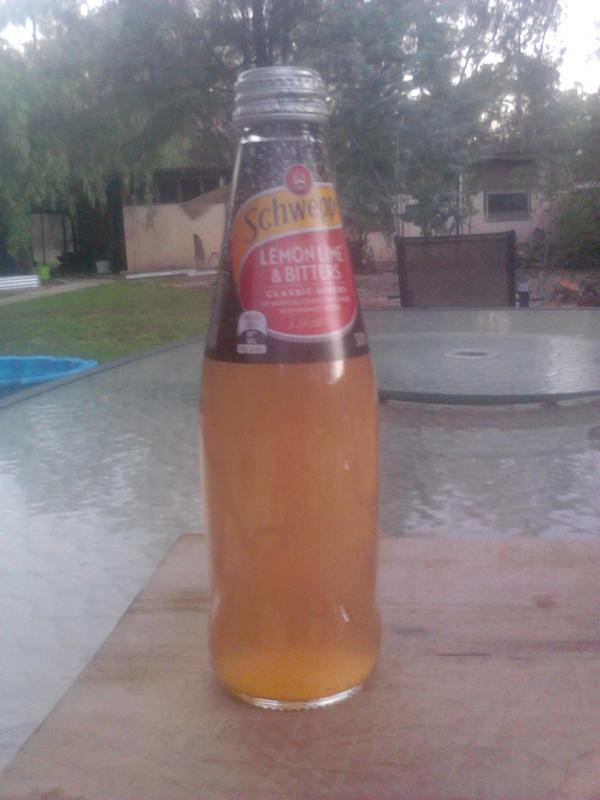
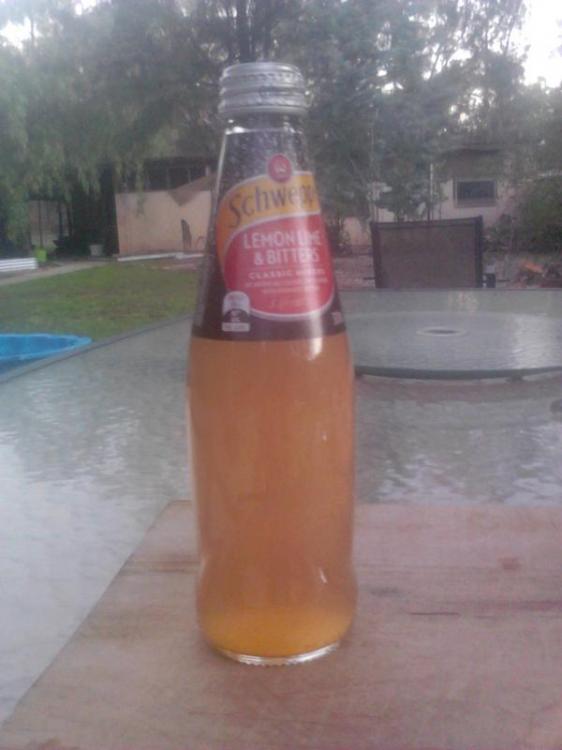
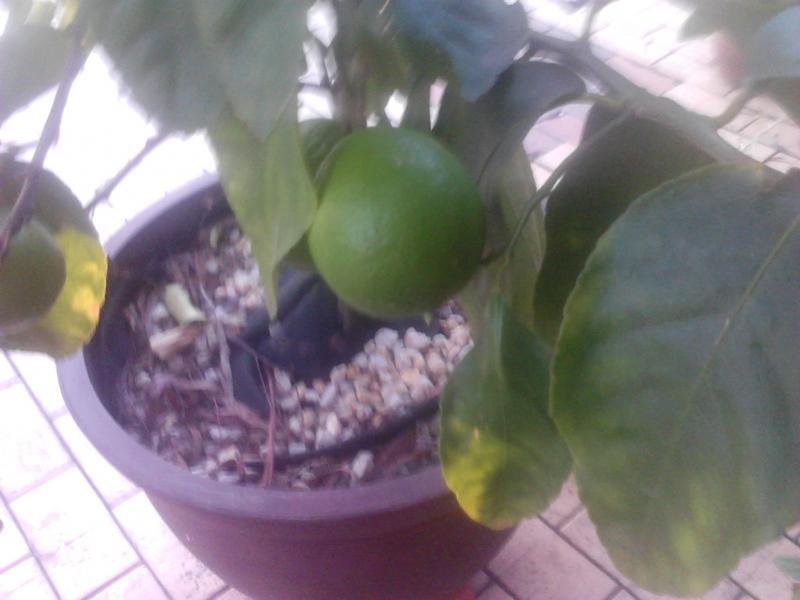
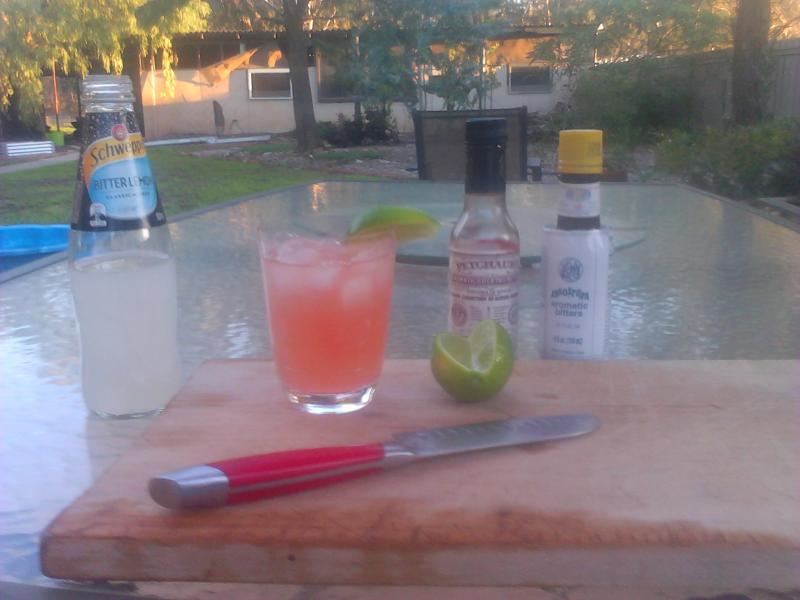
FrogPrincesse announced this MxMo in our previous Mocktail Thread but to save the cocktail blog world from having to wade through it I thought I'd start this thread for our entries (or entry at least). In spite of some skepticism expressed by the eGullet cocktail crowd, I was kind of pumped for this topic. Scott's announcement points out that many classic cocktail books had sections for for non-alcoholic beverages. But in addition to that, many old cookbooks had either sections for cocktails or had alcoholic beverages mixed in with non-alcoholic refreshment. Preparing a good drink was seen as an important skill, booze or no booze. Typical choices for designated driver drinks in bars are often pretty dismal - coke, water, or if you want to live on the edge, orange juice. But in Australia there is another choice - lemon-lime and bitters. What you usually get is a premix from Schweppes or Bundaberg like you can buy at the grocery (You can also get Angostura brand) that is basically lemonade (Sprite to you North Americans) with some bitters added. Still, it has bitters and that has to be worth something. A while ago, I was at a bar in Adelaide and went to get a lemon-lime and bitters for a friend. It was a revelation when the bartender made it using a big bottle of Angostura, a lime, and lemonade. I'm not sure whether it was any better but it was classy. So my MxMo contribution is a variation - Bitter lemon-lime and bitters: Start with a fresh lime: Add a healthy dose of Angostura and Peychauds bitters to an ice filled glass, top with bitter lemon soda and garnish with a lime slice. Bob's your uncle.

-
- 3
-