
sartoric
-
Posts
1,488 -
Joined
-
Last visited
Content Type
Profiles
Forums
Store
Help Articles
Everything posted by sartoric
-
Yes David. It’s a mango and ginger chutney, Sharwoods is the brand, a UK company.
-
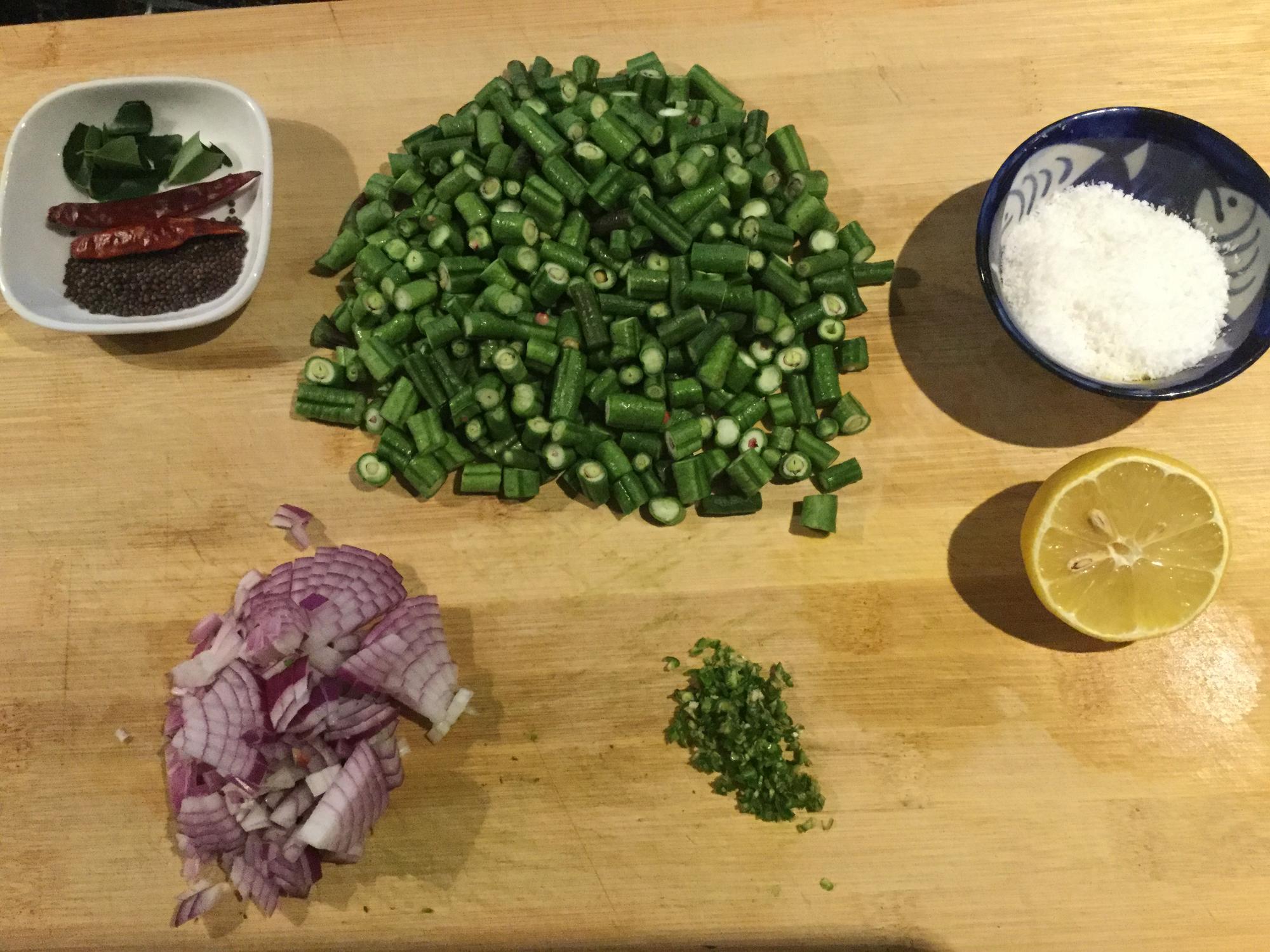
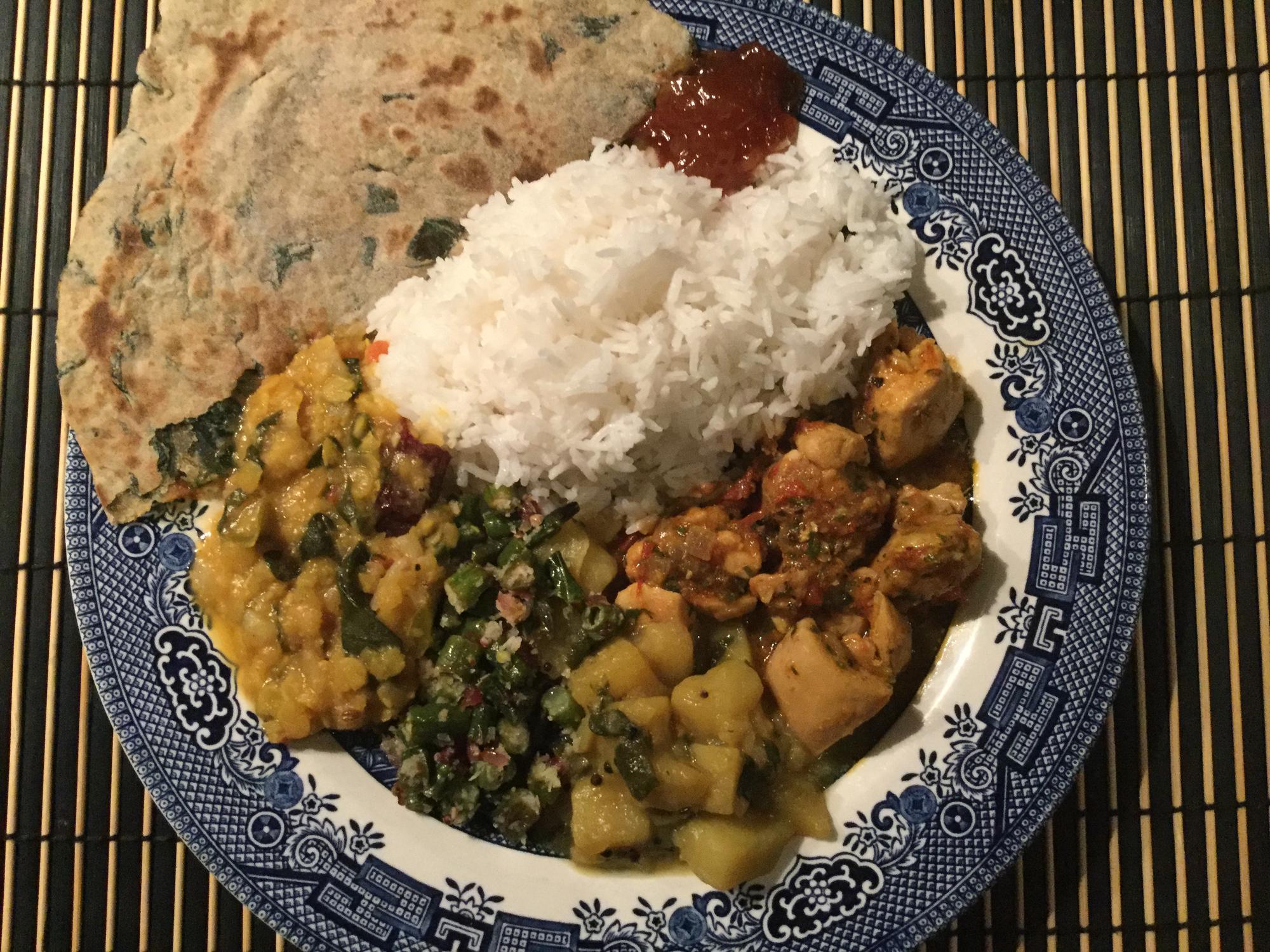
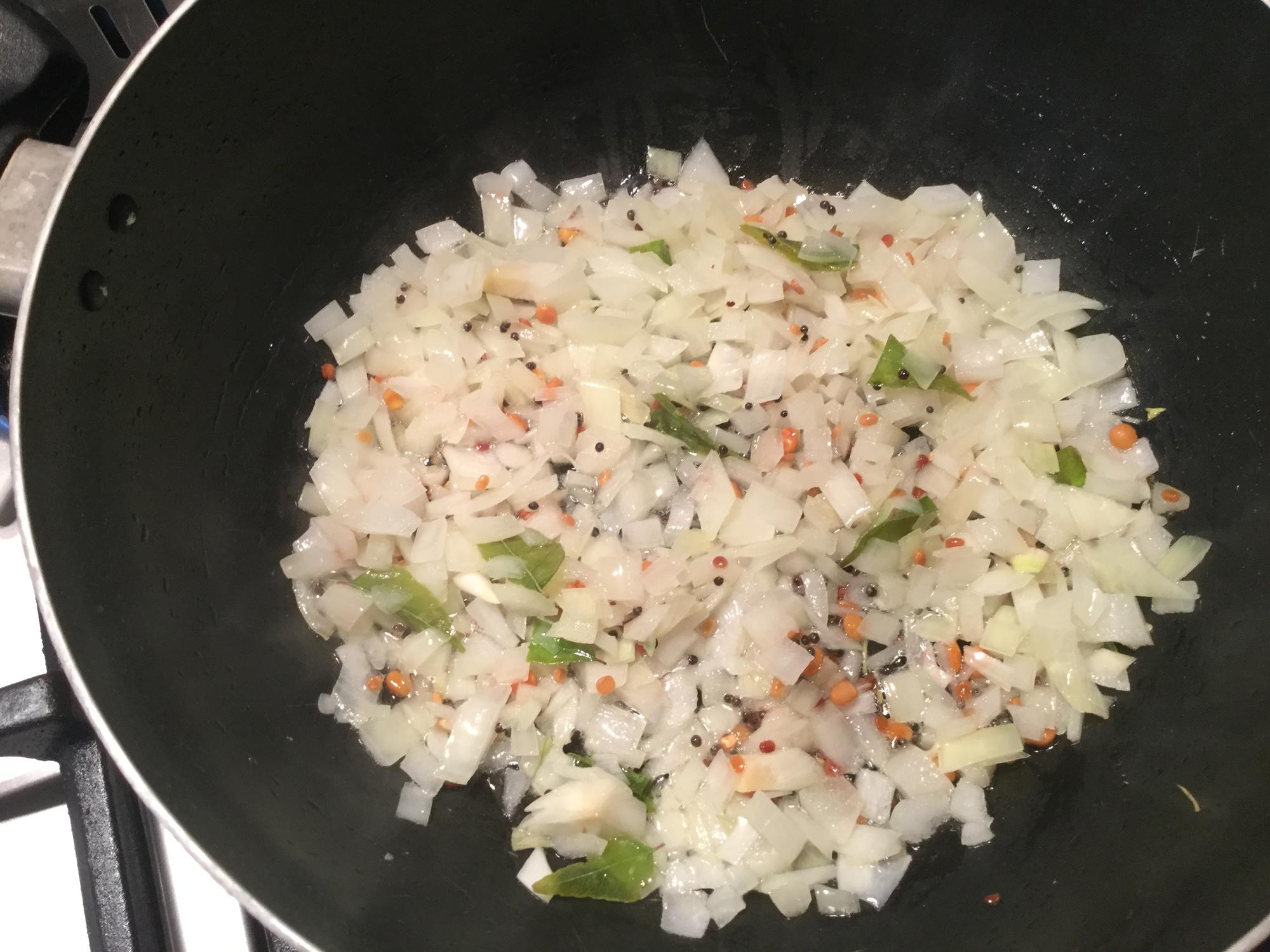
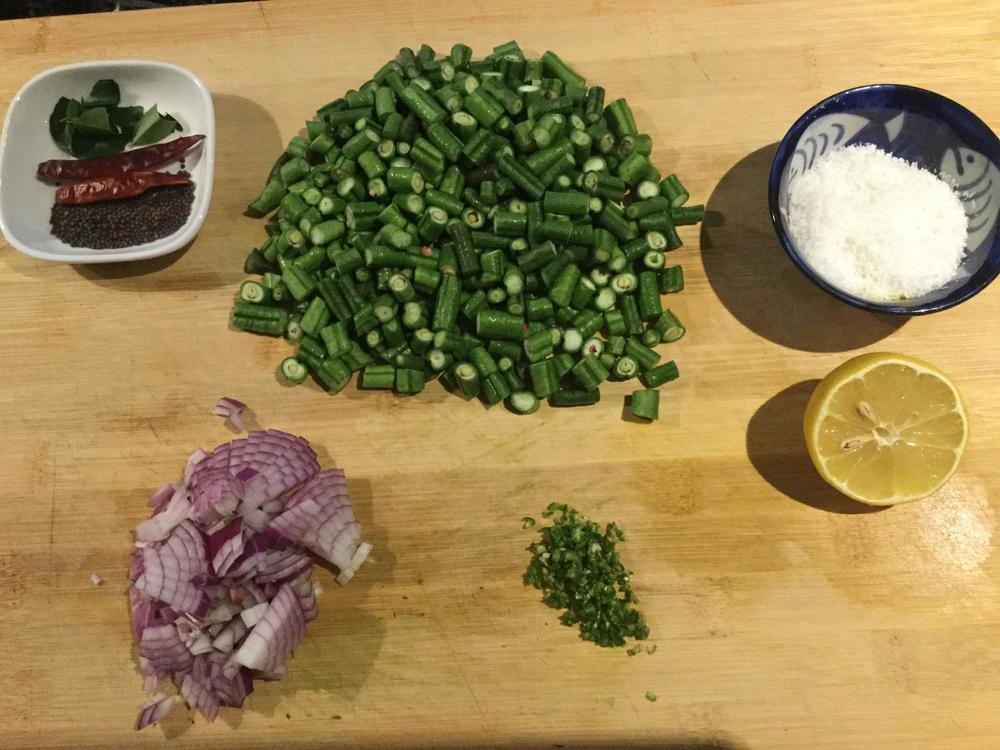
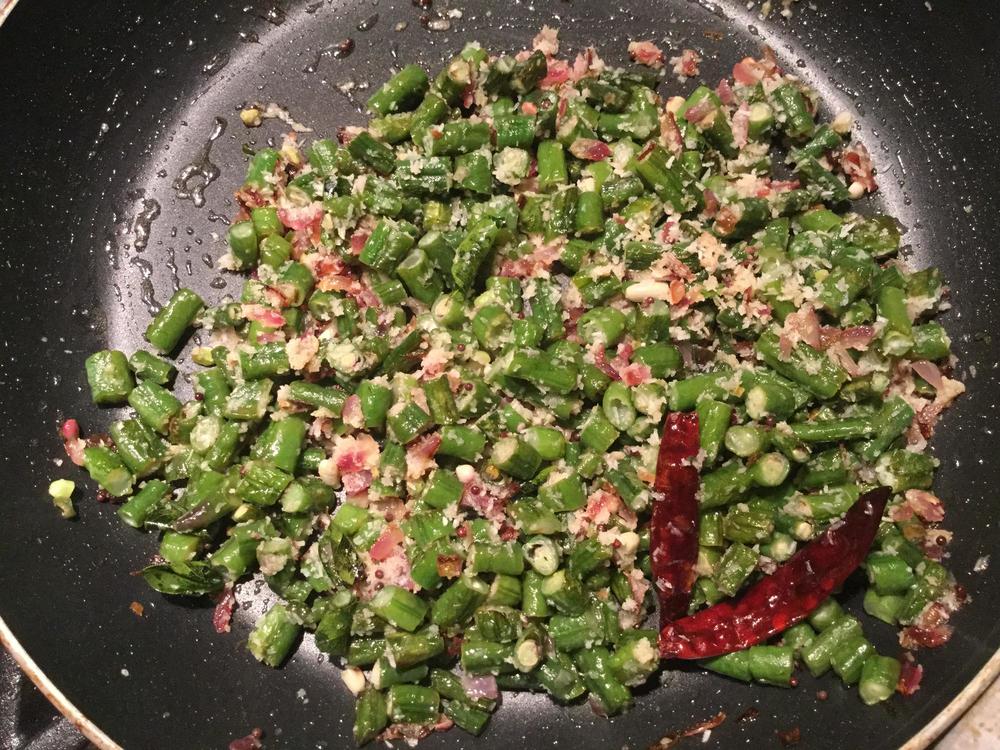
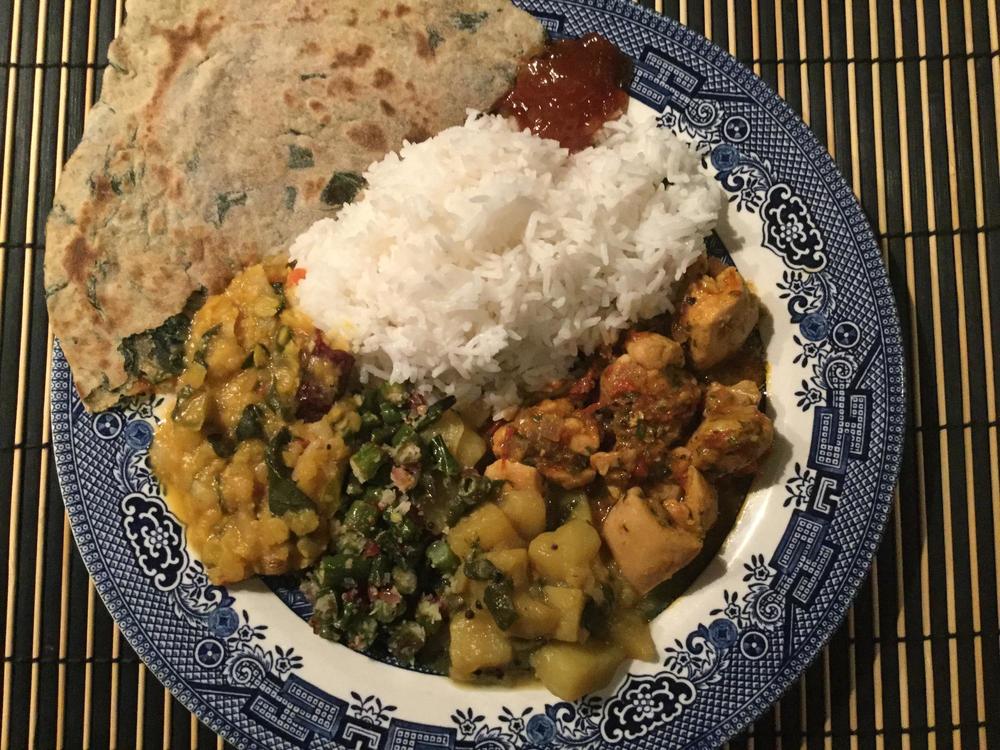
Tonight I made the chicken and fenugreek curry that I’ve detailed previously, served it with some leftover potato masala and dal, plus freshly made snake beans poriyal and spinach whole-wheat chapatis. From the south of India, poriyal describes a stir fried vegetable finished with lemon and coconut. The mise includes mustard seeds, dried chillies and curry leaves, red onion, green chillies and chopped snake beans (snow peas work well too), lemon juice and desiccated coconut. The dish is cooked within 10 minutes. I heat oil and splutter mustard seeds and dried chilli, add onion and curry leaves, get the onion a bit browned, add the green chilli and the beans with a pinch of salt. Cover and sauté for a few minutes, squeeze on the lemon, stir in the coconut, and voila.
-
Curry is forgiving like that ! Well done, I’d fight for the leftovers too....
-
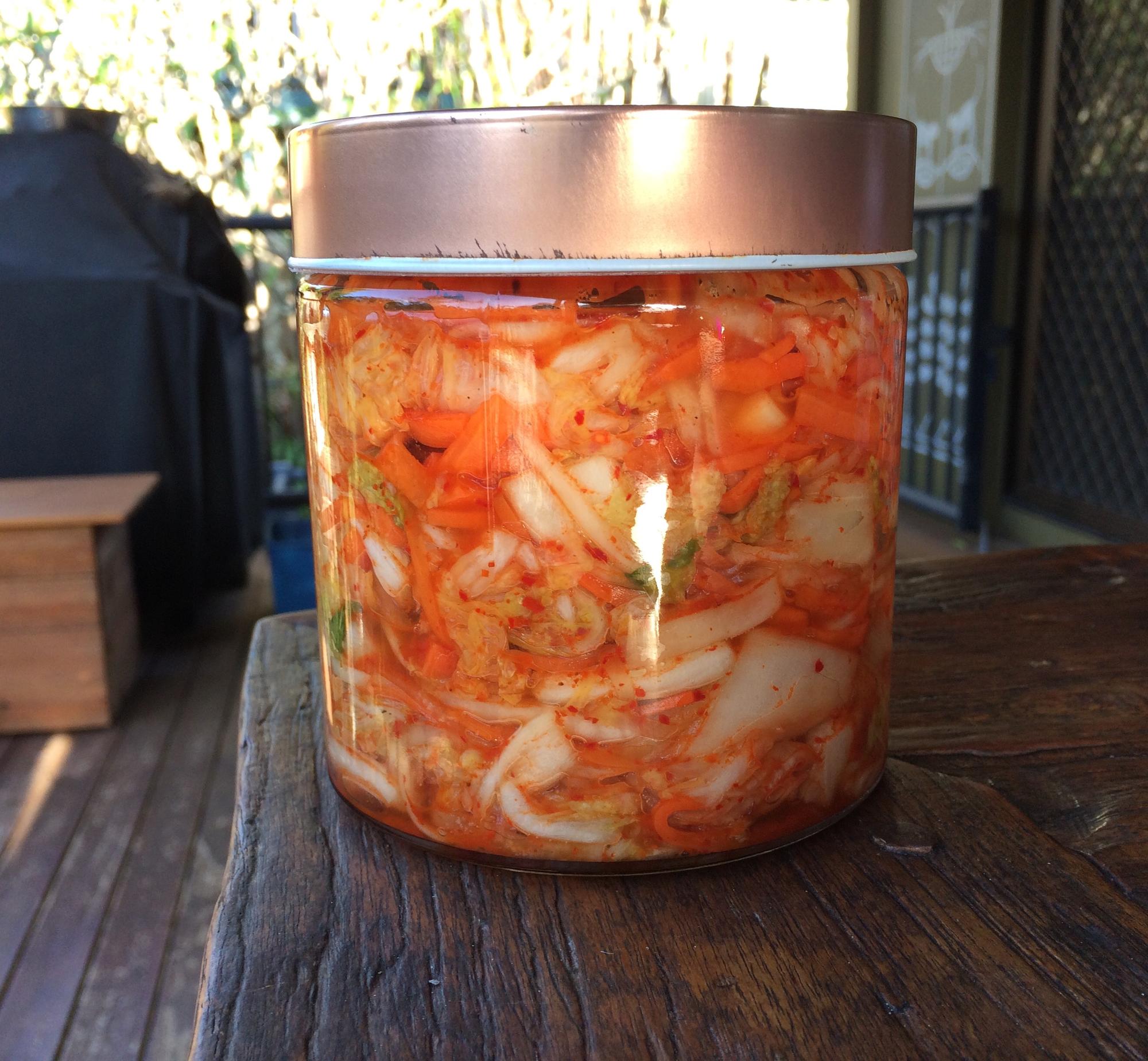
Err, I’ve had to move the kimchi outside....fermenting cabbage is powerful stuff !
-
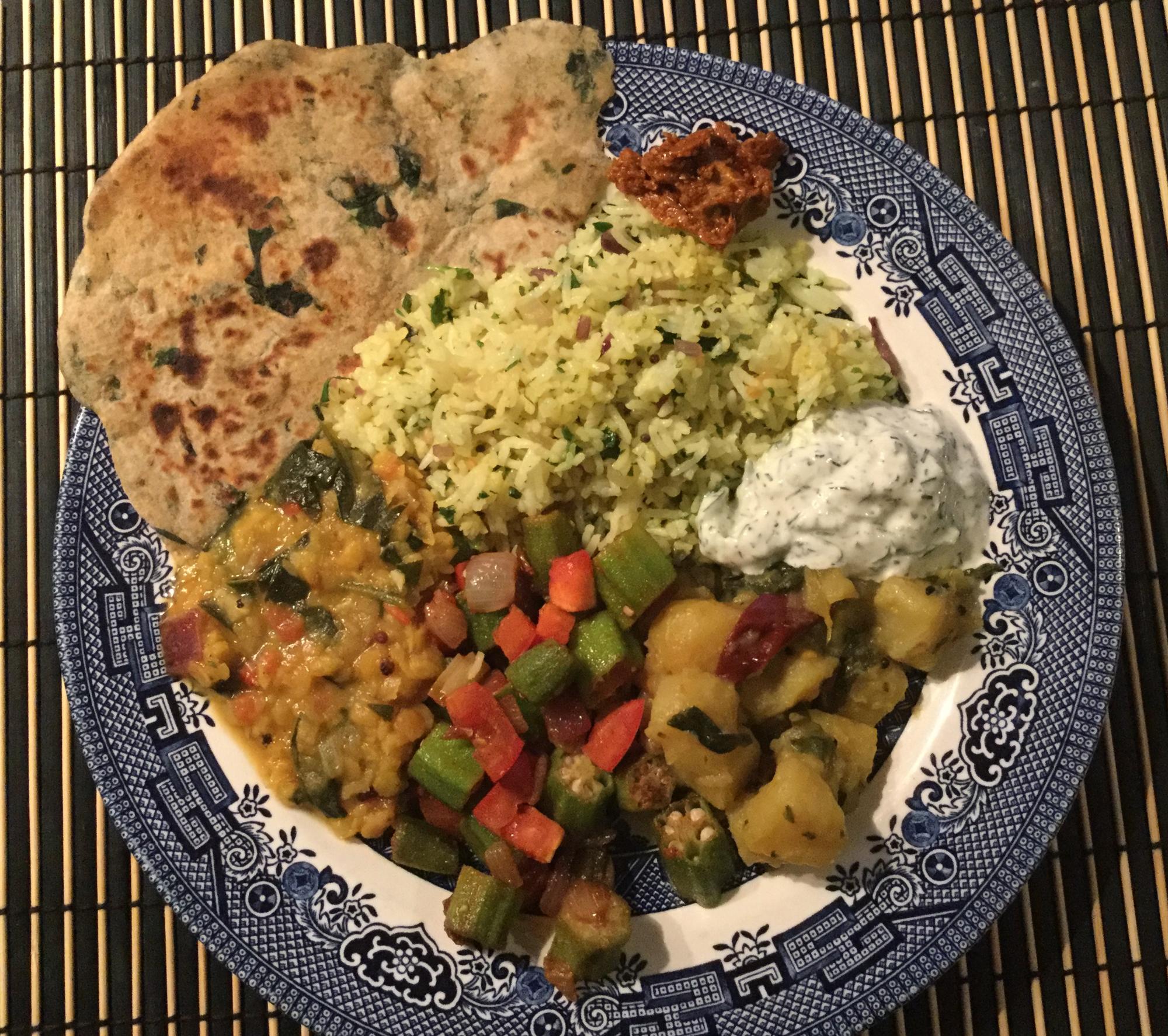
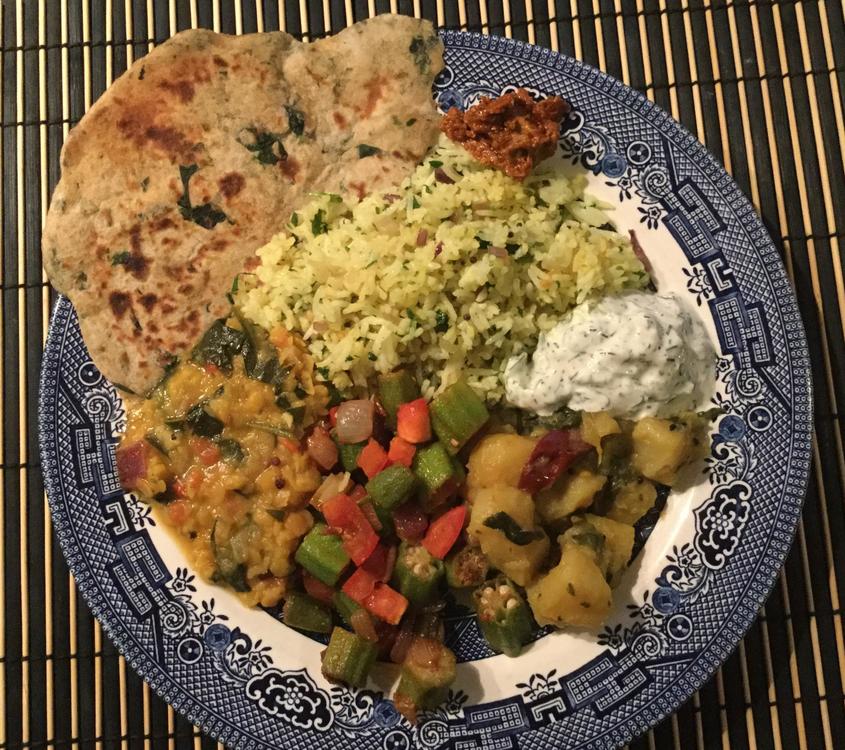
@Thanks for the Crepeshe who must be fed and I went flexitarian about 18 months ago...we don’t eat four legged animals, but still enjoy the occasional chicken or seafood something. We do have a predominately Indian diet, so lentils feature in nearly every meal. Mushrooms are good for B vitamins ( the vegos meat), spinach is a favourite, as are eggs and paneer is another source. Having said that, we both came up slightly B12 deficient after recent blood tests. A course of 3 x B12 shots soon fixed that. Here’s dinner tonight...yummy, although slightly out of focus. Ghee rice, cucumber and dill raita, potato masala, stir fried okra, toor dal and spinach flatbread with a mango pickle.
-
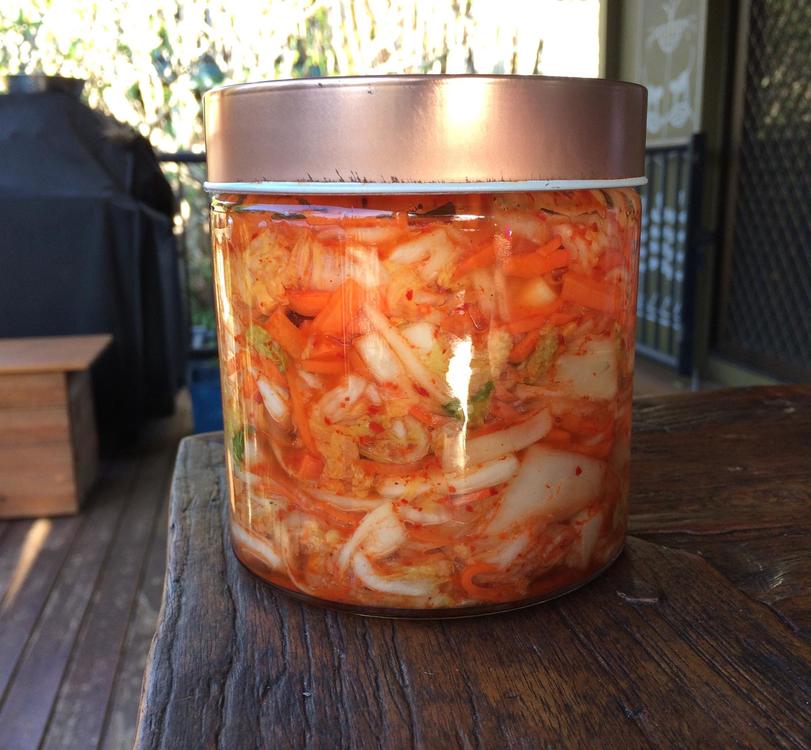
I found this thread again, and was inspired to try my first ever Kimchi. Here it is with wombok (Napa cabbage) daikon, carrot and spring onions. It’s about 24 hours old, and producing bubbles ! I’m excited!
-
In Australia we call the one on the right wombok. Makes a great salad with crispy noodles, crushed peanuts, spring onions and a rice wine dressing. Thanks for the topic @liuzhou
-
George Orwell was a genius. For me it’s an easy way to say “ I don’t eat pig, cow, sheep, goat etc”. I will hopefully own a few chickens soon (for the eggs) and that will probably be the last time I’ll eat any birds. My brother says chickens are so dumb, they’re basically vegetables on legs. He’s weird like that.
-
No, they’re legs or drumsticks from pretty large chickens. I love thighs too though, not so keen on breast meat.
-
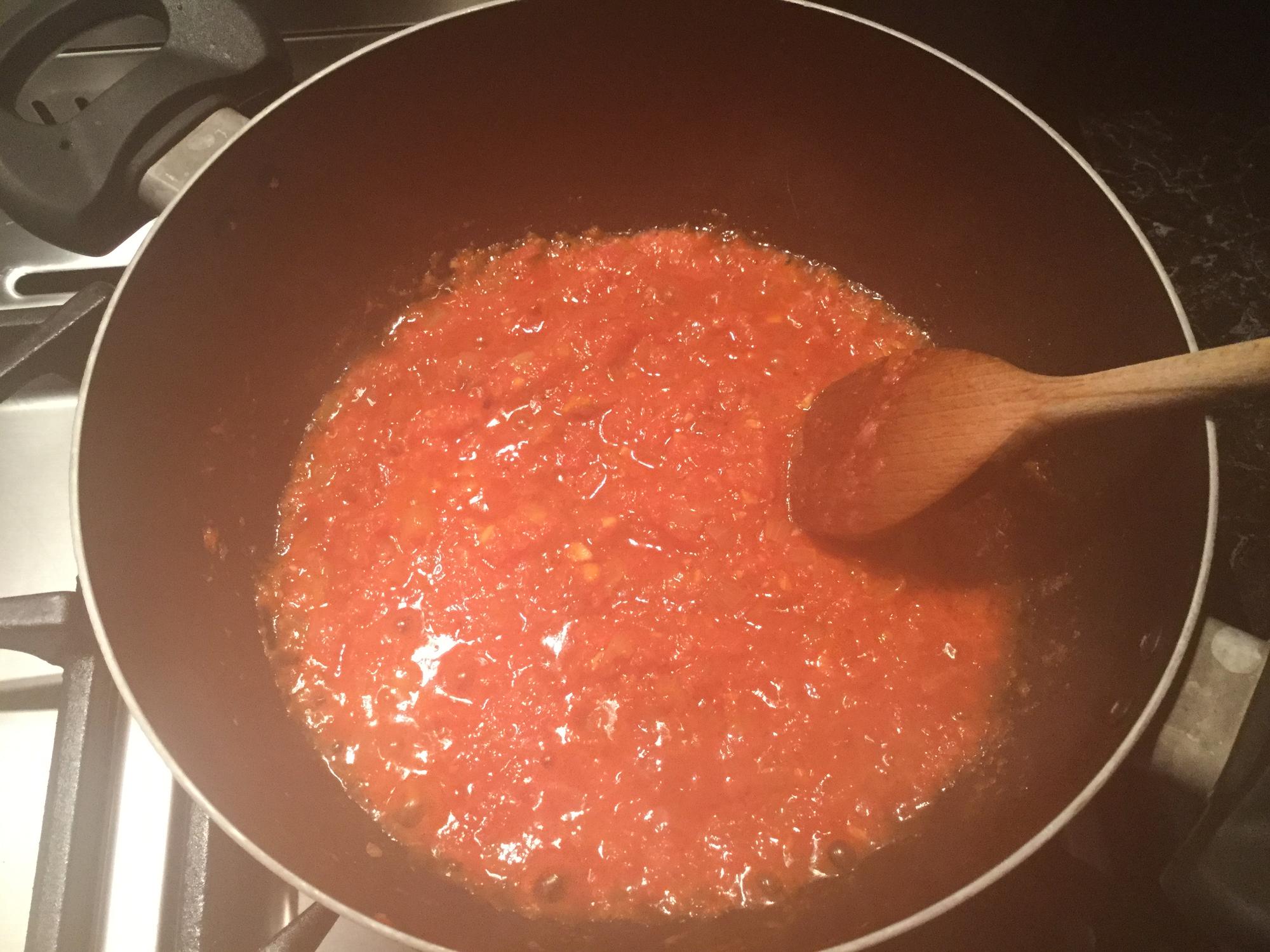
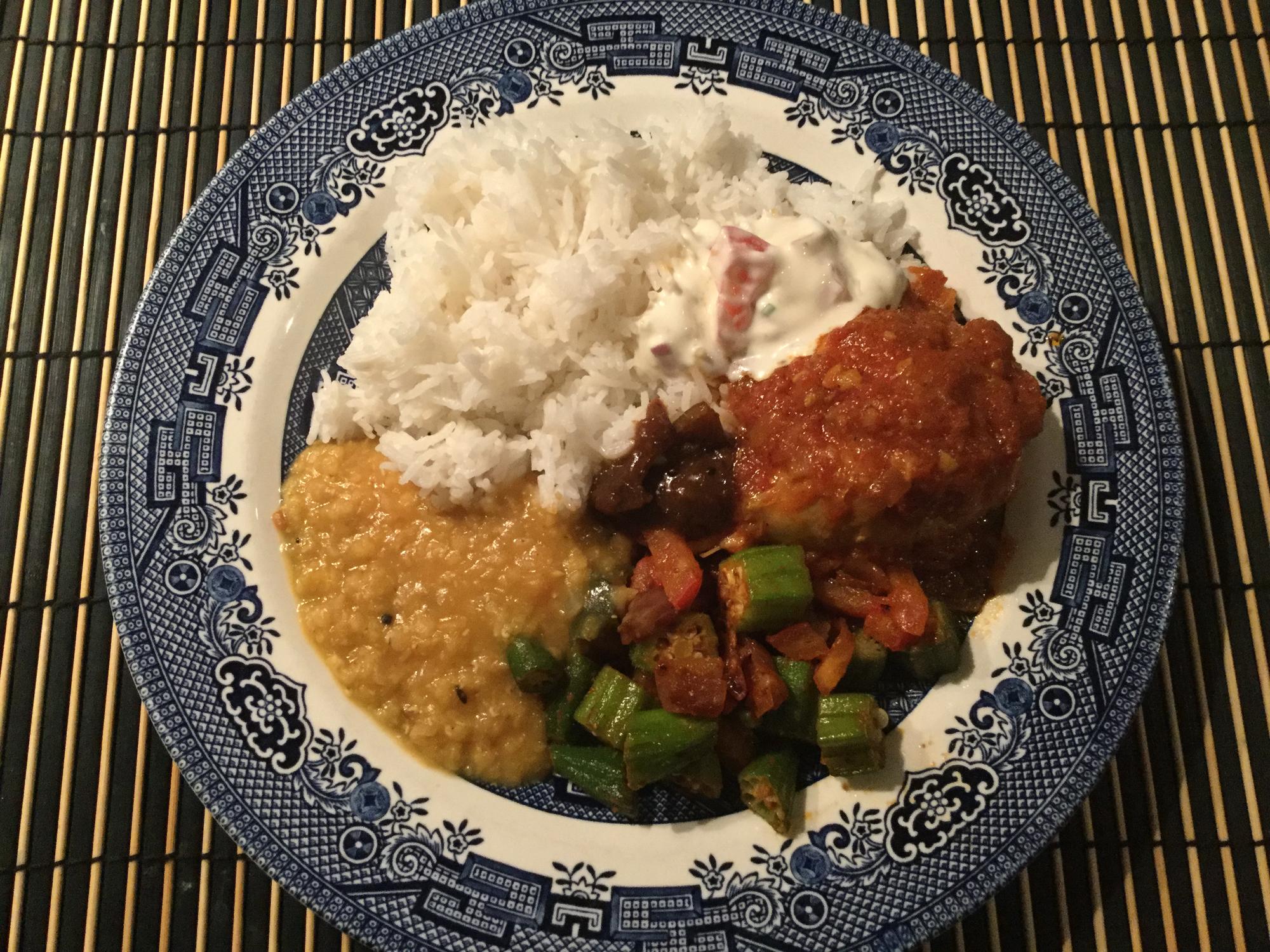
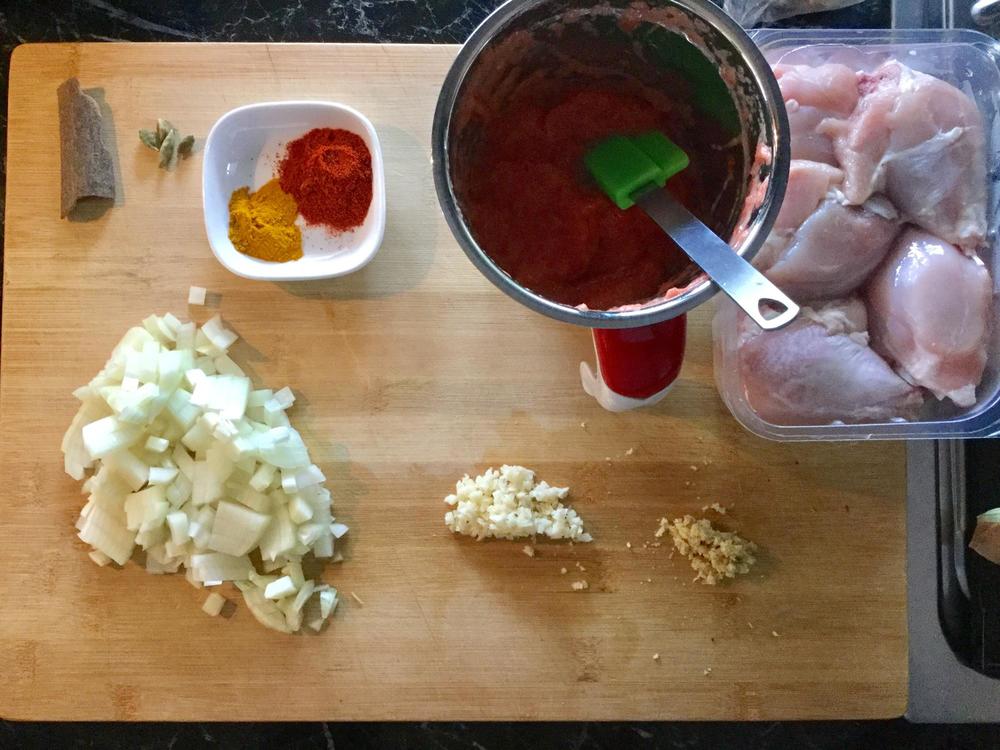
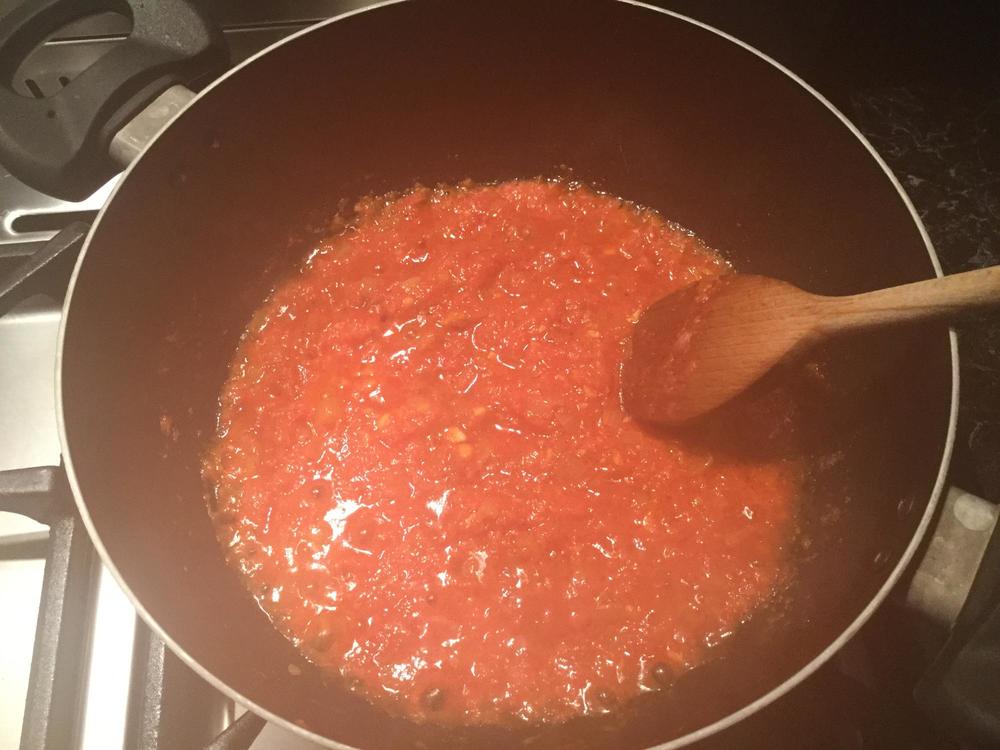
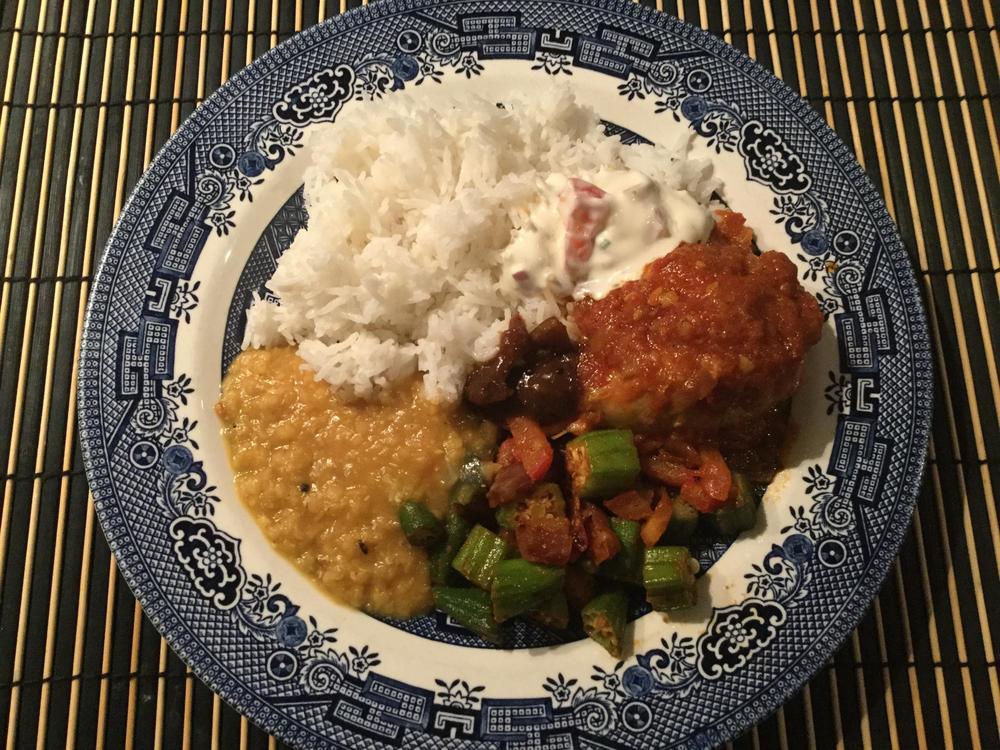
We no longer eat four legged animals, but can’t quite give up chicken yet...so here’s a really simple chicken masala from The Bangala Table. My mise includes real cinnamon bark (as opposed to cassia bark), cardamom pods, turmeric and chilli powder, tomato purée, lovely legs*, onions, garlic and ginger. In India tomato purée is sold in cans, a purée of strained tomatoes cooked for 20 minutes or so. It is sweeter and milder than tomato paste, a good substitute is passata, or as I’ve used here a couple of puréed tomatoes with a blob of tomato paste. *Lovely legs may be an Australian marketing term, they’re essentially skinned drumsticks with the knuckle lopped off. Usual process, whole spices first, then onions, garlic ginger, tomato and ground spices. The cinnamon adds such a lovely aroma to the dish. We need scratch and sniff screens. We like lots of sauce, the original dish has just a clingon of sauce to moisten. Served with yesterday’s dal, steamed rice and Madhur Jafferys (and my) everyday okra, a tomato and onion pachadi* and a blob of lime pickle. *Pachadi is the Southern India version of raita. It nearly always contains a spoon of sugar and few or no spices. This one is red onion, tomato, green chillies, salt and sugar mixed into yogurt. Simple and surprisingly delicious, also from The Bangala Table.
-
I think it would work fine. When presented with missing ingredients and possible substitutes, I say to myself “what would an impoverished Indian do” ?..and then use whatever is available.
-
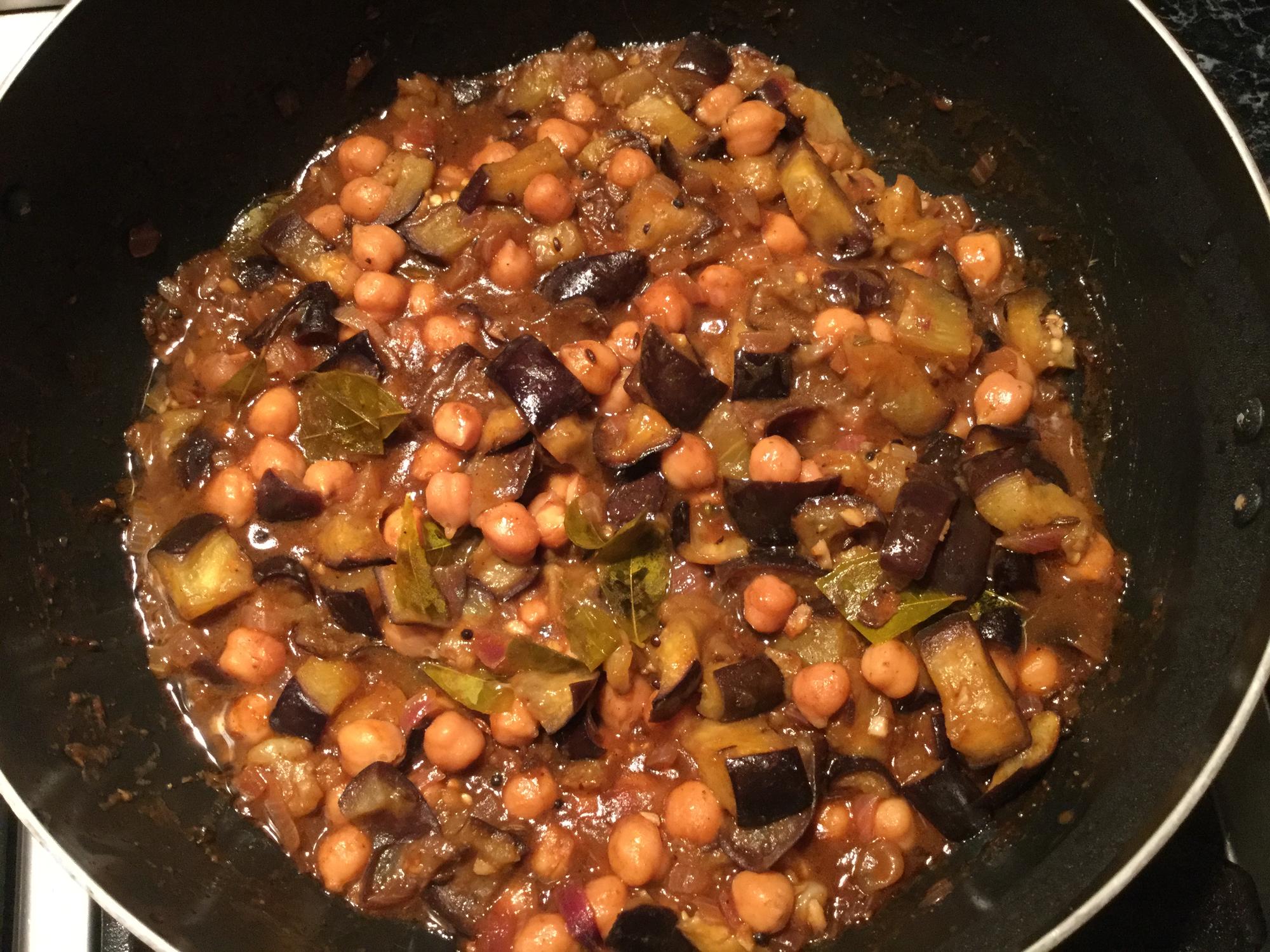
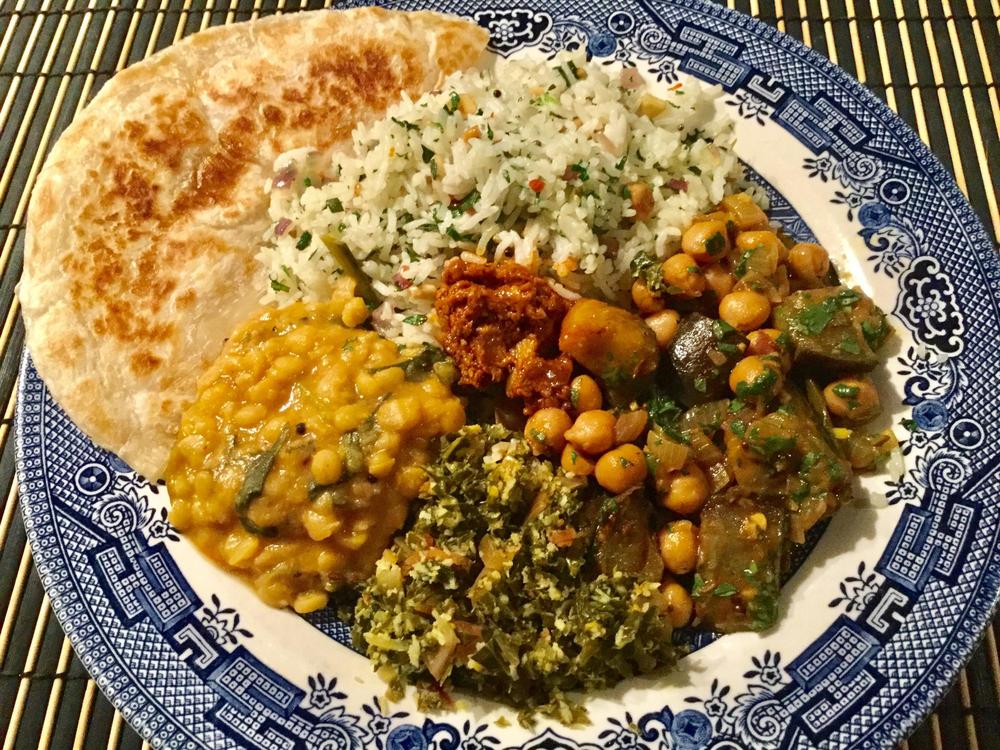
Tamil eggplant & chickpea curry - recipe is from a restaurant run by a group of Tamil (Sri Lankan) asylum seekers in Melbourne. The eggplant is chopped, mixed with turmeric and salt, then lightly fried and removed, sauté mustard, fennel and cumin seeds, add onions, garlic and chilli, a can of chickpeas and it’s liquid, the eggplant and tamarind paste. Garnish with coriander. Next to it is a mallum (mallung, or some other spelling) of kale. Another Sri Lankan dish, almost any green leafy veggie can be mallumed. In a saucepan put finely chopped onion, chopped leafy green of choice, chopped green chilli, 1/2 tsp turmeric, 2 tsp Maldive fish powder, salt and juice of half a lemon. Moisten with water if necessary, cook over medium heat for 5 minutes or so, then add a few spoonfuls of desiccated coconut. This dish works well cold as a salad too. Seen here with some of yesterday’s dal, ghee rice and a blob of pickle.
-
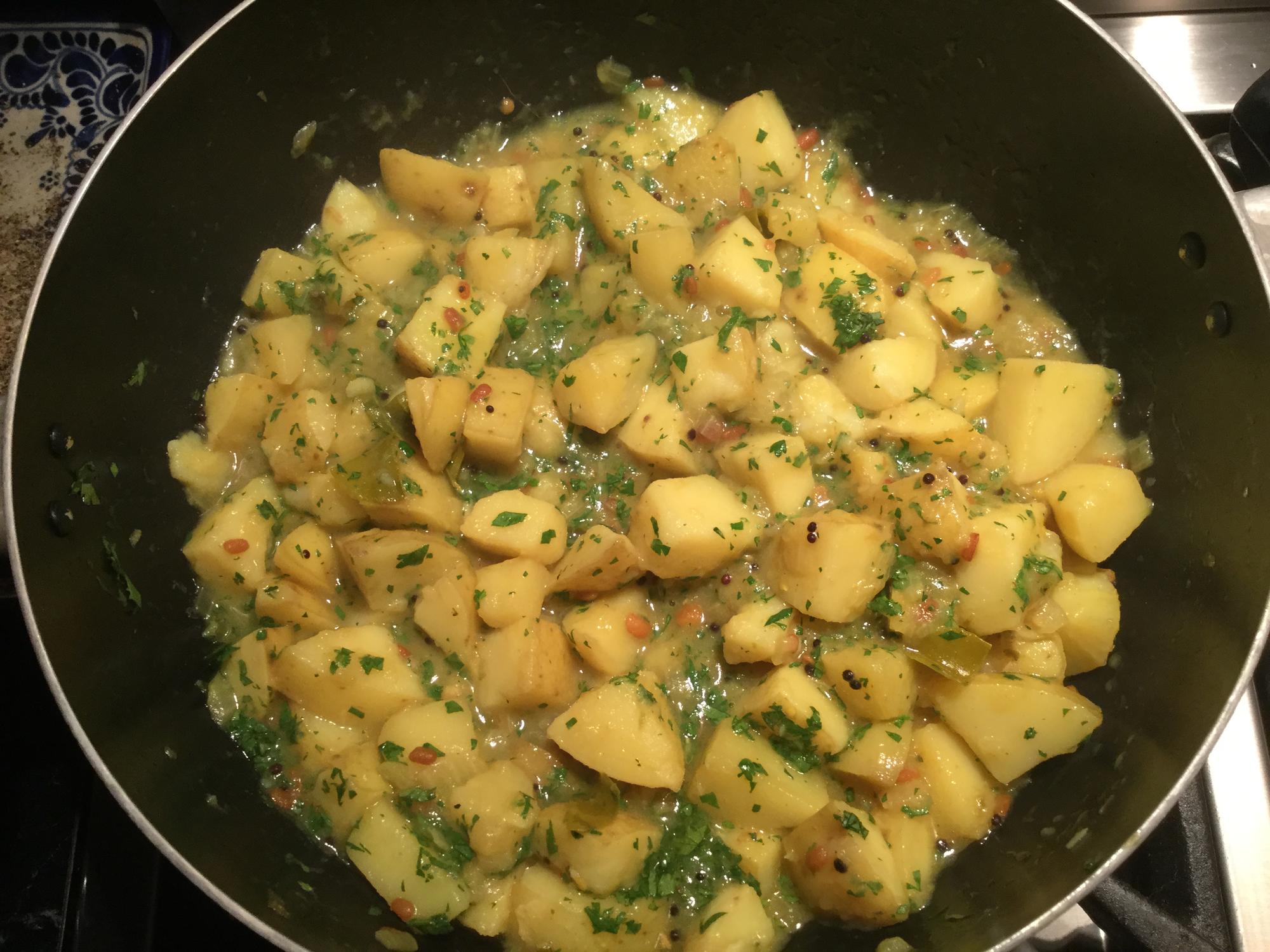
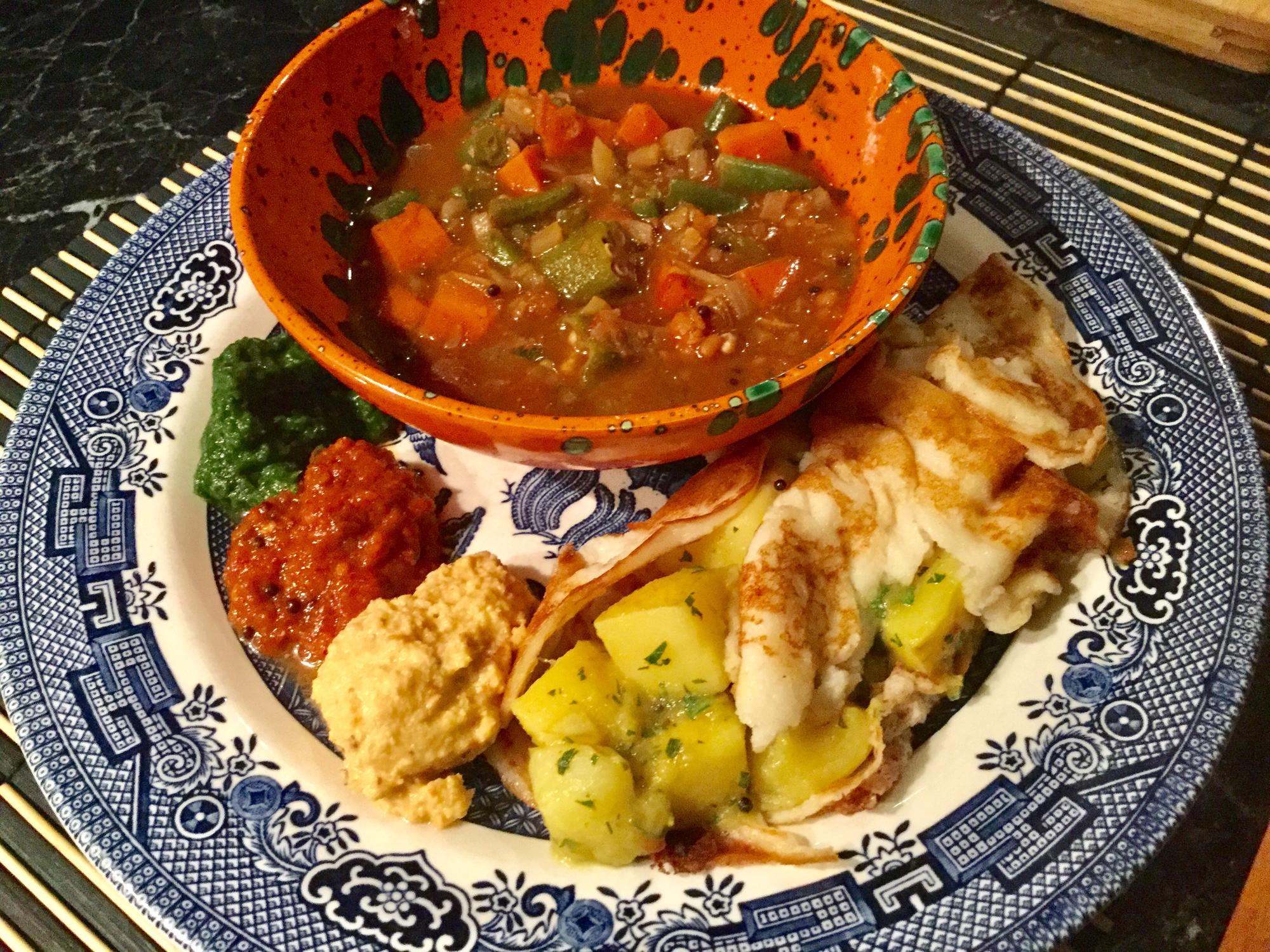
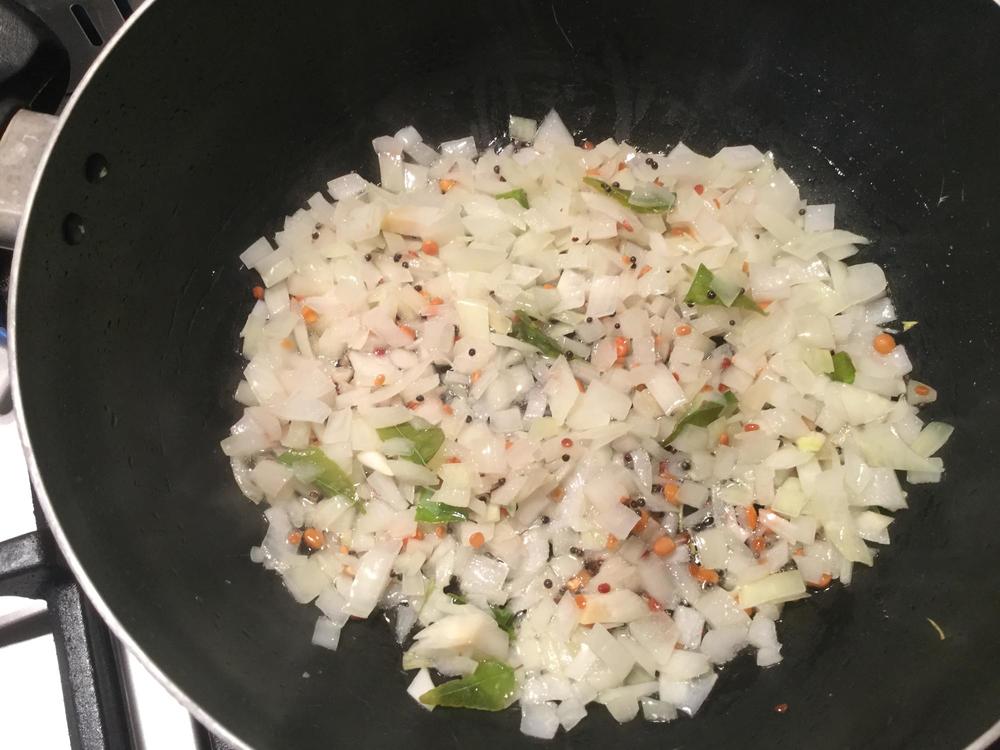
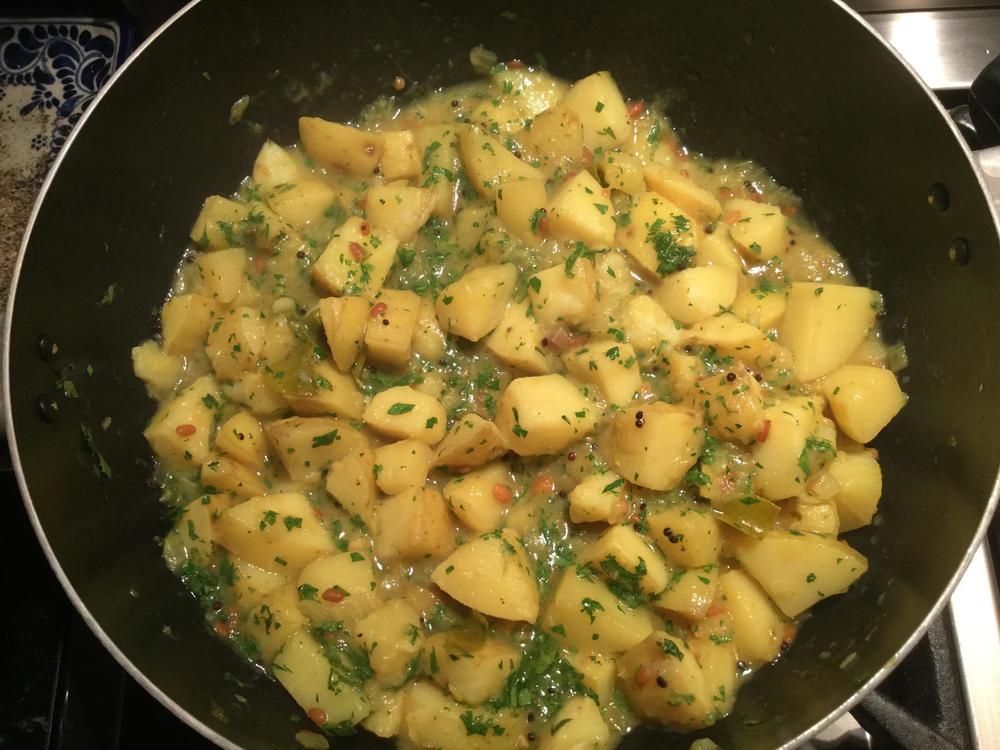
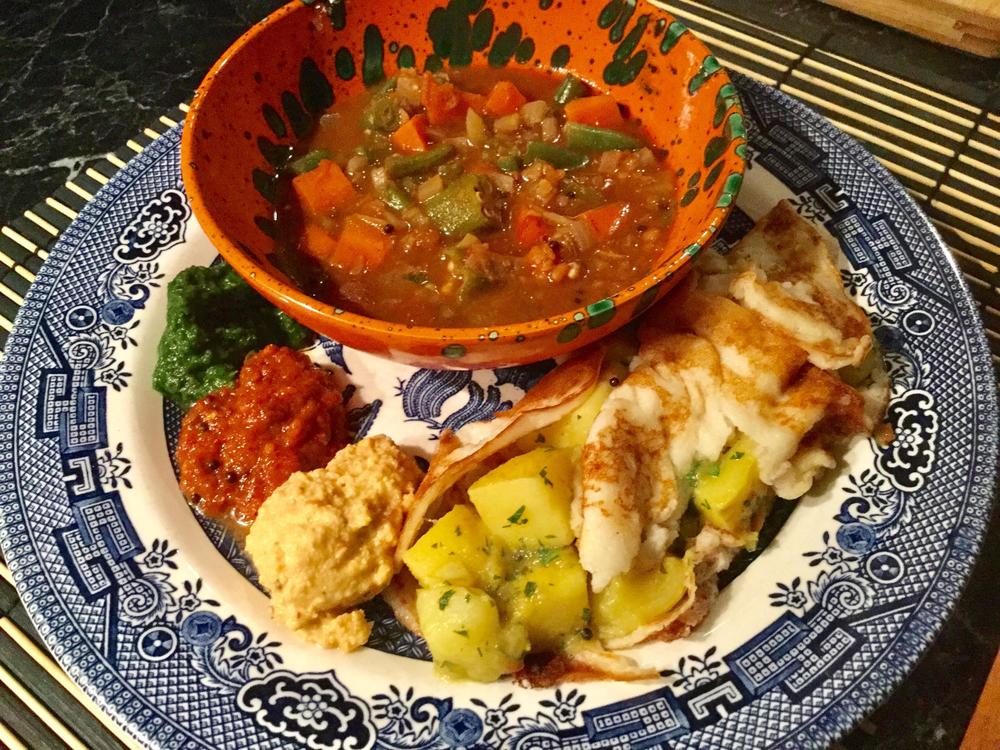
This is not a curry but there are exotic and aromatic spices ! The potato masala makes a great side dish too. Masala dosa is a traditional South Indian breakfast pancake stuffed with potato masala, and served alongside sambar (a soupy lentil and vegetable dish) and several fresh chutneys. We don’t eat breakfast at home but love this, so it often becomes a dinner time meal. The dosa batter is made from urad dal (skinned and split black lentils) and rice. Both grains are soaked overnight with a few fenugreek seeds, then blended until smooth, mixed and left to ferment for eight hours or so. It’s not warm enough for fermentation here yet, so I cheat and use a packet mix. The dosa get cooked on a tawa, a brilliant pan for pancakes, chapatis or paratha. The potato masala is made by frying off a tsp of channa dal, urad dal, mustard seeds and 10 or so curry leaves, then chopped onion, green chilli and grated ginger. Peeled and chopped potatoes are added with turmeric, salt and water. Simmer until cooked then stir through chopped coriander. Sambar can be made with almost any veggies on hand, today that was carrot, okra and green beans. I fry a few mustard seeds, then curry leaves, a little chopped onion, garlic and ginger, then add chopped tomatoes, the veggies, water and cooked toor dal. Simmer until the carrot is just tender and add sambar powder. Sambar powder (technically a curry powder) is available at any decent Asian grocer, mine contains coriander, chilli, turmeric, fenugreek, asafoetida, curry leaf and three types of dal. I make a trillion variations of this soup, it’s great for a light lunch served with toast. If you don’t have cooked lentils on hand, split red lentils (masoor dal) or split mung beans (mung dal) both cook quickly and add the desired thickness. The traditional chutneys are coconut, tomato and coriander. Seen here from right to left. The packet dosa mix broke up a bit, it’s more difficult to handle than one made from scratch...still tasty !
-
Note the Indian address is Bombay, that puts it pre 1995 !
-
I remember my mum making curry with leftover roast meat, curry powder, apples and sultanas ! This was in the 1970’s when the Australian diet largely consisted of meat and three veg, so very adventurous.
-
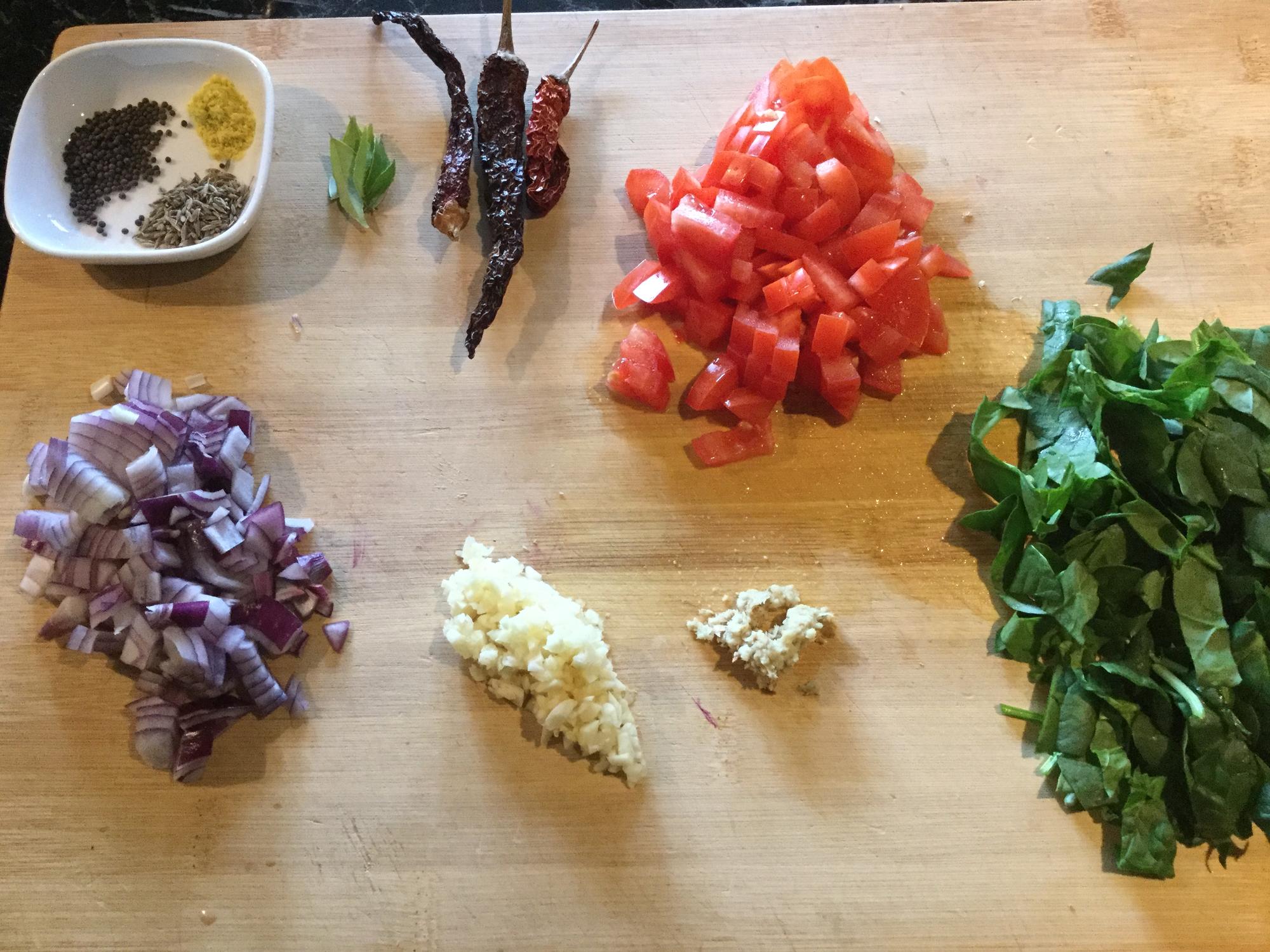
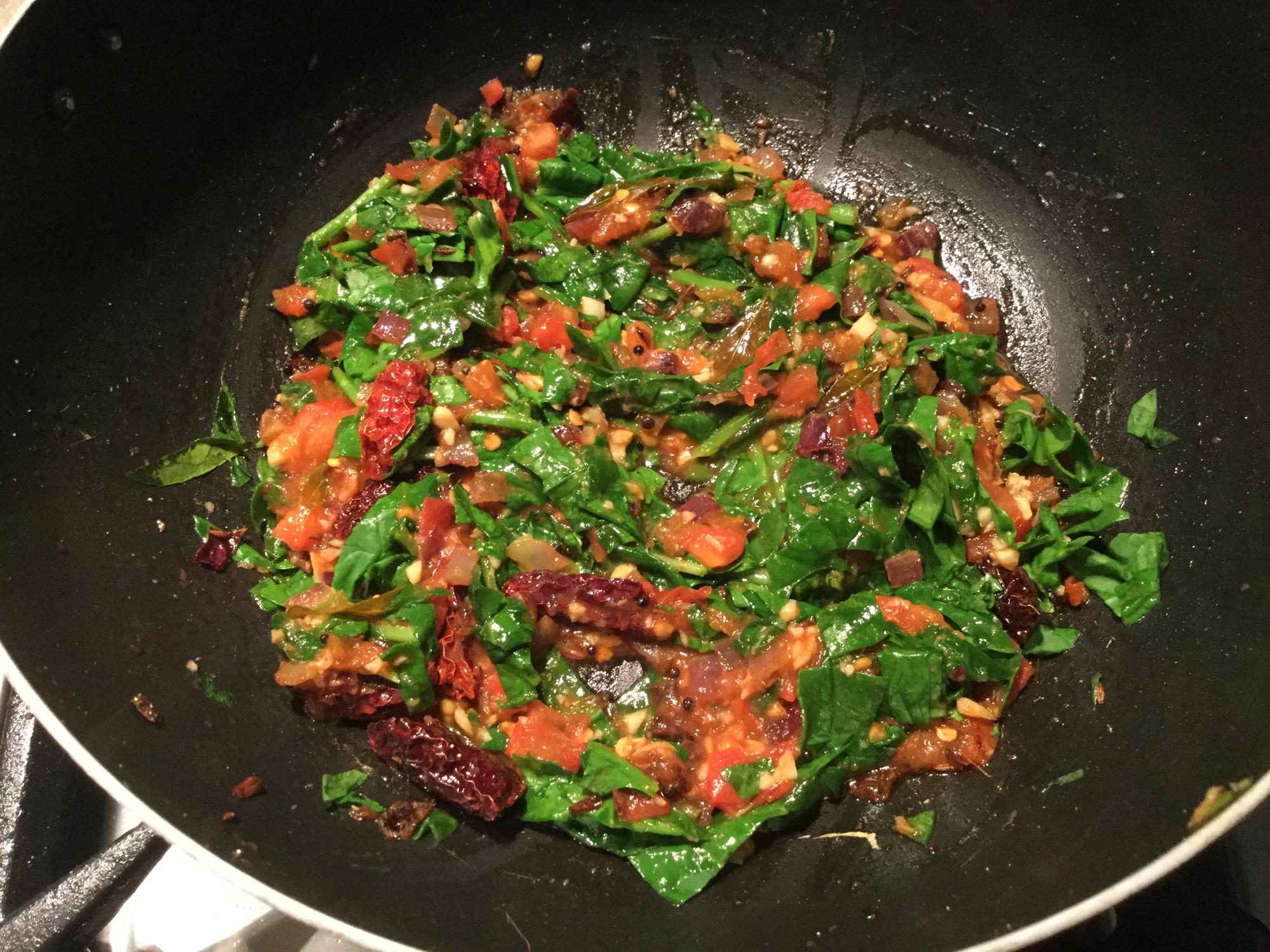
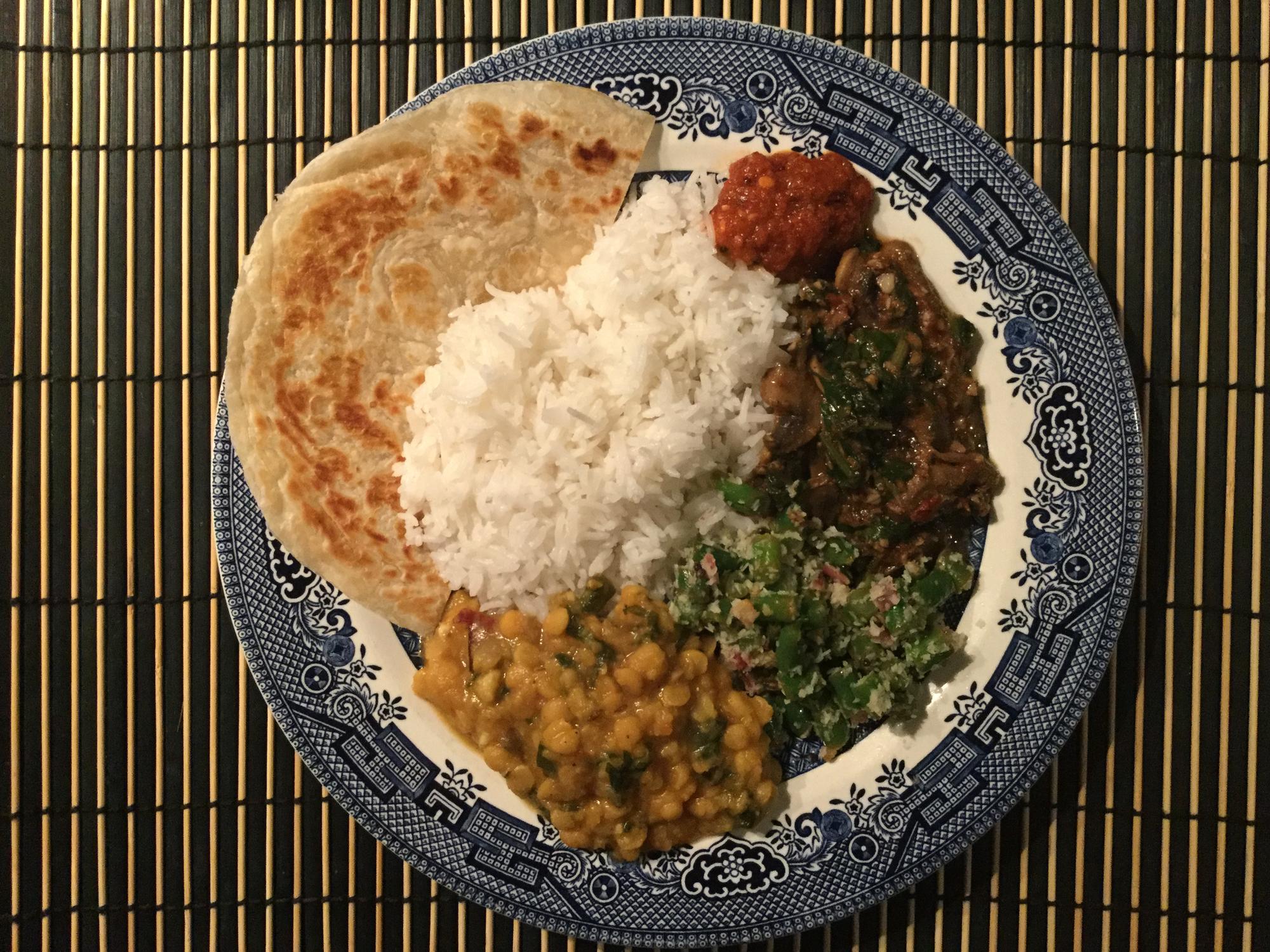
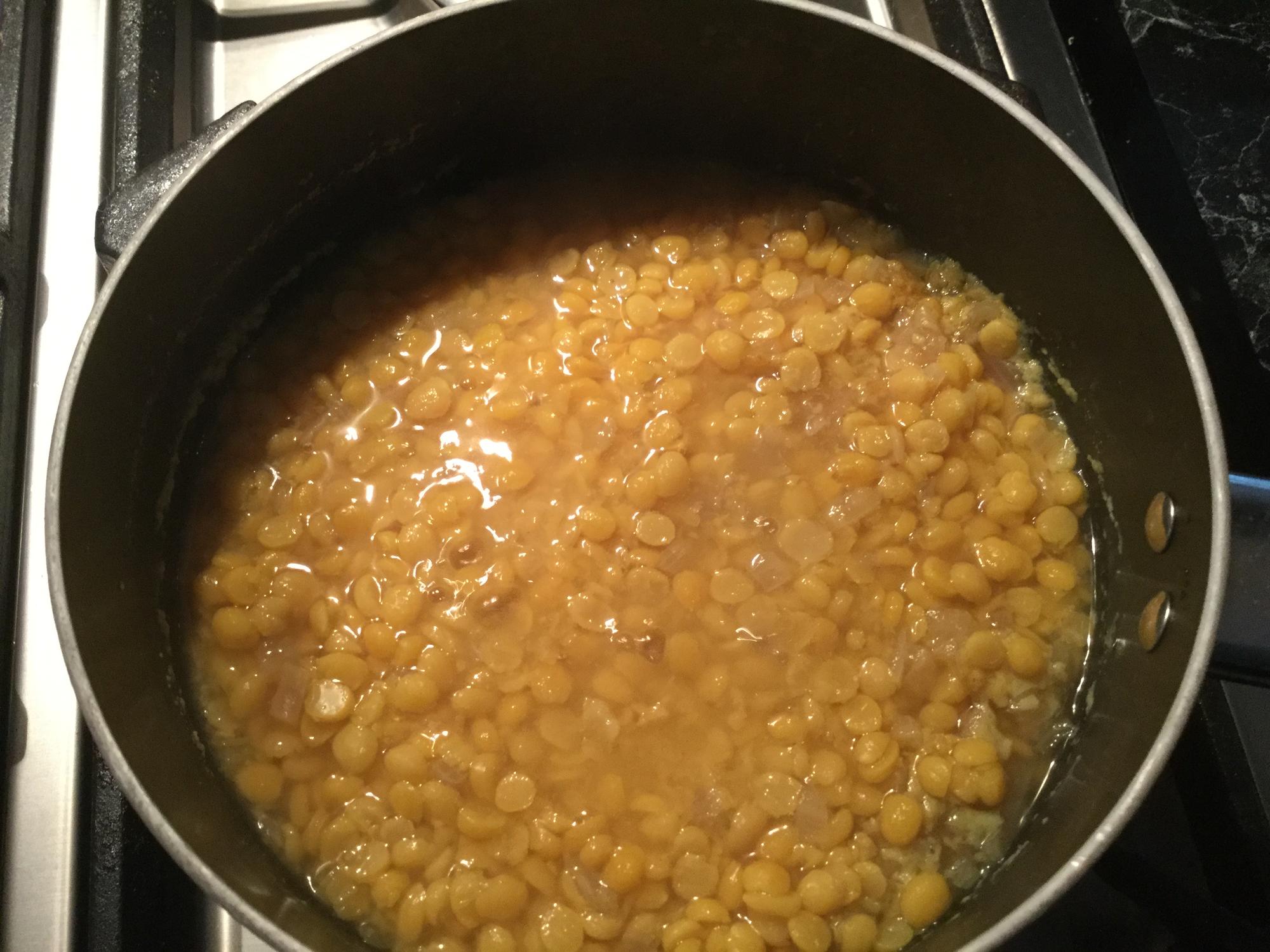
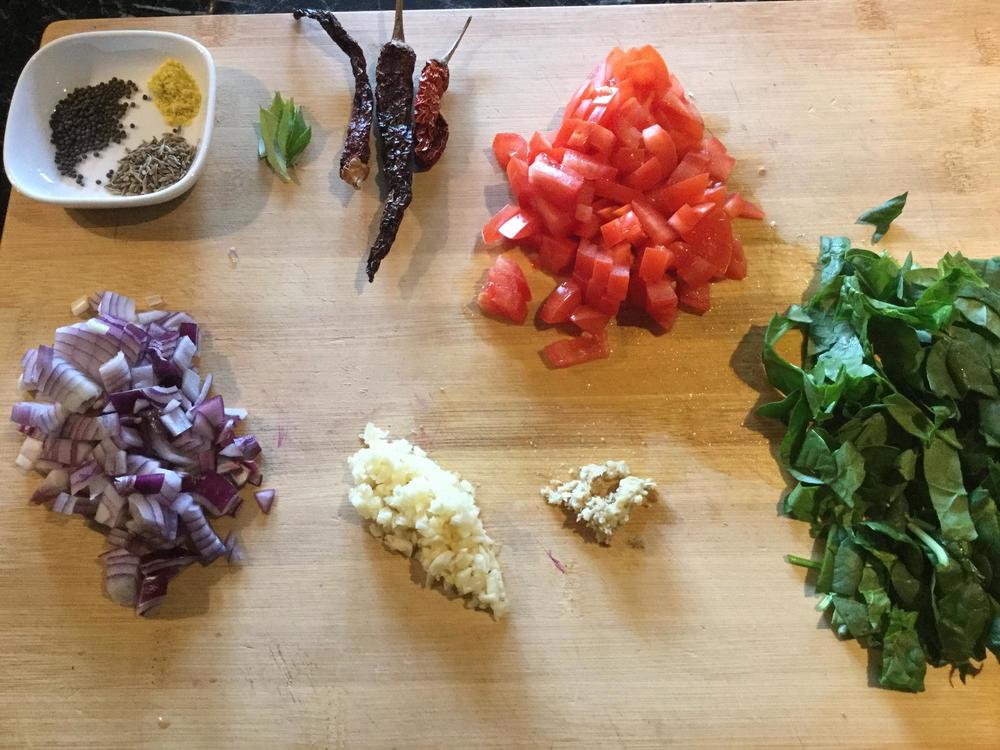
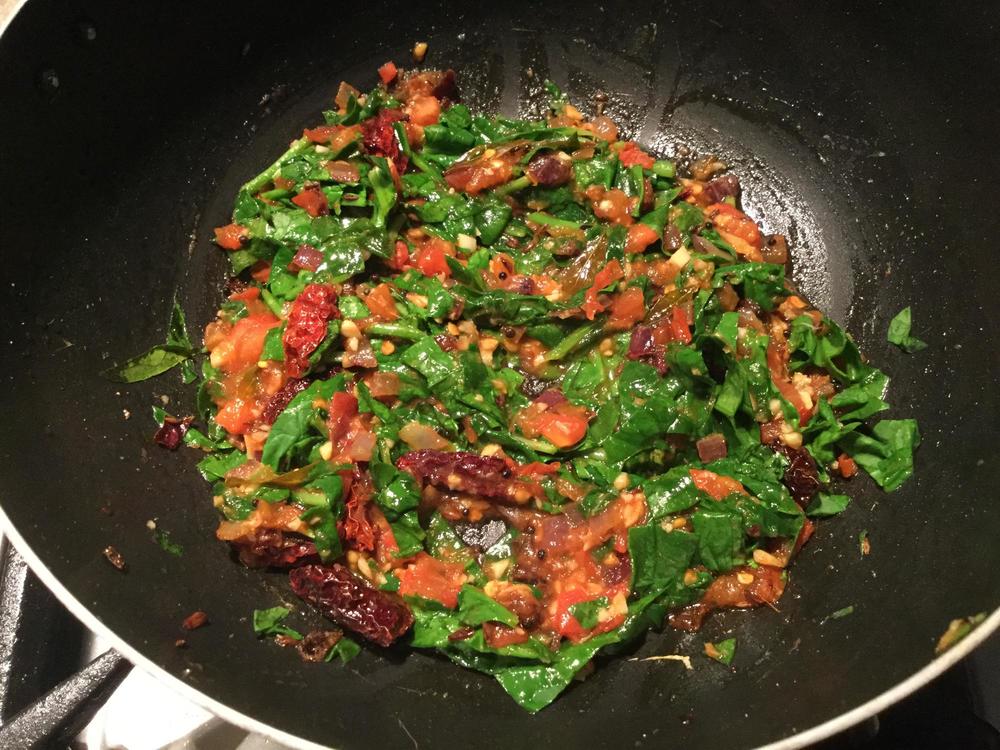
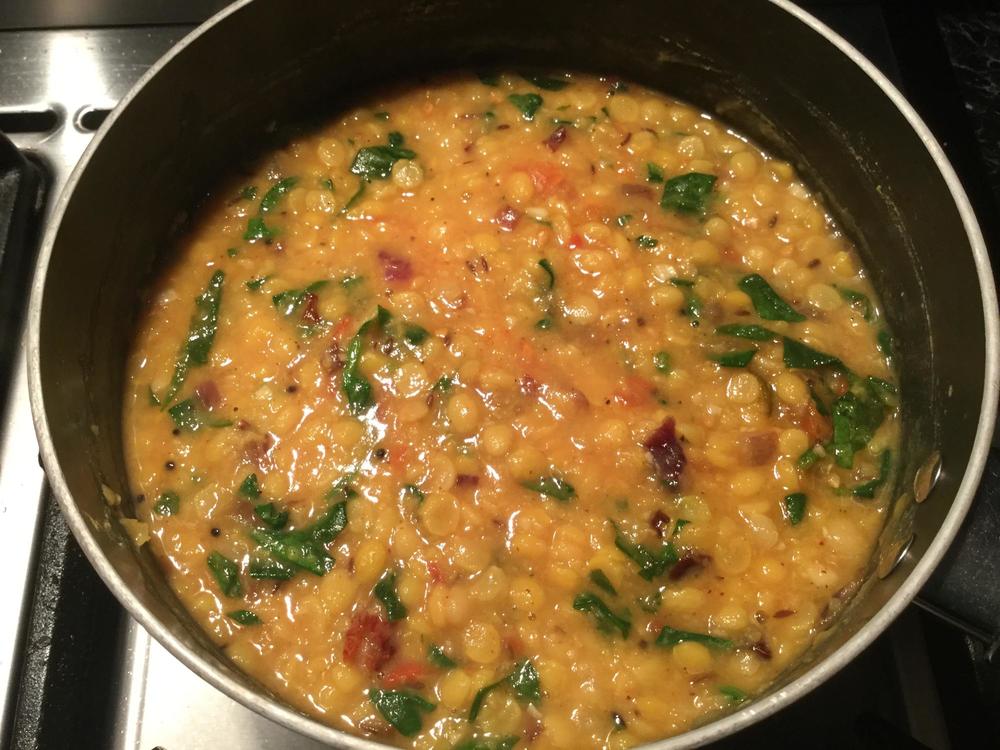
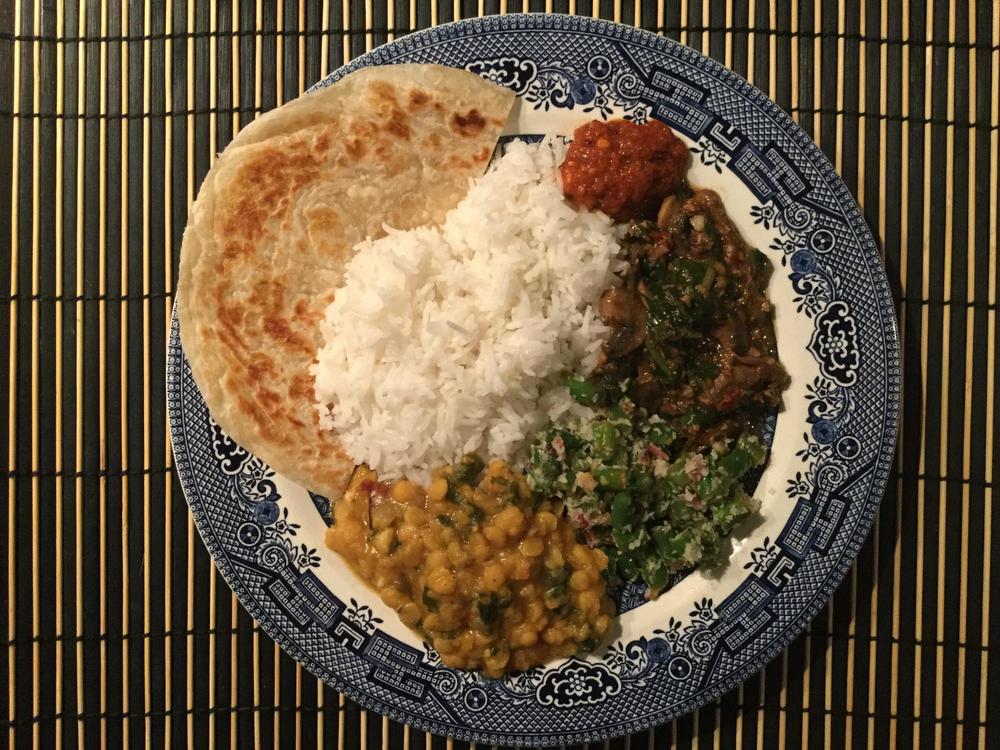
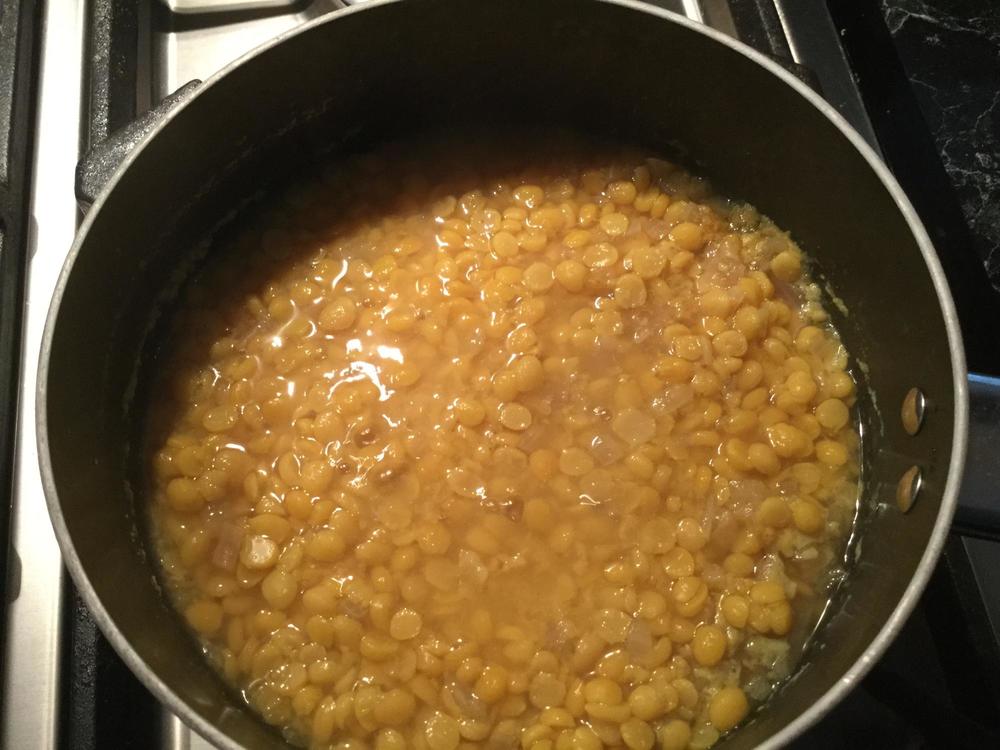
@David Ross expressed an interest in side dishes......here’s one of my favourite dals. I used 1.5 cups of chana dal (skinned and split chickpeas) washed in several changes of water then brought to a boil with about a 2cm covering of water. Once boiling I skim scum, lower the heat and add half a chopped onion and half a tsp of turmeric, cover the pot and simmer for about an hour. I like them to hold a bit of shape, but still turn creamy if you stir enough. These are nearly ready. The mise for seasoning. In the dish black mustard seeds, cumin seeds and asafoetida, curry leaves, dried Kashmiri chillis (you can use any dried chilli, these are my current favourite), chopped tomatoes, red onion, garlic, ginger and baby spinach. I heat a combination of ghee and mustard oil (about 3 tbs total) and throw in the asafoetida, then mustard seeds, cumin, curry leaves and broken chillies. Have a lid handy the curry leaves will spatter and try to escape. Then in go the onions until soft and beginning to brown, garlic, ginger and tomatoes. I give this about 5 minutes until the tomatoes soften, add the spinach and a lid to steam it for a few minutes. Pour the seasoning into the dal add salt to taste, a pinch of chilli powder and a few grinds of black pepper, simmer for a few minutes to meld the flavours. This keeps well in the fridge for several several days and goes with most Indian meals. Seen here with mushroom balti, green beans poriyal, steamed rice and my favourite and ever present tomato chutney.
-
Saffron is used in India, the Hindi word is kesar, or in Tamil kungumappu. Kashmir is said to grow the finest saffron in the world.. I’ve seen it used in many sweetmeats and have a recipe for saffron rice cooked by dum, a process of sealing the pot with a coil of dough to create a tight seal, traditionally with coals placed on top of the pot, now in an oven.
-
Wow, a great insight into the cuisine ! Thanks for sharing @shain.
-
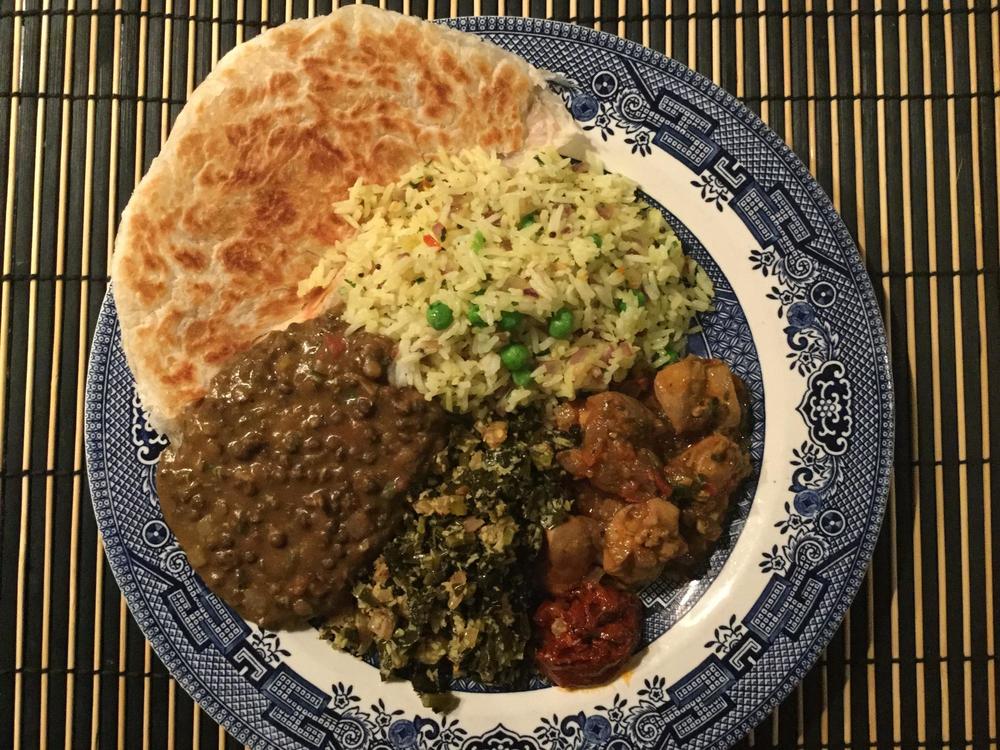
One of the things I like about our almost exclusively Indian diet is how the various dishes work so well together, and therein lies the ability to make a quick meal out of leftovers. I always cook a dish in quantity to serve 4 or more and keep the remainder in the fridge for up to four days. So when things get hectic and you’re scrambling to get a meal ready in short order, it’s easy peasy. This one took maybe 15 minutes....mostly spent frying rice and manning the microwave. The rice was cooked yesterday, in a rice cooker with just a few cardamom pods and cloves. Tonight I spluttered some mustard seeds in ghee, then added urad dal and curry leaves, diced onion, green chilli, and a pinch of turmeric, the cooked rice and stirred for several minutes to break up any lumps, then defrosted peas stirring until hot, and finished with chopped fresh coriander. It’s served with chicken and fenugreek curry from a few days ago, mallum made with Tuscan cabbage, also from a couple days ago, Kali dal (a black lentil dish) made yesterday and paratha cooked on a tawa. I buy the paratha frozen in a 20 pack, they’re handy when I can’t be bothered or don’t have time for making chapatis. Tawa (pronounced tava) is a fry pan, flat with a tiny lip and very useful for breads like chapatis, paratha and also dosa.
-
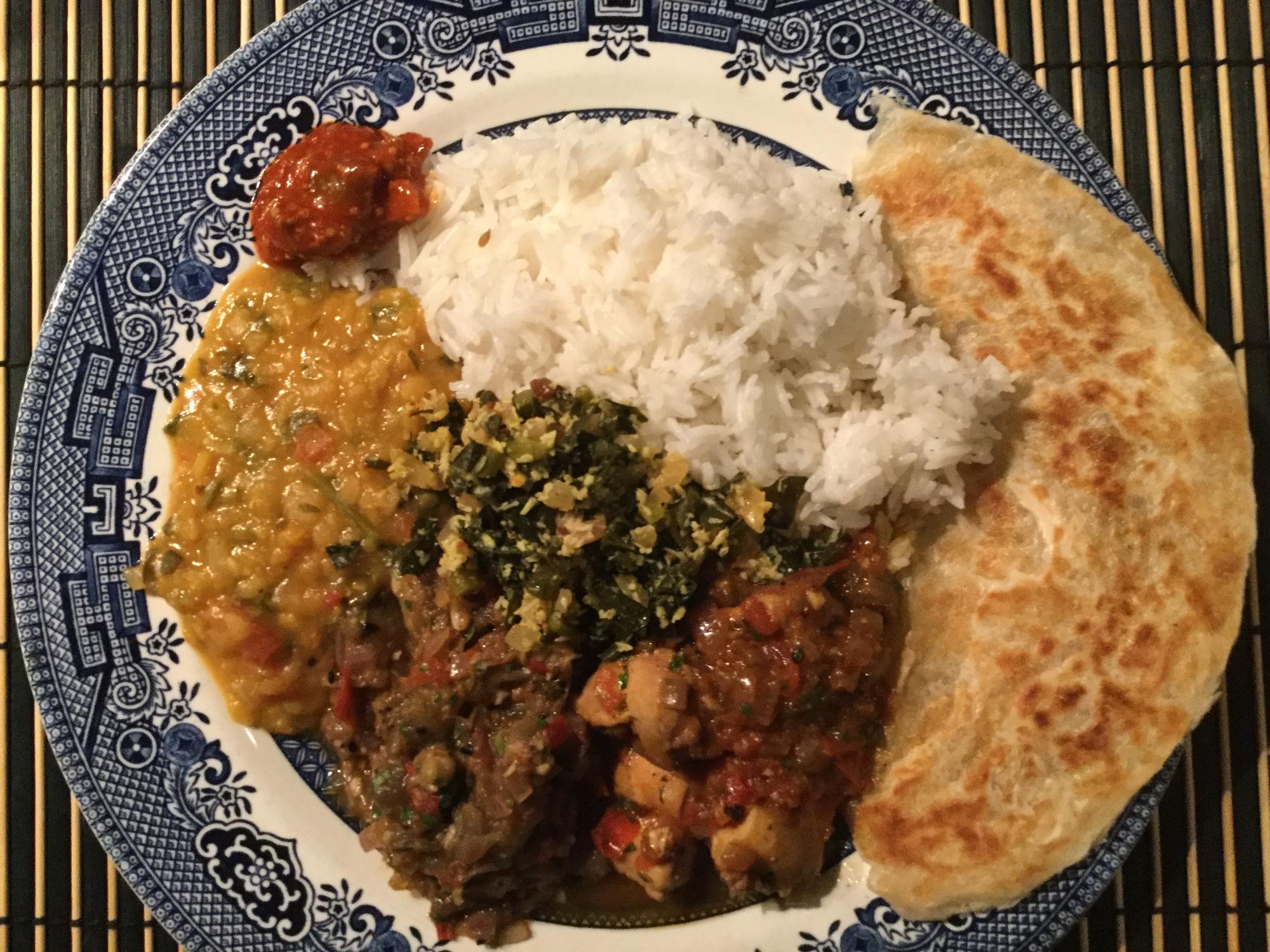
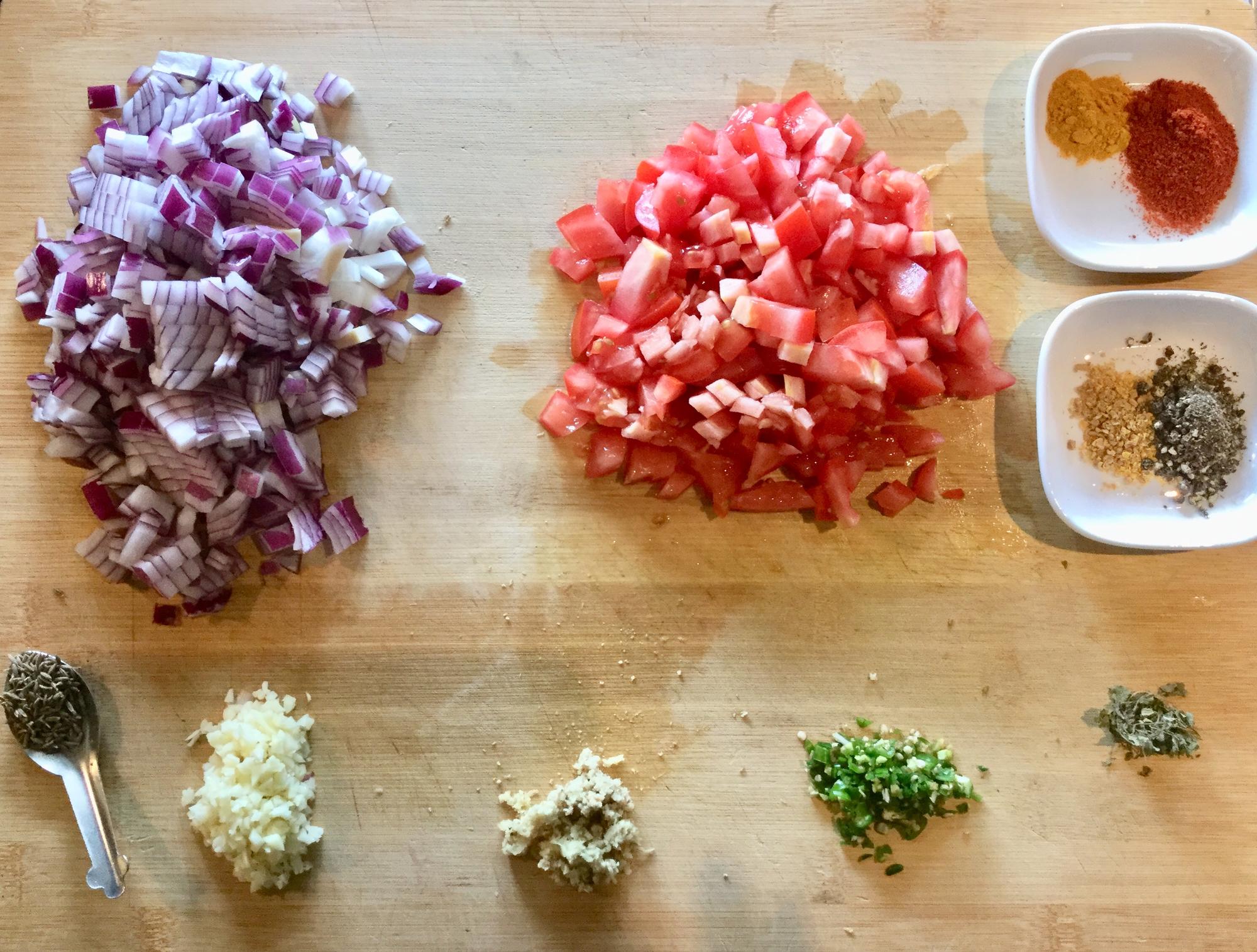
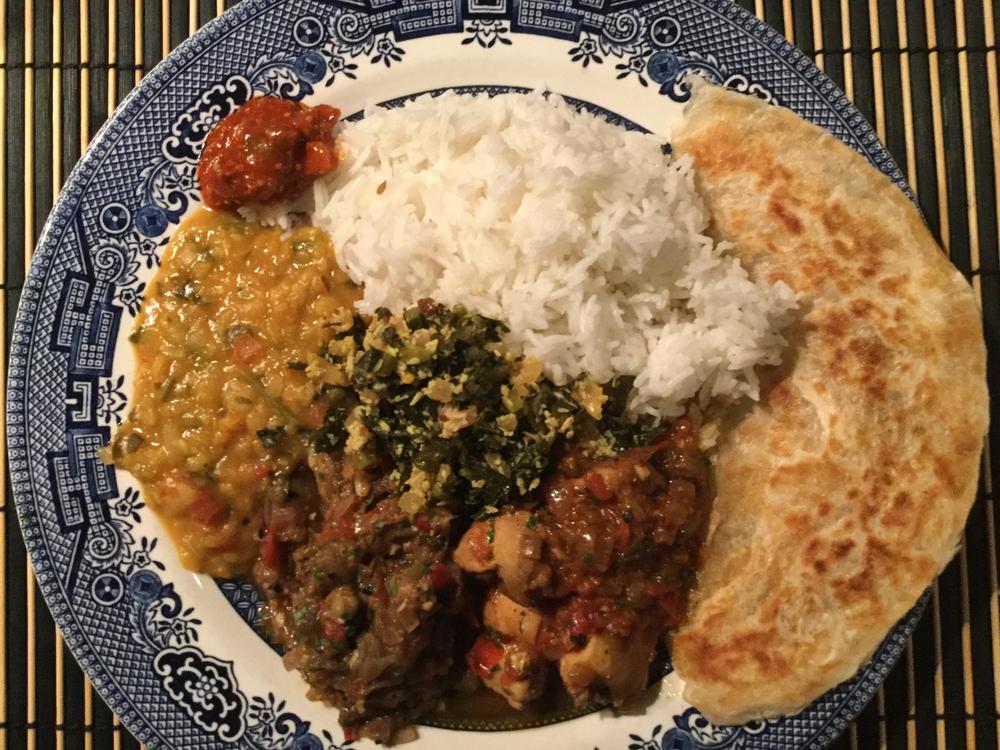
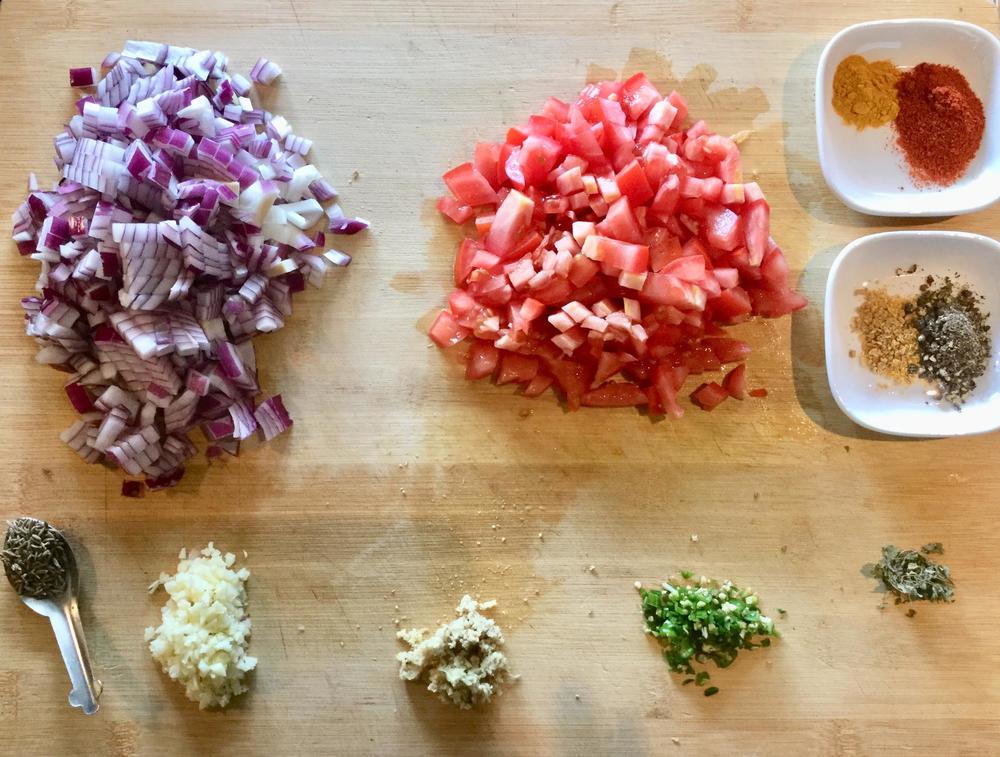
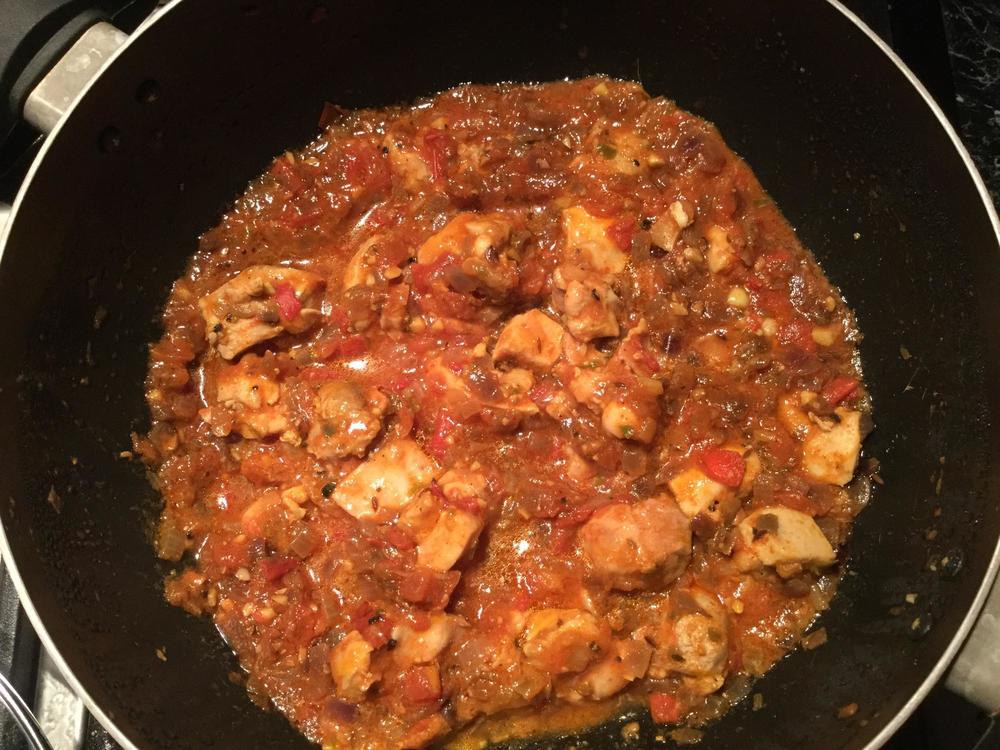
Dinner tonight featured a favourite chicken curry, served with a twice cooked eggplant dish, tarka dal, a blob of Ashoka brand mixed vegetable pickle, basmati rice, paratha and in the centre a dollop of.black cabbage mallum. The curry is Murgh methi / chicken with fenugreek. The recipe is from Meena Pathak Flavours of India. Fenugreek (methi in Hindu) is a complex slightly bitter herbaceous plant. Its very small leaves can be used fresh as you would baby spinach, or dried like in this recipe and the seeds also impart flavour, whether fried off whole, or ground to varying degrees. The fresh leaves are not common here, I’ve bought it once from my Indian grocer friend, and we grew a large pot full...once. The harvest made maybe two meals. The dried stuff and seeds are readily available. The mise. Chopped red onion, chopped tomatoes, turmeric & chilli powder, in the dish below is roughly ground fenugreek seeds & crushed black pepper, then cumin seeds, chopped garlic, grated ginger, chopped green chillies and a pile of dried fenugreek leaves. There’s a separate plate of chicken thigh diced into one inch bits. I have a favourite karhai like pan, it’s deep with a rounded bottom. Medium heat, a splash of vegetable oil then cumin seeds til they splutter, onions for a few minutes, garlic and green chilli til the onions take on brown edges. Add tomatoes, turmeric and chilli powder, salt to taste then sauté til the tomatoes are really mushy. Add ginger, the fenugreek and pepper, plus chicken. Simmer for 20 minutes or so until the chicken is cooked. Here the recipe adds butter and cream, I don’t, and prefer it without. It’s finished with a good handful of fresh coriander, chopped.
-
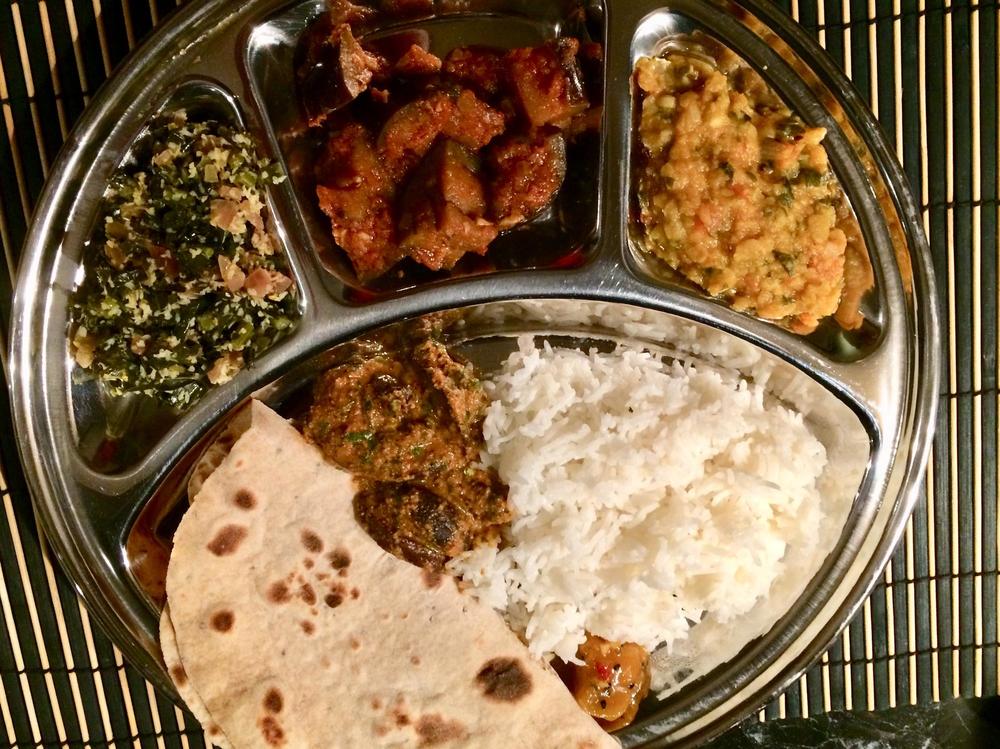
Bet you’re sorry you started this topic. Dinner tonight features a shiitake mushroom curry. There was a lot of mustard gravy made yesterday, so before adding the fish I saved some for another dish, and this is it. I sautéed the sliced fresh shiitakes in butter first, added some mustard gravy, water and double cream, then finished with chopped coriander. The thali style meal included eggplants in tomato gravy (Christine Manfield - Tasting India), tarka dal (Madhur Jaffery - Curry Easy Vegetarian) and Tuscan cabbage in a Sri Lankan mallum (Charmaine Solomon- The Complete Asian Cook Book), spiced basmati rice, a dab of homemade mango chutney and fresh chapatis. Mallum (or Mallung) is served with many Sri Lankan meals, it’s one of the ways Sri Lankan people get their vitamins. Almost any leafy green is simmered with chopped red onion, turmeric powder, ground Maldive fish, chopped green chillies and lemon juice, then thickened with desiccated coconut. You’d think I’d have chapatis down pat after making so many, but they’re still a bit hit and miss, these were 6/10. I’m sure the relative humidity has an impact.
-
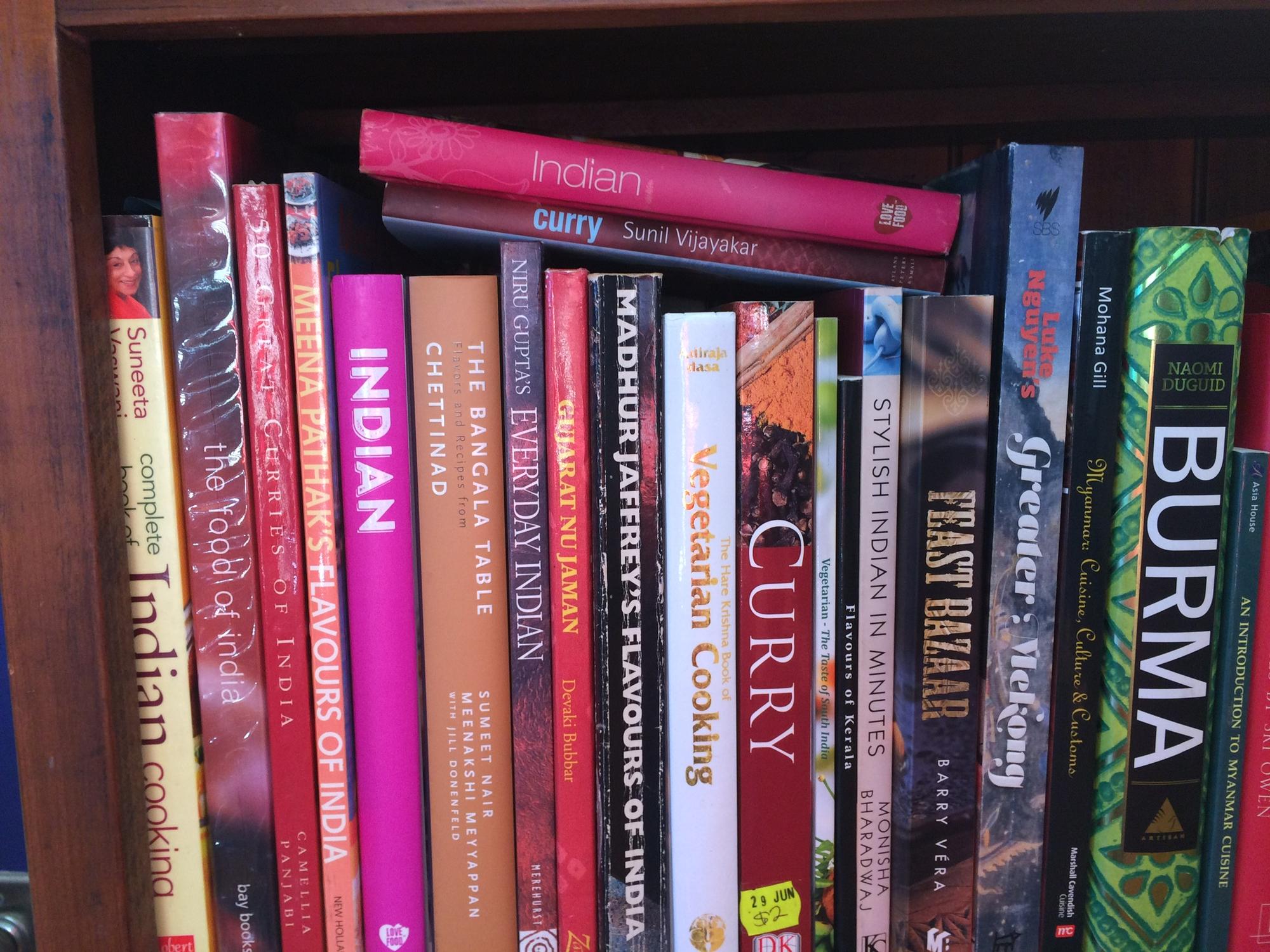
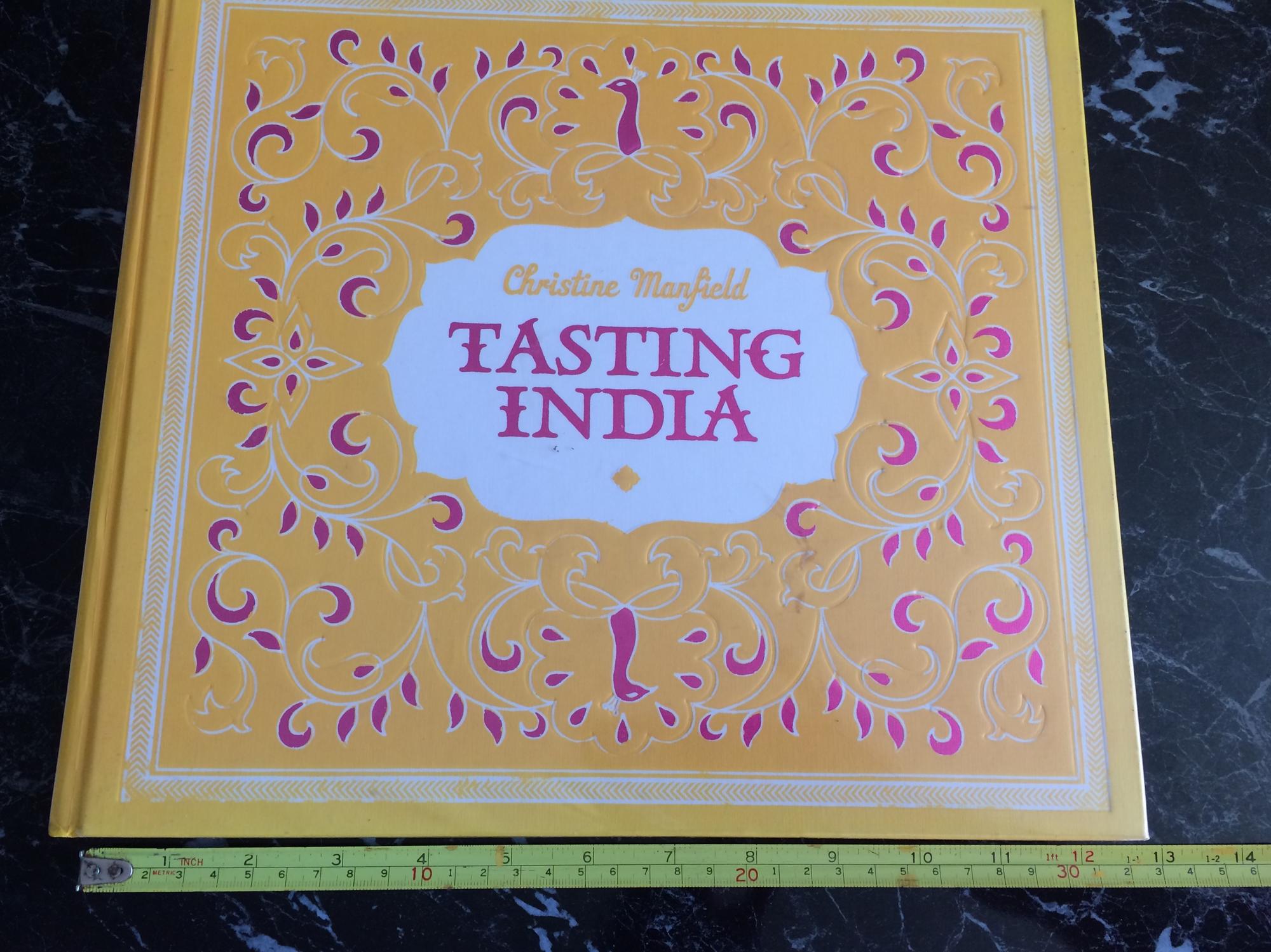
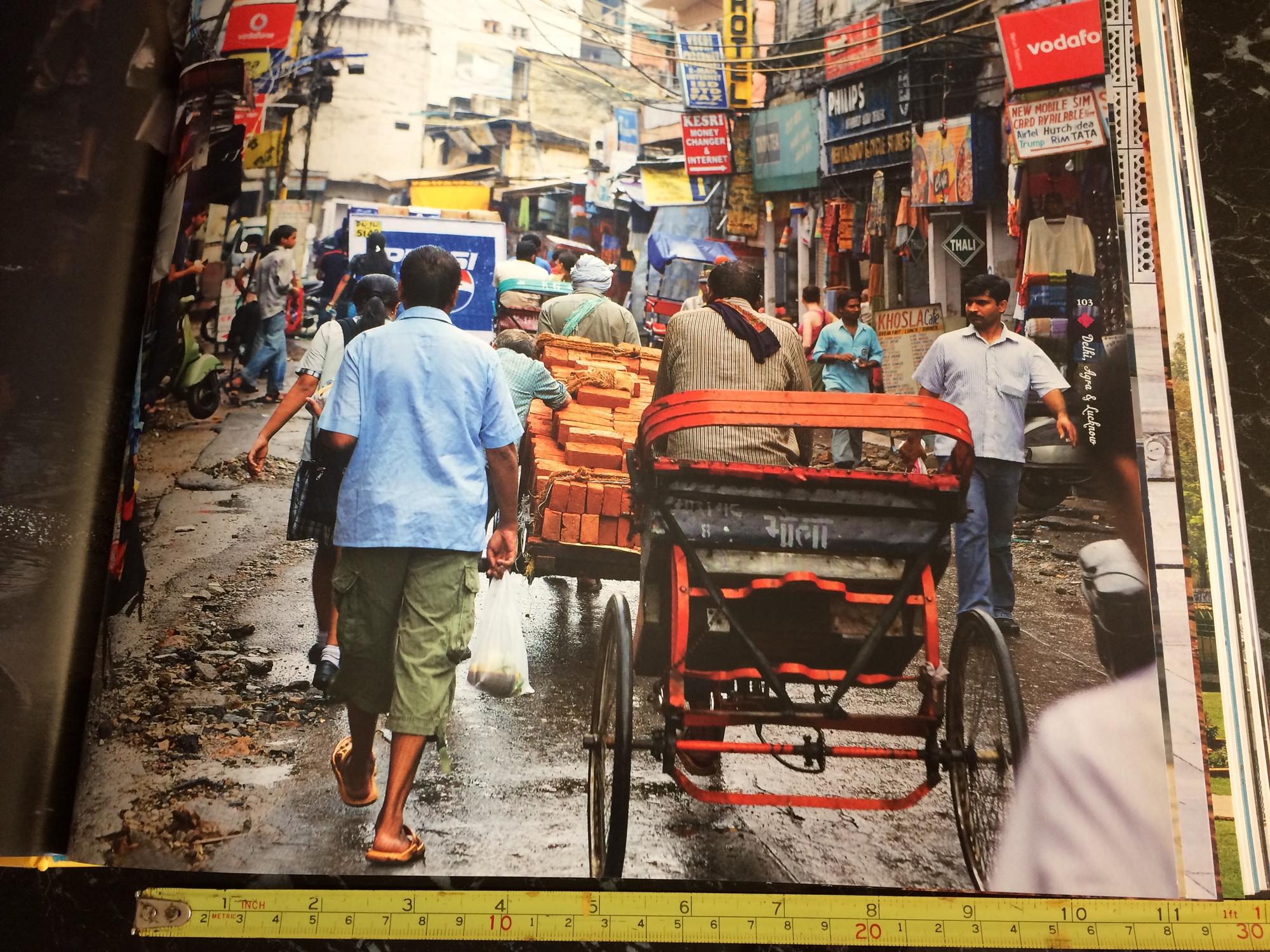
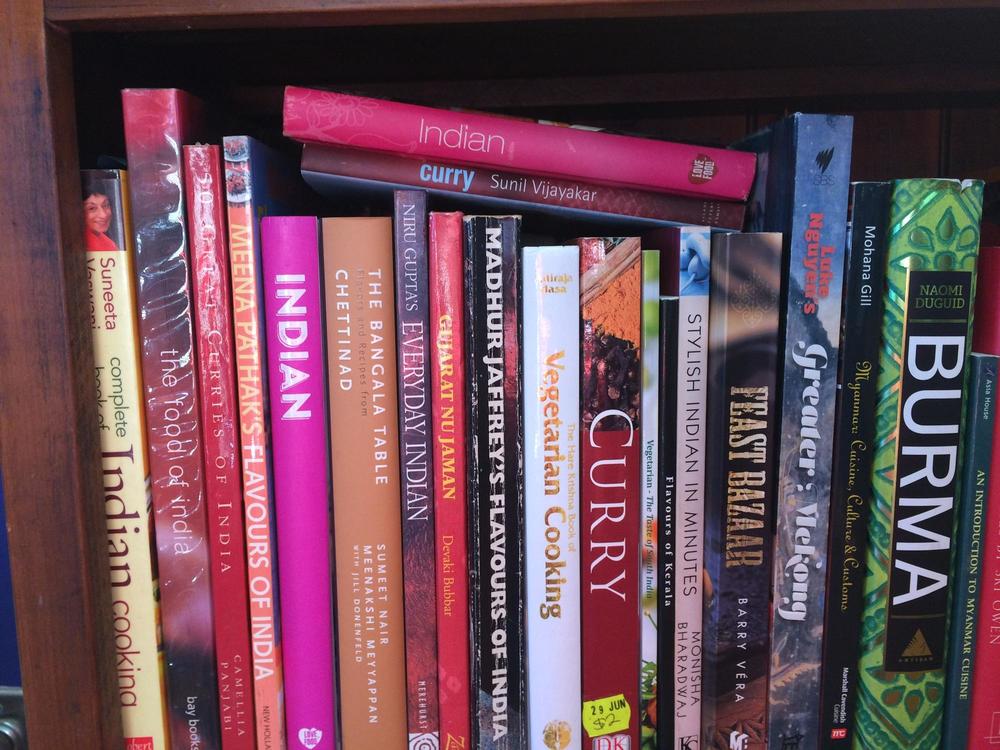
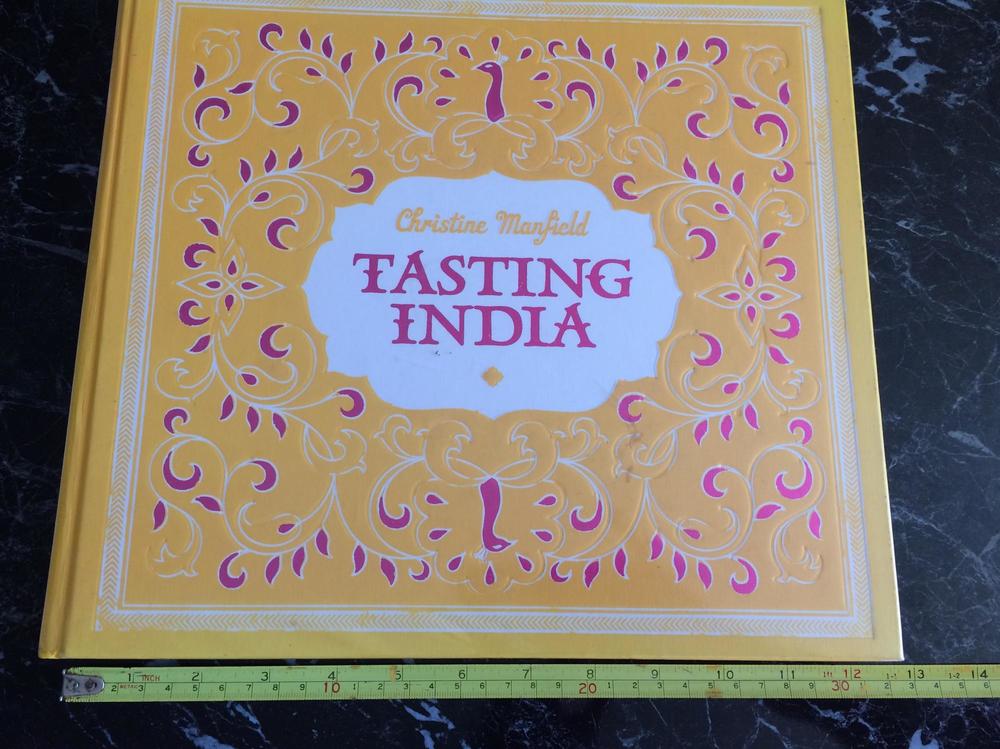
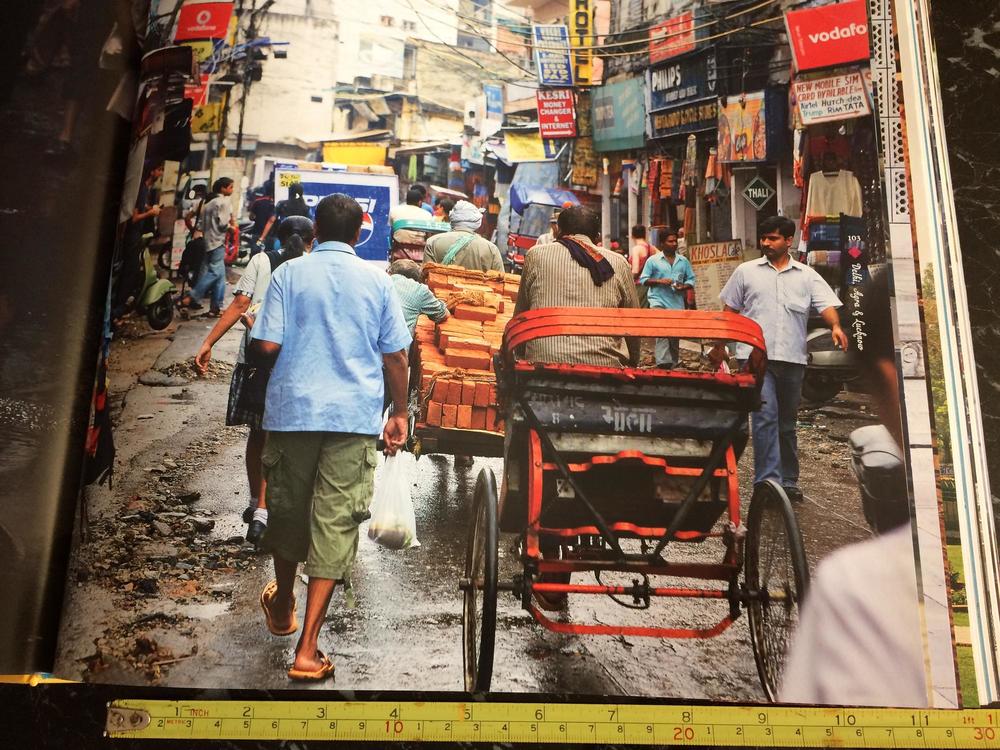
A few of my favourite cook books. The Food of India (recipes by Priya Wickramasinghe and Carol Raja Selva) got me started many years when full time work meant an Indian meal was a weekend event. These recipes always work and many favourite dishes come from this book. The Flavours of India by Meena Pathak, again, many favourites in here. The Bangala Table - we stayed at this heritage property The Bangala back in 2017. The book is co authored by the owner Mrs M, and is a fantastic resource for Chettinad cuisine. They run cooking classes too and have a beautiful open air kitchen. Madhur Jaffery’s Flavours of India concentrates on recipes from Kerala, Goa, Gujarat, Punjab, West Bengal and Tamil Nadu. I love her book Curry Easy Vegetarian as well, and borrow it from the local library in digital format regularly. There’s more books on a lower shelf, notably Tasting India by Christine Manfield. She’s an Australian chef who has travelled extensively in India. This book is coffee table size and part travelogue, with restaurant and accommodation recommendations, brilliant photos, plus hundreds of authentic, sometimes complex recipes gathered from her time stalking the kitchens...she does this well. I have several Sri Lankan recipe books too, and have no problem incorporating dishes from both countries into one meal. Charmaine Solomon is a favourite who has authored more than 30 cookbooks and deserves a separate post.
-
Anytime @Darienne, it’s a long flight but you’re more than welcome.
-
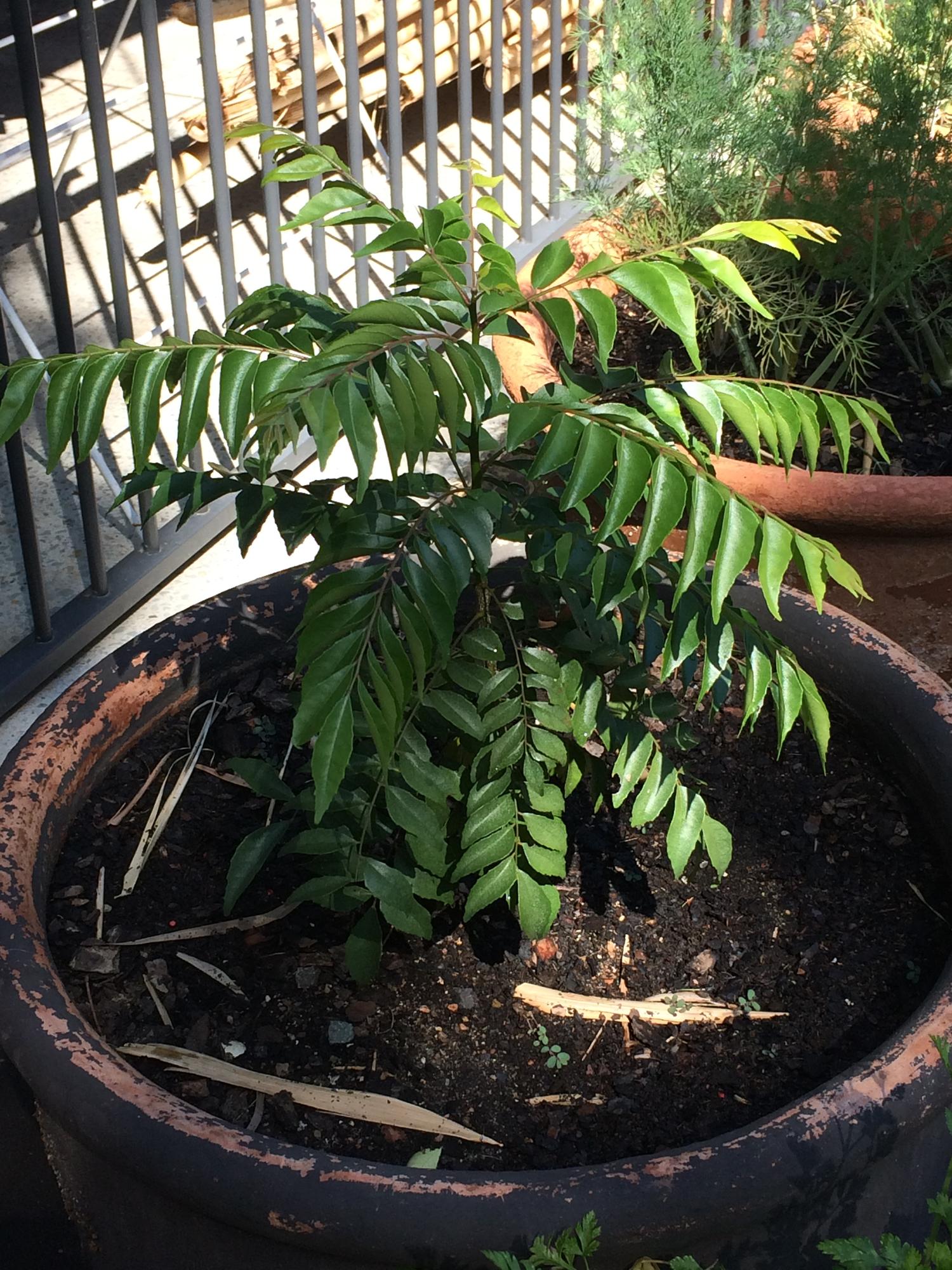
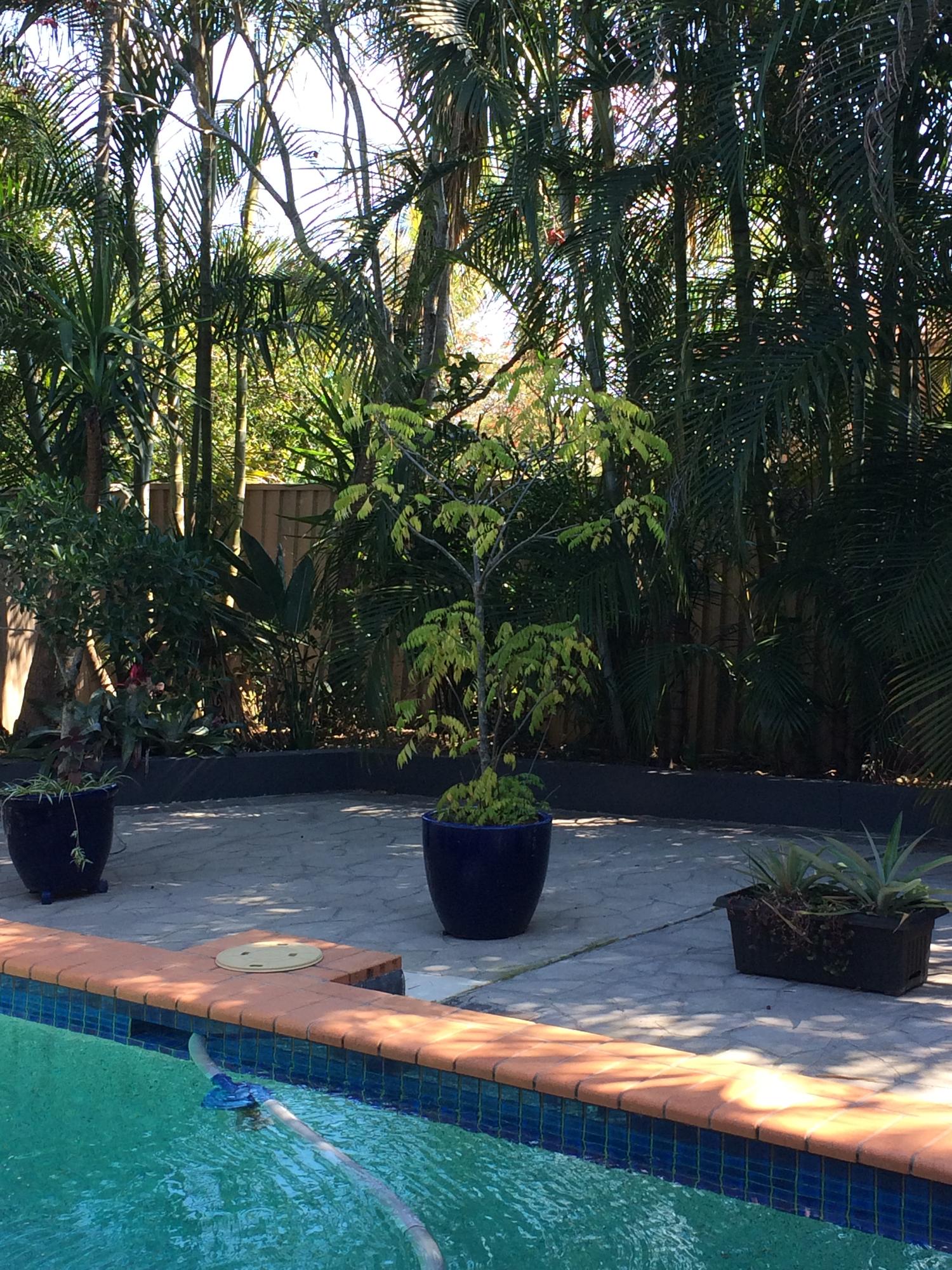
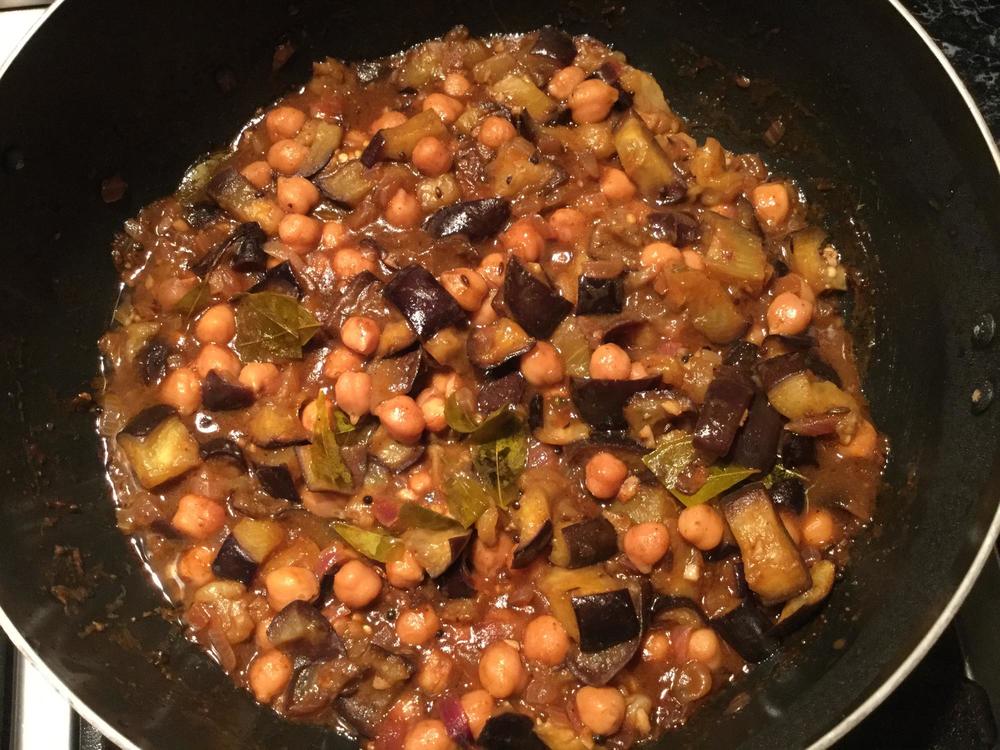
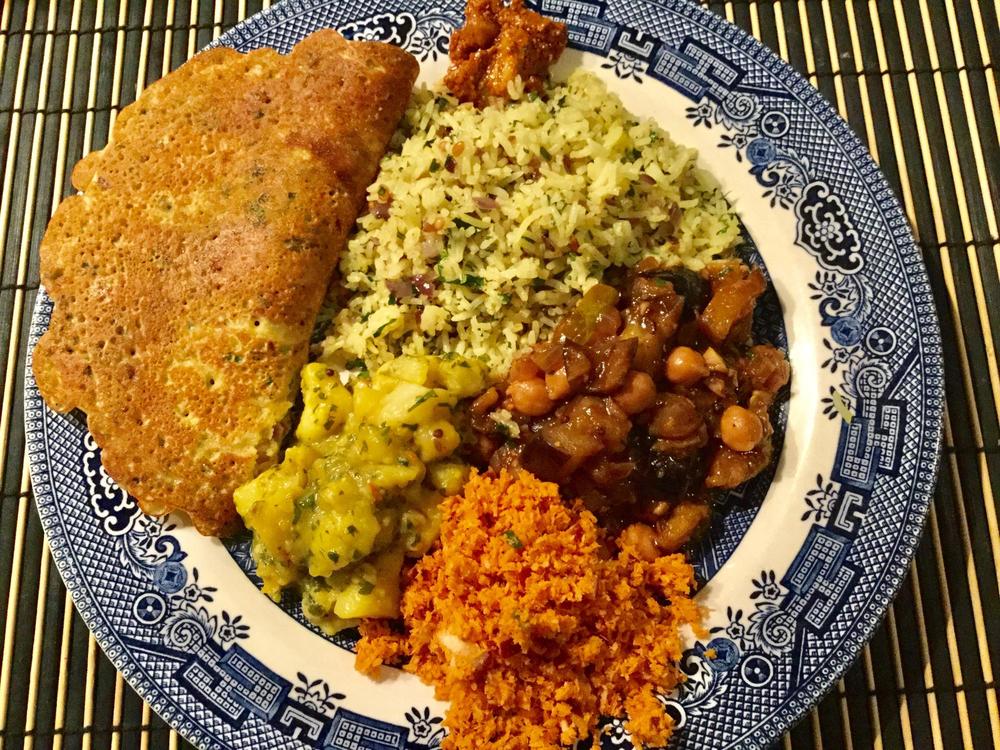
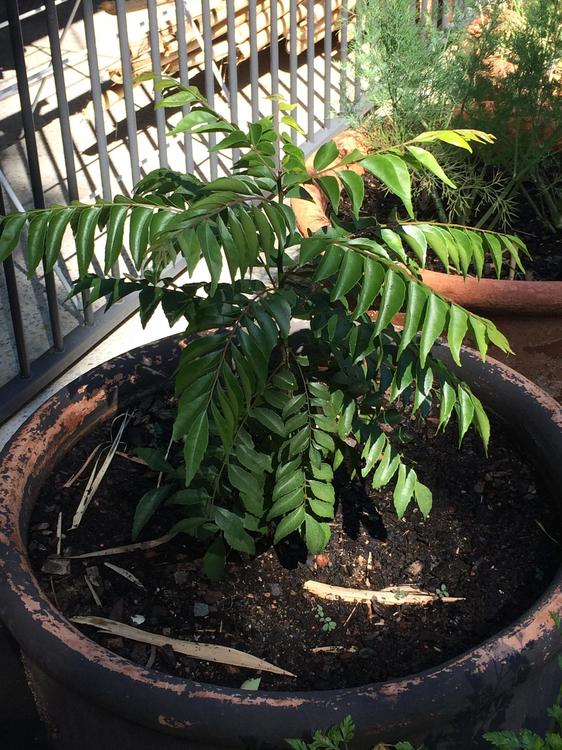
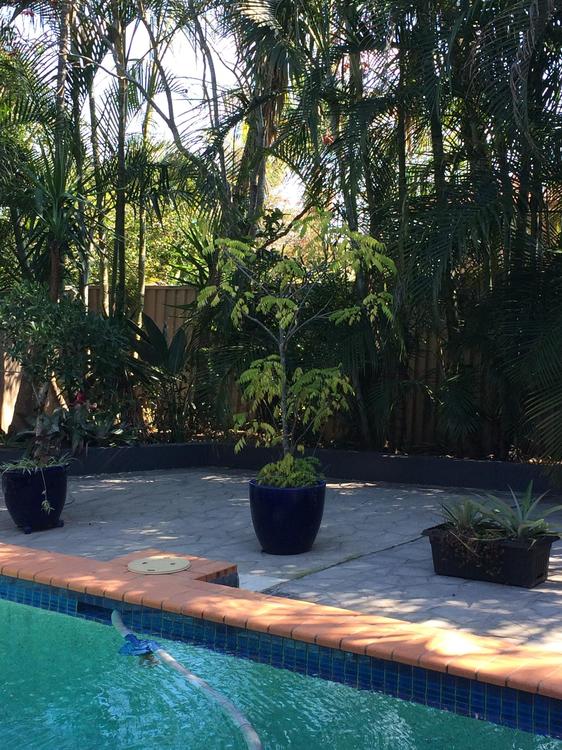
This is a favourite curry featuring tamarind, eggplant and chickpeas. Note the curry leaves, if there’s one thing that makes a curry taste extra special, it’s curry leaves (Murraya koenigii) the tree grows easily here. Served with lemon rice, chickpea flour pancakes, potatoes and pol sambal (a Sri Lankan coconut and chilli relish). The trees, the large one is 3 metres tall and a few years old, the smaller one is a pup. Yes, they produce pups ! My kinda tree.
-
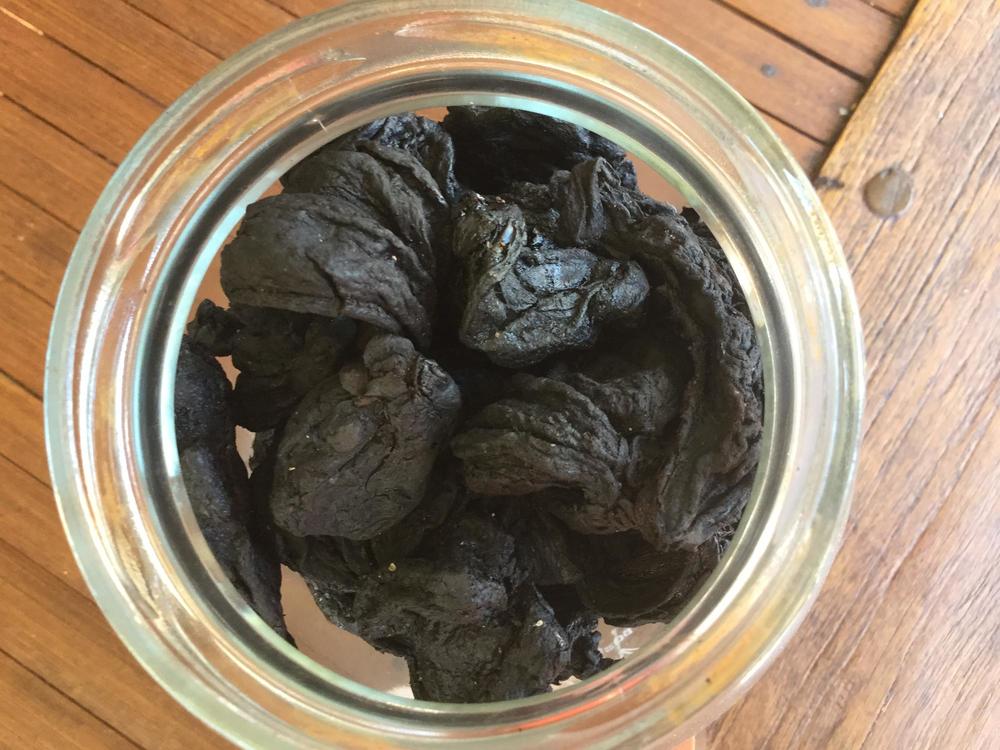
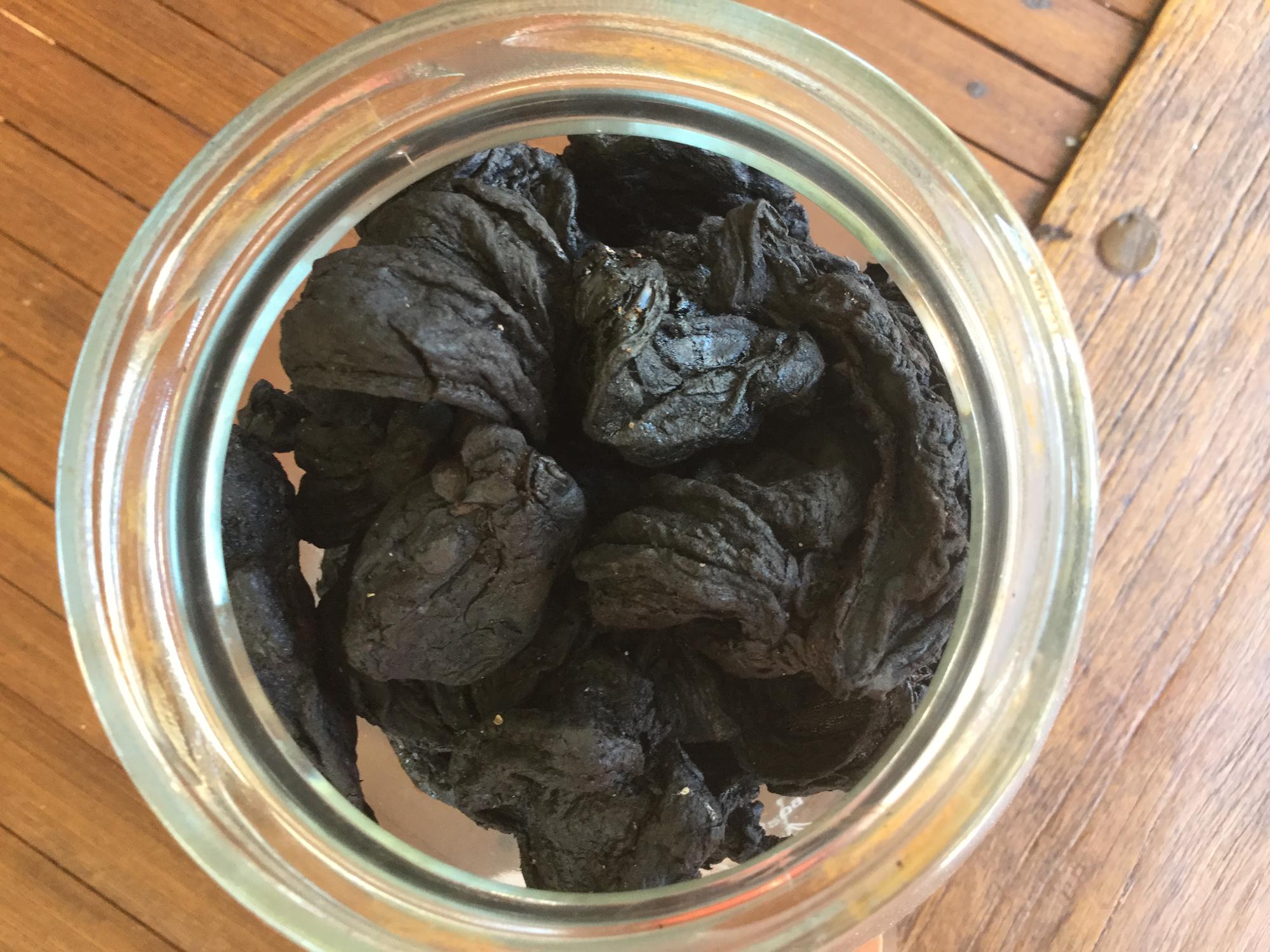
While we’re talking tamarind, here’s some black tamarind. It’s black because it’s been smoked, lends the typical sour taste, but also a smoky flavour. Used mainly in South Indian cooking, and very sparingly, it’s really strong.