
Duvel
-
Posts
4,433 -
Joined
-
Last visited
Content Type
Profiles
Forums
Store
Help Articles
Everything posted by Duvel
-
Cooked Spätzle are easily reheated in hot butter (with aromatics, such as caramelised onions, if desired). If they are cooked and cooled they tend to coagulate due to residual starch, but once warmed in the butter they break up easily. I have never seen them sintering into a mess. That being said, you can easily taste the difference (and I don’t mean to say that reheated is inferior - they are a different dish), so if I would order Spätzle as a side dish in a restaurant and they are not prepared a la minute (and they literally take a minute to cook), I would heavily complain ...
-
 Nope, no fries with that ... https://www.cbsnews.com/news/pompeii-archaeologists-ancient-thermopolium-street-food-volcanic-eruption/ https://www.theguardian.com/world/2019/mar/27/city-fast-food-bar-unearthed-in-pompeii-after-2000-years
 -
Christmas Eve/Christmas, New Year's Eve/Day 2020/21
Duvel replied to a topic in Food Traditions & Culture
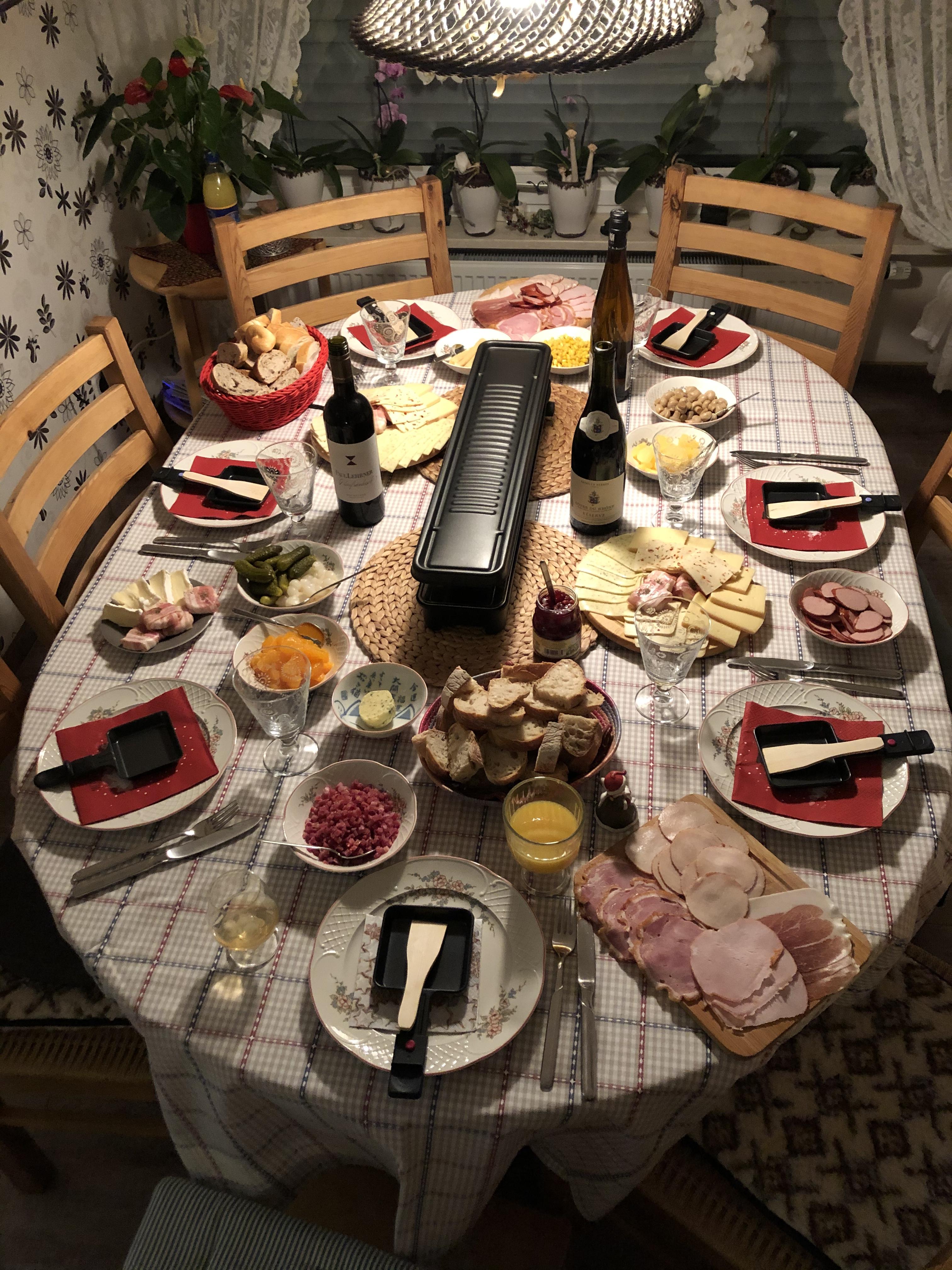
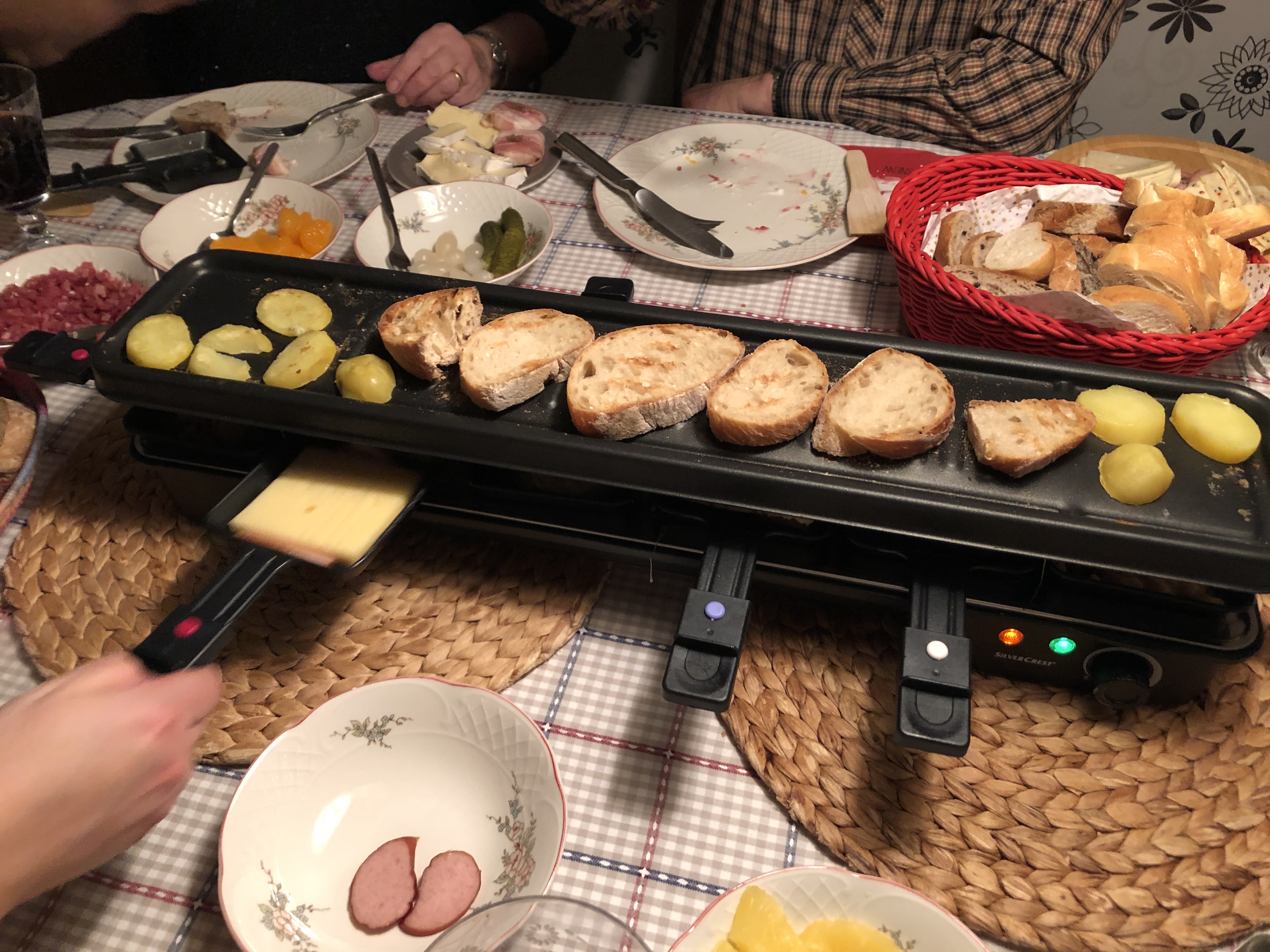
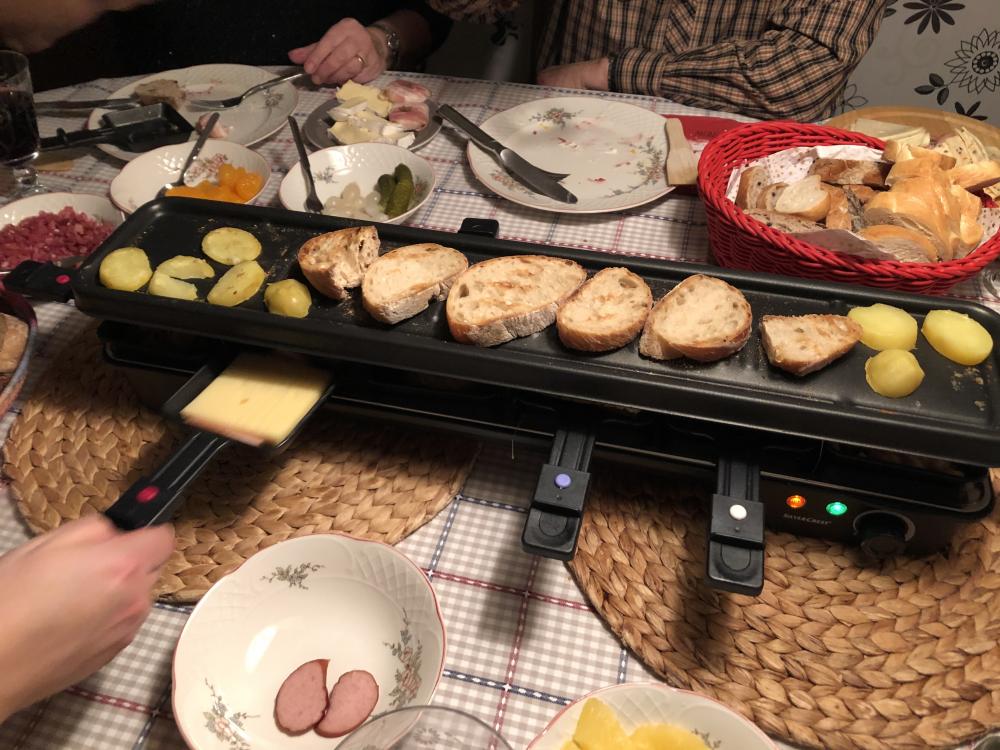
(Almost) zero prep dinner: Raclette !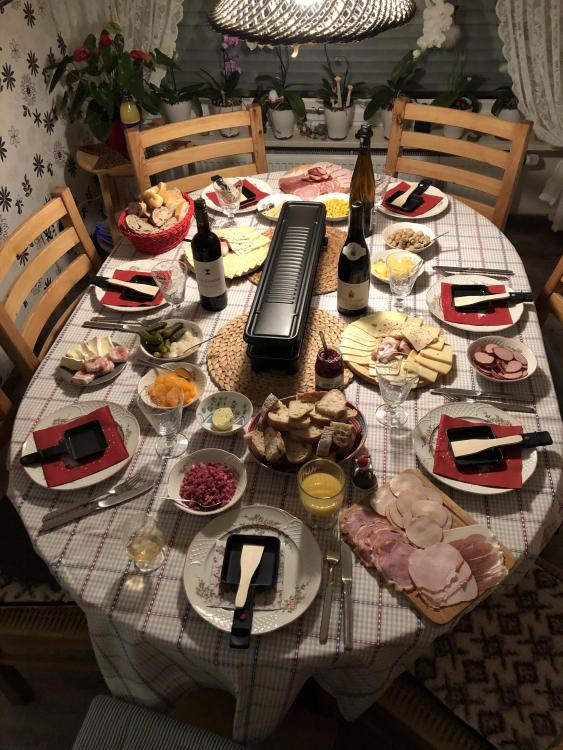
- 162 replies
-
- 14
-

-

-
Same visuals in my memory. My grandma used a blue enameled frying pan with a cracked wooden handle. Definitely not designed nonstick, but as her potato pancakes were exclusively fried swimming in lard and that specific pan was only used for frying potato pancakes I assume that ~40 years plus of usage left the surface as nonstick as any perfluorated polymer 😉
-
Yes, but you are also well known to be a people pleaser, so I will continue to try ... 😜
-
Sorry, with the travel ban and all there is no way I make it in time. So we need to count on you to take one for the team. McD in China delivers, as far as I remember - so no need to step into the lion’s den 👍 So please just get that burger and give us an unbiased review (unlike that fake news outlet, that even US presidents disapprove of ...).
-
I actually did a little more research, and it sure appears as if one of, if not the main reason that salt appears in that Ohsawa Mirin, as well as in the Eden Foods brands mirin imported from Japan (which is also highly touted and which I also bought) has to do with changing it from an alcoholic beverage (i.e. wine) into a cooking product (i.e. cooking wine). Or, you could have just read my post ... 😉 But this is usually not the major difference. Typically, the shio-mirin has little to no alcohol, as opposed to say 14% in hon-mirin. Please check the label on the Ohsawa. To illustrate the difference: If your recipe calls for an off-dry Riesling you could use off-dry Riesling (equivalent to a hon-mirin) or substitute grape juice with added salt (your shio-mirin). You can get great flavour profile from a nice grape juice, organic and all and the best sea salt there is, but at the end it won’t give you the result from the off-dry Riesling. If you notice and/or accept the difference depends on you and your point of reference.
-
I usually buy Hinode. It is one of the more economic brands and I used to buy it when I was living in Japan, so I kept the habit. I have another (more fancy) one down in my cellar which came in a care package from a dear Japanese friend, but I haven’t gotten to try it yet.
-
Thanks - I do not know him. It could be that Japanese cuisine is not one of his areas of full expertise. He certainly might be right that his favored product could have a deeper & more complex flavor than (at least the available) Kikkoman choices in the US. And that being said: shio-mirin is a product of its own right (though often used to circumvent the import tax for alcoholic beverages), and the one you‘ve chosen seemingly comes from a reputable producer - so please enjoy !
-
The bottle on the left is aji-mirin (as you know) and should be quite sweet. This is what you want to use if your recipe asks for mirin. The bottle on the right is ryorishu or cooking sake. It should not be sweet at all and you can use it if a recipe calls for sake.
-
Mirin should always be sweet (either by natural fermentation or added sugars). Do you have a picture ?
-
I have no idea who Kimball is.
-
Actually, all mirin is sweet. It is similar to a sweet sake, where part of the starches have been converted into sugars. This can happen naturally (and the sugars undergo subsequent alcoholic fermentation) to produce hon-mirin. You can cut the process short, add alcohol and sugars (HFCS if you are unlucky), and get aji-mirin or mirin-fu, which tastes very “one-dimensional”, yet has the sweetness of regular mirin. So you can use any mirin type in cooking in light of the sweetness, adjusting a bit for your taste, of course...
-
Well ... this is shio-mirin (“salted” mirin, next to no alcohol content, but added salt). It is definitely better that the aji-mirin varieties, but not a preferred choice for many dishes. If you’ll ever get your hands on hon-mirin (“real” mirin) you’ll never go back ...
-
I need to object here when specifically talking about Tempura. The dish originated in Nagasaki in the 17th century by combining Portugese fritters with Japanese vegetables. It was refined in the Edo area (modern Tokyo), leaning out the batter (no egg) and adding ice water to minimize gluten development. Processes and recipes are well documented.
-
That’s a nice idea. So pizza bianca, cooked with bacon, and then added ricotta (?) and egg yolk ?
-
In continental Europe, the „flavor“ of Netherland is associated with something else. Which - in return - goes pretty well with any flavor of potato crisp ...
-
Not for your everyday cuts. But if you buy half a hog’s head or some pig ears, some treatment might be required ...
-
There are two option: (1) use a disposable razor and shave (no shaving foam required), or (2) use a small blowtorch and flame them - better outdoors, as it tends to be a bit smelly ... I usually use (1).
-
With a certain probability this ...
-
The link is entropy, my friend ... Decomposing composers
-
If your goal is to “braise in its own juices” you may want to look into sous vide techniques. No evaporation due to a sealed containment at the temperature desired. You can emulate this by using any sealed vessel in a adjusted oven. To minimise evaporation, “double” sealing techniques have been developed. Salt/water/flour dough is traditional, heavy duty tin foil is more contemporary. Special plastic pouches are available. The results will emulate the “confit” technique. If you need higher temperatures, you are already aware of pressure cooking. Sealed environment & retention of moisture. If your heart is set to stovetop cooking and none of the before mentioned options do apply, the closest you get to a sealed system will be cast iron with a tight fitting lid. And if you have followed the thread, several brands exist. Good luck !
-
I think we deviated from the OP’s question, and I apologise. Let me finish my contribution to this thread assuring you again that I have no objection to your choices. I did not agree with your arguments on the quality/origin, and thus have stated mine. Again, I can and do not contest your choices based on perceived image value, and will certainly not contest your choice based on historical/political facts, even if this opens up a third line of rationalisation, moving from “pro-Staub” to “anti-IKEA”. What it shows me at the end is that we both enjoy our respective cooking vessels and I am sure that will continue ...