
JAZ
-
Posts
5,121 -
Joined
-
Last visited
Content Type
Profiles
Forums
Store
Help Articles
Everything posted by JAZ
-
I always cut the membranes off, or more precisely, cut the segments out of the membranes.
-
Take a sprig and orient it so the leaves are pointing up. Holding it by the top with one hand, slide the fingers of your other hand gently down along the stem to pull the leaves off. You won't get them all, but usually most of them come off.
-
For those who try to shop "local" -- whatever that means to you -- I'm interested to know what your motivation is. Supporting local farmers/local economy? Better quality? Or something else?
-
A couple of weeks ago on The Splendid Table, Lynne Rosetto Kasper did a segment on dumplings. In a typically enthusiastic but inaccurate introduction, she started with a list of dumplings around the world, including (according to her), kreplach, ravioli, potstickers, samosas, empanadas and dim sum (I swear I'm not making that last one up). She then continued that a dumpling is "some kind of dough wrapped around some kind of filling." To be blunt, I believe she's way off base. But when I tried to define what exactly a dumpling is, I admit I came up with more questions than answers. First, I think the idea that a dumpling is dough around a filling is both too narrow on the one hand and too broad on the other. What about the dumplings from Eastern Europe that are boiled dough, with no filling at all? I'd say that's the original meaning of dumpling, and the dough-around-a-filling meaning came later. But I really don't know. I'd also say that boiling, or perhaps steaming, is crucial to dumplings. I don't think empanadas and samosas qualify at all -- they're much more like savory pies than like dumplings. If it's baked or fried, it's not a dumpling. So my working definition is that a dumpling is some kind of dough (filled or not) boiled in water or sauce, or steamed. That's more or less what Food Lover's Companion says: "Savory dumplings are small or large mounds of dough that are usually dropped into a liquid mixture (such as soup or stew) and cooked until done. Some are stuffed with meat or cheese mixtures." How does that coincide with what others think about a definition for dumplings? Does it cover Asian dumplings? Is it too narrow, or too broad?
-
I have three herb plants on my deck (basil, parsley and rosemary). Other than that, probably close to 0%, unless it's just by chance. I used to belong to a CSA which dropped off where I worked. Now that I don't work there anymore, it's not worth the time -- a half hour each way on the bus, lugging back a bunch of produce. Some of the produce was great; some was not measurably better than grocery store produce; some was spoiled by the time it arrived or shortly thereafter. I could get meat too, which was usually very good, but often oddly butchered so the cuts were not at all what I was expecting. Besides, I like citrus fruit, and coffee and spices. I like olive oil and sherry vinegar. I like liquor. I like all kinds of things that won't ever be produced within 50 or 100 or 500 miles of where I live.
-
I take my Le Creuset pots directly from the fridge to the stove or oven all the time with no problems.
-
Excellent idea. I had some skin left over from roasted chicken thighs, so I put it back on the rack and crisped it in a medium oven. Then I chopped it up and sprinkled it over an Asian chicken salad. It was a great addition.
-
When I was growing up, we ate a lot of tossed green salads. My mother had a standard "salad" bowl and "salad servers" -- the wooden long-handled spoon and the long-handled thing that wasn't really a spoon but wasn't really a fork either. Pretty much any set of salad servers that I see today are the same kind of thing, so apparently it's still the standard in serving salads. But a few years ago, it became the in thing to toss your salads with your hands -- less damaging to the lettuces or something. I tried that for a few months, but here's the thing: it's really messy. I'm not crazy about having my hands covered in salad dressing, regardless of how it makes the lettuce feel. In any case, if I'm serving family style, I still need something to serve the salad with, right? I can't really have my guests plunging their hands into the salad bowl to serve themselves, can I? So now, I mostly use tongs. It's not perfect, but it works. Am I missing any options? Am I damaging my salad greens with harsh metal implements? What does everyone else use for salad tossing and serving?
-
I haven't tried the old Chun King ones, but I love these: La Choy rice noodles -- are they similar? They're much better than the regular "chow mein" noodles; ever since I tried them I've never used anything else in my Asian cole slaw.
-
Am I the only one who prefers gin in my Bloody Marys?
-
I eat a lot of green salads -- side salads and main dish salads. It occurred to me recently that as much as I like the crunch of vegetables, I really like salads when there's an additional crunch factor -- toasted nuts or croutons, for instance. What I add, of course, depends on the kind of salad I'm making. If it's an Asian style salad, I'll add crispy chow mein noodles, or toasted almonds or peanuts, or both. Caesar salad requires croutons, naturally. A southwestern or Mexican style salad gets crispy fried tortilla strips on top. With the abundance of packaged salad toppings in my grocery store's produce section, I have to believe I'm not alone in this. So what do you add to your salads for that ultimate crunch factor? Store-bought or homemade? Nuts or croutons or something else?
-
I had shrimp in the freezer and broccoli in the fridge, and I remembered these posts so I gave the recipe a try. While the flavors were great and the dish was very easy, I had some problems with the recipe as written. First, I found the cooking time to be way too short for the broccoli. Fortunately, I tried a piece after 10 minutes (when the shrimp is supposed to be added) and realized there was no way it would be done when the shrimp was. Then, when the dish was done, it was quite dry -- not the shrimp, which were moist and done nicely -- but the whole dish. I served it over pasta, so I added a couple ounces of pasta water and a splash of olive oil and that helped. I probably will make it again, but will try blanching or steaming the broccoli for a few minutes before roasting. I think that will keep some moisture in the broccoli while allowing it to become tender in the oven.
-
I'd bet you could do a ragu with pork necks over pasta for $1 per person.
-
As I recall, the Chronicle still awards an overall star, doesn't it? I agree, though, that ratings for different aspects of the dining experience is very helpful. I especially liked it when the Chron started listing noise levels. I should say that I don't really like restaurant reviews in and of themselves. I generally don't read them unless I'm considering the restaurant, and I certainly don't read them for literary value. For me, what's important from a review is that I get an idea of what to expect if I go to the reviewed restaurant. It sounds obvious, but often I really don't; sometimes it seems that the reviewer is trying so hard to be clever and "literary" that his or her opinions get lost in murky and pretentious prose. My primary experience has been with the San Francisco Chronicle, and frankly, Michael Bauer is such a poor writer that often I'd read his reviews and have no idea what he was trying to say. (I have to admit that I had the same reaction with the Sam Sifton review of Boulud's new place.) So, in that sense it's nice to have some kind of recap at the end, just in case. But a single star system is a really poor way to recap a review. What I think would be best would be if a review was followed by a breakdown according to food quality, beverage program, service, and ambiance/atmosphere. Not stars (although that would be better than nothing), but a short sentence about each aspect. So, if one didn't have time to read the whole review (or if it was confusing or poorly written), I could still skip to the end and see something like: Food: Everything we tried was good. Some average selections, but no big misses, and some really outstanding dishes. Service: Servers were friendly for the most part, but the service wasn't particularly professional, and there were some significant timing issues. Ambiance: Restaurant was loud and bustling. Beverage program: Full bar, but cocktails were pedestrian. Wine list was mediocre. Great beer selection. That way, I'd know that if I was most interested in good food, it would be worth checking out. For a quiet dinner for my parents' anniversary, not a good choice. Likewise if I required a good wine selection. Even if the star system is broken down into categories, seeing -- for instance -- one star for service doesn't tell me if the problem is condescending waiters, bad kitchen coordination or something else. Two stars for wine doesn't tell me if the wine selection is good, but limited; or good, but overpriced. Of course, I'd still have to figure out if the reviewer's opinions matched mine, but at least I'd have a head start. Ideally, one should be able to get this from the review in full, but that's seldom been my experience.
-
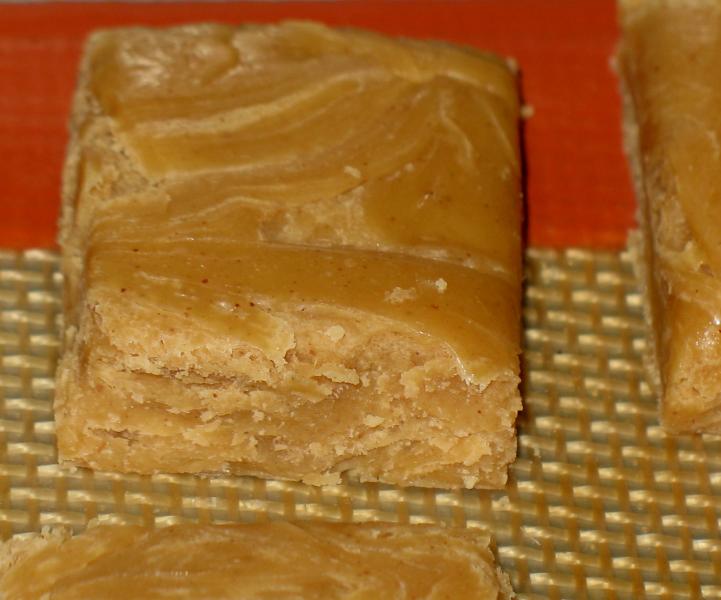
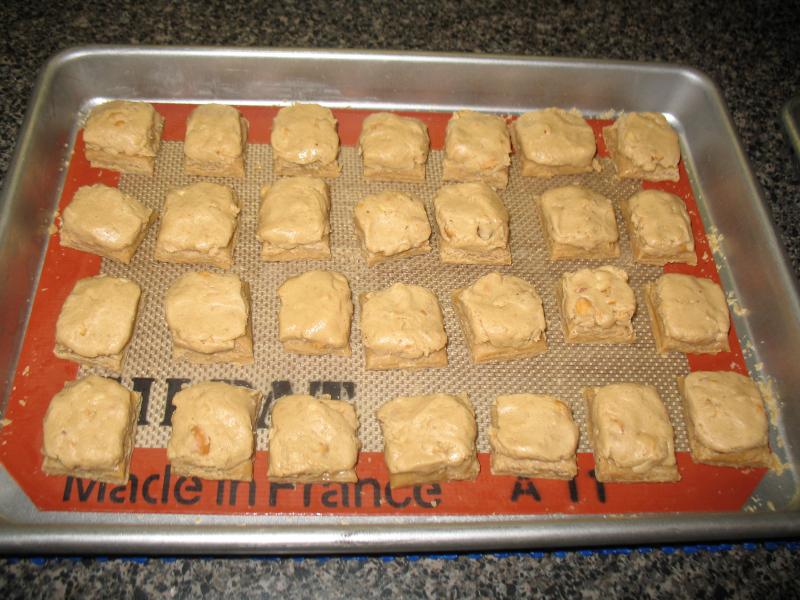
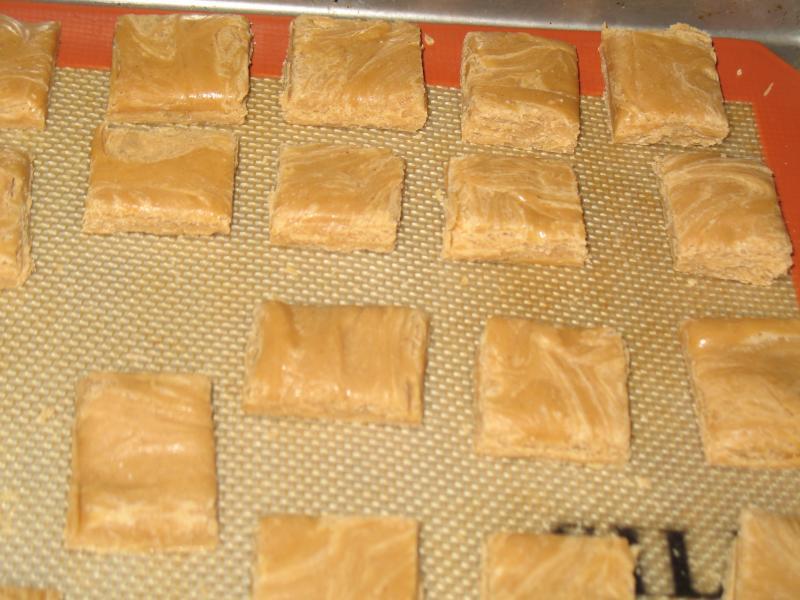
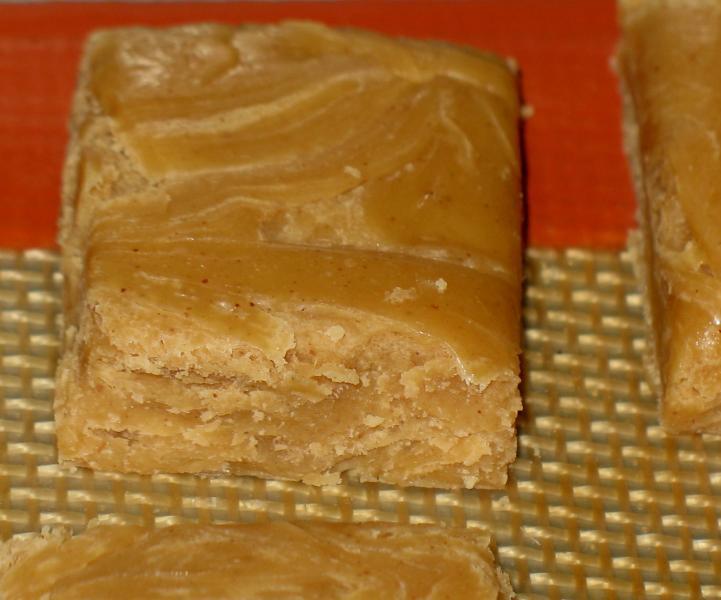
Pastameshugana, I had that trouble with the original batch I made (without the baking soda), which is why I wanted to try the baking soda variation. I based my second batch on this recipe, but changed the quantities as follows: 8-3/4 oz. (250 grams) (about 1-1/4 C) granulated sugar 2-5/8 oz. (78 g) (1/3 C) water 5-3/8 oz. (154 g) (1/2 C) corn syrup Then I mixed in: 9-1/4 oz. (268 g) (about 1 cup) peanut butter (I used smooth Jif) 2 g (1/2 tsp) baking soda 4 g (1 tsp) vanilla I brought the first three ingredients to a boil and cooked it to 300F -- if anything, I went a little higher. Then stirred in the peanut butter, soda and vanilla. I wouldn't say that I "beat" it, but it does take a lot of stirring to get the peanut butter incorporated. I wanted it the finished candy to be on the thin side, so rather than an 8" pan, I spread it out in a quarter sheet pan (on a silpat) and it fit perfectly. Anyway, I was quite happy with the texture; it's much better than my first try. I didn't get photos of the candy before cutting, but this is what it looked like after. I wanted to do a layered candy with peanut butter truffle filling on top, which is one of the reasons I didn't want it quite so sweet. (Then I dipped in 70 percent chocolate, but I didn't get a photo of that either.)
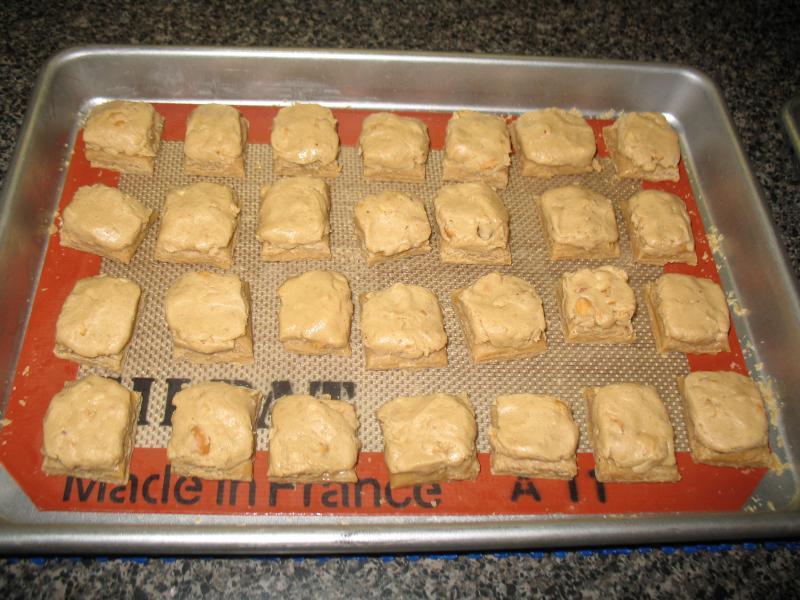
-
We've been having trouble finding it in the two Atlanta liquor stores that regularly stock it.
-

The Ice Topic: Crushed, Cracked, Cubes, Balls, Alternatives
JAZ replied to a topic in Spirits & Cocktails
I'm now seeing these pretty regularly, although I don't find it annoying. I can never decide whether to save them or use them. -
1. LU Petit Ecolier cookies (dark or extra dark chocolate). Not too sweet, and amazingly good chocolate. 2. Munch bars. Actual butter in the candy. 3. I used to love Mystic Mints, but I have no idea if they're even made anymore, or if I'd like them now. I also used to like Sunshine Lemon Coolers, but I'm pretty sure they aren't made anymore. So, I'll go with Fiddle Faddle as my third choice.
-
This squeezer is probably the one Oliver is referring to. I find that with the size of most Persian limes, the "lemon" size works fine, so I don't bother with two sizes. I prefer the stainless steel version; it's much more durable than the aluminum ones.
-
Most champagne stoppers simply seal the bottle so the carbon dioxide doesn't escape, and as Erik mentioned, they work pretty well for one opening. However, I've found this WMF pump/seal to be much better than a simple stopper. You can probably tell from the photo that this is two pieces: a stopper similar to other, more typical stoppers, plus a pump. Rather than removing air, like a vacuum pump does for wine, this pumps air into the bottle, which does keep the bubbles in the champagne. I'm not sure if this is available in the US anymore, but if you find one, buy it.
-
No pictures, but I discovered a couple duck breasts (boned, with skin) dating from last March and a container of duck fat. Seared the breasts and sauteed some potatoes in the fat. Not bad for a serendipitous freezer meal.
-
I've become a big fan of these tomatoes, especially since it's tough for me to get to markets that carry heirlooms or other good quality tomatoes. From the Wikipedia article, it seems that they're being grown by several Canadian producers. Although sometimes I wish they were larger -- when I want slices for a sandwich, for instance -- mostly I like the smaller size.
-
My pressure cooker came with a booklet that has charts for cooking times for various foods, so I always check the appropriate chart, and then start on the low end. Probably the most important thing I learned when I started using my pressure cooker a lot was that it's not that big a deal to release the pressure to check the progress of the food inside. Yes, it takes some time to build the pressure back up, but not nearly as long as it takes to start, because the food is really hot.
-
I don't know if these are available this year, but a few years ago, miniature dark chocolate Reese's peanut butter cups turned up for Halloween and then disappeared.
-
Wouldn't the fruit cook in the dishwasher?