Shel_B
-
Posts
4,803 -
Joined
Content Type
Profiles
Forums
Store
Help Articles
Everything posted by Shel_B
-
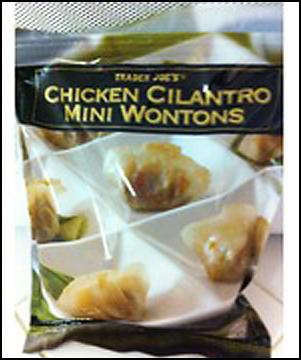
TJ's Chicken Cilantro Mini Wontons ... mmm! Good! Subtle cilantro taste, not too many calories, ideal for quick soups. I use some wontons, favorite boxed stock, some greens, a little garlic and ginger, and voila! A quick and satisfying lunch.
-

NYTimes Articles on Food, Drink, Culinary Culture 2013–
Shel_B replied to a topic in Food Media & Arts
I didn't know that Sunset was owned by Time, Inc. What a shame that they've lost their campus. It doesn't bode well for the future of the magazine. Hope I'm wrong. California, and the west in general, have had a long relationship with Sunset ... mine goes back 40 years, and I still read the magazine every month. -
None of the dairy products I buy have additives, such as a the carrageenan you mention.
-
Some years ago there was a TV commercial for some gadget or blender that showed the device whipping reduced fat, or maybe even fat-free, milk into what looked like whipped cream. I never thought more about it until this morning as I'm thinking of making a whipped cream topping for Christmas dinner. Is it possible to whip half-and-half, or regular milk, to give a result similar to regular whipped cream? Any special technique for doing so? Also, would manufacturer's cream whip any differently than regular whipping cream? Might it be too "heavy?"
-
I wouldn't say that I've mastered lemon curd, but at least I can whip up a good one using three different techniques, and have learned how to adjust tartness and mouth feel pretty well. The people I give it to all seem to enjoy it, which is most important and satisfying. In an earlier post, you said "To make it even better, add a touch of gelatin when it's hot, leave to rest overnight then whip it up. The gelatin makes it freeze stable, so you can use it in a bûche or entremets." Is that similar to a chiboust? In any case, I don't know what chiboust, bûche, or entremets are. However, I do like the idea of using a curd for other recipes, and have just started looking at how these recipes can be used in tarts.
-
I always add my butter at the end, after the curd has been removed from the heat. That was one of the riffs on the recipe that I used. In addition, to keep things simpler, I used three whole eggs instead of two yolks and two whole eggs. Anyway, I like making curd with whole eggs ...
-
Thanks for the push to making the curd in a saucepan directly over the heat. I made a small, personal batch this evening, riffing a little from this David Lebovitz recipe: http://www.davidlebovitz.com/2009/12/improved-lemon-curd/ . The curd was completed in ten minutes, start to finish (including measuring and prepping the ingredients), and it turned out pretty well. I'll definitely use this technique in the future. I like the simplicity, the speed, and the easy cleanup ... perfect for spur of the moment curd.
-
Not from what I understand, but that's one of the reasons I asked the question. Using the cider as part of the braising liquid doesn't work if the result is for grilled or pan seared pork.
-
How about injecting the breasts with chicken stock instead of water?
-
Has anyone here ever "brined" pork chops or pork loin in apple cider? Any though, ts on the best way to do that ... add sugar or salt? Maybe honey or maple syrup? For how long a time? Over night? Would using heritage-style pork instead of commercial, very lean, pork effect the timing? It seems that, since apples go well with pork, and there are lots of recipes for apple cider/vinegar pan sauces, soaking some chops or loin in apple cider might be interesting. Any comments pro or con?
-
It was a cold, wet, stormy afternoon, and I stayed home and watched a few episodes of Iron Chef America on Hulu - found the shows quite by accident. However, there were only about six episodes available for viewing, and I'd like to see some more. Does anyone know if these shows are available on line, and, if so, where they may be found? Also, are any Iron Chef recipes available on line? Thanks!
-
Maybe I'll give that a try when making the next batch. It'll make cooking the curd a little simpler. I've always used a double boiler - that's how I was taught.
-
OK, but what about when adding sugar to beaten eggs containing both yolk and white? I often use whole eggs in my recipes.
-
I make my lemon curd using a double boiler. Is there an ideal or recommended temperature for the water so the curd doesn't cook too fast or get too hot? I've been keeping the water below boiling, around 200-deg F, but is there a better temp? Thanks!
-
Too much for me, but it sure looks delicious. What about you? Would you take the time to make it? http://video.pbs.org/video/2365380521/
-
When I did the boiling water test by boiling the water in a saucepan on the stove, instead of in the microwave, the Thermapen registered within 2/10ths of a degree +/- depending on where in the pot the probe was inserted. It registered 212-deg in some spots as well. The ice water test, once I got the technique down, was accurate also.
-
In another discussion, it was said that if one leaves the yolks and sugar together too long before blending and adding the other ingredients, that can lead to graininess. The sugar kind of "burns" the yolks. This is new news to me, but I've not baked and made desserts a lot. Is this true? Does the same thing happen when combining whole eggs with sugar? How long is "too long?" What does it actually mean to burn the yolk? At this point I'm mostly making curd and puddings, and some quick breads, like banana bread.
-
I used their software ... my elevation is about 55 feet above sea level. Essentially a non issue.
-
No salt in the water - just plain, filtered tap water. I will try again later with water boiled in a pot on the stove, as recommended by ThermoWorks.
-
Hmm ... I attained 217-deg with basically just tap water (not pure water, if by pure water you mean absent any impurities), and there was plenty of vibration as the microwave table rotated. I'm assuming the Pyrex bowl in which the water was heated is a "smooth" vessel.
-
OK, super heated water ... thanks.
-
After a few months of hesitancy, I splurged and purchased a Thermapen which arrived yesterday. The calibration instructions say not to test the boiling point of water using water heated in a microwave oven, but to only calibrate using water heated on a stove burner. Why is that? I did check the boiling point using microwaved water, and, SURPRISE! the temp of the boiling water was greater than 212-degrees. I recall 217-degrees. Assuming the new Thermapen is accurate (and other tests suggest that it is) how can the boiling point of water be greater than 212-degrees? And why when heated in a microwave oven?
-
Thanks so much for posting the chart. I found the original at CI: http://www.cooksillustrated.com/how_tos/5524-how-to-substitute-dairy-products?incode=MCSCZ00L0 for those who have access and wish to look it up themselves. It has much more info than what you posted here. I'll be happy to share the chart ... just PM me and it'll be on its way.
-
Back around 1978 I acquired a Krups coffee grinder, like this one: http://www.bedbathandbeyond.com/store/product/krups-coffee-grinder/100211?mcid=PS_googlepla_nonbrand_coffeetea_&adpos=1o1&creative=39230273869&device=c&matchtype=&network=g&gclid=CjwKEAiA2JqkBRDshIOY_9eMghkSJABvNd1Qt0VCLLPoCb9dm362tEC9W0ofqfQF12bQWrU33gkCNhoCqQvw_wcB I used it for a couple of years and then replaced it with a burr grinder, and put the workhorse Krups in a cabinet somewhere, out of sight, out of mind. Some years ago I started to use it as a spice grinder, and after a while it disappeared. When I moved into my retirement apartment, the Krups reappeared, and now it's on it's third cycle, being used once again as a spice grinder. Works great, but that puppy is showing its age.
-
What percentages would you use to wing it?