
nakji
-
Posts
3,664 -
Joined
-
Last visited
Content Type
Profiles
Forums
Store
Help Articles
Everything posted by nakji
-
You could also use that pan to make takoyaki, if you also happen to like octopus fritters. Looks like it, anyway.
-

Hummus: Additives, Techniques, Recipes
nakji replied to a topic in Middle East & Africa: Cooking & Baking
I wonder if you use white beans...is it still hummus? Is it wrong? -
I usually rinse it in the fine mesh infuser that comes with my teapot. I usually use cold water to rinse - should I be using warm?
-
Trying to use up some Bi Luo Chun gifted to me by a student; I find it hopelessly dusty, no matter how I rinse it. The flavour is good, but I wish I didn't 500g of it. I like my Longjing better.
-
So...still using up my tahine. Do I keep the skins on my eggplants? Yogurt or no yogurt? I prefer eggplants to chickpeas any day, and here I've had tahine in my house weeks before even thinking of baba ghanoush. Don't get up; I'll fire myself.
-
Hummus: Additives, Techniques, Recipes
nakji replied to a topic in Middle East & Africa: Cooking & Baking
I'm making hummus and cucumber sandwiches for lunch tomorrow to use up the rest of my uneaten hummus. My fruit shop had the season's first cucumbers! The promise of a hummus lunch is the only thing keeping me from attacking the remainder with a spoon right now. I'll have to remember to sprinkle a little paprika on for zest - if only I had some feta. -
Yeah, I never have pork fat on hand. I eat it up too quickly. Fuschia Dunlop strongly recommends lard for her recipes, but I never seem to have the time to render my own, more's the pity.
-
Hummus: Additives, Techniques, Recipes
nakji replied to a topic in Middle East & Africa: Cooking & Baking
That is a stunning plate, just waiting to have some pita wiped through it. Oh, gosh, I did forget to mention the garlic. I added two cloves, grated first on my Japanese ginger grater. I find that gives the finest possible mince, removing the remotest possibility of happening across a painful chunk of raw garlic. Fresh mint is an utter, utter impossibility where I live. I miss it. I used the chickpea broth from the can - it was an Italian brand, and the broth doesn't taste tinny at all. -
Hummus: Additives, Techniques, Recipes
nakji replied to a topic in Middle East & Africa: Cooking & Baking
Sounds great! I have all this in my fridge right now. Any other vegetable combinations it goes well on? -
I have a nice, dry cup of Spring 2010 Longjing from Hangzhou; needed to clear the barolo hangover from my mouth.
-
Procession, then? I don't know, I just made it up. My tea changes flavour over the day, too, but because of the various infusions I do. I have a modern Chinese tea thermal cup. In the morning, my tie guan yin leaves go in, filled with hot water. I refill the same cup over the day using the same leaves. I get as many as ten infusions out of the leaves, which I think is good value. The first cup is usually too harsh, but the second cup is magic - all floral and sweetness with no tannins. The tea gets less floral and more "tea-y" during the day, but never develops any harshness. If only I could figure out the name. I'll have to snap a picture of the label the next time I go into the shop.
-
Hummus: Additives, Techniques, Recipes
nakji replied to a topic in Middle East & Africa: Cooking & Baking
I made hummus successfully for the first time in my life this week. Previous attempts had resulted in what could only charitably be called chickpea spread. A friend bought me back a litre (!) of tahina from Israel so I could make some "real" hummus. Following his family recipe, I whizzed a tin of canned chickpeas (sacrilege, I know) in the blender with lemon juice, ground pepper, salt, olive oil, and several spoons of tahina. I included the water from the can, and it made an incredibly light, almost fluffy hummus. I did not peel the chickpeas, as I wanted to include the fibre to offset all the fat. Tragically, we have no pita bread, so we've been eating a lot of crudite. What else can you do with hummus? -
I use peanut oil for deep-frying, too. Anytime I make anything wok-based, basically. Except if I'm stir-frying greens; then they get sesame oil.
-
The East is Red!...hum Great to see that protesters have to eat, too. My favourite is the pomelo...just the thing to cut the street heat, and doesn't come back to haunt you like street draught beer.
-
And as I recall, Moscow Mules were very trendy. Don't know if those are popular in the US as well, though.
-
Spring cabbage is back! I've been getting a head a week from my CSA. This week was red, and I pulled out Marcella Hazan for inspiration, since we were sick of coleslaw. She did not disappoint, with "Smothered cabbage, Venetian Style", from The "Essentials of Classic Italian Cooking". The cabbage is cooked slowly in olive oil over about an hour, with some garlic and salt as seasoning. At the end, you pour in a tablespoon of wine vinegar for seasoning. My only twist was to take the cover off at the end of cooking and allow some of the cabbage to crisp up in the olive oil. As good if not better, in my humble opinion, as roast cauliflower. As a side dish, I can't imagine a better use for cabbage.
-
Lately I've been getting a weekly bag of produce from a local organic farm, The May Farm. This week was: Red cabbage Grape tomatoes a couple varities of lettuce daikon indeterminate mushrooms and peashoots. I've gotten peashoots every week for the last month, in fact. What to do with peashoots? I've stir-fried them with sesame oil and garlic, and thrown the leftovers into fried rice. (delicious) I've put them into a Korean hot pot in place of chrysanthemum. But I don't know what else to do with them. Has anyone ever substituted them for kale or the like? I'm thinking of making a peashoot and bean soup.
-
Ah, chicken fat. I never have enough of that laying around, but when I do, it goes right on my greens. How about duck fat? I know duck fat and potatoes, but what else....?
-
It might be fun to pick up several teas and try a tea "flight" as it were, working through various levels of oxidation for one tea. I'll read up on those sites you've suggested, Richard, thanks.
-
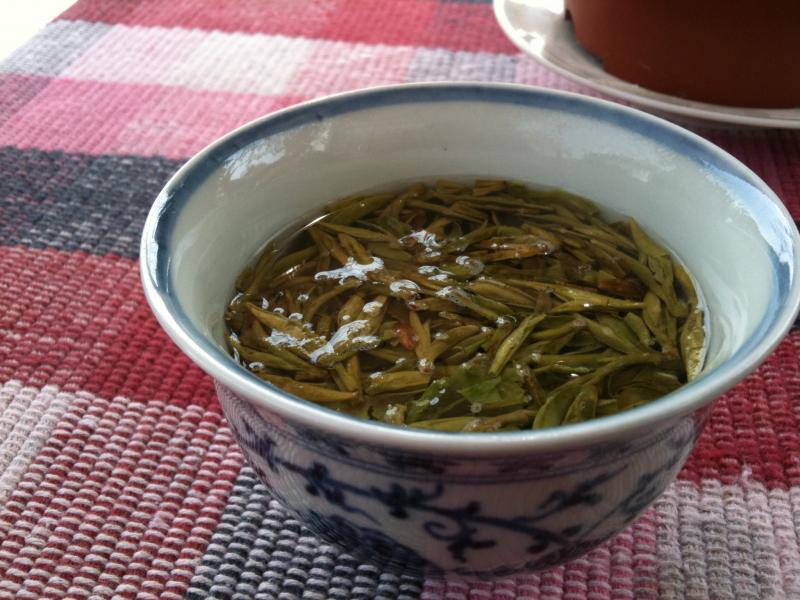
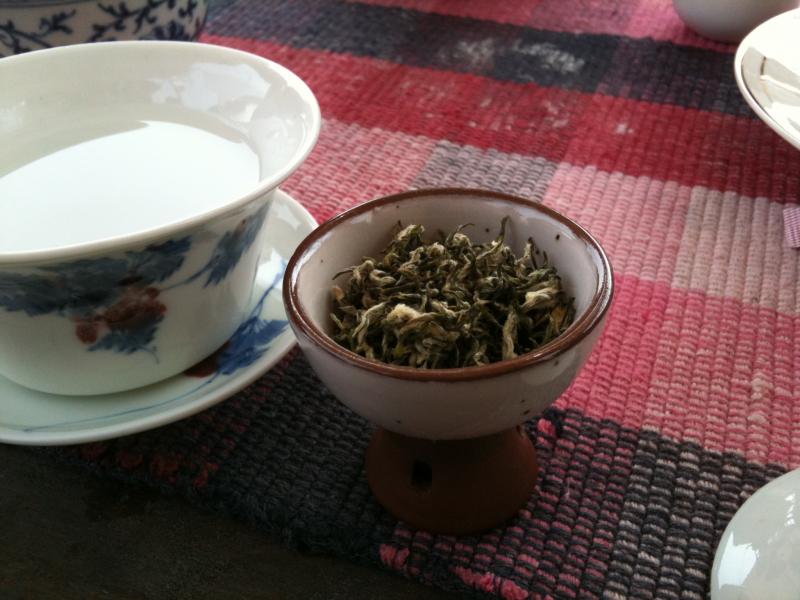
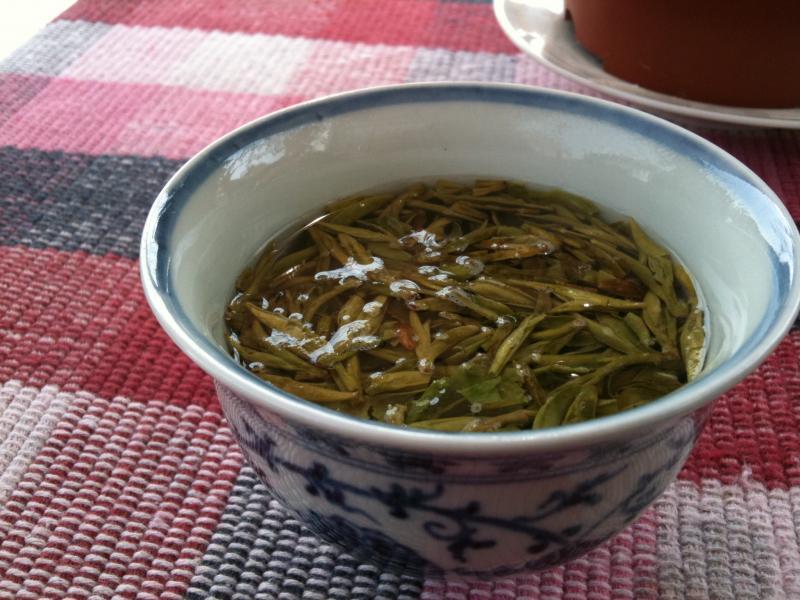
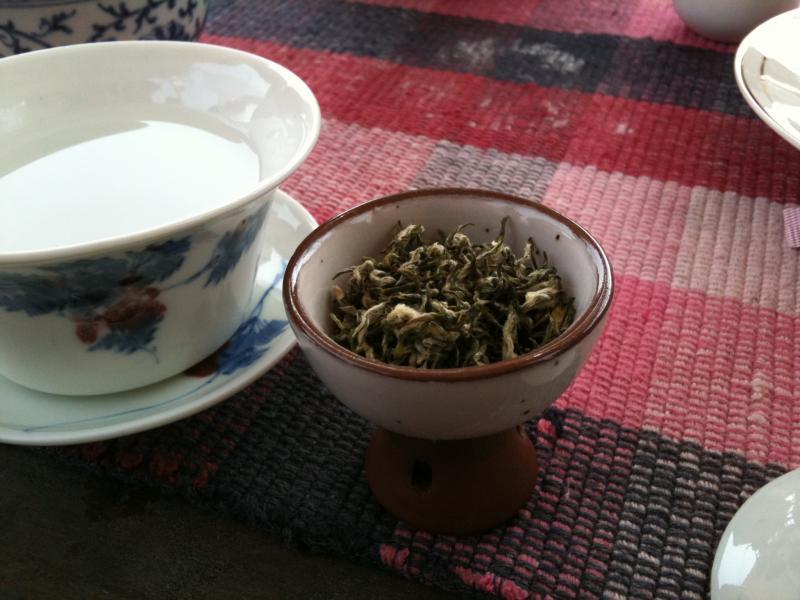
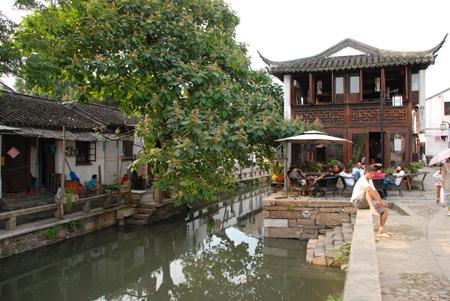
Well, we're being assured on a daily basis that a wave of foreign visitors is going to hit Suzhou as a result of the wildly anticipated Shanghai World Expo 2010. (New City! New Life!) So..if you're in the neighbourhood, there are a few decent places to eat. Suzhou is mainly famous for its formal gardens (not food), and one of the nicest places in town is a restored street of traditional housing - Ping Jiang Lu. It's lined with a number of nice teahouses and places to eat. One of my favourite houses has a terrace to sit out on the canal, where you can watch traditional canal boats poling by, and enjoy one of their many teas by the leaf. On a recent visit, we sampled some Hangzhou longjing I tried the bi luo chun, in an attempt to find one I like, but I'm just not a fan. A young couple runs this house, and they have an eclectic selection of teaware that is matched to each of their teas. They also offer fruit and flower teas, which are quite trendy now. You get your leaves and a giant thermos of hot water, so you can while away an afternoon in the sun reloading your cup and reading. They also have wi-fi.
-
I use commercial curry powder in cold salads: I like potato salad with peas and ham with a curry mayonnaise. Another great one, if you like cold pasta salad, is cavatappi with chicken, mandarin oranges, and red bell pepper in a curry powder mayonnaise dressing. Also, straight up curry dip: half mayo, half full-fat sour cream. Put that out with wings or crudite, it goes fast. I've never actually used commercial curry powder to make a curry, except when making a Japanese-style curry. Then it works great - it gives you that mild taste of a goopy, roux-based curry. Great over fried pork cutlets.
-
Japanese bar staples: Cassis orange; grapefruit "sours" made with grapefruit juice and shochu; and for the truly brave - cold oolong tea and shochu.
-
Over here, we were chatting about Oriental Beauty oolong, which Richard notes has a higher percentage of oxidation. I'm curious. The oolongs I have tried and liked, like tie guan yin (my favourite) and da hung pao (my second favourite) are two very different teas. The Oriental Beauty is very different from both those (although closer to the tie guan yin, if I had to compare), and I'm curious to what extent the oxidation affects those flavours. Is the difference in taste solely attributable to the oxidation percentage, or are there other factors involved?
-
I keep several oils and fats on hand for cooking, which amuses my non-cook friends. ( - Sample conversation: Friend:"Why do you have three different 1l bottles of oil?" Me: "The oils are different." Friend: "...?") Since I tend to cook seasonally, we get a glut of the same thing in my kitchen for a while. Right now it's spinach and pea shoots. To keep things seeming like there's more of a variety, I use different oils to help give the same ingredient a different spin. For example, the spinach with olive oil and a bit of garlic seems Italian. But with a bit of sesame oil, it's Korean. A bit of clarified butter, and it's leaning toward India. Or when I get cucumbers, a bit of vinegar and sesame oil, and we're in Korea again. But sunflower oil and vinegar puts me in Vietnam. What other oils or fats help give the main ingredient the feel of a different cuisine?
-
Can you say more about the "Oriental Beauty" style tea? I had a cup of what Starbucks was billing "Oriental Beauty Oolong" the other day, and was confused. Although they were calling it an oolong, it seemed to taste far closer to a traditional black tea. I liked it a lot - no bitterness at all, but it didn't taste like an oolong to me.