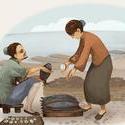
How Sandor Zombori put the Gulf Coast on the international culinary map
Sandor Zombori was raised in a Hungarian orphanage in the 1950s. His dissident parents having been jailed, he was the lowest of the low in a bad place at a bad time. But blessed with an Olympian's physique, the reflexes of a Praying Mantis, and an abundance of street smarts, he enjoyed wild success as an athlete, eventually becoming the Judo champion of Europe, a member of the 1964 Hungarian Olympic team, and one of the only Europeans ever to defeat the best Japanese martial artists. In 1969, he escaped Hungary, climbing over electrified fences and evading border patrols with shoot-to-kill orders, through Romania, Bulgaria, Yugoslavia, and Austria, where he was granted political asylum.
He arrived in the United States with nothing, and was taken in off the streets by the now legendary restaurateur George Lang, also a Hungarian Jew, and given a job as a dishwasher. Soon after, he enlisted in the United States Army and did six tours of duty in Vietnam as a Green Beret, a Ranger, and a Special Forces diver. He sustained multiple gunshot wounds, and acquired citizenship on account of his military service. And, after assimilating just about every skill the armed forces had to teach, he went on to become a computer technician for private defense contractors, where he saved his money and bided his time until he could pursue his real dream -- a dream inspired in part by his childhood of privation and in part by his mentor and idol Mr. Lang: Becoming a chef.
He traveled to France and trained at Cordon Bleu, and then pursued formal pastry training at Ecole Lenotre. He started his culinary career as the lowliest kitchen helper at Jamin, working under Robuchon. He then proceeded to apprentice in charcuterie, patisserie, and various other trades at small shops across France and particularly Alsace, where he wound up in the kitchen of Auberge de l'Ill.
Upon his return to the United States, still a few dollars away from being able to open a restaurant, he purchased an Italian pasta machine and set up a small artisanal pasta and sauce production company in Pensacola, Florida, called Pannonia Pasta. In the late 1980s, there was no other source of high-quality fresh pasta in that region of the Southeast, and Pannonia became the major pasta supplier in the area. (As Jim Shirley, chef at the Fish House restaurant in Pensacola, told me, "You know Sandor? Man, I wish he'd start making that pasta again. That stuff was the best.")
He opened Sandor's restaurant in 1991 in Pensacola, and was unhappy almost from opening day. The restaurant was too big, preventing Sandor (pronounced "SHON-door") from preparing the true European cuisine he wanted to provide to his guests. It was in a high-crime area, and there were at least four robbery incidents at Sandor's, including a hostage situation. Sandor will not tell you this, but if you talk to various chefs in Pensacola they'll recount increasingly dramatic tales of how former Green-Beret/martial-arts-champion Sandor, then in his 50s, disarmed a gang of hoodlums, rescued his waitress who was being held at knifepoint, and brought the no-doubt-bewildered bad guys to justice.
He closed the original Sandor's in 1994 and relocated to Seagrove Beach a couple of hours East along the Northwest Florida Coast. There he built a 32-seat restaurant (though he accepts only 25 reservations per night), which he operates to this day.
The area around Seagrove Beach, Florida, which includes such towns as Seaside (brought to public attention, albeit in a fictional incarnation, in the film The Truman Show), Fort Walton Beach, and Destin, is one of the last great undiscovered slices of America. We arrived after midnight and checked in at the Seagrove Cottages, the local pet-friendly lodging option (this being the off-season, we were placed in a three-bedroom cottage that could have accommodated six adults and several dogs; the owner, Mrs. Flowers, provides the necessary beach permits for guest dogs as well as a refrigerator magnet listing the local animal hospital's emergency contact information).
I arose early to take Momo for a walk on the beach, crossed the road, walked along the wooded public beach access path for about fifty feet, and found myself at the top of thirty-foot dunes overlooking one of the most dramatic stretches of white sand beach in the world -- no less in the United States. White, when used to describe these beaches, is not a figure of speech. The sand is pure quartz, and the grain is so fine it squeaks when you walk on it.
This being Momo's first experience of sand, he ate a lot of it.
Seagrove Beach is adjacent to Seaside (the granddaddy of the new breed of TND -- traditional neighborhood development -- projects, which seek to correct the mistakes of so many American suburbs by offering sidewalks, walkable downtowns, and precise long-term development plans) and the new Watercolor development, which is even nicer. Watercolor features, at its town center, a brand-new David Rockwell-designed hotel called the Watercolor Inn, which includes a restaurant (also designed by Rockwell) called Fish Out of Water. There is also a beach club and a small downtown area, and all the buildings in the development follow a rigorous design and color scheme that has occupied whole issues of various design magazines that I don't read.

My meal at Fish Out of Water came as a tremendous surprise. How can a hotel restaurant, just a couple of months old, in the most remote part of Florida (this is the extreme West of Florida that you might remember from the recent national election, where the time zone is different), be any good? But the muscle behind Watercolor -- the Arvida community development arm of the St. Joe company, Florida's largest landowner with resources comparable to Disney or Las Vegas -- was serious about building a restaurant that would meet international standards of quality in order to attract guests of the same caliber. And judging from my one early meal at the establishment, Fish Out of Water is well on its way to attaining that goal.
It's such a breathtaking restaurant -- I doubt any David Rockwell project in New York has had this kind of budget, with everything from hand-painted silk lanterns depicting undersea life, to a whole lot of wrought iron all over the place, to something like a quarter million dollars worth of flatware -- that most people would probably be happy there eating mediocre food. Luckily, they don't have to. Much of the seafood is straight from the Gulf of Mexico a few yards away, and the rest of the ingredients are mostly air-shipped from the best New York and international suppliers. (Even the sandwich and coffee shops downtown at Watercolor offer top-notch imported Italian cold cuts and Lavazza espresso.)
The executive chef of the hotel is a gentleman named Kevin Peters, a Missouri native formerly of the Ritz-Carlton St. Louis. He brought with him as chef-de-cuisine for Fish out of Water a young man named Steve Scherrer, who was the chef at a well-regarded restaurant called Grenache, across the street from the Ritz-Carlton. Mr. Scherrer looks to be perhaps 17 years old, but he knows how to cook.
My blue crab bisque was based on a heavily concentrated shellfish stock and had plenty of big chunks of sweet crabmeat floating around in it -- a no-nonsense but effective version of the dish that convinced me the kitchen had command of the fundamentals. The best dish I tried, however, was the restaurant's take on surf-and-turf: Seared scallops and braised short ribs, made with the sweetest and biggest untreated diver scallops I've had in awhile and a big pile of properly braised short ribs.

Fish Out of Water has -- rare for a small-town restaurant -- an actual professional pastry chef, Kerri Scherrer (she and the chef are a husband-and-wife team, and she worked under Mr. Peters at the Ritz-Carlton), and it shows in the desserts: The highlight was a steamed chocolate torte that could give Jean-Georges a run for his money. The word steamed evokes, to me, images of healthfulness, lightness, and perhaps in this context sponginess, but there is no element of austerity to this thing. You can see and taste the impact of a serious pastry kitchen in the little touches, such as miniature ice cream sandwiches accompanying a stylized root beer float, and handcrafted cookies used as garnishes on most desserts.
The wine program is ambitious, with more than 300 selections and growing quickly. We ordered the 1998 Sokol Blosser Pinot Noir, and the passionate wine director mentioned that he also had two bottles of 1997 in house but not on the list, so we tried both (1997 is better). There's a wine room available for private parties, and Rosenthal stemware is in use. The wine markup is ridiculously low, and no doubt subsidized by the hotel. On some bottles, I'd guess we're talking about less than a 50% margin, which can't possibly begin to cover the restaurant's costs.
Also, as has become the trend at large American seafood restaurants, there is a sushi bar, and the sushi is well made.
You will not go hungry along the stretch of Highway 30-A (also called the Blue Highway) in and around Seagrove Beach, Seaside, and Watercolor. Nearby, in Carillon Beach, there is Chef Paul's. Those familiar with the Atlanta dining scene will remember Chef Paul Albrecht, formerly of Pano's and Paul's (I say that as though I had heard of him before, but I confess ignorance; nonetheless, reading about him online it does seem he was a big deal). He, like many other smart ex-urbanites, has relocated to Northwest Florida and has brought with him an urban-sophisticated palate and foundation of technique, which he and other newcomers are applying to the amazing seafood of the Gulf (shrimp, oysters, crab, grouper, snapper, tuna, and a host of fish I had never heard of before -- such as ling -- are abundant and excellent). We went for lunch, which consisted of an assorted platter of fried seafood in the café part of the restaurant. It was good. I'd like to go back for the more formal dinner service, because there were several nice touches at lunch that hinted at good things to come, such as good bread baked on premises and an irresistible basket of homemade potato chips.
All in all, the area can be proud of its emerging food scene. To think that the designation "Redneck Riviera" has long been used to describe this stretch of the United States South Coast, the accomplishment is all the more admirable. Chef Gary Hunt of the restaurant Basmati's remembers the region in the 70s as being full of "guys running from their ex-wives, bootleggers, beach bums, savings & loan fugitives and assorted other dropouts -- the good old days when you'd drive your pickup down 30-A, barefoot with an open bottle."
There is even, in Seaside, right next to the Post Office, an Airstream trailer that has been turned into a sushi bar, and the sushi is okay -- still you must eat at least a California roll there in order to be able to say you had the sushi from the Airstream trailer. And there are four or five other restaurants I didn't get to visit but which came with strong recommendations from people I trust, especially an operation called Criolla's run by long-time regional chef Johnny Earles.
Here's the sunset, traditionally viewed by everyone from the roof deck of Bud & Alley's, the local watering hole (named for two cats, and with a well regarded restaurant attached) in Seaside:

Mark my words: Northwest Florida is the next big thing. The regional magazines are all over it, but serious national press coverage is still a year or more away. Buy now. If I had the means to do it, I'd buy two plots of land in Watercolor and I'd build two houses, renting each to vacationers at $500 a night -- the going rate. Ten years from now I'd sell one of them and retire to the other on the proceeds of the sale.
And I would dine at Sandor's restaurant every night.
Sandor, in his never-ending quest for self-improvement, closes his restaurant every January and visits kitchens around the world, especially in New York. He has done short stages at, among others, Vong, Jean Georges, Le Bernardin, Cello, Lespinasse, and Tabla, collecting ideas and honing his technique. He is particularly close friends with Eric Ripert of Le Bernardin. "Growing up in Hungary, I never saw a fish. So I learned from Eric."
I met Sandor in the kitchen of Lespinasse restaurant in New York, where I was doing a week-long kitchen stage a couple of years ago. Sandor was doing the same, and we bonded over a baby pig. Ever since our week together, Sandor has e-mailed me persistently and persuasively, demanding that I visit Seagrove Beach and tell the world about the emerging restaurant culture in the area (little does Sandor know I have no such power).
It is not important whether Sandor's is the best restaurant in Florida (though it surely is), or America (it can certainly compete), or the world (it isn't, but unless you have been to Sandor's you cannot say you've dined at all the world's top restaurants). As my friend Bill Sabella -- one of the architects of the Watercolor project, who has dined at Sandor's more than 100 times and who is also a well-traveled and globally experienced gourmet -- puts it, "I've pretty much given up on other restaurants."
A meal at Sandor's leaves you wondering what would happen if any of the top chefs from New York or Paris had to operate under similar conditions to Sandor: There is only one person in Sandor's kitchen, and that is Sandor. There are no prep cooks, no line cooks, no sous-chefs. Everything, from taking reservations and creating the wine list, to the preparation and cooking of every dish -- most of which are based on the numerous stocks he prepares every day -- is done by him. There's a waiter and a waitress, though you can be sure that if Sandor could do it, he'd prefer to wait on every table as well. Sandor's wife, Mary, occasionally answers the phone. And one of the waitress's daughters comes in late some nights to help with the dishes.
Although the seafood of the Gulf is readily available and there is some excellent produce available during Florida's growing season, obtaining other ingredients is a daily struggle. Sandor doesn't purchase the quantities necessary to attract major distributors and their refrigerated delivery trucks, so he spends hours each day shopping everywhere from markets in nearby Destin to the Publix supermarket up the road, where his relationship with the produce manager gets him access to whatever is available nationally. He grows his own herbs, and he and his customers often return from New York and elsewhere with suitcases full of premium ingredients. Still, if there is a weakness in Sandor's cuisine, it is the low proportion of vegetables.
As at Alain Ducasse New York and Michelin-starred restaurants in Europe, there is one sitting and your table is yours for the evening. Sandor has been known to sit and talk with customers after the dinner service, sometimes until 5:30am. Sandor's is open six days a week (closed Sundays) for dinner almost year-round, and seven days a week in season (May-September).
The building, formerly an architect's office, has the unique architectural feature that you must go outside and around the side to use the restrooms. It is not a fancy building, but everything in the dining room is of high quality, from the chairs and the table linens to the flatware and the oil paintings of Napoleon that ring the room. Sandor, though he appears to be seven feet tall, is a major Napoleon buff, and has in his estimation read every book on Napoleon written in the five languages he speaks. "For me, Napoleon is about anything being possible, no matter who you are or where you come from."
Sandor's wine list contains 30 or so selections from small European producers, each chosen by him with the cuisine in mind. Of the wines I recognized on his list, all are good.
Sandor believes that the Hungarian/Middle-European culinary tradition has much to offer, particularly its slow-cooking methods and its use of spices. The cuisine you'll find at Sandor's is a kind of pre-fusion fusion, harkening back to the days when the spice traders introduced the new ingredients that revolutionized Western cooking. In his experience of cuisine, spices are used effortlessly and as an essential component of dishes -- not as an attempt to be trendy. He brings to the table not only his classical European training but also his extensive study of Asian and Indian spices. "When the other guys in Vietnam were out at the girly bars, I was in restaurants begging to learn. When I was on the Malaysian border, I had a housekeeper, and when I was leaving for America she asked me to marry her daughter. I told her I already have four wives in America, but that I'd like her curry recipe." Needless to say, Sandor has only one wife, but he does have the curry recipe.
My epic meal at Sandor's started with salsify soup with white truffles, a blend of salsify, celery, leeks, onions, and a very strong vegetable stock. Somehow, Sandor's proportions -- always so right -- allowed each ingredient to be perceived both individually and as part of the integrated whole. The presentation, as with many dishes at Sandor's (though the desserts are ornate), is utilitarian: White soup in white bowl with spoon. Sandor doesn't believe in an abundance of unnecessary garnishes, though he does present some dishes with artistic flair and he would like to have more time. He is his own toughest critic, "The thing that's wrong with this soup is that I don't have the time to make a brunoise of salsify and combine it with the soup right at the end -- I would love to give it that extra bit of texture, and a soup really should have something in it that symbolizes the main ingredient." Don’t pay any attention to Sandor: You haven't had a better soup.
Egg custard with flying fish roe, served in a hollowed out egg shell, is fortified with saffron and white truffle. The saffron is just a hint, enough to make the palate curious without identifying the flavor.

Crayfish in puff pastry is based on a mixture of shrimp stock, coconut milk, and Thai curry (Sandor of course makes his own from Thai chili peppers, garlic, fish sauce, lemongrass, and kaffir lime leaf). The puff pastry slowly absorbs the sauce, and is a delight to eat at the end.
Crabmeat salad with mango chutney and brandy is balanced just so you can taste the sweetness of the crab meat pushing through the spices. As with most everything at the restaurant, all the underlying components are made by Sandor: He makes his own mango chutney from fresh mangoes and freshly ground spices. He grinds each spice separately, and some are cooked or bloomed before being added to the chutney, while others are added raw. I ask what the slight tomato taste is. "Oh, that's ketchup." But it isn't Heinz: He makes it himself from fresh tomatoes, balsamic vinegar, hot peppers, horseradish, and Worcestershire sauce. "Do you make your own Worcestershire sauce too?" I quip. "Yes," answers Sandor, as though I just asked the dumbest question in the world.

Next in the progression were two pate courses, demonstrating Sandor's facility with this technique: First a heavily peppered terrine of veal liver and beef fat (he uses the trimmings from tenderloins) the likes of which you never taste outside of rural France, and next a delicate terrine of artichoke hearts, grated white truffle, ginger, and sherry vinegar. I'd have thought the opposite order of service would have been more appropriate, but the fluffy artichoke turned out to act almost as an antidote to the exhausting black pepper terrine.
Chilean sea bass in a sauce of mirin, soy, ginger juice, lavender honey, and safflower oil is accompanied by Sandor's take on the classic brandade. Instead of salt cod, he uses smoked Finnan Haddie (yes, he smokes it himself). "I don't understand the French, why they insist on using salt cod. Maybe that was good in the stone age, but now when you have fresh fish, why do that?"
Sandor's grouper preparation is inspired by Robuchon, but of course Robuchon didn't have the Gulf of Mexico out his window. The brick of grouper (the portions at Sandor's are quite large, suitable for a seven-foot-tall Hungarian martial artist -- "It would be wrong to feed people less than I would eat myself") sits in a reduction of Port and 50-year-old balsamico.
For the final savory course, Sandor's braised veal short ribs, inspired by Gray Kunz, are perhaps the best short ribs I've had in a market that is now heavily saturated with great short rib preparations. Sandor doesn't believe in marinating his short ribs, because he wants them to maintain a certain meaty texture. And I must agree with his decision: Although the falling-off-the-bone texture of typical restaurant short ribs is seductive, it is too often achieved at the expense of preserving the flavor of the meat. Sandor's short ribs have structure, and they taste like meat. They are braised in oxtail stock at 170 degrees for eight hours. They are spiced with cinnamon, coriander, cardamom, mace, lavender, Thai chili, ginger, shallots, and zatar, and served atop Lebanese-style couscous (the big pearls of couscous rather than the fluffy fine stuff). I ate a good quarter of the portion.
Most chefs who prepare their own desserts are doing it to cut costs, or because they just don't understand desserts. Sandor is doing his own desserts because there's no pastry chef in the region who could do it as well. His version of the molten-center chocolate cake is as good as any I've had anywhere in the world, made from El Rey chocolate (Venezuela) and topped with French black cherry sorbet. Some of his desserts are decidedly old-style, and they make one wonder why the old-style desserts ever got replaced by so many crummy new ones. His Crepes St. Tropez are piled four layers high and filled with lemon custard. A big wedge is served with lemon sauce and passion fruit sorbet. Sandor even makes his own petits fours. At some point, he worked for a chocolatier.


Sandor's Crab Salad with Mango Chutney
For 2 normal people or 1 Hungarian martial artist
1 8oz. container lump crabmeat (available cleaned and cooked at any good seafood market)
1/4 cup mango chutney (give or take depending on the strength of the chutney)
1 teaspoon ketchup
1/2 teaspoon brandy
For the mango chutney: You may use a high-quality store-bought chutney, or take a not-too-ripe mango, cut it into cubes and simmer it in vinegar until soft. Drain and puree in a food processor, but stop short of a totally smooth mixture. Mix in by hand a "pinch" each of mustard seed that has been bloomed in vinegar (pan-roasted until the vinegar has evaporated), and fresh galangal, asafetida, ajwan, fenugreek, and chana dal (Sandor recommends Kalustyan's in New York, which is where he gets all his spices).
For the ketchup: You may use a little tomato paste with a few drops of Worcestershire, hot pepper sauce, balsamic vinegar, and freshly grated horseradish added, or cook a peeled and seeded fresh tomato over low heat in a saucepan until soft, and add Worcestershire sauce, salt, pepper, balsamic vinegar, hot pepper sauce, and horseradish to taste.
Press the crabmeat gently in a strainer to remove as much liquid as possible.
In a stainless bowl, very carefully combine (so as not to break up the lumps of crabmeat) the crabmeat with the mango chutney. You may refrigerate at this point for later service. At the very last minute, add the ketchup and brandy and give it a stir. Add salt and white pepper to taste, if needed.
Eat it directly out of the bowl and don't share with anyone.
Addresses
Bud & Alley's
2236 Highway 30-A (across from the Post Office)
Seaside, FL
(850) 231-5900
www.budandalleys.com
Chef Paul's
102 Market Street
Panama City Beach, FL
(850) 235-2811
www.chef-paul.com
Criolla's
170 Highway 30-A
Grayton Beach, FL
(850) 267-1267
Fish Out of Water
1701 Highway 30-A (at the Watercolor Inn)
Seagrove Beach, FL
(866) H20-COLOR
www.watercolorflorida.com
Sandor's
Corner of Highways 30-A and 98
Seagrove Beach, FL
(850) 231-2858
Photos by Ellen R. Shapiro